

Consumer credit still has plenty of room for expansion.
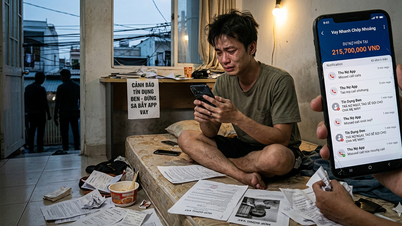
In reality, illegal lending still exists in many sophisticated forms, especially in industrial zones and residential areas with a large number of low-income workers. Many workers, when facing unexpected financial needs but unable to access official sources of funding, are forced to resort to high-interest loans.
Recently, authorities in Dong Nai province discovered two cases showing signs of usurious lending to workers in a company located in the Long Thanh Industrial Park. The perpetrators exploited the difficult circumstances of the workers to lend money at high interest rates, requiring borrowers to hand over their ATM cards used for salary payments as a means of controlling debt collection. This practice not only puts workers under prolonged financial pressure but also poses significant risks to social security and order.
 |
| Banks are promoting online lending to help people expand their access to formal sources of funding. |
Cases like the one above demonstrate that when urgent capital needs are not met promptly by the formal financial system, illegal lending will have the opportunity to infiltrate and thrive. Therefore, expanding access to consumer credit is considered an effective solution to reduce the market share of organizations and individuals engaging in usurious lending.
According to FinGroup's assessment, the Vietnamese consumer finance market still has significant growth potential, as the size of consumer credit in Vietnam is only just over 10% of GDP – much lower than other countries and territories such as South Korea with over 40% of GDP, Hong Kong (China) with over 20%, etc.
In reality, consumer lending demand in Vietnam is showing a clear upward trend. According to the State Bank of Vietnam, outstanding consumer loans reached approximately 3 trillion VND, accounting for over 20% of the total outstanding loans in the economy , indicating that consumption is becoming a crucial driver of credit growth. In this context, commercial banks' efforts to boost consumer credit with reasonable interest rates, convenient procedures, and diverse products are considered important solutions to help people access safe and transparent capital.
For example, Bac A Bank is continuing to implement the "Timely Capital Access - Secure Future Steps" program until the end of 2026. Accordingly, customers can access short-term loans with interest rates from 9.9%/year and medium- and long-term loans with preferential interest rates from 9.5%/year.
The program applies to various loan purposes such as secured consumer loans, car purchases, study abroad support, working capital for production and business, or agricultural development. Diversifying credit products helps banks reach a wider range of customers while closely meeting the actual needs of the people.
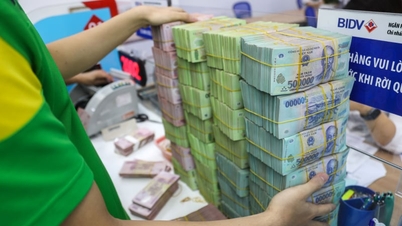
Similarly, BVBank has also launched two preferential credit packages totaling up to VND 4,800 billion for individual customers, focusing on home purchase loans and secured consumer loans with competitive interest rates. This is seen as a positive move to support people in accessing legitimate sources of capital amidst increasing consumer and investment demand.
Not only small and medium-sized banks, but many large banks are also restructuring their credit portfolios towards increasing the proportion of retail lending. According to a representative from VietinBank, the bank is focusing on preparing resources to boost retail lending growth in the coming period, as consumer and real estate demand gradually recovers.
Digitalization of consumer credit creates new growth drivers.
One of the key factors driving the recent growth of consumer credit is the strong digital transformation in the banking industry. According to experts, the application of technology to lending operations has significantly shortened appraisal and disbursement times, while also enhancing customer experience. Digital banking platforms, electronic identity verification (eKYC), automated credit scoring, and online lending are making access to capital easier than ever before.
Mr. Nguyen Duc Lenh, Deputy Director of the State Bank of Vietnam, Region 2, stated that the quality of services is constantly improving thanks to the application of modern technology in consumer lending activities. Electronic lending methods, overdraft services, and digital financial products have facilitated individuals and households in accessing capital quickly, saving time and transaction costs.
The development of technology not only helps expand the coverage of formal credit but also enhances risk management capabilities and increases the transparency of lending activities. This is an important foundation for the banking industry to develop consumer credit in a more sustainable, safe, and efficient manner.
According to Associate Professor Dr. Dang Ngoc Duc, Director of the Institute of Financial Technology, Dai Nam University, online lending is becoming an important part of the digital financial ecosystem of commercial banks. The expert stated that many banks have recorded loan growth rates from digital channels exceeding expectations, while also expanding their service reach to rural and remote areas – places previously inaccessible to traditional financial services.
According to Mr. Duc, applying AI, Big Data, and Machine Learning to the credit approval process helps banks reduce risks, speed up application processing, and improve customer experience. When national data on population, taxes, and credit are connected, banks can assess customers' repayment capacity in real time, thereby extending credit to even those with no prior loan history.
In reality, many banks in Vietnam have been boosting lending through digital channels. Given the potential for growth in online lending, the State Bank of Vietnam (SBV) is seeking feedback on a draft amendment to Circular 39/2016/TT-NHNN – a document regulating lending activities of credit institutions and branches of foreign banks to customers. One notable change is the redefinition of "small-value loans." According to the draft, the maximum loan amount will be raised to 400 million VND at credit institutions, four times higher than the current 100 million VND threshold. This amendment to lending regulations is expected to create more room for banks to expand credit on digital platforms, helping individuals and businesses access capital more quickly and conveniently.
Source: https://thoibaonganhang.vn/thu-hep-dat-song-cua-tin-dung-den-182911.html
![[Photo] General Secretary and President To Lam presides over a meeting on preparations for the review of one year of operation of the three-tiered government system.](https://vphoto.vietnam.vn/thumb/1200x675/vietnam/resource/IMAGE/2026/06/02/1780391821195_a1-bnd-4595-9717-jpg.webp)

































































































Comment (0)