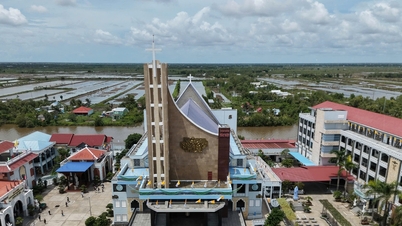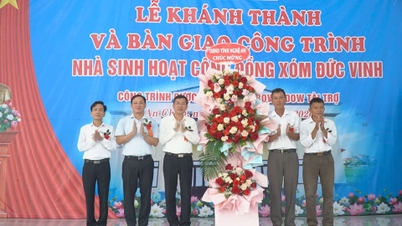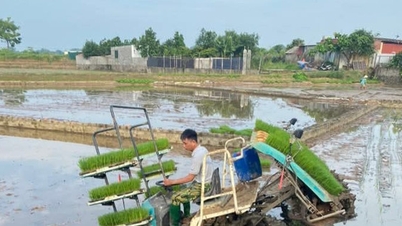
The villages are undergoing a transformation.
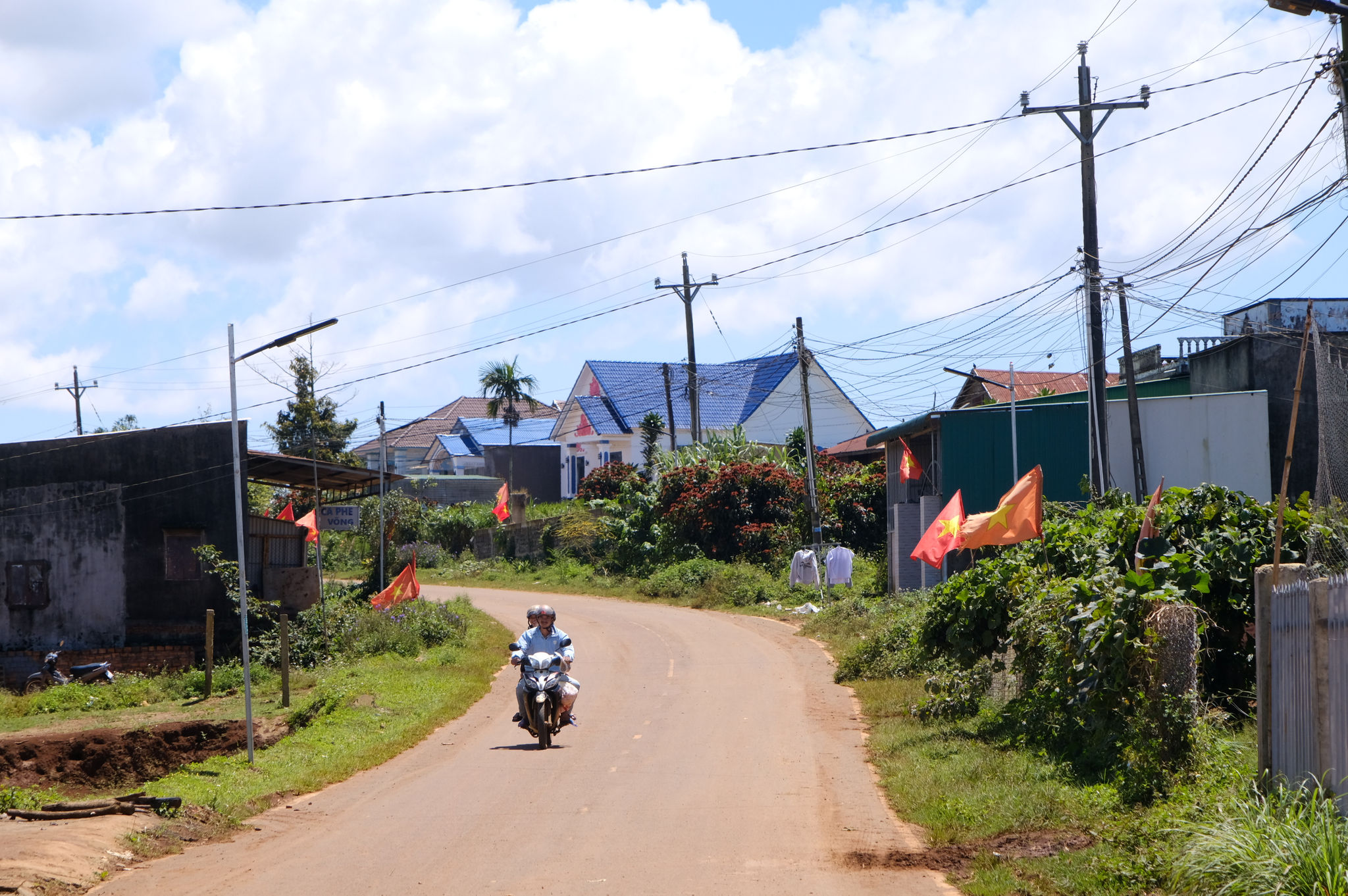
Located in the heart of Don Duong commune's agricultural area, Bookabang village was once one of the most disadvantaged areas. With 150 households and over 930 inhabitants, mostly ethnic minorities, the villagers' lives previously depended primarily on small-scale agricultural production. As a poor village under Program 135, with difficult transportation, limited education levels, and limited access to scientific and technological advancements in agriculture, its economy developed slowly.
Mr. Ha Xuyen, Head of the Village Front Committee, said that thanks to the Party's attention, the State's investment, the involvement of the political system, and the unity of the people, the appearance of Bookabang village is changing every day. People are gradually shifting to growing commercial vegetables, developing livestock farming, and improving their herds of cattle and poultry, contributing to increased income. A stable economy also motivates people to actively participate in building new rural areas and model residential areas; thousands of people have participated in environmental sanitation and contributed to the construction of internal village roads.
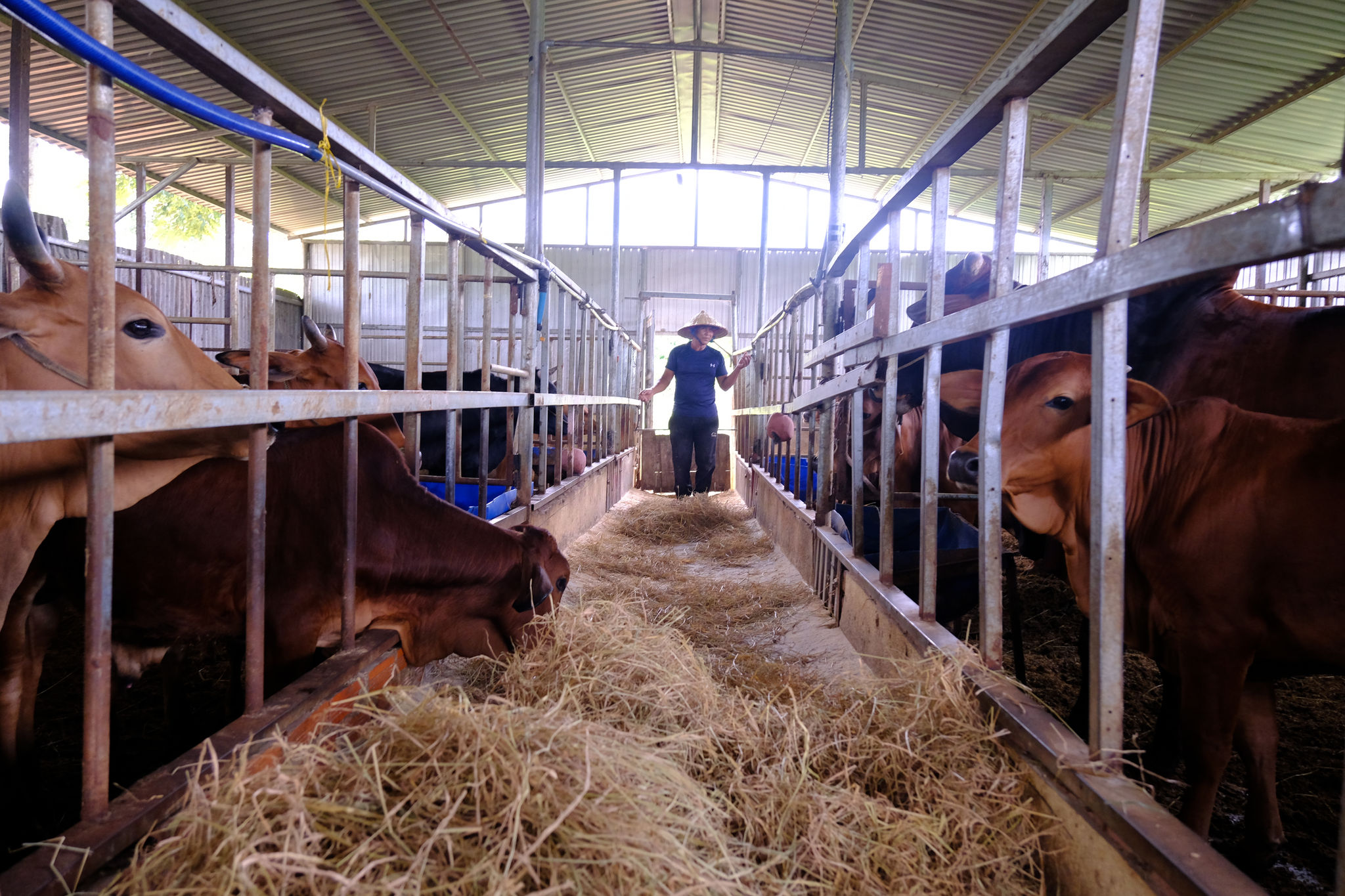
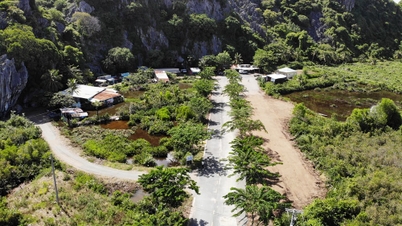
Further south, in the heart of Cat Tien National Park, the S'tieng community in Hamlet 3, Cat Tien 2 Commune, is also witnessing daily changes. Along the small concrete road winding through the village, cocoa, coffee, and durian orchards are thriving. Few would imagine that this place once consisted of only a few dozen houses nestled in the dense forest, where life was still full of hardships.



Thanks to support in providing seedlings, fertilizers, technology transfer, and participation in forest management and protection contracts, many households have gained stable livelihoods. People have boldly switched to suitable crops, improving production efficiency and their living standards. Many families have built spacious houses, creating favorable conditions for their children to receive a full education. Along with economic development, traditional cultural values are still preserved, contributing to the unique identity of the community.

Narrowing the development gap
Currently, 100 out of 124 communes, wards, and special zones in the province are located in ethnic minority and mountainous areas, encompassing over 2,300 villages, hamlets, and residential groups. This area has a large geographical scope, uneven population distribution, and has historically faced numerous challenges in terms of development. However, through the comprehensive implementation of ethnic minority programs and policies, the appearance of these areas has undergone many positive changes.
To date, 100% of communes in ethnic minority and mountainous areas have access to the national power grid and radio and television coverage; all communes have cultural centers, and villages have community centers. The school system and medical facilities are being gradually upgraded. Along with infrastructure investment, policies supporting production, poverty reduction, vocational training, preferential credit, and forest protection contracts have helped people confidently switch to different crops and livestock, apply science and technology to production, increase income, and improve their living standards.
These efforts have yielded tangible results in poverty reduction among ethnic minority communities. The multidimensional poverty rate decreased from nearly 27% at the end of 2021 to 8.75% at the end of 2025. Throughout the province, 16 out of 19 communes in Zone III and 138 out of 236 villages have been removed from the list of particularly difficult areas, contributing to narrowing the development gap between ethnic minority regions and other areas.



Behind those figures lies the transformation in every home, every residential area, and every ethnic community. However, the journey to narrow the development gap in ethnic minority areas still has much work to be done. Nevertheless, the changes currently evident in the villages will be a solid foundation for ethnic minorities to continue to develop their internal strengths, preserve their cultural identity, and together build increasingly prosperous rural areas.
Source: https://baolamdong.vn/thu-hep-khoang-cach-phat-trien-vung-dong-bao-dtts-449613.html



![[Photo] Prime Minister Le Minh Hung presides over the thematic session on promoting science and technology development and innovation.](https://vphoto.vietnam.vn/thumb/1200x675/vietnam/resource/IMAGE/2026/06/23/1782207872934_ndo_br_dsc-1724-jpg.webp)