

For many years, oral cancer was associated with a familiar image: older men who had smoked for many years. However, doctors in India are now witnessing a far more alarming trend: an increasing number of young people in their 20s and 30s, some of whom have never smoked, are being diagnosed with advanced-stage oral cancer.
Many of them lead healthy lifestyles, are interested in exercise, have recently started a family, or are building their careers. Yet this disease is becoming increasingly common.
According to the Indian Council of Medical Research (ICMR), oral cancer remains one of the most common cancers in the country, primarily due to the widespread use of tobacco and betel nuts.
The hidden tobacco trap that many young people overlook.
According to India Times, Dr. Akshat Malik, a head and neck oncologist at Apollo Hospital (Delhi), said the biggest misconception among young people is that only cigarettes cause oral cancer.
"Previously, oral cancer was primarily seen as a disease of older men who had smoked for many years. But recently we've seen a rapid increase in cases in people under 40, including many non-smokers," Dr. Malik explained.
According to Dr. Malik, instead of smoking, many young people use products considered "normal" in daily life, such as chewing gum containing betel nuts and smokeless tobacco (like betel leaves, gutkha, pan masala, supari). These products are often widely promoted and considered culturally significant, leading many to underestimate their effects. However, from a medical standpoint, they are not harmless.
"The majority of oral cancer patients do not use cigarettes as their primary source of tobacco. Instead, they use other forms such as gutkha, khaini, pan masala, supari, or betel nut," Dr. Malik said.
Unlike cigarette smoke, these substances are trapped directly in the oral cavity, in close contact with the gums and cheek mucosa for extended periods. This prolonged exposure silently damages cells every day.
The danger is that many people don't consider themselves "smokers," and therefore have absolutely no idea they are at risk of developing cancer.
 |
The habit of chewing betel nuts and other chewing products made from betel nuts, or smoking tobacco, is one of the causes of increased oral cancer, especially among young people. Photo: Shutterstock. |
Even seemingly minor dental problems can be dangerous.
Another less-noticed cause of the increase in oral cancer is prolonged irritation in the oral cavity. For example:
- The sharp, broken teeth rubbed against the tongue for months.
- The dentures don't fit.
- Persistent oral infections
- Poor oral hygiene
- Small wounds that don't heal completely.
These are all minor health issues, so many people live with them for years without seeking medical attention. However, doctors say that repeated damage can cause chronic inflammation and increase the risk of abnormal cell changes over time.
According to Dr. Malik, in India, many people only seek dental care when the pain becomes unbearable. Mouth ulcers are often treated with folk remedies, bleeding gums are ignored, and white patches in the mouth are dismissed as "internal heat." Meanwhile, the damage continues to progress silently.
Genetic factors may also be involved.
Not all young patients with oral cancer have clear risk factors. This is what worries oncologists in particular. "There are young patients who are more susceptible to cancer due to genetic factors, even without traditional risk factors," Dr. Malik explained.
Researchers around the world are trying to understand why some young people still develop fast-growing oral cancer despite having relatively healthy lifestyles.
Some experts suspect gene mutations make the body more susceptible to cellular damage. Other theories link environmental toxins, processed foods, alcohol, prolonged stress, HPV infection, and changes in modern lifestyles.
Although science is still researching this, doctors agree on one thing: youth is no longer a "shield" against oral cancer. Even more worrying, oral cancer in young people tends to progress more aggressively.
"We believe that oral cancer in young people tends to spread and progress more rapidly than in older adults," Dr. Malik warned.
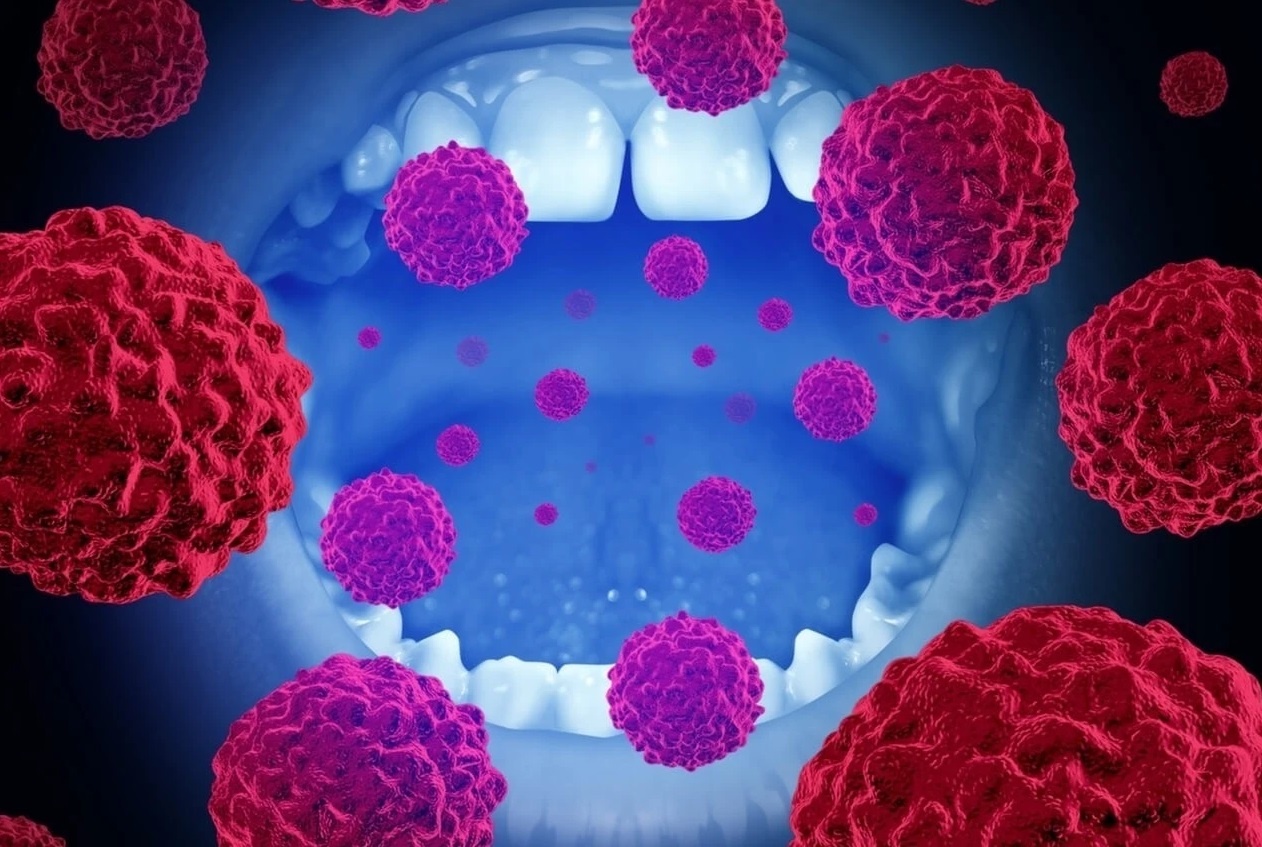 |
Poor oral hygiene and neglecting dental problems are also factors that increase the risk of oral cancer. Photo: Shutterstock. |
Why are so many cases detected too late?
One of the major reasons oral cancer is so dangerous is its late detection. Young people rarely think they have cancer. Even doctors sometimes mistake the initial symptoms for common infections or canker sores.
"Delayed diagnosis is one of the biggest barriers to treating oral cancer," said Dr. Malik.
The early warning signs are often quite subtle:
- Mouth ulcers that don't heal after 2-3 weeks
- Red or white patches appear in the mouth.
- A burning sensation when eating
- Difficulty chewing or swallowing
- Difficulty opening the mouth
- Swollen lymph nodes in the neck
Although they may sound commonplace, these symptoms should absolutely not be ignored if they persist. "Early diagnosis through biopsy and imaging will significantly increase the chances of successful treatment," Dr. Malik emphasized.
Source: https://znews.vn/thu-pham-am-tham-dan-den-ung-thu-mieng-post1654967.html
![[Image] Nearly 125,000 Hanoi students completed the Literature exam for the 10th grade entrance exam.](https://vphoto.vietnam.vn/thumb/1200x675/vietnam/resource/IMAGE/2026/05/30/1780117233041_ndo_br_thiet-ke-chua-co-ten-2-png.webp)




































































































Comment (0)