

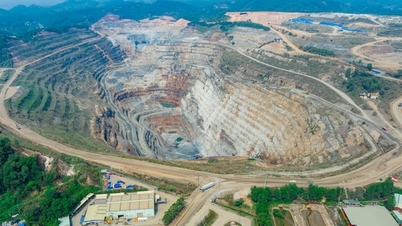
In Datong, Shanxi province, China—one of the country's largest coal mining centers—changes in the energy sector are gradually becoming apparent in people's lives. From mining to services, from coal to tourism and new energy, the transition is unfolding step by step.
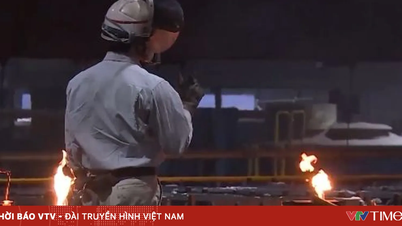
At age 60, Yang Haiming left his job as a miner and switched to selling grilled lamb skewers. His small stall is located right in the residential area once associated with Coal Mine No. 9 – a former hub of life for thousands of workers and their families.
Mr. Yang Haiming shared: "In its heyday, this place was always crowded. Back then, the surrounding villages hadn't been demolished yet. Especially during the Lunar New Year, every place was packed. Now, that hustle and bustle is gone, and the atmosphere of the past is lost."
Shanxi is one of China's largest coal-producing regions, with approximately 800,000 direct mining workers and a projected output of 1.3 billion tons by 2025. In addition, millions of related jobs exist in transportation, services, and logistics.
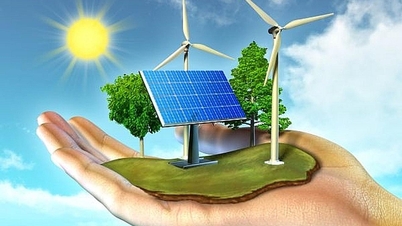
With China's rapid expansion of renewable energy, localities like Datong are beginning to explore new avenues for development. Tourism is one notable option. At the Yungang Caves – a Buddhist heritage site dating back to the 6th century – visitor numbers have surged, contributing to job creation in the area.
Ms. Zhao Xia, a tour guide in Datong, said: "Coal is a non-renewable industry. Once it's depleted, it's gone and it will take hundreds of millions of years to regenerate. With tourism, we not only create jobs but also boost the local economy ."
In addition, many coal miners believe that relying entirely on coal mining for their livelihood is not a sustainable solution.
Miner Zhou Hongfei said, "I'm actually quite worried watching my children grow up. In 15 years, when the resources are depleted, we will all have to face the question of what to do next."
There are very few skilled workers in the coal industry. The majority are manual laborers, making it difficult for them to adapt to new things and new professions.
According to experts, China's energy transition is closely linked to social factors, especially in provinces heavily reliant on coal such as Shanxi, Shaanxi, and Inner Mongolia. Meanwhile, to ensure energy security, China continues to maintain and expand coal-fired power. By 2025, the country plans to add 78 gigawatts of new coal-fired power capacity.
Ms. Junyan Liu, Deputy Program Director, Greenpeace East Asia, said: "What is really needed is a smart grid system to absorb more renewable energy sources, along with energy storage and other flexible mechanisms to support renewable energy."
From mines and coal-fired power plants to solar farms, Dai Dong is showcasing a transformative landscape with many parallel paths, in which the issues of employment and livelihoods remain key factors.
Source: https://vtv.vn/thu-phu-than-da-trung-quoc-chuyen-dich-nang-luong-xanh-100260408095454741.htm




![[Photo] General Secretary and President To Lam presides over a meeting on preparations for the review of one year of operation of the three-tiered government system.](https://vphoto.vietnam.vn/thumb/1200x675/vietnam/resource/IMAGE/2026/06/02/1780391821195_a1-bnd-4595-9717-jpg.webp)
































































Comment (0)