

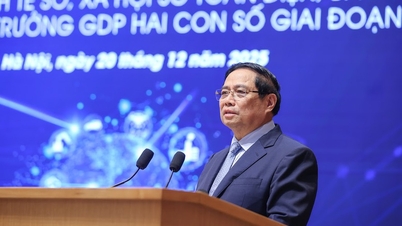
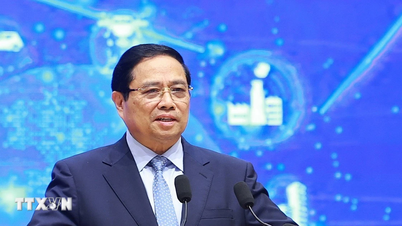
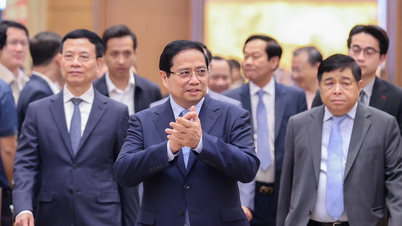
On the afternoon of December 18th, Prime Minister Pham Minh Chinh, Head of the Government Steering Committee on Science , Technology Development, Innovation, Digital Transformation and Project 06, chaired a conference to review the first year of implementing the Government's Action Program to implement Resolution No. 57-NQ/TW, the five-year implementation of the overall program for administrative reform of the State; and the four-year implementation of Project 06.
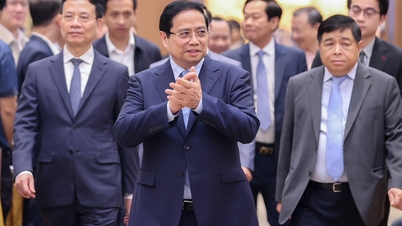
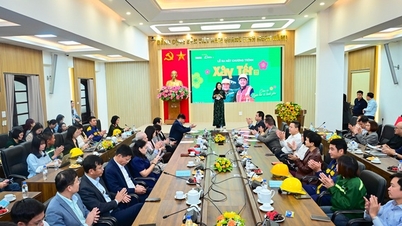
The conference was held in person at the Government Headquarters and online with 34 provinces and cities. Attendees included: Politburo member and Standing Deputy Prime Minister Nguyen Hoa Binh ; Deputy Prime Ministers Nguyen Chi Dung and Pham Thi Thanh Tra; leaders of central and local ministries, departments, and agencies; and representatives from training and research institutions, associations, corporations, and businesses in the field of science and technology.
Bringing tangible benefits to people and businesses.
The conference assessed that, in the past period, leadership, direction, and management have been implemented decisively and synchronously with high determination and great effort from the central to the grassroots level.
The Prime Minister has established three inter-ministerial coordinating organizations: the National Committee on Digital Transformation, the Government's Steering Committee for Administrative Reform, and the Task Force for implementing the Prime Minister's Project 06.
To effectively implement Resolution No. 57 of the Politburo, the Prime Minister decided to establish the Government Steering Committee on the development of science, technology, innovation, digital transformation and Project 06.
The Prime Minister and government leaders have issued 23 telegrams, 18 directives, 196 notices of conclusions and guiding documents; organized 31 Steering Committee meetings and online conferences with localities. All ministries, sectors, and localities have established and strengthened Steering Committees at their respective agencies and units.
Over the past period, institutions, mechanisms, and policies related to the development of science and technology, innovation, digital transformation, and Project 06 have been focused on being revised, supplemented, and perfected to remove "bottlenecks" and unlock resources for development.
Specifically, during the 2021-2025 period, the Government submitted to the National Assembly for consideration and approval 28 draft laws and 1 resolution to create breakthroughs in the development of science, technology, innovation, digital transformation, and Project 06; and issued 91 decrees implementing related laws.
Science, technology, innovation, and digital transformation have developed strongly and widely, spreading to almost all industries, fields, and aspects of life.
Vietnam has issued a list of 11 strategic technology groups and 35 strategic technology products; launched the Science, Technology, Innovation, Digital Transformation Initiative Portal and the science and technology exchange platform; and its innovation index consistently ranks among the top 50 countries.
Digital infrastructure has made a leap forward in capacity, technology, and quality with 5G coverage reaching nearly 59% of the population; Internet speeds have increased by 50 ranks, from around 60-70th in the world in 2020 to the top 20 in the world in 2025.
In 2025, the first National Data Center will be operational, and three additional submarine and terrestrial fiber optic cables will be put into operation, doubling international connectivity capacity compared to the end of 2020.
Digital government is being promoted; online public services are becoming increasingly sophisticated, shifting from a passive to a proactive approach in serving citizens and businesses based on data.
To date, the rate of online applications submitted through the entire process has reached 36.8%. Vietnam's e-Government Development Index in 2024 ranked 71st out of 193 countries, an increase of 15 places compared to 2020.
The digital economy has made remarkable progress, with the number of digital technology businesses increasing rapidly from 58,000 in 2020 to approximately 80,000 in 2025; the export value of digital technology products is estimated to reach US$172 billion in 2025, more than 1.7 times higher than in 2020; the scale of e-commerce is estimated to reach US$36 billion in 2025, three times higher than in 2020; cashless payments are becoming widespread from urban to rural areas; and tax management and electronic invoicing are being implemented decisively and effectively.
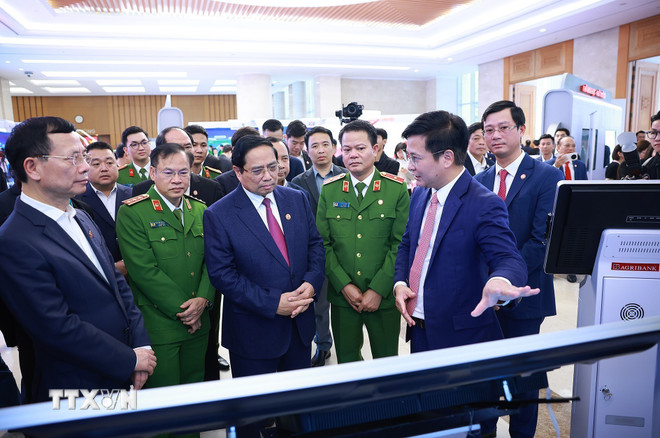
The implementation of Project 06 has been strongly promoted and spread, bringing practical benefits to people and businesses.
The national population database has proven highly effective, integrating 16 million data points from socio-political organizations; cleaning up 57.9 million land data points, 107 million civil registration data points, over 100 million insurance data points, and 35.08 million driver's license records…
The VNeID platform is a widely used digital tool serving citizens and businesses, with 100% of citizens being issued personal identification codes; 87 million chip-embedded citizen identity cards issued; 67 million VNeID accounts; and many utilities serving citizens and businesses integrated, such as finance, banking, education, and healthcare.
Administrative reform has been implemented decisively, synchronously, and extensively, closely linked with digital transformation and Project 06. In accordance with the Party's guidelines, the restructuring and streamlining of the government apparatus and the two-tiered local government system have been completed, coupled with the promotion of decentralization and delegation of power. The government apparatus now comprises 14 ministries and 3 ministerial-level agencies; the two-tiered local government system is gradually operating in an orderly manner, ensuring uniformity and smooth operation. Administrative procedure reform continues to be implemented decisively; during the 2021-2025 period, 3,241 administrative procedures and business conditions have been reduced and simplified.
However, the conference assessed that, in order to achieve the goals of digital transformation, administrative reform, and Project 06, there is still much work to be done; many obstacles and difficulties need to be overcome, and many tasks set out are behind schedule.
At the conference, leaders from central and local ministries and agencies engaged in in-depth discussions on: the "three-party" linkage in training high-quality human resources in the fields of science, technology, innovation, and digital transformation; institutional reform and improvement; experiences in administrative reform in the field of building and developing e-government and digital government at the grassroots level; the current state of administrative reform in the field of civil service reform and attracting high-quality human resources at the local level...
Concluding the conference, Prime Minister Pham Minh Chinh basically agreed with the report and the opinions expressed by the delegates; acknowledged, commended, and highly appreciated the efforts and achievements of the ministries, sectors, and localities; the decisive leadership of the members of the Steering Committee; and the solidarity, support, and active participation of the people and businesses, making important contributions to the development of science and technology, innovation, digital transformation, administrative reform, and Project 06 with an elevated mindset and more decisive actions, bringing practical benefits to the people and businesses; making an important contribution to the overall achievements of the country.
However, the Prime Minister also pointed out some shortcomings and limitations such as: Many targets have not been achieved; financial resources for science, technology, innovation, and digital transformation are not commensurate with the requirements; investment in research and development is much lower than the target of 2% of GDP; many tasks in programs, plans, and projects are behind schedule and have not shown clear progress; digital infrastructure does not meet the requirements and demands of practice; the deployment of national and specialized databases is still slow; the reduction and simplification of administrative procedures is still slow, only reaching 18%; the rate of providing full-process public services is still low; cybersecurity in many places is not given adequate attention and is not implemented decisively…
Promoting three strategic breakthroughs in digital institutions, digital infrastructure, and digital human resources.
Clearly identifying the causes of existing limitations and lessons learned in the development of science, technology, innovation, digital transformation, and Project 06; analyzing the global situation and future trends, the Prime Minister emphasized that, for Vietnam, breakthroughs in science, technology, innovation, digital transformation, and administrative reform are objective requirements, strategic choices, and priorities for investment; they are levers for restructuring the economy, increasing labor productivity, improving the efficiency of state management and national competitiveness, and are new growth drivers that play a crucial role in achieving double-digit economic growth in the coming period.
The Prime Minister emphasized that the development of science and technology, innovation, digital transformation, administrative reform, and Project 06 must be implemented decisively, comprehensively, synchronously, flexibly, promptly, and effectively, creating many breakthroughs so that Vietnam can catch up, keep pace with, and surpass the region and the world in the spirit of "substantive and effective administrative reform; strong implementation of Project 06; and comprehensive and nationwide development of science and technology, innovation, and digital transformation across all sectors."
Noting the need to accelerate the three strategic digital breakthroughs—digital institutions, digital infrastructure, and digital human resources—Prime Minister Pham Minh Chinh emphasized that science, technology, innovation, administrative reform, digital transformation, and Project 06 must be closely linked to the revolution in streamlining the apparatus; strongly reforming leadership, direction, and management methods, as well as working styles and practices, towards a scientific, professional, and modern approach with the motto "Streamlined apparatus - Connected data - Smart governance."
Regarding future tasks and solutions, the Prime Minister requested that the heads of ministries, sectors, and localities focus on decisive leadership, prioritizing the timely and adequate allocation of resources to complete the tasks assigned by the Central Steering Committee and the Government Steering Committee as soon as possible, ensuring progress and quality; effectively utilize the role of the Working Groups assisting the Government Steering Committee in establishing working groups to supervise, guide, and summarize difficulties and obstacles arising during implementation, and promptly report to the Government and the Prime Minister for definitive resolution.
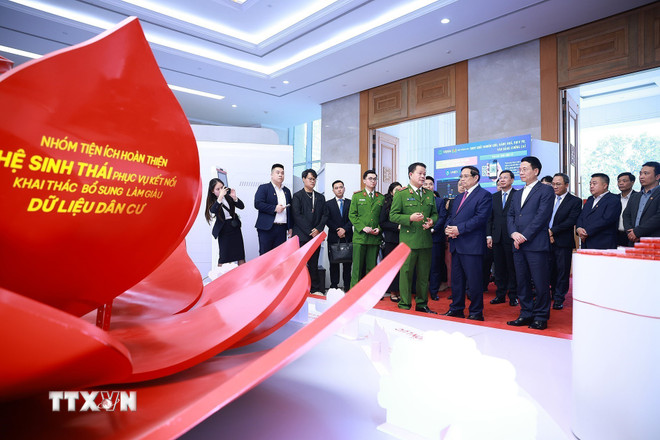
Regarding the improvement of institutions, mechanisms, and policies, the Prime Minister emphasized that ministries and agencies should promptly develop and finalize detailed regulations and guidelines for the implementation of laws passed by the National Assembly at its 9th and 10th sessions of the 15th National Assembly; and accelerate the review, development, amendment, and supplementation of relevant legal documents.
In this context, the Ministry of Science and Technology is focusing on developing and submitting to the Government, and then to the National Assembly, the Law amending and supplementing a number of articles of the Law on Measurement and the Law on Postal Services (amended).
The Ministry of Public Security is developing and submitting to the Government a Decree regulating the organization and operation of the National Data Center; and developing a Program for implementing Project 06 for the period 2026-2030. The Ministry of Interior is developing a Plan of key activities for state administrative reform for the period 2026-2030, focusing on administrative procedure reform, and submitting it to the Prime Minister for promulgation.
The Prime Minister has assigned the Ministry of Science and Technology to task enterprises, science and technology organizations, universities, and research institutes with developing strategic technology products listed in the Strategic Technology Catalogue, and to report to the Prime Minister; and to draft a Prime Minister's decision approving the overall plan for the development of nuclear power infrastructure.
Regarding national digital transformation and the implementation of Project 06, the Prime Minister requested ministries, sectors, and localities to urgently coordinate with the Ministry of Public Security to register and utilize centralized infrastructure at the National Data Center; the Ministry of Public Security is responsible for proposing plans for building new National Data Centers according to the roadmap.
The Prime Minister requested accelerated development of telecommunications infrastructure, expansion of broadband 5G coverage, Starlink satellite internet, and planning of power and green energy infrastructure for data centers; acceleration of data review and classification, development of a roadmap for completing and immediately putting into use databases, especially the 12 key databases; and urgent deployment of the VNeID platform to become a national digital tool serving citizens and businesses.
Directing the development of online public services and the reduction and simplification of administrative procedures, the Prime Minister requested that information on the comprehensive standardization of administrative procedures be publicly disclosed through mass media, thoroughly utilizing data from national databases to replace paper documents; and uniformly applying data fields to replace paper documents in administrative procedure files. The Ministry of Justice, in coordination with other ministries and agencies, is to urgently review and standardize administrative procedures and files at all levels, compile reports, and submit them to the competent authorities.
Directing solutions to ensure cybersecurity, secure funding, and develop human resources, Prime Minister Pham Minh Chinh stated that the Government is committed to always creating, supporting, and removing all bottlenecks in institutions, infrastructure, and human resources so that science, technology, innovation, digital transformation, and administrative reform truly become new drivers of growth.
The Prime Minister called on the technology business community to uphold the national spirit, dare to think big, act big, and be pioneers in mastering core technologies, bringing Vietnamese intelligence to the world stage; and for every citizen to proactively become civilized "digital citizens," actively learning and improving digital skills to master the future and work together to build a strong, prosperous, and happy Vietnam.
At the conference, collectives and individuals with outstanding achievements in administrative reform during the 2021-2025 period and in the implementation of Project 06 during the 2022-2025 period were awarded prestigious honors by the Party, the State, and the Prime Minister, including various types of medals and certificates of merit from the Prime Minister.
Source: https://www.vietnamplus.vn/thu-tuong-moi-nguoi-dan-hay-chu-dong-tro-thanh-nhung-cong-dan-so-post1083858.vnp


![[Photo] Prime Minister Pham Minh Chinh attends the Conference on the Implementation of Tasks for 2026 of the Industry and Trade Sector](/_next/image?url=https%3A%2F%2Fvphoto.vietnam.vn%2Fthumb%2F1200x675%2Fvietnam%2Fresource%2FIMAGE%2F2025%2F12%2F19%2F1766159500458_ndo_br_shared31-jpg.webp&w=3840&q=75)






























































































Comment (0)