


Strengthening the linkages between FDI and domestic enterprises is considered an urgent requirement in the 2026-2030 period, helping Vietnam enhance its competitiveness and participate more deeply in global value chains.
According to data from the Foreign Investment Agency ( Ministry of Finance ), as of the end of April 2026, Vietnam had 46,534 active foreign direct investment (FDI) projects, with a total registered capital of over US$543.1 billion. The cumulative implemented capital of these foreign investment projects reached US$357.641 billion, equivalent to approximately 65.8% of the total registered active investment capital.
According to the Ministry of Finance, investors have currently invested in 19 out of 22 sectors in Vietnam's national economic classification system. Of these, the manufacturing industry accounts for the highest proportion with nearly US$334.8 billion, representing 61.6% of total investment. This is followed by the real estate business with over US$80.6 billion, accounting for 14.9% of total investment; and electricity production and distribution with over US$44.9 billion, accounting for 8.3% of total investment.
According to Mr. Hoang Van Cuong, Vice President of the Vietnam Economic Science Association, after nearly 40 years of reform, the FDI sector has become an important part of the Vietnamese economy, contributing approximately 20% of GDP, over 70% of export turnover, and creating direct jobs for millions of workers.
Many large technology and industrial corporations worldwide have chosen Vietnam as a strategic production base, contributing to the promotion of industrialization, modernization, and international integration; at the same time, strengthening the linkages between FDI and domestic enterprises will help increase the spillover effects of foreign investment on the economy.
However, according to Mr. Hoang Van Cuong's assessment, the level of linkage between the FDI sector and domestic enterprises remains limited. This leads to a low localization rate in many industries and a small number of Vietnamese enterprises participating deeply in global value chains. Technology transfer and spillover effects to the domestic economy have not met expectations.
Sharing the view that the linkages between FDI enterprises and domestic enterprises are still limited, Mr. Nguyen Duc Hien, Deputy Head of the Central Strategic Policy Committee, stated that the weak linkages between the FDI sector and domestic enterprises limit the technology absorption capacity of Vietnamese businesses and affect the effectiveness of FDI attraction and the ability to spread and enhance the competitiveness of the Vietnamese economy. Therefore, strengthening the linkages between FDI and domestic enterprises should be considered a key solution in the new development phase.
Considering the lack of linkages between FDI enterprises and domestic businesses as one of the major limitations in attracting FDI today, Mr. Ho Sy Hung, Chairman of the Vietnam Chamber of Commerce and Industry (VCCI), believes that the world is entering a period of profound transformation with many geopolitical changes, technological competition, and demands for sustainable development. In this context, multinational corporations are not only seeking new production locations but also prioritizing ecosystems that are adaptable, transparent, and sustainable.
According to experts, in the context of Vietnam prioritizing high-tech FDI projects, foundational industries, as well as renewable energy, green economy, and circular economy sectors, while simultaneously screening and restricting projects that consume resources, pollute the environment, or have low added value, it is necessary to develop specific, superior incentive policies and separate procedures. Strengthening the linkages between FDI and domestic enterprises will also be a crucial condition for Vietnam to improve the quality of foreign investment flows.
In this context, to attract high-quality FDI, Mr. Ho Sy Hung believes that Vietnam cannot rely solely on low costs but needs to enhance the endogenous capacity of its economy. This requires focusing on building linkages between foreign and domestic businesses, and one of the solutions that needs to be implemented is developing domestic businesses, especially supporting industries, to meet the quality, technology, and management standards of foreign partners.
For domestic businesses to shift from a "participation" mindset to an "enhancement" mindset in the value chain, Vietnamese businesses need to gradually master technology and participate in high value-added stages such as design, research and development (R&D), and innovation, thereby strengthening the linkages between FDI and domestic businesses in a more substantive and sustainable way.
Mr. Nguyen Duc Hien also stated that, in order to attract a new generation of FDI, Vietnam needs to "organically integrate FDI enterprises with the domestic economic ecosystem." To achieve this, it is necessary to focus on strongly developing supporting industries, enhancing the capacity of domestic enterprises, and designing appropriate mechanisms to promote technology transfer and connect supply chains with FDI enterprises. The goal is to form value chains in which Vietnamese enterprises participate more deeply and substantially.
Furthermore, it is necessary to continue implementing substantive institutional reforms, creating a transparent, stable, and highly competitive investment environment, and developing high-quality human resources – a crucial factor in attracting a new generation of FDI. This also forms the foundation for strengthening the long-term linkages between FDI and domestic enterprises.
Vietnam will shift from its advantage of "low-cost labor" to "high-quality human resources." In particular, during the period 2026-2030, focus should be placed on implementing large-scale, highly interconnected infrastructure projects such as completing the North-South expressway, constructing high-speed rail lines and international intermodal railways, bringing Long Thanh International Airport into operation, and upgrading the port and logistics system to a modern standard.
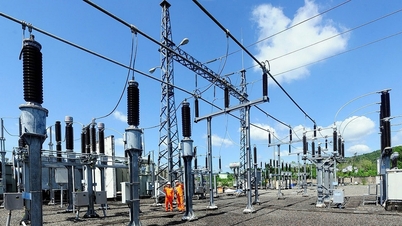
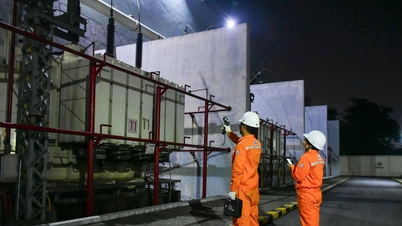
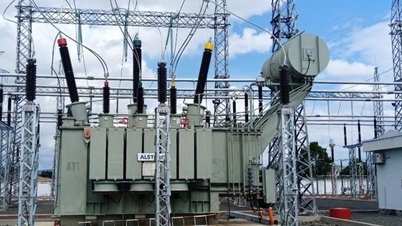
Simultaneously, there will be a strong focus on developing energy infrastructure, especially renewable energy and LNG infrastructure, to ensure a stable electricity supply for large-scale production. Digital infrastructure will also be prioritized with the popularization of 5G, the development of data centers and digital platforms, creating a foundation for the digital economy and attracting high-tech FDI; at the same time, supporting the strengthening of linkages between FDI and domestic businesses in new supply chains.
Source: https://baotintuc.vn/kinh-te/thuc-day-lien-ket-fdi-trong-giai-doan-moi-20260602081403950.htm




![[Photo] General Secretary and President To Lam presides over a meeting on preparations for the review of one year of operation of the three-tiered government system.](https://vphoto.vietnam.vn/thumb/1200x675/vietnam/resource/IMAGE/2026/06/02/1780391821195_a1-bnd-4595-9717-jpg.webp)

![Transforming from Resolution 57: [Part 2] Businesses Lead the Way](https://vphoto.vietnam.vn/thumb/402x226/vietnam/resource/IMAGE/2026/06/02/1780399668663_5332-dsc09931-2-235637_295-235639.jpeg)























































Comment (0)