

 |
| Officials at the Dien Hong Ward Public Administrative Service Center, Ho Chi Minh City, assist citizens in obtaining queue numbers and completing administrative procedures. Photo: Vu Phuong |
According to Comrade Nguyen Thanh Xuan, Deputy Secretary of the Party Committee of the People's Committee of Ho Chi Minh City, the study and emulation of Ho Chi Minh's ideology, ethics, and style throughout the Party Committee has become increasingly profound and substantive. Many contents have been concretized through projects and tasks related to administrative reform, digital transformation, and improving the quality of service to the people. It is noteworthy that among the 168 collectives and individuals commended this year, many do not hold prominent positions but are crucial "links" in ensuring the smooth operation of the system. These include officials directly handling administrative documents, young Party members participating in data digitization, and civil servants persistently resolving difficult issues during the restructuring of the administrative apparatus.
The image of veteran Party members receiving the 45-year and 55-year Party membership badges at the ceremony also evoked much reflection on the continuity of responsibility between generations of cadres and Party members. People's Teacher, Professor, Doctor Hoang Tu Hung, Head of the Department of Basic Dentistry, Faculty of Dentistry, Hong Bang International University, believes that one of the great lessons from President Ho Chi Minh is knowing how to seize opportunities to act at the right time. Decisive action is necessary, but it must be guided by correct thinking. Thorough consideration is needed to determine the right direction and then achieve the set goals. After nearly a year of operating the two-tiered local government model (from July 1, 2025), Ho Chi Minh City is entering a phase that demands a more streamlined but more efficient administrative apparatus. Along with that, the criteria for evaluating cadres will also be based on the effectiveness of serving the people, the ability to handle work effectively, and the spirit of taking responsibility.
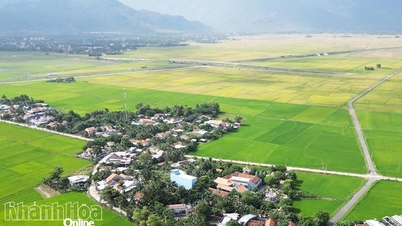
The situation in Tan Nhut commune clearly demonstrates this change. By the end of the first quarter of 2026, Tan Nhut commune had processed over 6,200 applications, with both on-time and online application rates reaching nearly 99.5%. The locality has implemented a model to support people in using online public services directly at the hamlet office, instead of concentrating them at the commune People's Committee headquarters. Local officials, youth union members, and community digital technology teams directly guide people in using digital platforms, from logging into VNeID accounts to submitting applications online. As a result, many elderly people or unskilled laborers who were previously hesitant about technology can now proactively carry out administrative procedures right in their place of residence.
From the perspective of the younger generation, Comrade Pham Bich Tram, Secretary of the Youth Union of the Faculty of Creative Communication, Nguyen Tat Thanh University, believes that learning from and following President Ho Chi Minh's example today must begin with a sense of responsibility in daily work. In the context of Ho Chi Minh City's accelerated administrative reform and digital transformation, young people need to play a pioneering role, enhance their professional skills, political acumen, and dedication to better serve the people.
Source: https://www.qdnd.vn/chinh-polit/cac-van-de/thuoc-do-pham-chat-nang-luc-can-bo-1042355





































































Comment (0)