

Speaking at the rally "Responding to the National Hygiene Day to improve public health in 2023 – For a healthy and sustainable Vietnam" on June 30th, Deputy Minister of Health Nguyen Thi Lien Huong stated that, recognizing the importance of hygiene in disease prevention and control, the Government issued Directive No. 29 in 2012 to implement the National Hygiene Movement to improve public health.
After 10 years of implementation, the Movement has received attention and guidance from all levels of government; the coordination of departments, organizations, and socio -political organizations from the central to local levels has created a positive effect and ensured its sustainability.
As a result, the work related to clean water, personal hygiene, environmental hygiene, disease prevention and control, food safety and hygiene, occupational hygiene, hygiene in medical facilities, and hygiene in educational institutions has been gradually improved.
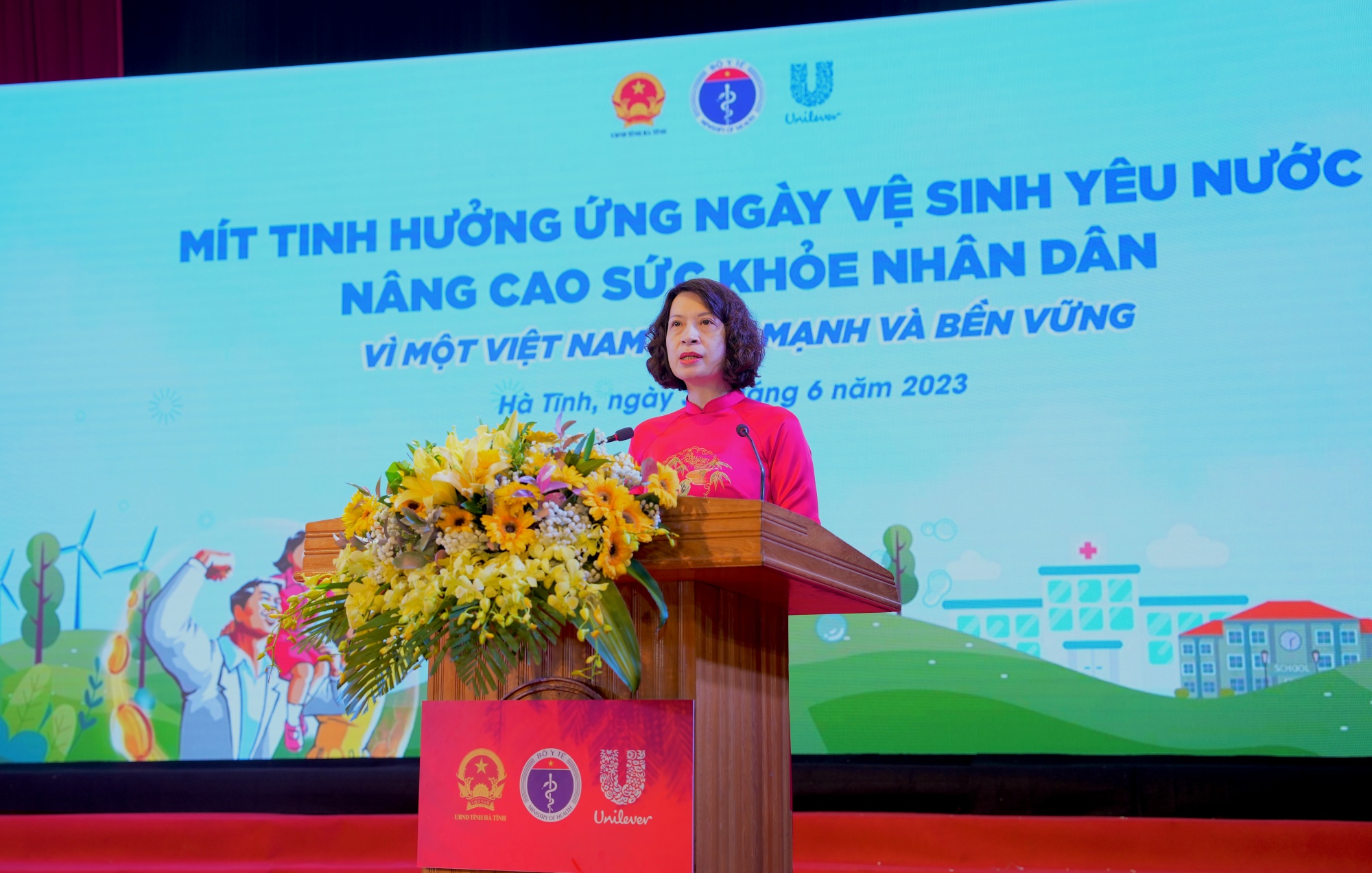
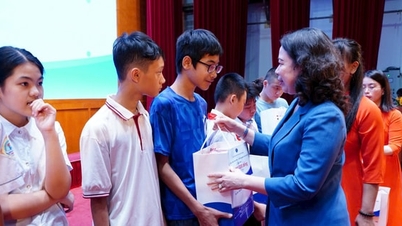
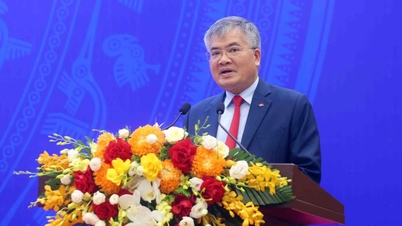
Deputy Minister of Health Nguyen Thi Lien Huong delivered a speech at the ceremony.
The main results achieved by the movement are: 100% of provinces/cities annually develop plans and organize the implementation of the movement; the percentage of people maintaining the habit of washing hands with soap has doubled compared to 2012; the percentage of rural households with toilets increased from 79% (2012) to 97% (2022);
The percentage of rural households with hygienic toilets increased from 57% (2012) to 80.1% (2022); the percentage of urban residents with access to clean water increased by nearly 14% from 78.5% in 2012 to 92% in 2022;
The percentage of rural households using safe water increased by 12.5%, from 80% in 2012 to 92.5% in 2022; the percentage of health stations with clean water and hygienic toilets improved significantly from 84.2% in 2012 to 96% in 2019; school hygiene conditions improved, ensuring sufficient drinking water, water for daily use, and hygienic sanitation facilities; food poisoning incidents are under control, with a significant reduction in the number of cases, illnesses, and deaths.
The effectiveness of the movement in changing personal hygiene and environmental sanitation behaviors, and improving sanitary conditions and clean water for people in the community, has contributed to a significant reduction in infectious diseases such as cholera, dysentery, typhoid, diarrhea, hand, foot and mouth disease, dengue fever, encephalitis, influenza, etc.
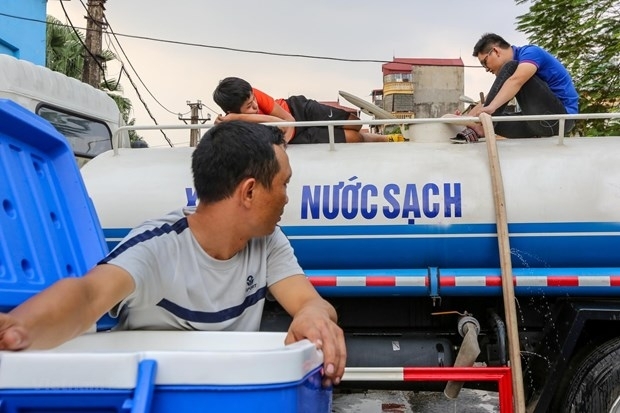
Improving sanitation and access to clean water for people in the community has significantly contributed to a reduction in infectious diseases.
The H5N1 avian influenza outbreak has also been well controlled in the last 10 years, and Vietnam is recognized as one of the most successful countries in controlling H5N1 influenza.
In the last 10 years, no cases of cholera have been recorded. As of 2022, diarrhea cases have decreased fivefold, bacillary dysentery by 17 times, typhoid fever by 2 times, encephalitis by 4 times, and hand, foot, and mouth disease by 2 times compared to 2012.
The Deputy Minister of Health emphasized, "During the recent Covid-19 pandemic, personal hygiene and environmental sanitation were affirmed as key solutions contributing to the rapid control of the disease."
The achievements of preventive healthcare and the patriotic hygiene movement in improving people's health, in addition to directly reducing the incidence of disease, mortality, and sequelae for patients, also indirectly contribute to reducing the number of hospitalizations, lowering treatment and healthcare costs, and reducing the time and effort of family members caring for patients, thereby creating positive impacts not only on individuals but also on the community.
Despite achieving many successes, we are currently facing numerous difficulties and challenges. According to the World Health Organization, in 2023 and 2024, the El Niño phenomenon could increase the transmission of dengue fever and other mosquito-borne infectious diseases.
Environmental pollution, climate change, urbanization, and rapid population growth are factors that cause some emerging and re-emerging diseases to tend to re-emerge, directly impacting people's health.
The Deputy Minister also requested that ministries, government agencies at all levels, and socio-political organizations proactively develop plans for the Patriotic Sanitation Movement for the period up to 2030 and annual plans, integrating the movement's activities into plans, programs, and projects to ensure the achievement of the objectives of relevant national target programs.
Strengthen investment and socialize the mobilization of resources from organizations, businesses, collectives, individuals, households, and domestic and foreign organizations.
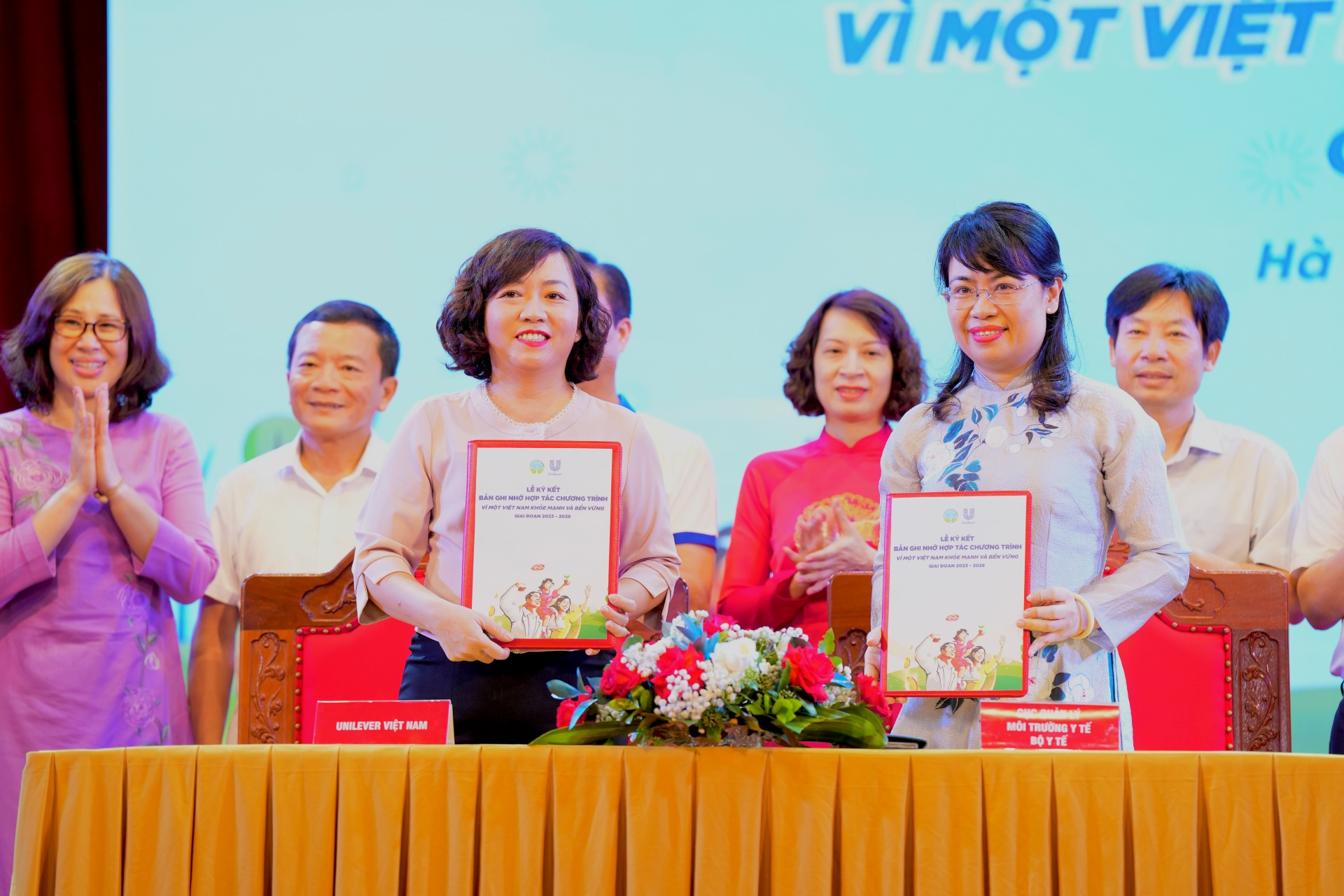
The program for a healthy and sustainable Vietnam in the period 2023-2028 has many key tasks.
Strengthen propaganda and mobilize people, departments, organizations, and students to participate in environmental sanitation campaigns, personal hygiene, and the use of clean water to prevent diseases; actively coordinate with the health sector in carrying out campaigns to eliminate mosquito larvae and pupae to prevent dengue fever.
The diverse activities in response to the National Hygiene Day for improving public health in 2023 include: Organizing a rally with the theme "For a healthy and sustainable Vietnam";
Organize communication activities such as: Hanging banners, posters, and slogans promoting hygiene and disease prevention; showcasing the achievements of the health sector in implementing the patriotic hygiene movement to improve public health...
Within the framework of the ceremony, a memorandum of cooperation was signed between the Department of Environmental Health Management (Ministry of Health) and Unilever Vietnam for the "For a Healthy and Sustainable Vietnam" program for the period 2023-2028, with many key tasks. The cooperation program is expected to contribute to raising awareness and improving hygiene and health conditions for the people, while building a sustainable healthcare environment in Vietnam .
Source


![[Image] Nearly 125,000 Hanoi students completed the Literature exam for the 10th grade entrance exam.](https://vphoto.vietnam.vn/thumb/1200x675/vietnam/resource/IMAGE/2026/05/30/1780117233041_ndo_br_thiet-ke-chua-co-ten-2-png.webp)









































































Comment (0)