


Deposit interest rates are heating up.
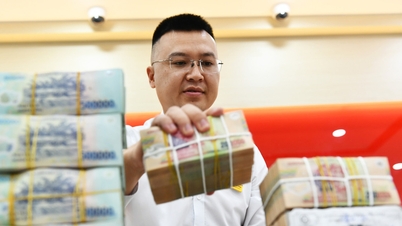
Deposit interest rates began to change from the beginning of 2026 and became more pronounced in the following months. While at the beginning of the year, many banks listed 12-month terms at around 6-6.5% per year, by the end of March 2026, the common rate had risen to 7-8% per year.
A survey conducted at several banks on April 1, 2026, revealed a clear differentiation between groups. At BIDV , the interest rate for a 12-month term fluctuated around 5.3 - 5.5% per year, an increase of approximately 0.2% per year compared to the end of 2025. Vietcombank and VietinBank also offered rates of 5.2 - 5.4% per year, a slight increase compared to before.
Meanwhile, joint-stock commercial banks made more significant adjustments. Sacombank listed interest rates for 12-month deposits at around 7.2 - 7.6%/year, an increase of about 0.7 - 1%/year compared to the end of 2025. Bac A Bank applied rates of around 7.5 - 7.9%/year, while some smaller banks listed rates above 8%/year for large deposits or long terms. For 6-month deposits, interest rates at many banks ranged from 4.5 - 6.5%/year, about 0.5%/year higher than at the end of 2025.
The increase wasn't huge, but it occurred across the board, more noticeably in medium and long-term maturities. However, compared to the 2022-2023 period, current interest rates remain low. At the end of 2022, many banks offered 12-month deposits at around 8-9% per year, with some approaching 9.5% per year for large sums; 6-month deposits also occasionally exceeded 6% per year.
Currently, the common interest rate for 12-month terms is 7-8% per year, while 6-month terms mainly range from 4.5-6.5% per year. The rate of increase has also changed, no longer rapid but slower and gradual.
According to Mr. Tran Van Hung, residing in Thanh Dong ward, current interest rates are not really high, especially compared to the end of 2022. "However, in the current context, with investment channels like gold and real estate still experiencing many fluctuations, depositing money in the bank remains a safe way to protect idle funds," Mr. Hung stated.
The data clearly reflects this trend. By the end of March 2026, the total mobilized capital in Hai Phong reached approximately VND 662,018 billion, an increase of nearly 2% compared to the end of 2025. While there is a tendency for money to flow back into banks, this has not yet created a clear "wave," mainly representing a redistribution among investment channels.
According to observations at several banks in the area such as Sacombank, Bac A Bank, and Techcombank, people's savings deposits tend to increase, but are often divided into smaller amounts across multiple terms. Ms. Pham Thi Van Anh, Director of Bac A Bank Hai Duong branch, said: "Many customers divide their money into two amounts, one for short-term deposits as a precaution, and the other for longer-term deposits to earn higher interest."
There is not much room to raise interest rates.

This interest rate adjustment is linked to capital pressure within the banking system. According to the Vietnam Banking Association, by the end of February 2026, credit growth is projected at approximately 1.4%, while deposits are expected to increase by only 0.36% compared to the end of the previous year. In Region 6 (Hai Phong and Quang Ninh), outstanding credit is estimated to reach over VND 756,000 billion by the end of March 2026, an increase of approximately 3.4% compared to the end of 2025. In Hai Phong alone, outstanding credit is expected to reach nearly VND 524,000 billion, an increase of over 3%, higher than the increase in deposits (approximately 2%).
When credit grows faster than deposits, raising interest rates to retain funds is unavoidable. However, the current context is different from the 2022-2023 period, when interest rates increased under multiple pressures: high inflation, volatile exchange rates, tight monetary policy, while the bond and real estate markets faced difficulties, causing demand for capital to surge into banks. System liquidity was at times strained, forcing banks to compete fiercely to retain deposits.
Currently, liquidity remains secure and is being managed in a stable manner to support growth. This interest rate increase is a corrective measure, aimed at meeting credit demand and retaining capital in a context where other investment channels are still competitive.
The outlook for deposit interest rates in the second half of 2026 therefore largely depends on credit and deposit trends. The gap between these two indicators in the early months of the year shows that capital pressure remains present. If credit continues to grow faster than deposits, interest rates may inch up for some maturities, especially medium and long-term.
However, many banking experts believe there is not much room for further increases. The State Bank of Vietnam continues to manage interest rates in a way that stabilizes the overall level to support economic growth, while also requiring credit institutions to control capital costs.
The market also shows clear differentiation. Large banks maintain lower interest rates due to their cost of capital advantage, while smaller banks have to maintain higher rates to remain competitive. High interest rates may appear in some areas, but are unlikely to become a general trend.
Interest rates may be rising, but money isn't fully flowing back into banks yet. Depositors tend to diversify their funds across channels, waiting for clearer signals in the short term.
HA KIENSource: https://baohaiphong.vn/tien-gui-len-gia-539743.html
































































































Comment (0)