Scientists in this country are offering a glimmer of hope to patients suffering from glioblastoma, one of the deadliest cancers known to medicine.
This type of cancer rarely gives patients a chance of surviving beyond a few months and is being diagnosed in approximately 1,000 Canadians each year.
Published in The Lancet Oncology, this study followed 34 people with glioblastoma, including 14 patients treated at Toronto's Sunnybrook Health Sciences Centre.
Research has found that a new technique using microbubbles, activated by focused ultrasound waves to temporarily open the brain's protective barrier, allows chemotherapy to penetrate tumor areas more effectively.
Patients lived nearly 40% longer – an average survival time of over 31 months, compared to about 19 months in the group treated with standard therapy.
Dr. Nir Lipsman, a neurosurgeon and director of the Harquail Neuromodulation Center at Sunnybrook, said this is a condition that requires urgent treatment. The new treatment is quite safe and effective. This could be a starting point for thinking about the role of ultrasound in the care of these patients.
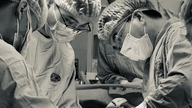
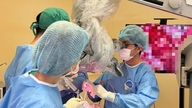
The study, conducted from 2018-2022 in Toronto and several locations in the US, tested a new method using six monthly ultrasound treatments over six months. Each time, patients received oral chemotherapy (temozolomide) for five days. On the day of the ultrasound, they were also injected with a substance containing microscopic bubbles. These bubbles vibrated when targeted by ultrasound waves and temporarily opened the blood-brain barrier, allowing the chemotherapy to pass through, around the tumor and surrounding tissues.
The results were remarkable: survival rates increased to over 30 months, compared to 19 months in the traditional treatment group. Some patients even survived for 4-5 years after treatment – an extremely rare outcome for glioblastoma.
Dr. Mary Jane Lim-Fat, a brain cancer specialist and scientist at Sunnybrook who participated in the study, said this is quite rare. While less than 5% of patients survive after five years, there are currently patients participating in the trial who are living past four or five years.
These patients were able to resume most daily activities without any difficulty, except for having to shave their heads for each of the six ultrasound treatments.
Dr. Lim-Fat said that finding a way to deliver drugs to the brain is a major challenge, and if successful, it could open the door to more trials and potentially bring us closer to more effective treatments.
The blood-brain barrier has long been one of the biggest obstacles in treating neurological diseases, protecting the brain from toxins, but also blocking many potentially life-saving drugs.
According to Dr. Lim-Fat, delivering drugs at concentrations sufficient to produce an effect is very difficult, as the brain is surrounded by the blood-brain barrier.
Those tiny bubbles are the key. After being injected, they circulate in the bloodstream. Focused ultrasound, transmitted under MRI guidance, causes the bubbles to vibrate precisely at the tumor site and its surrounding edges. That vibration opens the blood-brain barrier momentarily.
By "prying open" the barrier, even if only for a few minutes, chemotherapy can eventually enter the brain and circulate to where glioblastoma cells remain after surgery, around what doctors call the "border" and which is almost always the starting point for cancer recurrence.
The research team discovered that this technique not only allows chemotherapy to enter but also appears to allow key tumor markers to exit through a two-way door.
Dr. Lipsman said that things can get in, but they can also get out. In blood samples taken within 30 minutes of treatment, researchers found markers from the tumor, opening the door to the possibility of non-invasive blood biopsies to detect brain cancer, an extraordinary ability that allows doctors to track tumor genetics and predict who might respond to treatment. This means that ultrasound is being used not only as a treatment strategy but also as a diagnostic strategy, and that's truly unique.
Although promising, this therapy currently requires an MRI room—an expensive and limited resource. This means that only a small number of patients will have access if the therapy is approved.
Studies of the Canadian-made device could begin as early as next year. A smaller, temporary device – an improved cap, but still based on MRI – has already been used.
(VNA/Vietnam+)
Source: https://www.vietnamplus.vn/tin-vui-cho-cac-benh-nhan-u-nguyen-bao-than-kinh-dem-post1079665.vnp






![[Photo] Prime Minister Le Minh Hung presides over the thematic session on promoting science and technology development and innovation.](https://vphoto.vietnam.vn/thumb/1200x675/vietnam/resource/IMAGE/2026/06/23/1782207872934_ndo_br_dsc-1724-jpg.webp)













![[GALLERY] The 2027 Audi A3 debuts with a luxurious interior, priced from $36,300.](https://vphoto.vietnam.vn/thumb/402x226/vietnam/resource/IMAGE/2026/06/24/1782263942237_13-jpg.webp)