

1. How do push-ups help build muscle?
Push-ups are an exercise that uses primarily body weight to generate resistance, mainly targeting the chest, shoulders, triceps, abdominal muscles, and upper back. When performed correctly, multiple muscle groups work together to stabilize the body, thereby improving overall strength and motor control.
During the lowering and pushing motion, muscle fibers continuously contract and relax to generate force. When practiced regularly with appropriate intensity, the body adapts by increasing its load-bearing capacity, improving muscle endurance, and supporting the development of lean muscle mass. This is also why push-ups are often included in strength training and fitness programs.
In addition to strengthening muscles, push-ups also help improve cardiovascular endurance, increase bone density through weight-bearing exercises, and boost metabolism. For middle-aged and older adults, maintaining strength training exercises like push-ups also helps limit age-related muscle loss and reduce the risk of falls.
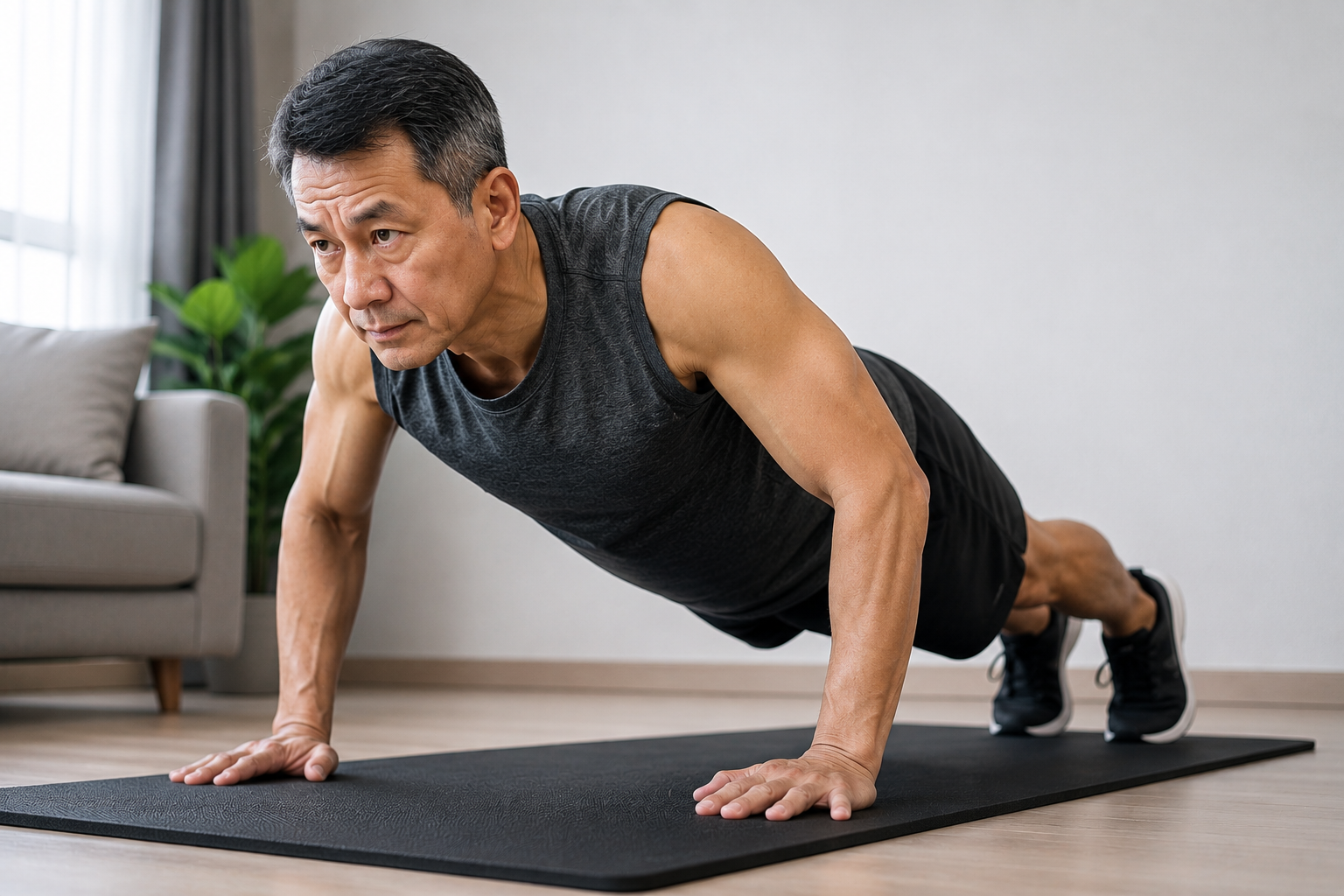
Push-ups are an exercise that uses primarily body weight to create resistance, mainly targeting the chest, shoulder, triceps, abdominal, and upper back muscles.
2. Factors affecting push-up effectiveness
2.1. Push-up rhythm
Many people have a habit of doing push-ups very quickly to complete many repetitions; however, this can reduce the effectiveness of muscle stimulation. According to Dr. Nguyen Trong Thuy (former doctor of the Vietnam National and U23 men's football teams), the important factor in push-ups is controlling the "time the muscles are under load".
When doing push-ups too quickly, the muscles don't have enough time to generate maximum force, while the shoulder and wrist joints are susceptible to sudden pressure. The exerciser should maintain a push-up rhythm according to the following ratio:
Lower yourself down in about 2-3 seconds.
- Hold briefly in the low position for about 0.5-1 second.
- Push yourself up in about 1 second.
This pace increases activity in the pectoralis major, triceps, and anterior deltoid muscles, while also improving movement control. Those who train at a steady pace tend to maintain better technique compared to those who push up too quickly or "drop" their bodies. Several recent studies have shown that controlled-speed training improves muscle strength better in beginners and middle-aged individuals, while reducing the risk of shoulder pain due to overuse.
2.2. Correct Technique
Speed is only effective when the exerciser maintains proper posture. Throughout the movement, the body needs to remain in a straight line from head to heel, similar to a plank position.
To do push-ups effectively and safely, keep the following in mind:
- Place your hands slightly wider than shoulder width apart.
- The fingers are naturally spread apart to distribute the force.
- Tighten your abdominal and gluteal muscles to stabilize your spine.
- Avoid arching your back or raising your hips too high.
- The elbows are slightly angled backward, about 30-45 degrees.
When lowering yourself down, your chest should move close to the floor but not touch it hard. You should inhale as you lower yourself and exhale as you push up to maintain a steady rhythm. If your body starts shaking, your shoulders lift, or you can't control the lowering speed, stop the set instead of trying to continue.
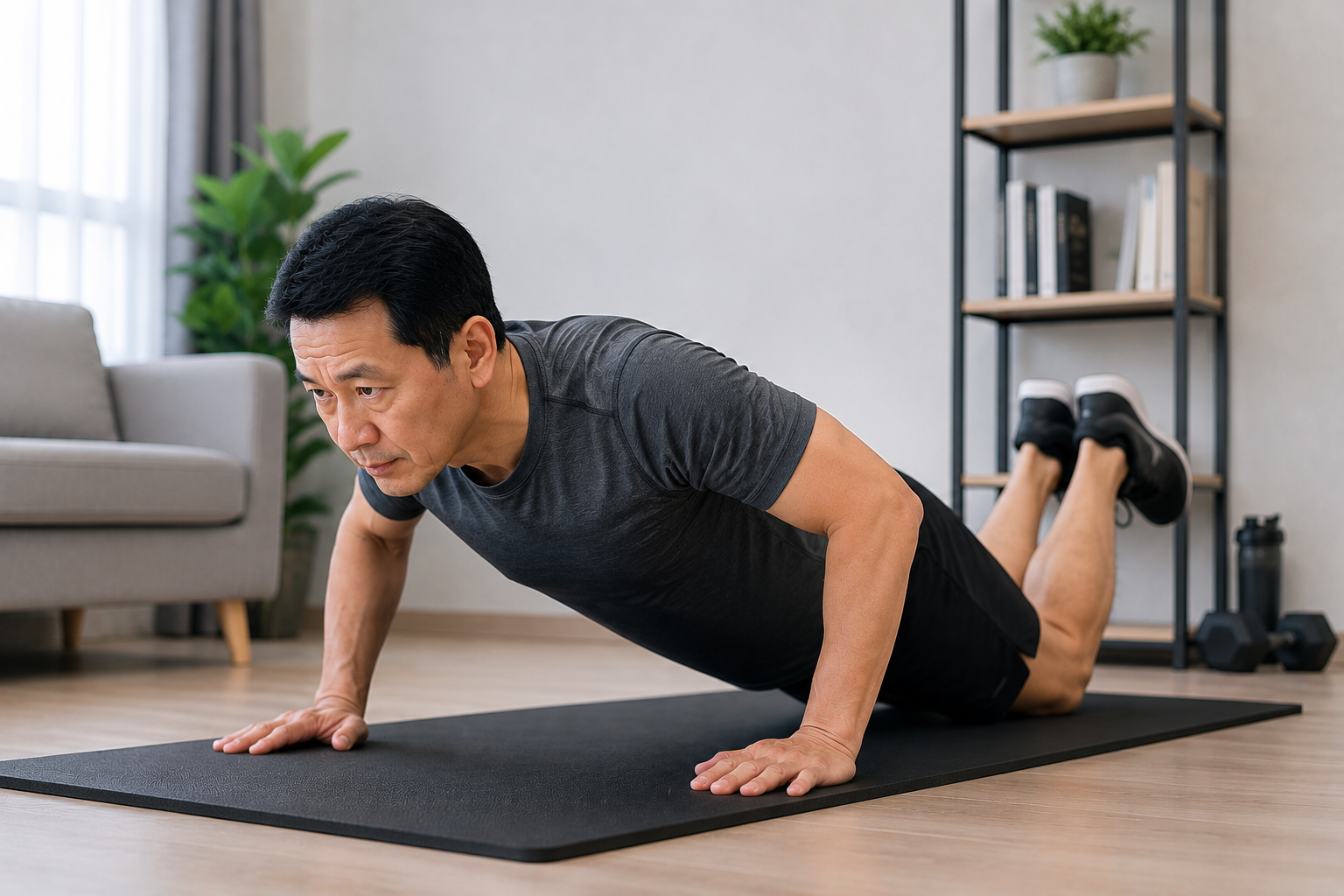
You can do push-ups on your knees to reduce the strain on your shoulders and arms.
3. How long should each set of push-ups last?
The duration of a push-up set depends on your training goals. With a standard rhythm of 2–3 seconds lowering and 1 second pushing up, each repetition typically lasts about 4 seconds.
So:
- Six push-ups, each lasting approximately 24 seconds.
- Ten push-ups should each last approximately 40 seconds.
- 12 push-ups lasting almost 1 minute.
Generally, a resistance time of 30-60 seconds per set is considered suitable for strength development and muscle growth in most general exercisers. Beginners should aim for 6-10 repetitions per set, maintaining 2-3 sets. Experienced individuals can increase this to 10-15 repetitions per set or incorporate more challenging variations instead of simply increasing speed.
To allow muscles to recover and grow, push-ups should be done 2-4 times per week, with at least 24-48 hours of rest between heavy workouts targeting the same muscle group. Trainees should gradually increase the load by increasing the number of repetitions, sets, or progressing to more challenging variations.
In addition, getting enough sleep, consuming sufficient protein, and maintaining full-body exercise also play an important role in the muscle recovery process.
4. Things to note when doing push-ups to avoid injury.
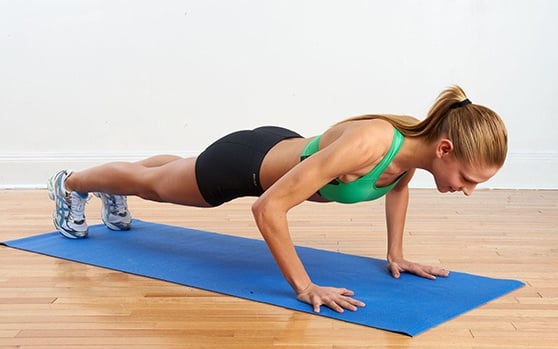
A common mistake is attempting standard push-ups when arm and shoulder muscles and body control aren't yet well-developed. This easily leads to incorrect technique and increases pressure on the shoulder, wrist, and lower back joints.
Beginners or those with limited arm strength can practice with easier variations such as:
- Perform push-ups on an inclined surface by placing your hands on a chair, the edge of a table, or a wall.
- Do push-ups on your knees to reduce strain on your shoulders and arms.
- Wall push-ups are suitable for older adults or those recovering from mobility issues.
As muscle strength improves, exercisers can gradually progress to classic push-ups or more advanced variations such as narrow-grip push-ups or high-knee push-ups. Additionally, hand placement affects the muscle groups targeted. Narrow-grip increases triceps and anterior deltoid activity, while wide-grip engages the chest muscles more. High-knee push-ups increase the load on the shoulders and upper chest.
Readers are invited to read more:
Source: https://suckhoedoisong.vn/toc-do-chong-day-anh-huong-the-nao-den-tang-co-169260521141240819.htm

![[Image] Hanoi's urban life under the challenge of a "scorching hot" environment](https://vphoto.vietnam.vn/thumb/1200x675/vietnam/resource/IMAGE/2026/05/25/1779706979265_nang-nong-t5-2026-minh-duy-7-4636-jpg.webp)


![[Image] Close-up view of the interchange connecting the two expressways and Long Thanh Airport.](https://vphoto.vietnam.vn/thumb/1200x675/vietnam/resource/IMAGE/2026/05/25/1779703378210_ndo_br_z7863716673926-224453a31600126cce10622af6290afd-4549-jpg.webp)































































































Comment (0)