

Ca Mau City - the southernmost urban area of Vietnam, was established on April 14, 1999, and in 2010 was recognized by the Prime Minister as a type II urban area directly under Ca Mau province (according to Decision No. 1373/QD-TTg dated August 6, 2010).
Prior to October 2024, the city was organized into 17 commune-level administrative units, including 10 wards (wards 1, 2, 4, 5, 6, 7, 8, 9, Tan Thanh, Tan Xuyen) and 7 communes (Hoa Tan, Hoa Thanh, Dinh Binh, Tan Thanh, Ly Van Lam, Tac Van, An Xuyen).
On October 24, 2024, the Standing Committee of the National Assembly issued Resolution No. 1252/NQ-UBTVQH15 on the rearrangement of commune-level administrative units in Ca Mau province for the period 2023-2025. Accordingly, Ca Mau City now has 16 commune-level administrative units (including 9 wards and 7 communes), with Ward 2 and Ward 4 being merged into the new Ward 2, and some other administrative boundaries also being adjusted to suit the actual situation and urban development plan.
The city Party Committee currently has 59 grassroots Party organizations with a total of 8,916 Party members, operating in various forms, clearly reflecting its role as the core of comprehensive leadership in the area.
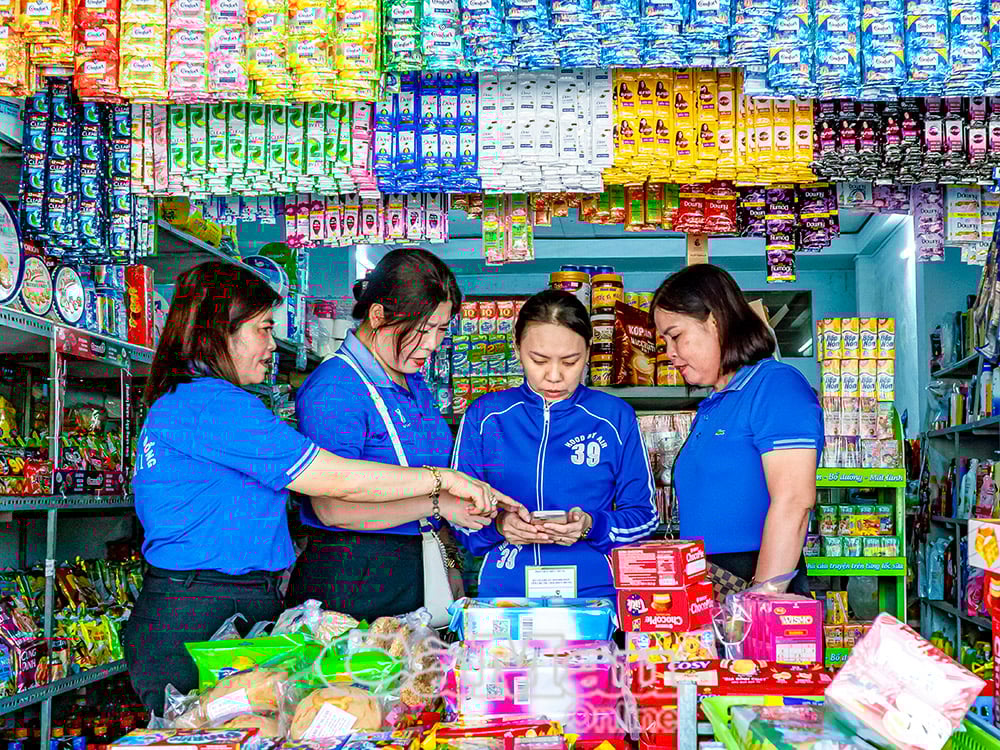
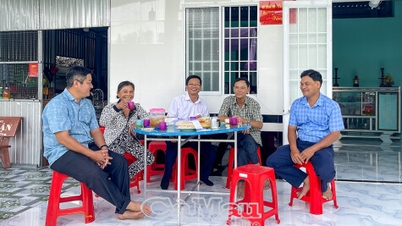
The Community Digital Technology Team of Hamlet 6, Ward 1, is promoting the use of convenient payment methods on mobile apps among business owners, shortening transaction times.
The economic growth rate in 2024 reached 9.63%. The economic structure shifted in the right direction: services accounted for 64.02%, industry and construction 32.28%, and agriculture 3.59%. Per capita income reached approximately 123 million VND/person/year. The trade and service sector continued to play a leading role, with the network of supermarkets, shopping centers, and traditional markets being upgraded. Services such as logistics, banking, telecommunications, and transportation are increasingly developing in a modern direction, effectively meeting the needs of people and businesses. Many new business models applying digital technology have emerged, promoting digital transformation in trade.
Urban space is expanding, and the transportation system is becoming more integrated. Many key projects have been completed and put into use, contributing to changing the city's appearance. By 2024, 7 out of 9 wards in the city will have met the standards of a civilized urban area. Resource and environmental management is regularly given attention, aiming for sustainable and modern development.
The city completed its rural development program in 2020, and currently has 3 communes that have achieved advanced rural development standards. The OCOP program has achieved many positive results, with 37 products from 19 entities recognized (12 products achieving 4-star standard, and 25 products achieving 3-star standard).
The school system has been streamlined and rationally organized, with 56 out of 69 schools meeting national standards. Health insurance coverage has reached 93.5% of the population. Cultural and sports activities are vibrant, and the people's spiritual lives are increasingly improving. Poverty reduction efforts have been effective, with the poverty rate decreasing to 0.13%. In particular, the program to eliminate temporary and dilapidated houses has completed support for 137 houses, ensuring that the assistance reaches the intended beneficiaries and is completed on schedule, with a total budget of over 7.9 billion VND, including significant contributions from social mobilization. This is a political task with profound humanitarian significance, demonstrating the spirit of "leaving no one behind," contributing to improving the quality of life, ensuring social security, and building increasingly modern and sustainable urban and rural landscapes.
The city has performed well in local defense work, conducting regional defense exercises, and achieving 100% of its recruitment and conscription targets. The "All People Protect National Security" movement has been strengthened, contributing to maintaining security, order, and social safety.
Party building and the political system are given special importance. The apparatus is streamlined, effective, and efficient; the quality of cadres is constantly improving. The City Party Committee has implemented many innovative organizational models, such as merging the Propaganda and Mass Mobilization Departments, merging Party branches of Front and mass organizations, and transforming Party branches of high schools into directly affiliated grassroots Party committees.
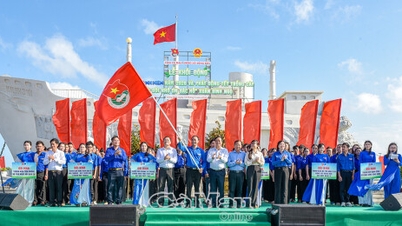
The Fatherland Front and political and social organizations of the city have continuously innovated the content and methods of their activities, focusing strongly on the grassroots level and caring for the legitimate rights and interests of their members and the people. Many patriotic emulation movements and major campaigns have been effectively implemented. The Fatherland Front and these organizations serve as a solid bridge between the Party, the government, and the people, contributing to consolidating national unity, maintaining political stability, and promoting sustainable socio-economic development.

A new look for the shores of Van Thuy Lake, Ward 5.
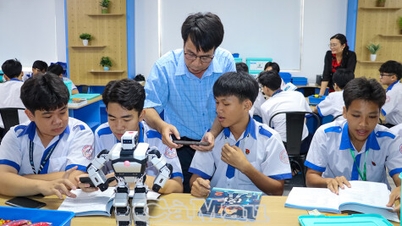
Administrative reform coupled with digital transformation has been identified by Ca Mau City as a key and ongoing task. The city is promoting the application of information technology in management and administration; effectively implementing the modern "one-stop shop" and "integrated one-stop shop" models; and improving the quality of service for citizens and businesses. The development of a digital government is being carried out in parallel with the development of the digital economy and digital society, gradually forming a modern, transparent, effective, and efficient administrative system. At the same time, the city is actively implementing digital transformation models in education, healthcare, and agriculture, contributing to improving the quality of life, enhancing the investment environment, and promoting sustainable socio-economic development.
Mr. Le Hoang Phuong, Permanent Deputy Secretary of the City Party Committee and Chairman of the People's Council of Ca Mau City, affirmed: "The past ten years have been a period of strong breakthroughs for Ca Mau City in all fields, demonstrating the unity, consensus, and high determination of the entire political system and all strata of the people."
“With a solid foundation already built, along with confidence, consensus, and a determination to innovate, Ca Mau City will continue to move steadily forward on the path of urban construction and development, becoming a green, smart, and modern city – worthy of being the political, administrative, economic, cultural, educational, and scientific-technical center of Ca Mau province and the Mekong Delta region,” Mr. Tran Hong Quan, Secretary of the City Party Committee, confidently stated.
Nhat Minh
Source: https://baocamau.vn/tp-ca-mau-dau-an-chang-duong-but-pha-a39457.html
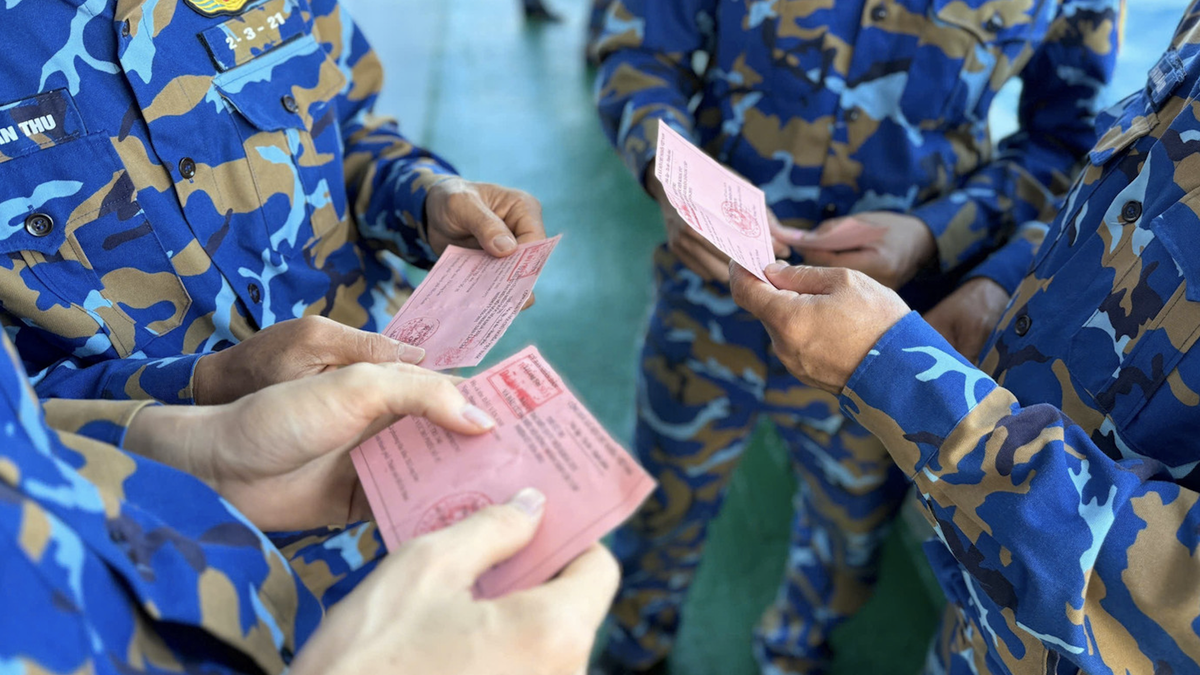
![[Photo] New recruits happily exercise their right to vote at their unit.](https://vphoto.vietnam.vn/thumb/1200x675/vietnam/resource/IMAGE/2026/03/14/1773473286544_stug0337-6388-jpg.webp)




























































Comment (0)