

Chris Schalkx, a writer for the American travel magazine CnTraveler, describes his journey through Southern Vietnam as a stroll between two contrasting realities. Starting from the relentless hustle and bustle of Ho Chi Minh City, he gradually moves toward the intricate network of canals, where the rhythm of life is measured by the rotations of bicycle wheels and the sound of waves lapping against boats.
Saigon: A whirlwind of energy and color
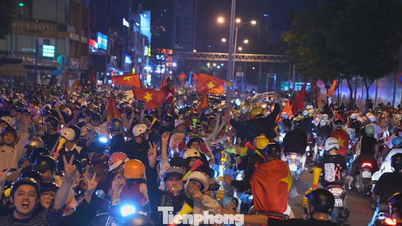
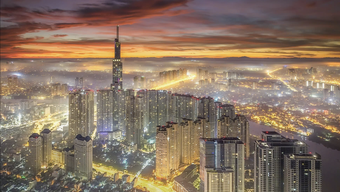
As the sun sets over Ho Chi Minh City, the city begins to radiate heat from its streets. The air vibrates with the roar of 9 million motorbikes and the presence of 11 million people. Chris chose to immerse himself in this flow on a vintage Vespa driven by his guide, Bui Quan Khanh. The scooter weaved through narrow alleyways, neon-lit bars, and brightly lit skyscrapers.
Here, life unfolds right on the sidewalks: old men sipping iced beer, women in pajamas grilling meat over charcoal, and parks transformed into public gyms. Beneath the Rainbow Bridge – a structure designed by Gustave Eiffel – Chris enjoys stir-fried snails and shrimp pancakes under fluorescent lights, sensing a city undergoing a dramatic transformation with its new metro line and megacity planning aimed at becoming a Southeast Asian economic hub.
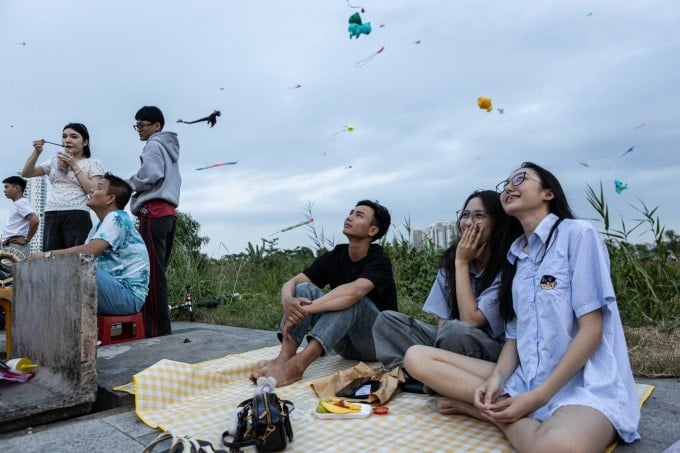
The Mekong Delta: A symphony of rice and water
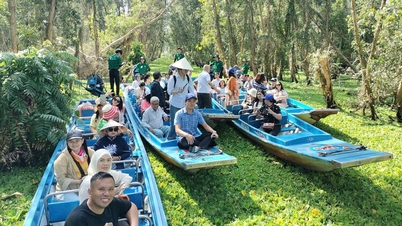
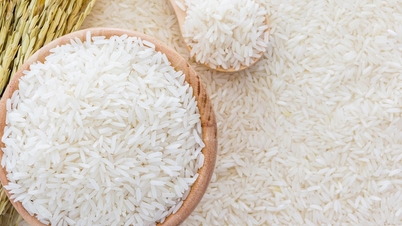
Leaving behind the hustle and bustle of the city, the Mekong Delta reveals a completely different rhythm. This is the largest rice granary in the country, where the crops change every 10 kilometers depending on the soil. Along the way, the sight of large sacks of jackfruit loaded on motorbikes or flocks of chickens running under the wheels becomes familiar.
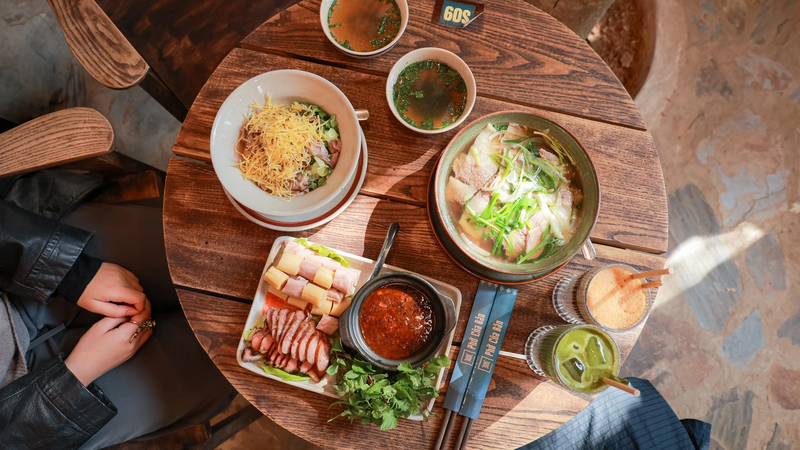
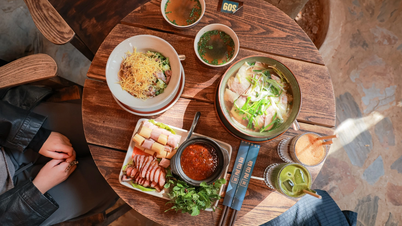
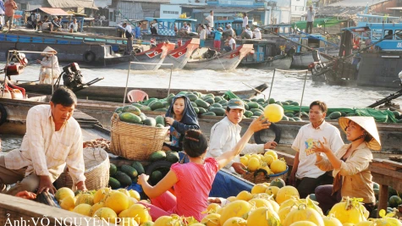
In Can Tho , Chris visited Cai Rang floating market early in the morning. Amidst the labyrinth of boats with eyes painted on their bows for good luck, he enjoyed a bowl of noodle soup from Ms. Bay's boat – a vendor who has been selling this dish on the river for over 40 years. His guide, Thuan Khuc, explained that to achieve the stability it enjoys today, the people have spent generations digging canals, managing water resources, and reclaiming this swampy land.
Cultural diversity along the Mekong River
The journey continued, taking the group cycling through Co Do district, where they were invited into a home to drink rice wine and try grilled field mouse after work. The hospitality of the people of the Mekong Delta is encapsulated in the proverb, "Sell distant relatives, buy close neighbors."
The beauty of this land also lies in its diverse cultural blend. There are the vibrant golden Khmer temples where monks sweep the courtyards in their saffron robes, or the floating Cham village of Chau Giang, where women wearing hijabs weave silk in traditional wooden houses.
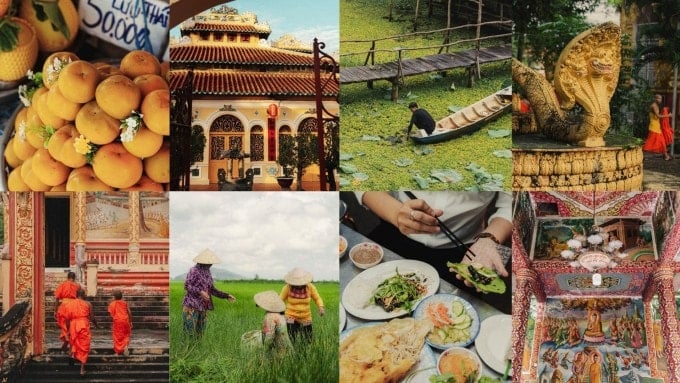
Practical information for the trip
- Best time to visit: The dry season, from December to April, is the ideal time for cycling and outdoor activities.
- Suggested experience: Combine a van for long journeys and a bicycle for village trails to best appreciate the scent of sun-dried coconut shells and the hospitality of the locals.
- Cuisine: Don't miss stir-fried snails in Ho Chi Minh City, floating market noodle soup in Can Tho, and local specialties like grilled field mouse in various regions.
The final stop in Chau Doc town as the sun set marked the end of the journey. Amidst the distant hustle and bustle of the night market and the swaying palm trees, Chris realized that the soul of Vietnam lies in the continuous yet profound movement between land and water.
Source: https://baodanang.vn/tp-hcm-va-mien-tay-hanh-trinh-qua-hai-the-gioi-doi-lap-3315699.html


![[Photo] Prime Minister Pham Minh Chinh attends the Conference on the Implementation of Tasks for 2026 of the Industry and Trade Sector](/_next/image?url=https%3A%2F%2Fvphoto.vietnam.vn%2Fthumb%2F1200x675%2Fvietnam%2Fresource%2FIMAGE%2F2025%2F12%2F19%2F1766159500458_ndo_br_shared31-jpg.webp&w=3840&q=75)





























































Comment (0)