


The skills gap is widening.
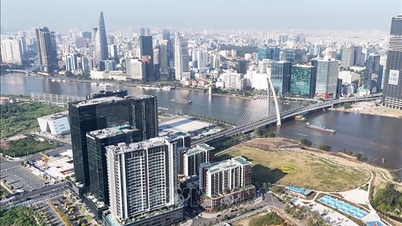
The labor market in Ho Chi Minh City is facing a paradox: businesses are short of staff, yet many workers are still struggling to find suitable jobs. Amidst the rapid digital transformation, the gap between the skill requirements of businesses and the actual capabilities of workers is widening.
According to the Ho Chi Minh City Department of Home Affairs, in the first quarter of 2026, Ho Chi Minh City recorded nearly 33,000 people receiving unemployment benefits, while businesses needed to fill over 82,000 positions. The majority of recruitment needs are concentrated in the unskilled and basic skilled labor sectors in manufacturing, logistics, and trade and services. However, many businesses are still facing difficulties because workers do not yet meet the required practical skills.

This gap is widening rapidly with technology. According to the World Economic Forum's "Future of Jobs 2025" report, by 2030, approximately 22% of global jobs will be affected by artificial intelligence (AI) and automation. While around 170 million new jobs could emerge, the world also risks losing approximately 92 million traditional jobs. Notably, nearly 60% of the workforce will require retraining or skill upgrades to adapt to the new market.
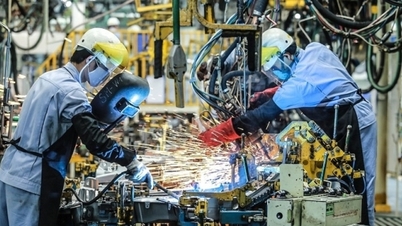
For many years, a significant number of workers believed that hard work and long-term commitment were sufficient to secure stable employment. However, in the digital age, seniority is no longer a guarantee of career prospects. Repetitive, low-skill jobs are gradually being replaced by robots, automated production lines, and AI.
According to the World Economic Forum, up to 41% of global businesses anticipate cutting staff in certain positions due to AI's ability to perform tasks more efficiently. Most concerning is the situation among middle-aged workers. After years of stable employment, many only realize their skills are outdated when they lose their jobs. They easily fall into a vicious cycle of unemployment, working part-time with precarious income, and then being unable to afford new training.
Meanwhile, businesses are increasingly prioritizing workers who are tech-savvy, adaptable, and willing to learn continuously. This is also why the gap between labor supply and demand is widening, even though recruitment needs remain high.

According to Ms. Nguyen Van Hanh Thuc, Director of the Ho Chi Minh City Employment Service Center, recruitment demand is currently increasing sharply due to businesses boosting production and business activities, especially in the industrial, logistics, trade, and retail sectors. However, the labor market still suffers from a significant mismatch between recruitment needs and the quality of the workforce.
"Many businesses lack workers with the right skills and experience, while a segment of highly qualified workers find it difficult to find jobs in their field or are unwilling to take on simple tasks," Ms. Thuc said.
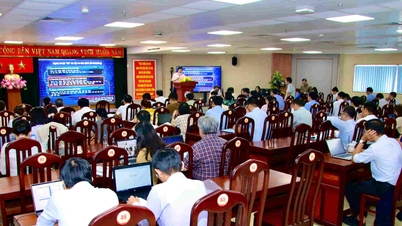
According to labor experts, the current challenge is not only creating more jobs but also retraining the workforce to adapt to technological changes. Therefore, policies supporting vocational training from the unemployment insurance fund need to be expanded and simplified to make them more accessible to workers. At the same time, the vocational training system needs to change towards a more flexible approach, closely aligned with the actual needs of businesses, instead of the current scattered training model.
Workers must change to adapt.
Not only are workers under pressure from the digital transformation wave, but many businesses in Ho Chi Minh City are also facing a prolonged labor shortage. According to forecasts from the Ho Chi Minh City Center for Human Resource Demand Forecasting and Labor Market Information, in the second quarter of 2026, the Ho Chi Minh City labor market will continue to be in a state of "demand exceeding supply," with a need for 60,000-75,000 job positions, mainly in the manufacturing and service sectors.
In many industrial zones, businesses have to constantly put up recruitment signs and send personnel directly to export processing zones to find workers, but they still cannot recruit enough laborers.

Mr. Nguyen Trong Hoang, CEO of Phuc Thinh Packaging Co., Ltd., said that the company had gone through a period of sharply declining orders and high production costs, but still tried to retain its workforce instead of making massive layoffs.
"We chose to reduce working hours, reorganize tasks, and accept lower profits to retain our core team. If we laid off workers during difficult times, it would be very difficult to recruit experienced people again when the market recovers," Mr. Hoang said.
According to Mr. Hoang, thanks to retaining the existing workforce, the company did not face a labor shortage like many other businesses when orders returned. This is not only an advantage in terms of recruitment costs but also helps to stabilize production.
Mr. Hoang believes that the labor market has changed significantly, with workers no longer focusing solely on salary but also prioritizing the working environment, stability, and how companies treat their employees.
"Businesses need to view employees as long-term assets, not as expenses to be cut whenever things get tough. Once trust is lost, it's very difficult to regain it," Mr. Hoang added.

Meanwhile, Mr. Do Doanh Nam, a logistics business owner in Ho Chi Minh City, said that the biggest challenge currently is recruiting workers who are capable of using technology and adapting quickly to digitalization processes.
"Many candidates are still accustomed to old ways of working, are reluctant to learn new skills, or lack the ability to use management software. Meanwhile, almost every process in the logistics industry operates on a digital platform," Mr. Nam said.
According to economic experts, in the AI era, the most important thing for workers is no longer "learning a trade for a lifetime," but rather the ability to continuously learn and adapt to technological changes. Existing skills can quickly become obsolete if not regularly updated.
Experts also argue that AI can transform the labor market, but it doesn't mean it will completely eliminate human jobs. What leaves many workers behind is their slow response to change and lack of adaptability to new market fluctuations.
Source: https://baotintuc.vn/van-de-quan-tam/tp-ho-chi-minh-doi-mat-nghich-ly-thieu-nguoi-du-that-nghiep-20260520141331924.htm

![[Photo] General Secretary and President To Lam presides over a meeting on preparations for the review of one year of operation of the three-tiered government system.](https://vphoto.vietnam.vn/thumb/1200x675/vietnam/resource/IMAGE/2026/06/02/1780391821195_a1-bnd-4595-9717-jpg.webp)





























































































Comment (0)