

Infrastructure breakthrough
According to recent information from the Ho Chi Minh City Department of Construction, 58 urgent projects need to be completed immediately between 2026 and 2030, including many transportation projects, have attracted the attention of the city's residents and the business community.
In addition to addressing many inherent traffic bottlenecks, the implementation of a series of large-scale infrastructure projects will enhance connectivity and reduce logistics costs for Ho Chi Minh City in particular and the whole country in general.
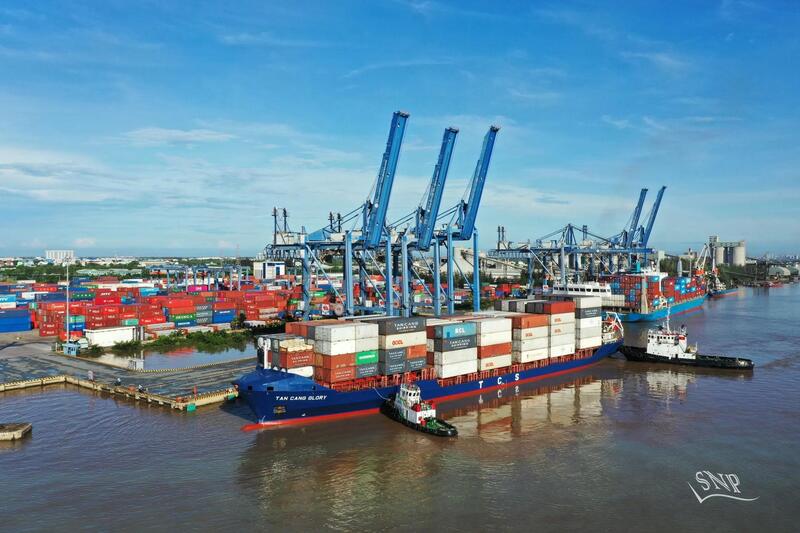
With its large GRDP, leading the country, Ho Chi Minh City's current breakthrough investment strategy in infrastructure development will boost the local economy and the national economy as a whole. Photo: TCSG
Decision 4432/QD-UBND approving the plan for the development of the logistics industry in Ho Chi Minh City until 2025, with a vision to 2030, sets the following targets: a revenue growth rate of logistics services for businesses in Ho Chi Minh City reaching 15% by 2025 and 20% by 2030; and a contribution of logistics to Ho Chi Minh City's GRDP reaching 10% by 2025 and 12% by 2030. Notably, the goal is to contribute to reducing the national logistics cost ratio to national GDP by approximately 10-15% by 2025. To date, the city's efforts to reduce logistics costs have not met expectations.
However, recently Ho Chi Minh City has shown great determination in implementing strategic infrastructure investments. Successfully implementing these projects on schedule will certainly reduce logistics costs.
Among the 58 urgent projects proposed by the Ho Chi Minh City Department of Construction, 27 road projects are proposed for investment to reduce traffic congestion, connect regions, and create new growth poles, with a total investment of approximately 300,000 billion VND. Notable projects include the Ho Chi Minh City Ring Road 4, the Ho Tram - Long Thanh Airport Expressway, the sea-crossing road connecting Can Gio and Ba Ria - Vung Tau (formerly), the East-West axis (extended Vo Van Kiet road) to Tay Ninh , the upgrading of the Ho Chi Minh City Ring Road 3 section from Tan Van - Binh Chuan - Phu Loi, and the Thu Thiem 4 Bridge…
Simultaneously, Ho Chi Minh City will expand its main transportation arteries following a "green lane, no intersections" model connecting the city center to the ring road and expressways, such as upgrading National Highways 1, 22, and 13, the North-South arterial road, Truong Chinh - Cong Hoa road, Xo Viet Nghe Tinh road, Dinh Bo Linh road, etc. In the first four months of 2026, Ho Chi Minh City commenced construction on 10 strategic infrastructure projects with a total capital of approximately 520,000 billion VND. These are all breakthrough projects addressing infrastructure bottlenecks in the city that have persisted for many years.
In a recent interview with a reporter from the Industry and Trade Newspaper regarding the key directions, solutions, and coordination methods to create new growth drivers for the city in 2026, Mr. Bui Ta Hoang Vu, Director of the Department of Industry and Trade of Ho Chi Minh City, stated that developing logistics and trade infrastructure has been identified as a strategic breakthrough. The sector focuses on developing a modern logistics system, applying digital technology in management and operation, and strengthening connections between seaports, warehouses, and multimodal transport. This will contribute to reducing logistics costs, which currently account for a high proportion of expenses, and enhancing the competitiveness of businesses.
According to Mr. Vu, one of the programs that the City's Department of Industry and Trade will implement is focusing on developing strategic infrastructure such as: free trade zones connected to seaports, modern logistics systems, international exhibition and convention centers, wholesale markets, and large-scale industrial zones and clusters. Developing synchronized infrastructure will help reduce costs and enhance the competitiveness of the city's goods in the international market.
More comprehensive solutions are needed.
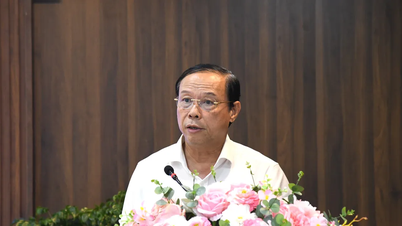
On May 16th, in an interview with a reporter from the Industry and Trade Newspaper, Mr. Dao Trong Khoa, Chairman of the Vietnam Logistics Services Business Association (VLA), stated that with its large GRDP, leading the country, Ho Chi Minh City's current breakthrough investment strategy in infrastructure development will boost the local economy and the national economy as a whole. This will also significantly contribute to the goal of reducing logistics costs nationwide. The Vietnam Logistics Services Development Strategy for the period 2025-2035, with a vision to 2050, aims to reduce logistics costs to approximately 12%-15% of GDP by 2025-2035 and further to 10-12% of GDP by 2050, while simultaneously making logistics a sector with a value-added contribution of 7-9% of GDP.
According to Mr. Dao Trong Khoa, to reduce logistics costs in Ho Chi Minh City in particular and the whole country in general, comprehensive solutions are needed.
Firstly, regarding infrastructure: focus on multimodal connectivity, port hinterland connections, inland container depots (ICDs), logistics centers, freight railways, inland waterways, and strategic logistics corridors.
Secondly, in terms of institutions, we need to continue reforming customs procedures, specialized inspections, digitizing documents, reducing legal overlaps, increasing transparency of surcharges, and shortening goods processing times.
Thirdly, regarding technology and data, we must view digital transformation in logistics not just as warehouse or transportation management software, but as building a shared data ecosystem connecting businesses – customs – ports – warehouses – shipping companies – banks – insurance companies. When the data flow is smooth, costs will be reduced sustainably.
According to Mr. Dao Trong Khoa, if Ho Chi Minh City implements these measures well, and more broadly, if the whole country implements the National Logistics Development Strategy for the period 2025-2035 with a vision to 2050 in a synchronized and systematic manner, logistics will not only be a cost to be borne, but will become a national competitiveness. Logistics needs to be recognized for its true role: not just a supporting service, but a soft infrastructure – a strategic infrastructure of the economy. If Vietnam wants to achieve double-digit growth and enhance strategic self-reliance, it cannot focus solely on production but must simultaneously master transportation, circulation, distribution, storage, and market connectivity.
Beyond simply relieving urban traffic congestion, Ho Chi Minh City's breakthrough infrastructure investment strategy for the 2026-2030 period is the core "key" to restructuring the supply chain and reducing logistics costs. To facilitate the flow of goods, in addition to the "hardware" of transportation, the city is accelerating the synchronization of "soft" solutions, from institutional reforms and free trade zone models to building a shared digital data ecosystem.
Source: https://congthuong.vn/tp-ho-chi-minh-dot-pha-phat-trien-ha-tang-keo-giam-chi-phi-logistics-456940.html


![[Image] Hanoi's urban life under the challenge of a "scorching hot" environment](https://vphoto.vietnam.vn/thumb/1200x675/vietnam/resource/IMAGE/2026/05/25/1779706979265_nang-nong-t5-2026-minh-duy-7-4636-jpg.webp)
![[Image] Close-up view of the interchange connecting the two expressways and Long Thanh Airport.](https://vphoto.vietnam.vn/thumb/1200x675/vietnam/resource/IMAGE/2026/05/25/1779703378210_ndo_br_z7863716673926-224453a31600126cce10622af6290afd-4549-jpg.webp)





















































































Comment (0)