

Each student has an "AI assistant".
The Ho Chi Minh City Department of Education and Training recently issued Plan No. 4545/KH-SGDĐT on May 18, 2026, outlining a breakthrough roadmap for educational development linked to digital transformation and innovation for the period 2026-2030, with a vision to 2045.
The core objective is to help the city maintain its leading position and become a high-tech workforce training center on par with the region and the world .
The focus of the period from now until 2030 is to successfully build an Intelligent Digital Education Ecosystem (IEOC), which operates on live data and is learner-centered.

The city's education sector is determined to make a substantial and significant shift, moving from merely using technology as a support tool to a smart digital platform that maximizes flexibility and personalization in each student's development path. Specifically, the city expects to have 1,000 general education institutions meeting the "digital school" standard by 2030.
The emergence and profound intervention of artificial intelligence (AI) will change traditional teaching and learning methods. According to the plan, 100% of educational institutions will deploy advanced AI assistants to support teachers in lesson design, automate competency assessment processes, and streamline administrative tasks.
For high school students, 100% will be equipped with dedicated, age-appropriate AI accounts to act as personal learning assistants, suggesting knowledge acquisition paths based on their actual abilities.
In addition, the city aims to have 30% to 50% of its students receive in-depth training in artificial intelligence. To monitor technological risks during operation, an Education AI Ethics Council will be established to independently oversee the algorithms used to evaluate and grade students.
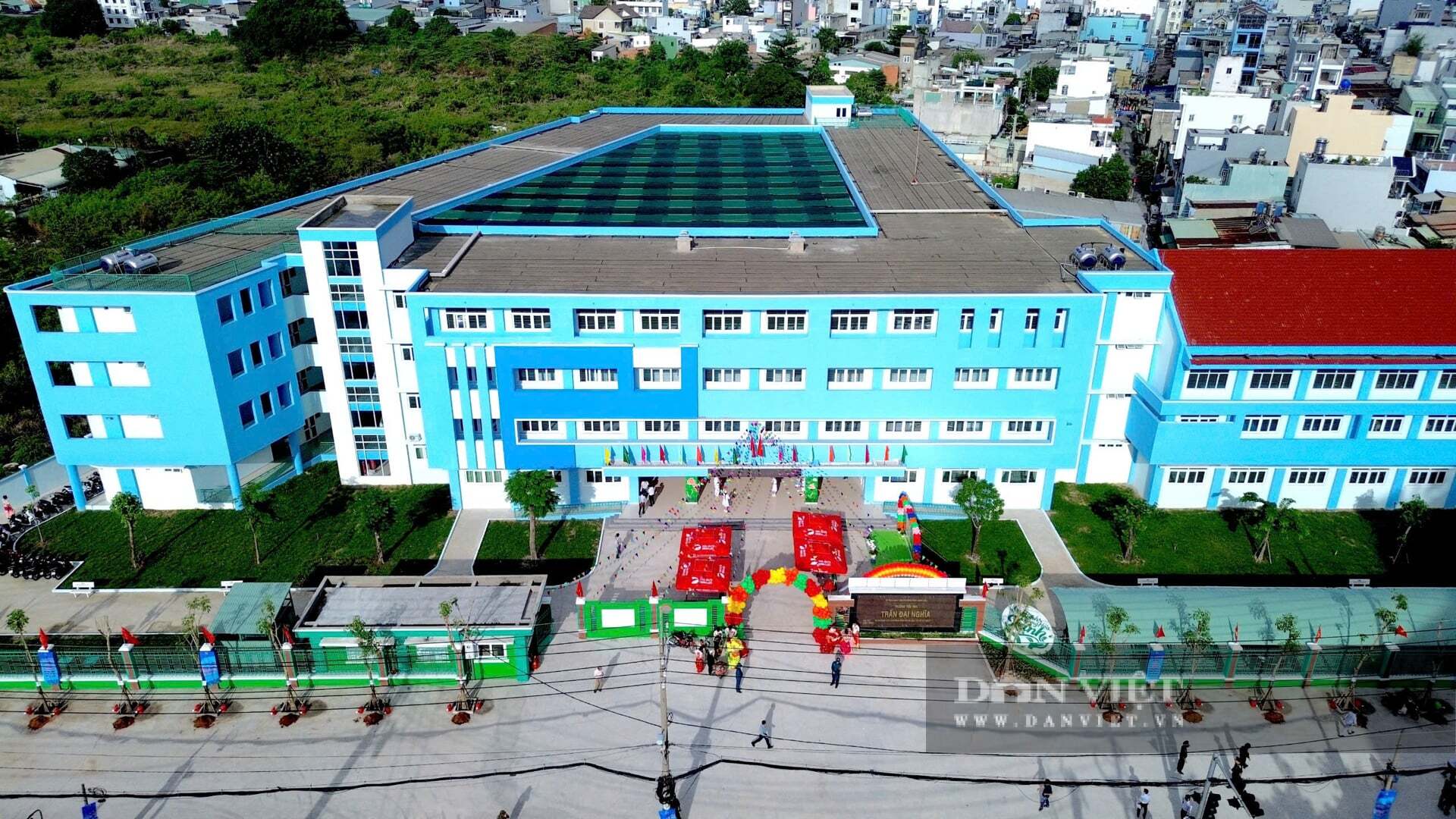
1,000 digital schools and the ambition to "eliminate" paper records.
In terms of physical infrastructure, by 2030, 100% of educational institutions must have coverage of the latest generation dedicated wireless network and broadband fiber optic internet connection with a minimum speed of 1 Gbit/s.
Schools are required to standardize their modern computer systems and equip at least one digital classroom with integrated interactive screens, digital audio, and AI cameras that automatically digitize lectures. Administrative management is also moving towards a "paperless" model, with 100% of facilities operating digital offices; all professional records such as transcripts, diplomas, and registration books are digitized using personal digital signatures and automatically linked to the VNeID application.

Looking further ahead to 2045, the face of education in Ho Chi Minh City is expected to make remarkable strides. Accordingly, 100% of educational institutions will operate on an integrated artificial intelligence platform to automatically coordinate resources and optimize the learning environment with real-time multi-sensory simulations (Metaverse/XR).
Blockchain technology will also be applied to connect global knowledge and verify diplomas, ensuring absolute transparency and international legal validity for lifelong academic records.
To realize this major goal, the annual budget for science , technology, and digital transformation will be guaranteed at 4-5% as per the City People's Council Resolution.
Notably, the education sector is also planning to develop a mechanism for legally exploiting the economic value of educational data repositories. The city will provide fully anonymized learning behavior data packages to licensed research institutes and EdTech businesses, with all revenue being directly reinvested in maintaining and upgrading AI systems.
In particular, the city prioritizes the use of domestic solutions with the goal that by 2030, at least 60% of AI technology solutions and platforms deployed in the industry must be "Make in Vietnam" products.
Source: https://danviet.vn/tphcm-dat-muc-tieu-xay-dung-1000-truong-hoc-so-d1428752.html









































































































Comment (0)