

Ho Chi Minh City - The Can Gio Bridge, Thu Thiem 4 Bridge, and pedestrian bridge over the Saigon River, with a total investment of over 18,000 billion VND, are planned to start construction in 2025, helping to increase connectivity and alleviate infrastructure bottlenecks in many areas of Ho Chi Minh City.
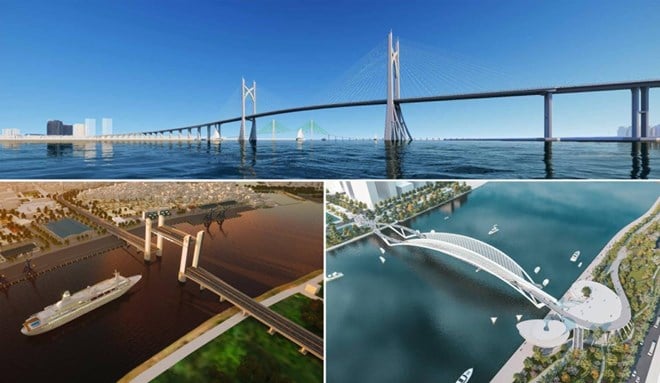
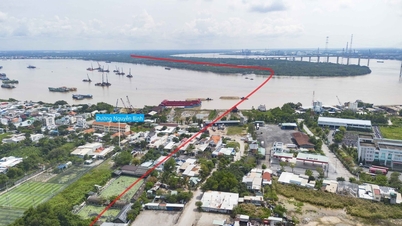
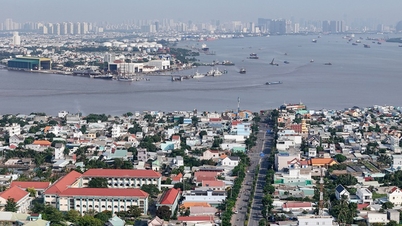
The project includes the Can Gio port, Thu Thiem 4, and a pedestrian bridge over the Saigon River. Photo: Ho Chi Minh City Department of Transport.
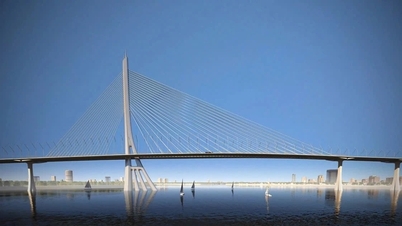
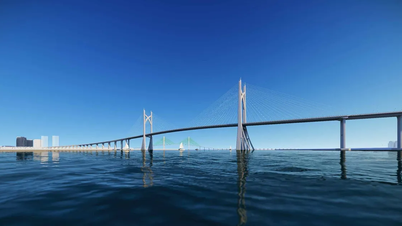
The Can Gio Bridge project, with a total investment of over 11,000 billion VND, is proposed to be invested under the BOT (Build-Operate-Transfer) model. Recently, the Ho Chi Minh City Department of Transport proposed that the Ho Chi Minh City People's Committee allocate approximately 5,246 billion VND to participate in the project investment (equivalent to nearly 50% of the total investment), with the remainder to be mobilized by the investor. According to the Department of Transport's proposal, the starting point of the Can Gio Bridge is on Road 15B (Nha Be District), about 500 meters north of the Muong Ngang canal. The bridge then crosses Nguyen Binh Road and spans the Soai Rap River. Upon reaching Can Gio District, the bridge will connect to Rung Sac Road at a location about 2.1 km south of the Binh Khanh ferry. The Can Gio Bridge has a total length of 7.3km (of which the bridge itself is nearly 3km long, and the approach roads are over 4.3km long), with 6 lanes (4 lanes for motorized vehicles, 2 lanes for non-motorized vehicles), and a speed limit of 60 km/h. The bridge is constructed as a cable-stayed bridge with a main span of 350m in the middle of the river, supported by two 150m high piers. The Can Gio Bridge will have a navigable clearance of 55m (equivalent to the Binh Khanh Bridge of the Ben Luc - Long Thanh expressway project) - the highest in Vietnam at present.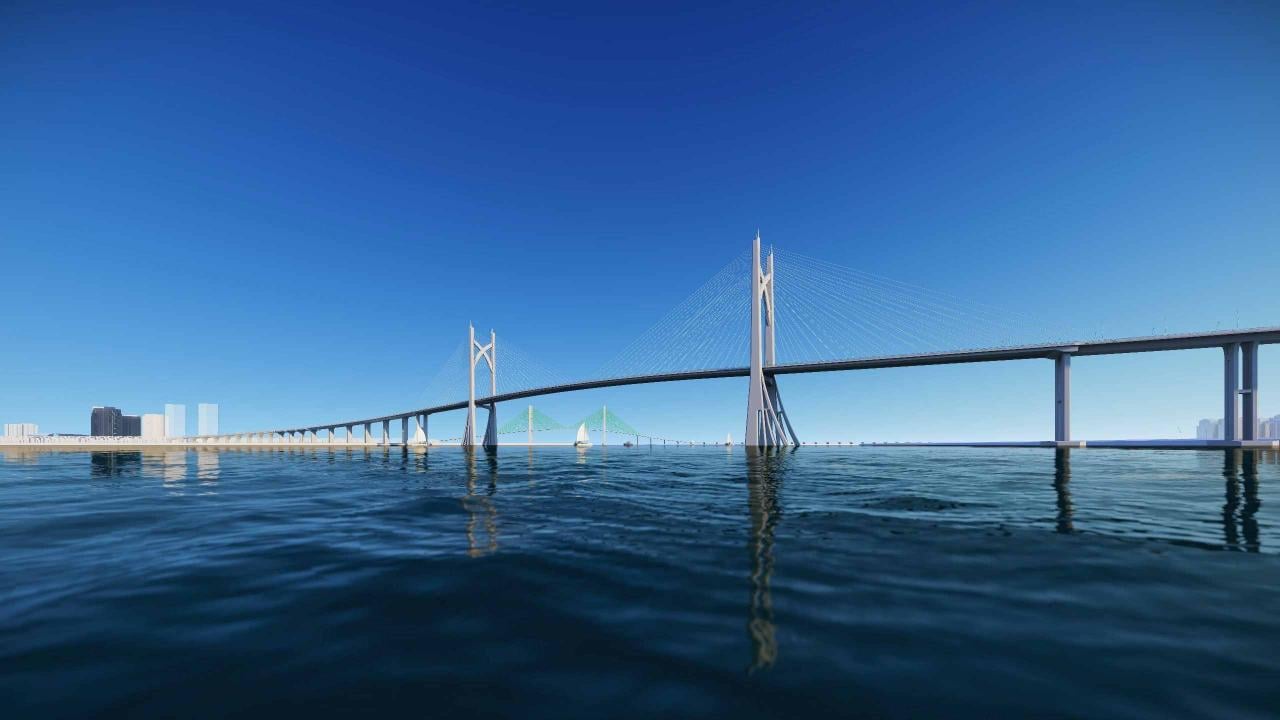
Perspective view of Can Gio Bridge. Photo: Ho Chi Minh City Department of Transport.
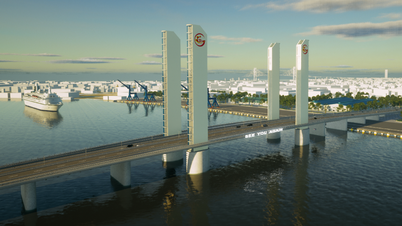
The project will be submitted to the Ho Chi Minh City People's Council for investment approval in 2024, construction to begin in 2025, and completion in 2028. At that time, the Can Gio Bridge will surpass the Phu My Bridge (connecting Thu Duc City and District 7) or the Binh Khanh Bridge, becoming the largest cable-stayed bridge in Ho Chi Minh City. Simultaneously, the Can Gio Bridge will replace the Binh Khanh ferry connecting the southern part of Ho Chi Minh City with Can Gio District, meeting the transportation needs in the area. This will facilitate the promotion and development of two projects in Can Gio: the Can Gio International Transshipment Port and the Can Gio Coastal Tourism Urban Area. The Thu Thiem 4 Bridge has a total investment of approximately 6,030 billion VND, invested under the BOT (Build-Operate-Transfer) model. The Ho Chi Minh City Department of Transport has also recently proposed to the Ho Chi Minh City People's Committee to allocate approximately 2,826 billion VND (equivalent to about 50% of the total investment) for this project. According to the proposal, the total length of Thu Thiem 4 Bridge will be approximately 2.16km (of which the bridge section is over 1.6km long) with 6 lanes. The bridge's main span can be raised and lowered with a maximum clearance of 45m. The Department of Transport believes this type of bridge design is unprecedented in Vietnam, allowing large ships to easily navigate the Saigon River into the center of Ho Chi Minh City.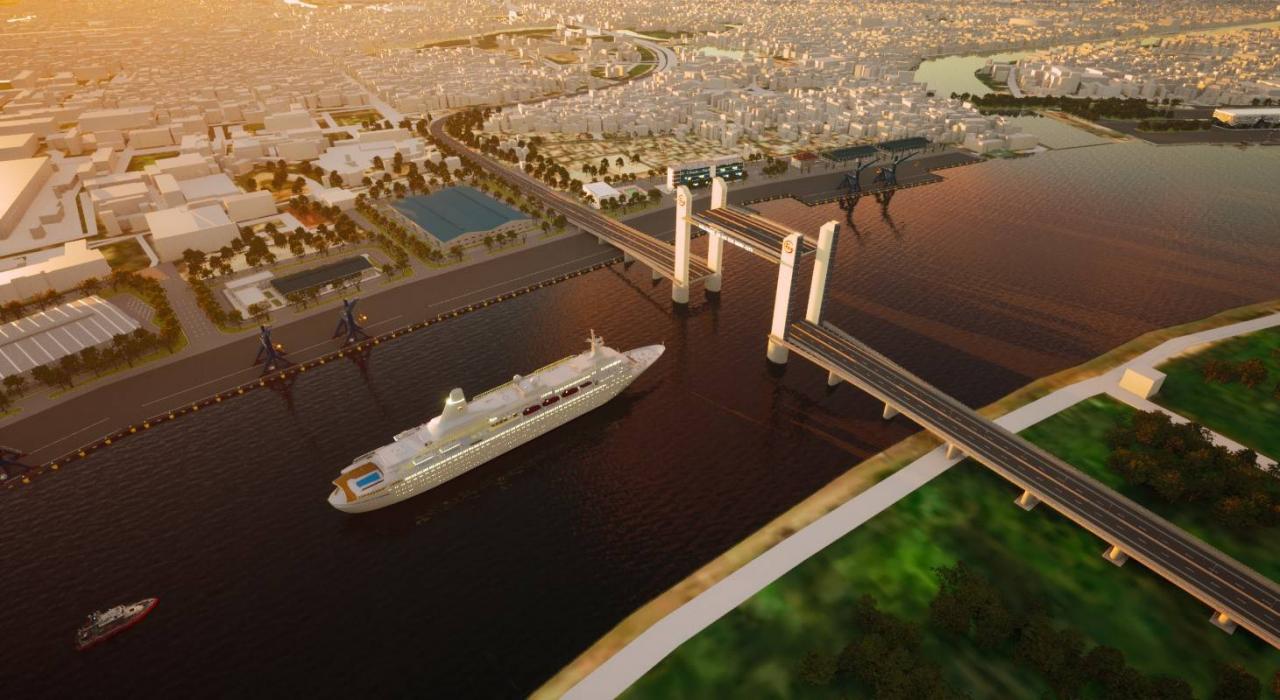
Rendering of the Thu Thiem 4 bridge showing the ability to raise and lower its spans to allow large ships to pass through. Photo: PORTCOAST
The project starts from the section before the intersection of Tan Thuan 2 Bridge and Nguyen Van Linh Street, runs along Nguyen Van Linh Street, turns left at the Huynh Tan Phat intersection connecting to Luu Trong Lu Street (District 7). The bridge continues to cross the Tan Thuan port area, crosses the Saigon River, connecting to the Thu Thiem Urban Area at the intersection of the North-South axis and Bui Thien Ngo Street. The project will be submitted to the Ho Chi Minh City People's Council for investment approval this year, with construction starting in 2025 and completed in 2028. Upon completion, Thu Thiem 4 Bridge will not only promote the development of the Thu Thiem New Urban Area but also shorten travel time from Thu Duc City and Binh Thanh District to Districts 7, 8, Nha Be, and Binh Chanh. The project will also help reduce traffic congestion around Ben Nghe Port, Tan Thuan Export Processing Zone, and Huynh Tan Phat Street in District 7. The pedestrian bridge over the Saigon River connecting District 1 and Thu Duc City has a total investment of over 1,000 billion VND. The bridge is 500m long, situated between the Ba Son Bridge and the Saigon River Tunnel. The District 1 end is located within the Bach Dang Port Park area and closest to Nguyen Hue pedestrian street. The Thu Duc City end is located in the riverside park and outside the boundary of Zone A, south of the central square in the Thu Thiem New Urban Area.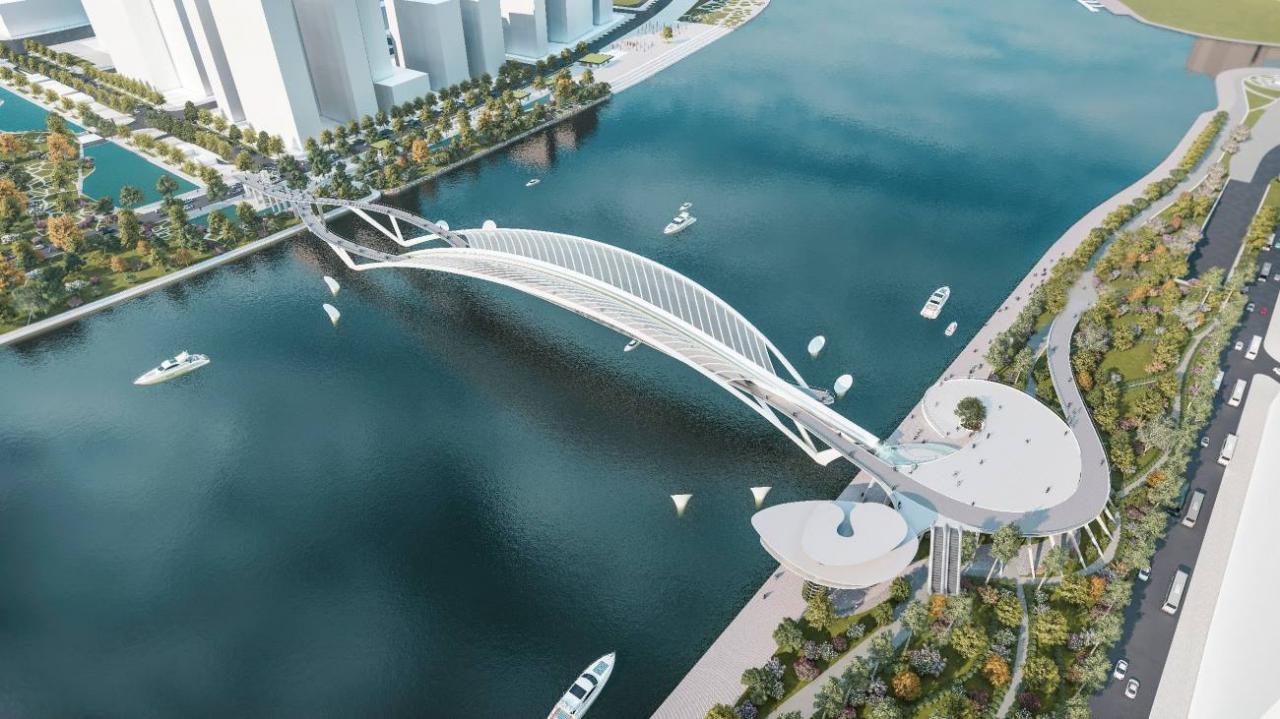
The pedestrian bridge over the Saigon River is shaped like a water coconut leaf. Photo: Consulting consortium.
According to the architectural design plan for the pedestrian bridge across the Saigon River selected by the Ho Chi Minh City People's Committee, the bridge will resemble a water coconut leaf – a familiar image of Southern Vietnam. The structure is designed to withstand a magnitude 7 earthquake, strong winds, and vibrations from large crowds. Besides serving pedestrians, the bridge will also have lanes for bicycles and people with disabilities. It is also designed for ambulances in emergency situations. In early December 2023, the Ho Chi Minh City Department of Transport signed a memorandum of agreement to finance the project. Accordingly, the enterprise will fully fund the construction costs of the project according to the approved plan, design, and scheme by the city. The Department of Transport stated that it is finalizing the steps to submit the investment plan for approval. Ho Chi Minh City aims to commence construction of the pedestrian bridge across the Saigon River on April 30, 2025, to commemorate the 50th anniversary of the Liberation of Southern Vietnam and the reunification of the country.Laodong.vn
Source link


































































Comment (0)