


People perform a prayer ritual before eating Iftar at home. Photo: GIA KHÁNH
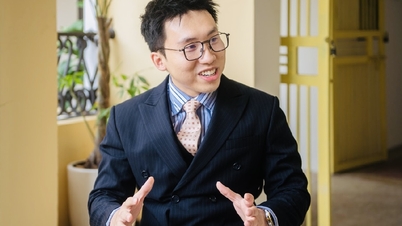
I met Haji Abul Alim, a young man deeply committed to his Cham community. Despite having just returned home from a long and tiring business trip, his eyes lit up when he spoke of Ramadan. He meticulously explained: “Not only the Cham village of Da Phuoc, but all Muslim communities worldwide are observing Ramadan. We deeply understand our faith in Allah, our belief that good things will be granted. Therefore, this fasting month is a source of pride for our community.”
According to him, during Ramadan, all believers of the legally required age (calculated from the time of puberty) will not eat or drink anything from sunrise to sunset (called Imsaak), while still going about their daily lives, working, and studying as usual. Regardless of wealth or poverty, occupation, or gender, everyone participates in this "challenge," aimed at cultivating patience, purifying the soul, and guiding people towards compassion. They believe that completing this challenge will help them atone for all their sins and "touch" heaven. “Many people ask us how we manage to achieve the challenge of fasting all day long. Actually, the training starts from a young age to gradually get used to it. Children reduce their meals from five a day to three. Teenagers reduce it to two meals a day… until they are officially old enough to fast. Of course, some people can't complete a day of fasting due to various reasons. They will make up for it on another day, ensuring they meet the required number of days,” Alim explained.
The fascinating aspect of Imsaak is that each person in the community must maintain beautiful relationships, refrain from any actions or words that offend others, and strive to become a better version of themselves. When it's time to break the fast (Iftar), even the simplest food and drink become more delicious, helping everyone understand the sacred value of life and experience the joy of overcoming temptation within themselves each day.
For the Cham people, Ramadan is not only religious but also a time for community bonding. From early morning to late evening, all activities in the village revolve around the rhythm of the fasting month. Each family strives to maintain a solemn lifestyle while caring for and helping each other to get through the fasting days. Those who are not healthy enough may be exempted from fasting, instead distributing food to the poor and sick in the village, with a target of 60 portions per month. Wealthier families often proactively prepare extra food to donate to needy households in the neighborhood. These gifts, though simple—rice, sugar, milk, dates, or a few cakes and fruits—contain genuine care. The recipients do not see it as mere charity but as a symbol of community solidarity, where everyone cares for one another during this sacred month.
In the afternoon, as the sunlight began to soften, the small alleys of the Cham village became more lively. Mrs. A Mi Nah (62 years old) sat chatting with her neighbors, waiting for the time to receive her "Iftar" porridge. "I've spent my whole life here, in this traditional stilt house built 40 years ago. In the mornings, I help with odd jobs, contributing a little to the cooking process for the mosque. Around 5 or 6 in the afternoon, the elderly, children, and women all come out in front of their houses to wait for the porridge cart to pass by. It's so much fun!" Mrs. A Mi Nah said, preparing her porridge container.
Along the short stretch of Highway 91C, we clearly felt the joyful atmosphere of Iftar. Women prepared the meal, and children helped arrange the food. A warm atmosphere permeated the houses. In many places, families brought food to share with others, and women gathered together to eat as the call to prayer echoed from the Ehsan Mosque. Men gathered at the Mosque to partake in Iftar and participate in the Solah Taraweh prayer.
What was particularly valuable was that within that cultural space, the sense of community wasn't limited to the Cham people. Non-Chams like us were also warmly and sincerely welcomed, even invited into the mosque to partake in an Iftar meal consisting of sweet dates, fragrant chicken porridge, and a refreshing bottle of ginseng tea. These heartwarming encounters left a deep impression even after we left the Cham village, as Ramadan was nearing its end.
After 30 days of fasting comes Eid Alfitri (falling on March 20, 2026), when the new moon reappears, becoming the most joyful time for the Cham Muslim community, similar to the Lunar New Year. At this time, every household showcases their skills in preparing traditional dishes, ready to welcome guests. As Ramadan ends, daily life gradually returns to normal, but the positive values of the sacred month remain. These are reminders of compassion, solidarity, and neighborly love – a beauty preserved by the Cham people through generations.
Alim believes that, with sufficient resources and conditions to integrate Ramadan culture into community tourism, Cham villages will undoubtedly become attractive destinations for tourists. “I want tourists to have the opportunity to experience this unique culture, immerse themselves in the atmosphere of the fasting month, and enjoy the best Cham cuisine , prepared by the villagers themselves during Iftar… At that time, culture and religion will become special ingredients for a unique tourism product, encouraging tourists to stay longer and have more fun in the Cham villages,” Alim affirmed.
Source: https://baoangiang.com.vn/trang-non-o-lang-cham-da-phuoc-a479730.html
![[Photo] General Secretary and President To Lam presides over a working session with the Central Policy and Strategy Committee on the development of the materials industry.](https://vphoto.vietnam.vn/thumb/1200x675/vietnam/resource/IMAGE/2026/05/21/1779359935432_a3-bnd-3129-1412-jpg.webp)








































































Comment (0)