Causes of wheezing in children
- Causes of wheezing in children
- What should parents do when their child has wheezing?
- Serious signs that require taking your child to the doctor.
Wheezing in infants can be caused by several factors, including:
Pneumonia. Pneumonia in infants is usually caused by respiratory infections that damage the lungs. This leads to fluid buildup and pus accumulation in the bronchial sacs, causing the infant to experience difficulty breathing, wheezing, and nasal congestion.
Asthma. Besides wheezing, asthma can also cause nasal congestion. Asthma attacks tend to be triggered when children are exposed to pollen, pet dander, cigarette smoke, etc. These triggers can easily narrow a child's airways, causing difficulty breathing or wheezing.
Gastroesophageal reflux. When suffering from gastroesophageal reflux, infants tend to wheeze. This is because stomach acid and digestive juices easily reflux into the esophagus, affecting the airways, increasing the risk of irritation and inflammation, and narrowing the airways.
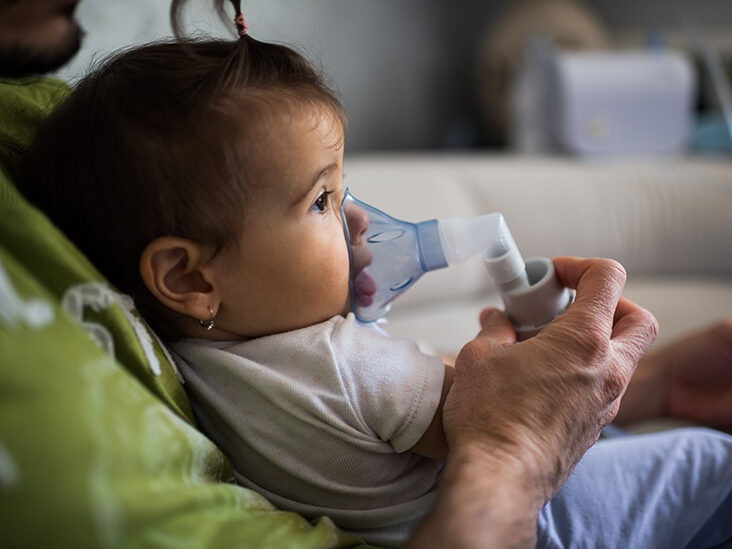
When children wheeze, parents can use a nebulizer with saline solution or bronchodilator medication according to the dosage prescribed by the doctor.
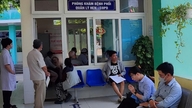


Bronchiolitis. This condition begins when a child's bronchioles become inflamed, causing fluid buildup that obstructs or narrows the airways. This leads to symptoms such as wheezing, mild fever, coughing, and runny nose. The symptoms of bronchiolitis are similar to asthma. If a child wheezes for several weeks without improvement, parents should take the child to see a doctor.
Laryngomalacia. Laryngomalacia is a congenital defect that can occur in some newborns. This defect causes the upper part of the larynx to be softer and more prone to collapsing during breathing, resulting in wheezing.
In addition, wheezing in children can also be caused by other factors such as: a foreign object lodged in the airway; acute laryngobronchitis; a tumor in the lung, etc.
What should parents do when their child has wheezing?
If a child has mild wheezing and no serious symptoms, parents can try the following measures to help them feel more comfortable:
- Keep the body warm: Pay special attention to keeping the child's nose, neck, and chest warm to avoid irritating the airways, and avoid exposing the child to cold air or drafts.
- Nasal and throat hygiene: Use 0.9% physiological saline solution to instill into the nose or rinse the nose, helping to clear mucus and reduce congestion.
- Give children plenty of fluids: For infants, increase breastfeeding to provide fluids and boost immunity. For older children, encourage them to drink warm water to thin mucus.
- Using a nebulizer: If prescribed by a doctor, parents can use a nebulizer with saline solution or bronchodilator medication at the correct dosage.
Do not:
- Do not self-medicate: Absolutely do not use bronchodilators, antibiotics, or cough medicine without a doctor's prescription, as this can cause dangerous side effects.
- Avoid polluted environments: Keep children away from cigarette smoke, chemicals, dust, or strong odors, as these can worsen wheezing.
- Adjust sleeping position: If you suspect your child has gastroesophageal reflux, do not let them sleep lying flat. Gently raise their head to reduce pressure on the airway.
Serious signs that require taking your child to the doctor.
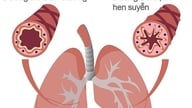
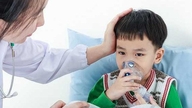

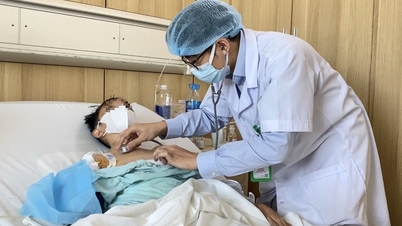
When children experience prolonged and persistent wheezing and difficulty breathing (over 4 weeks), they should be taken to a specialist hospital for examination because many cases require further in-depth tests to determine the diagnosis.
If your child is wheezing and exhibits any of the following unusual symptoms, parents should take the child to see a doctor immediately:
- The child is breathing faster than normal (around 60 breaths per minute), and their nostrils are flaring.
- Children with chest retraction
- The child's lips, extremities, or around the mouth turn blue.
- In addition, the child may also have poor feeding, excessive crying, lethargy, or fatigue.
Source: https://suckhoedoisong.vn/tre-so-sinh-tho-kho-khe-do-dau-169260129171333993.htm
![[Image] Schools organize meetings and introduce teaching models to students admitted to grade 10.](https://vphoto.vietnam.vn/thumb/1200x675/vietnam/resource/IMAGE/2026/06/25/1782368077271_ndo_br_z7970052192242-1ec8daeb77a6eed1a4e9f58c564ddd3e-jpg.webp)

![[Photo] General Secretary and President To Lam attends the 13th National Congress of the Ho Chi Minh Communist Youth Union](https://vphoto.vietnam.vn/thumb/1200x675/vietnam/resource/IMAGE/2026/06/25/1782356968989_ndo_br_1-jpg.webp)

![[Photo] General Secretary and President To Lam receives Palestinian Ambassador Saadi Salama](https://vphoto.vietnam.vn/thumb/1200x675/vietnam/resource/IMAGE/2026/06/25/1782365384740_a1-bnd-9423-8322-jpg.webp)