

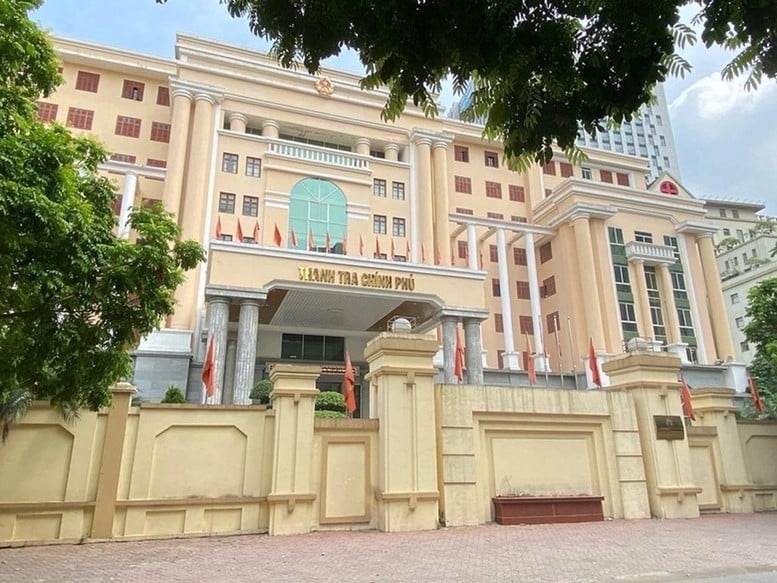
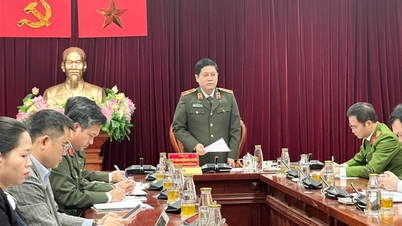
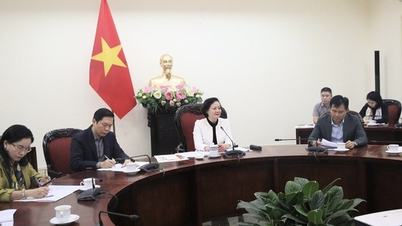
Government Inspectorate - Photo: VGP
The Government Inspectorate has just issued Plan No. 4238/KH-TTCP, launching a thematic inspection campaign aimed at preventing and combating waste in the management and use of land and buildings owned by state agencies, organizations, and enterprises.
This plan implements the conclusions of General Secretary To Lam, Head of the Central Steering Committee on preventing and combating corruption, waste, and negative phenomena, at the 27th session and the 2025 work program of the Steering Committee (Program No. 58/CTr-BCĐTW dated January 15, 2025), along with the direction of Deputy Prime Minister Nguyen Hoa Binh in Document No. 744-VPCP-VI dated February 24, 2025, from the Government Office.
The purpose of this plan is to identify shortcomings in the mechanisms, policies, and legal regulations regarding the management and use of public land and buildings, and to propose amendments and additions to improve the legal framework, ensuring efficient use of public assets and avoiding waste.
Inspection activities are required to strictly comply with legal regulations, focus on key areas, ensure timely completion, and not disrupt the normal operations of agencies and organizations.
The plan emphasizes the timely detection of violations, the proposal of appropriate remedial measures, and the assurance of confidentiality, accuracy, objectivity, honesty, transparency, and democracy in reporting and conducting inspections.
In particular, the plan clearly defines the responsibilities of agencies, organizations, and individuals involved in wasteful practices, thereby proposing strict handling measures in accordance with the law, in order to rectify and improve the efficiency of public asset management.
The scope of the inspection includes checking compliance with legal regulations on preventing and combating waste in the management and use of state-owned land and buildings from January 1, 2019 to July 1, 2025.
The subjects of inspection are administrative agencies, public service units, state-owned enterprises, and related individuals.
The inspection focuses on the issuance and implementation of legal regulations, mechanisms, and policies on preventing and combating waste in the management and use of houses and land; the management, use, allocation, leasing, recovery, conversion of land use purposes, auctioning of land use rights, valuation and sale of assets on land according to approved plans and schemes; decisions on investment policies for projects, appraisal and approval of investment projects based on houses and land, implementation progress, capital allocation and project settlement; the use of houses and land for the correct purposes, targets, norms, standards and regulations issued by competent state agencies; and the preparation, appraisal, approval and implementation of plans for the arrangement and handling of houses and land when restructuring, streamlining the apparatus or relocating.
In addition, it is necessary to promptly address unused, unneeded, or inefficiently used properties that hinder socio-economic development; determine land allocation and lease rates, land use fee exemptions and reductions, property valuation, and related financial obligations; conduct inspections, audits, and handle violations, and publicly disclose the results of handling wasteful practices in the management and use of properties.
The plan places special emphasis on detecting wasteful practices, such as the misuse of houses and land, improper leasing, lending, cooperation, business, joint ventures, and partnerships; improper allocation, leasing, or conversion of land use; failure to fulfill financial obligations, outstanding debts, or evasion of financial obligations related to houses and land; and inefficient use of housing and land facilities that fail to achieve set goals or hinder socio-economic development.
Regarding implementation, the Government Inspectorate assigned the Department of Anti-Corruption, Waste, and Negative Phenomena Prevention and Control (Department IV) to take the lead and coordinate with relevant units to guide the Inspectorates of the Ministry of National Defense, the Ministry of Public Security, the State Bank of Vietnam, and the Inspectorates of the provinces in carrying out the content, period, and subjects of inspection. Department IV is also responsible for establishing a working group to direct, guide, supervise, and summarize the inspection results, and report to the Prime Minister and the Central Steering Committee.
Inspectors from the Ministry of National Defence, the Ministry of Public Security, the State Bank of Vietnam, and provincial inspectorates are required to survey and assess the situation in order to develop inspection plans that are appropriate to the reality, report on progress before August 30, 2025, and compile the results according to the outline of the Government Inspectorate.
The inspection period lasts 45 actual working days, starting from the date of announcement of the Inspection Decision, excluding public holidays or days off as prescribed by law.
This thematic inspection plan is of significant importance in detecting and addressing wasteful practices, while also contributing to the improvement of mechanisms and policies for managing public assets.
The synchronized implementation of inspections across ministries, sectors, and localities will help strengthen the accountability of agencies and organizations in managing and utilizing public housing and land; promptly detect and handle violations; propose policy reform solutions; improve the effectiveness of state management; and promote socio-economic development.
The plan places special emphasis on detecting wasteful practices, such as the misuse of houses and land, improper leasing, lending, cooperation, business, joint ventures, and partnerships; improper allocation, leasing, or conversion of land use; failure to fulfill financial obligations, outstanding debts, or evasion of financial obligations related to houses and land; and inefficient use of housing and land facilities that fail to achieve set goals or hinder socio-economic development.
Toan Thang
Source: https://baochinhphu.vn/trien-khai-thanh-tra-chuyen-de-chong-lang-phi-trong-quan-ly-tai-san-cong-102250702092411695.htm












































































Comment (0)