

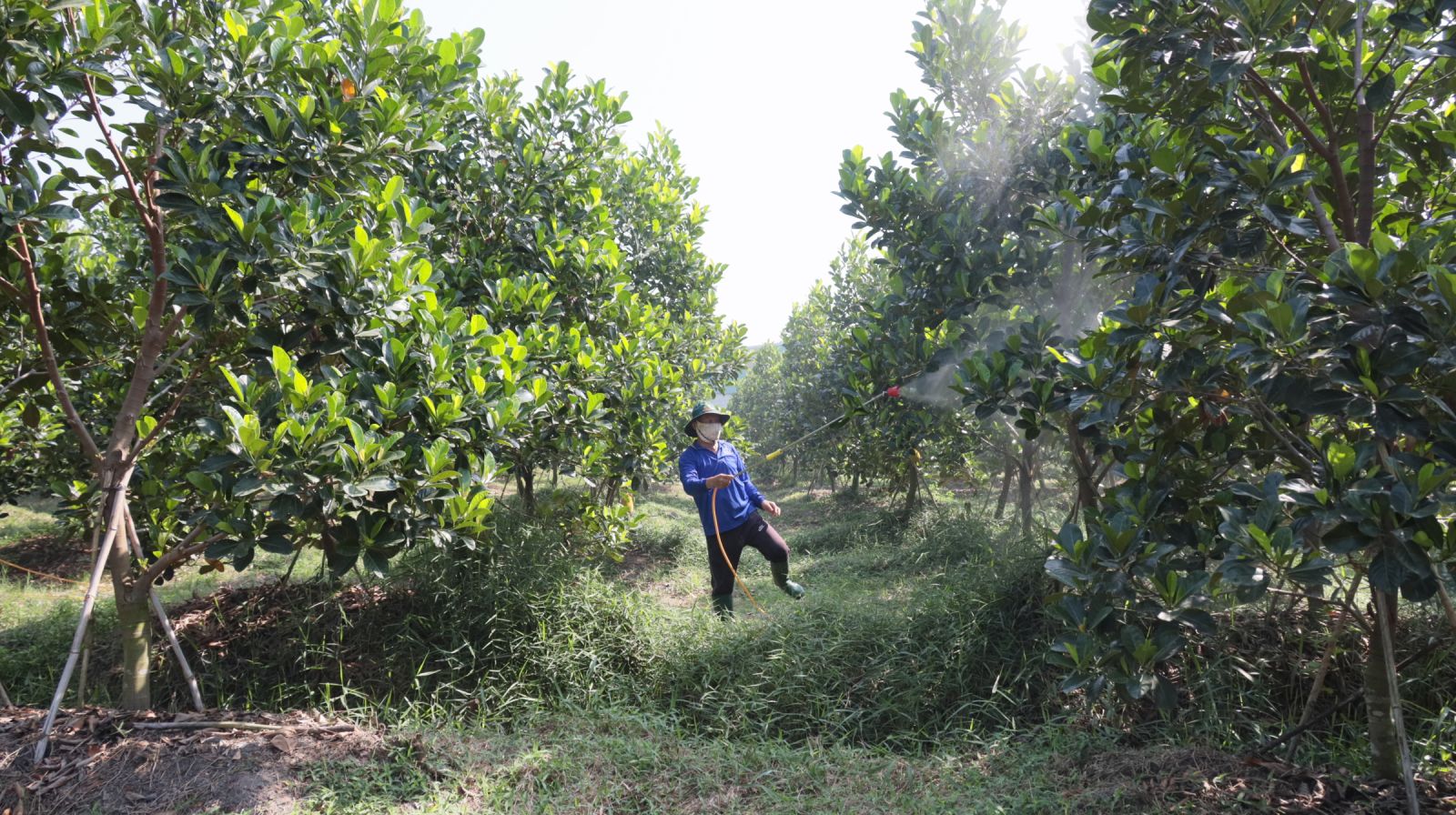
The first step to generating high income.
In recent years, farmers in the province have converted large areas of agricultural land to cultivate various fruit trees suitable to the soil, yielding higher economic returns.
In particular, the model of growing red-fleshed, yellow-fibered jackfruit with oval leaves, implemented by Mr. Ngo Van Duoc – Director of Phu Thinh TN Agricultural Cooperative, Bau Nang commune, Duong Minh Chau district, has initially yielded stable economic results.
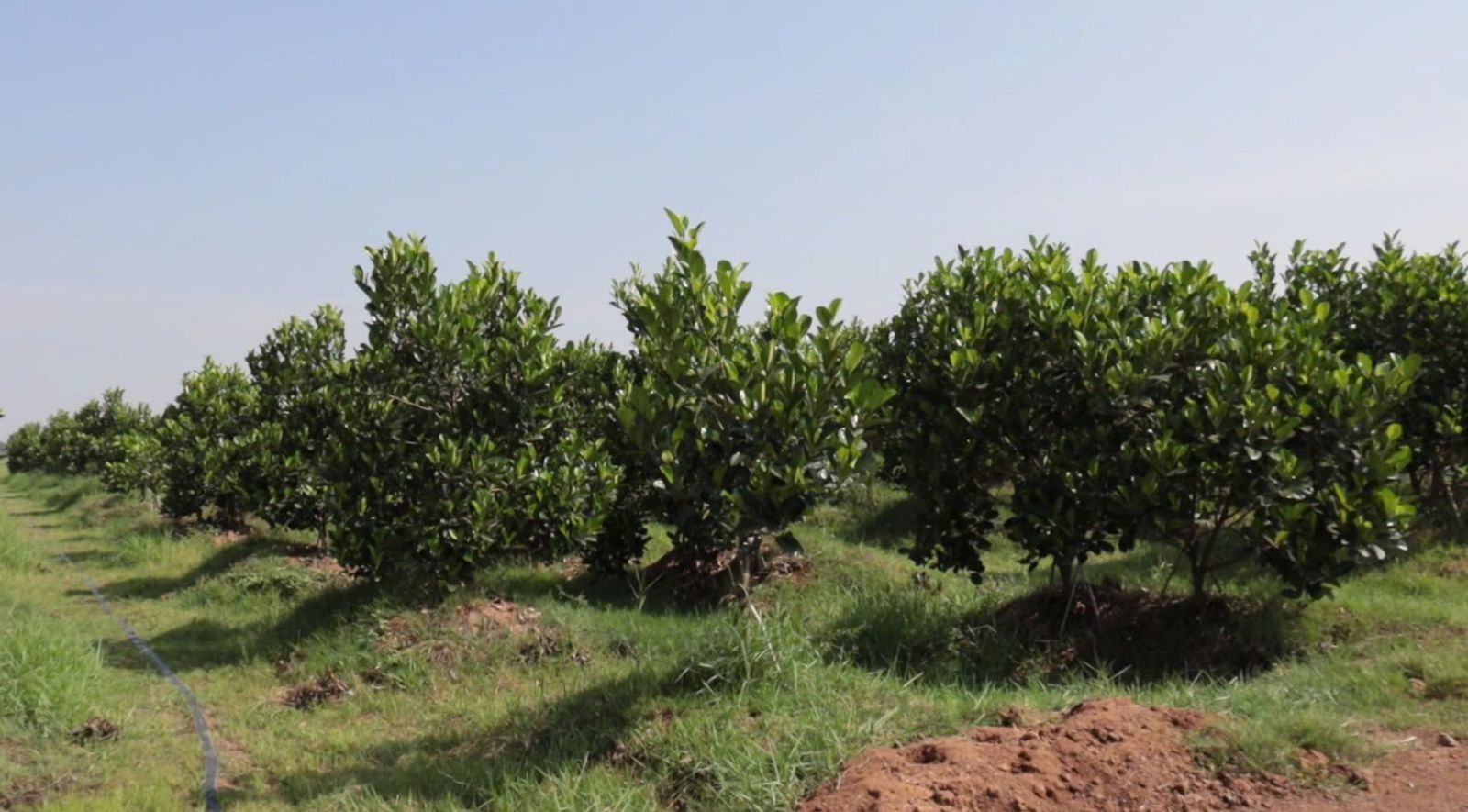
Mr. Được said that he used to grow seedless lemons, but the economic efficiency was low and he faced difficulties due to high labor costs. Therefore, he decided to switch to growing red-fleshed, yellow-fibered jackfruit. Currently, his total jackfruit cultivation area is nearly 6 hectares, including 2 hectares that are bearing fruit and 4 hectares that were planted about 18 months ago, ready for the first harvest.
According to Mr. Duoc, jackfruit trees are easy to grow and require little care. Jackfruit trees need plenty of water but cannot tolerate waterlogging, so to grow jackfruit effectively, growers need to create raised beds and dig irrigation ditches. From planting to harvesting takes about 24 months, faster than some other fruit trees, and jackfruit is particularly large in weight.
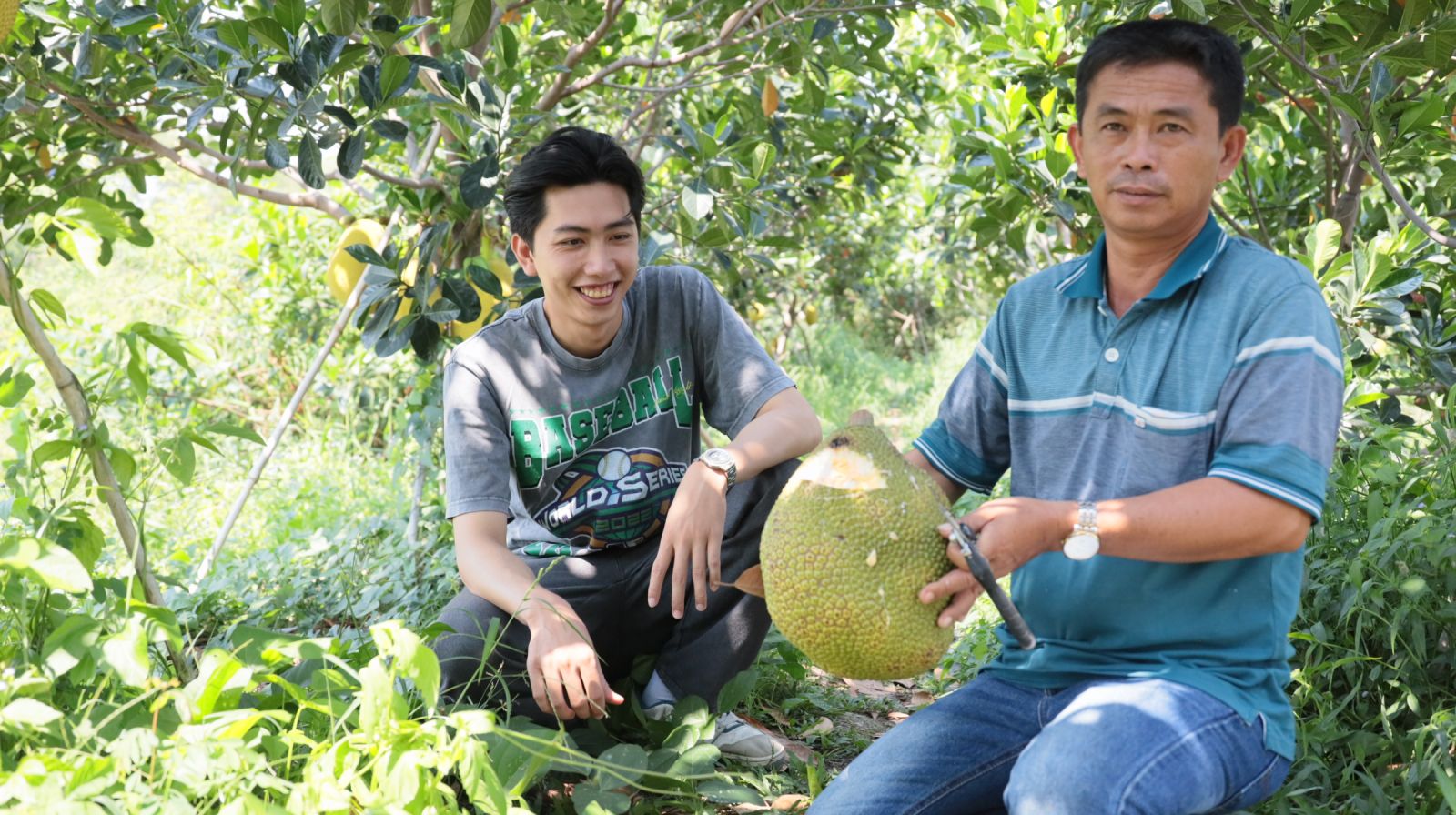
Jackfruit trees flower after about 18 months. From this point on, growers need to spray pesticides to prevent bee stings that cause black rot disease. Each flowering period produces a large number of fruits, but depending on the tree's health, growers can leave more or fewer fruits per tree. However, according to Mr. Duoc, for newly fruiting trees, only about 2 fruits per tree should be left, and when the tree is about 3 years old or older, the number can be increased to 4-5 fruits.
With current jackfruit prices ranging from 45,000 to over 50,000 VND/kg, each jackfruit tree can bring growers approximately 3 million to 5 million VND per year.
Unique double-root planting model
While researching the cultivation model of red-fleshed, yellow-fibered jackfruit, Mr. Ngo Van Duoc was surprised to see that many farmers in the Mekong Delta provinces such as Hau Giang and Can Tho planted up to two jackfruit trees per mound (double rootstock), with 1,000 trees per hectare, double the number compared to traditional methods.
Upon further study of this model, Mr. Duoc realized that, unlike other jackfruit varieties such as the super-early Thai jackfruit, the broadleaf jackfruit, and some other fruit trees, the red-fleshed, yellow-fiber jackfruit is particularly suitable for double-root planting. This is because the tree produces fewer branches, there is no competition for nutrients, and the fruiting is not affected; the fruit remains large, averaging 10-14 kg per fruit.
After learning about the double-rooted jackfruit tree planting model, Mr. Ngo Van Duoc decided to apply it to an area of about 4 hectares in Tra Sim hamlet, Ninh Dien commune. Currently, this jackfruit orchard is 18 months old and has begun to yield its first harvests.
According to Mr. Duoc, when choosing to plant using the double-root model, he studied the practices in many jackfruit orchards in the Mekong Delta provinces. He found that planting two trees in a single mound requires adhering to the necessary spacing for growth, such as a minimum distance of 1 meter between trees and 5 meters between rows to ensure that the trees do not compete for nutrients, the canopies are evenly distributed, and there is no crowding that could cause the trunks to lean in a "V" shape. In addition, planting two trees close together also helps to reduce the risk of them falling over due to wind.
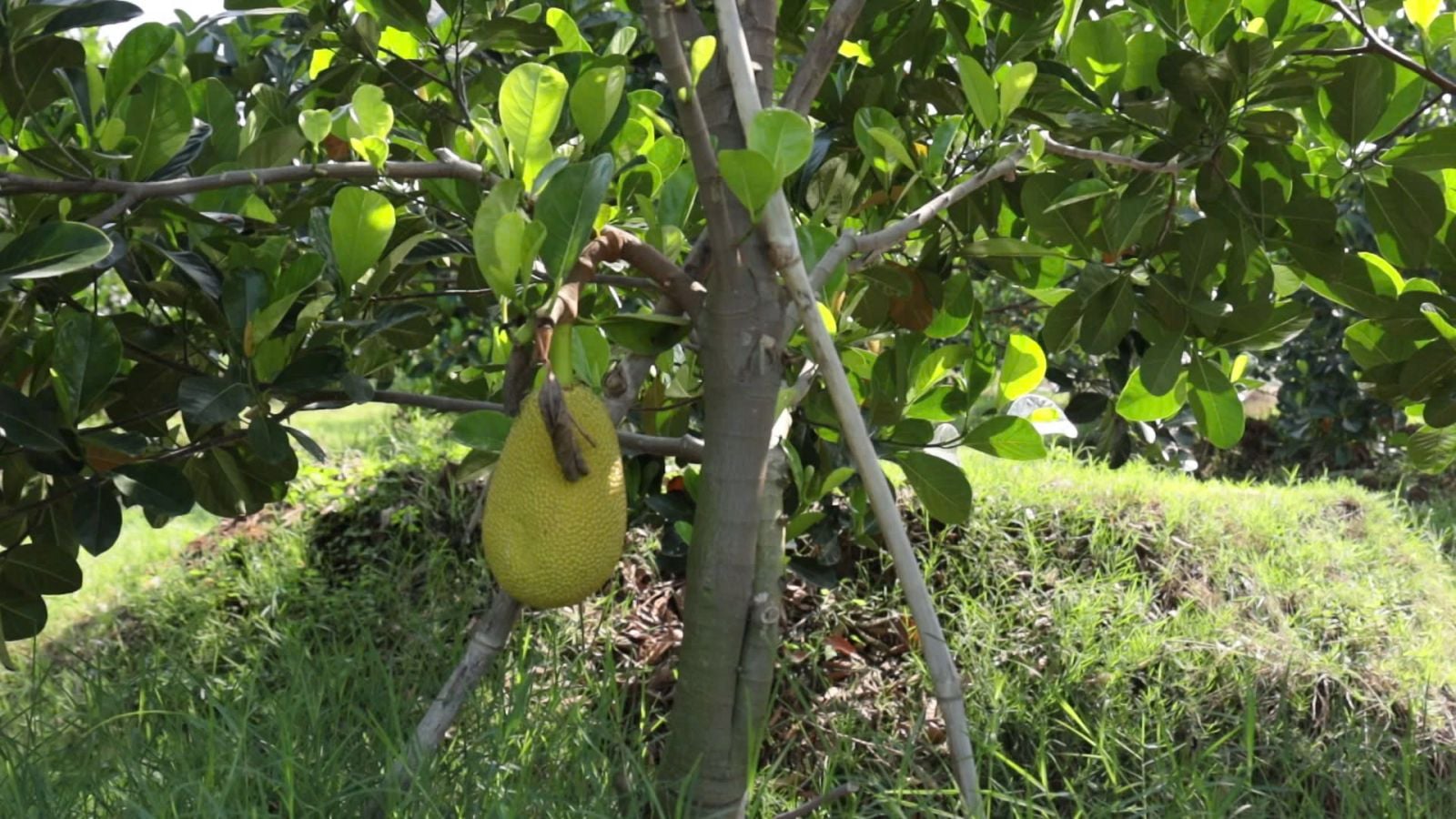
"This model requires farmers to spend more money on seedlings and initial care, but in return, when it bears fruit, the yield will be double compared to planting only one tree per plot. Proof of this is that my jackfruit orchard is still thriving, the trees are very uniform, and there's no difference in size between trees planted in the same plot like with some other crops," Mr. Duoc added.
Linking for sustainable development
In recent years, not only durian has brought huge incomes to farmers, but jackfruit has also become a crop that many farmers in the province have switched to, bringing high economic value. Among them, the red-fleshed, yellow-fibered jackfruit is currently one of the crops that is developing strongly thanks to its stable price.
Recognizing the needs of farmers, at the end of 2024, Mr. Ngo Van Duoc spearheaded the establishment of the Phu Thinh TN Agricultural Cooperative with 4 members, specializing in growing red-fleshed, yellow-fibered jackfruit on a total area of over 60 hectares. In addition, the cooperative also handles the distribution of seedlings and collaborates with businesses, providing fertilizers, pesticides, and purchasing goods to ensure a self-sufficient supply from production to market.
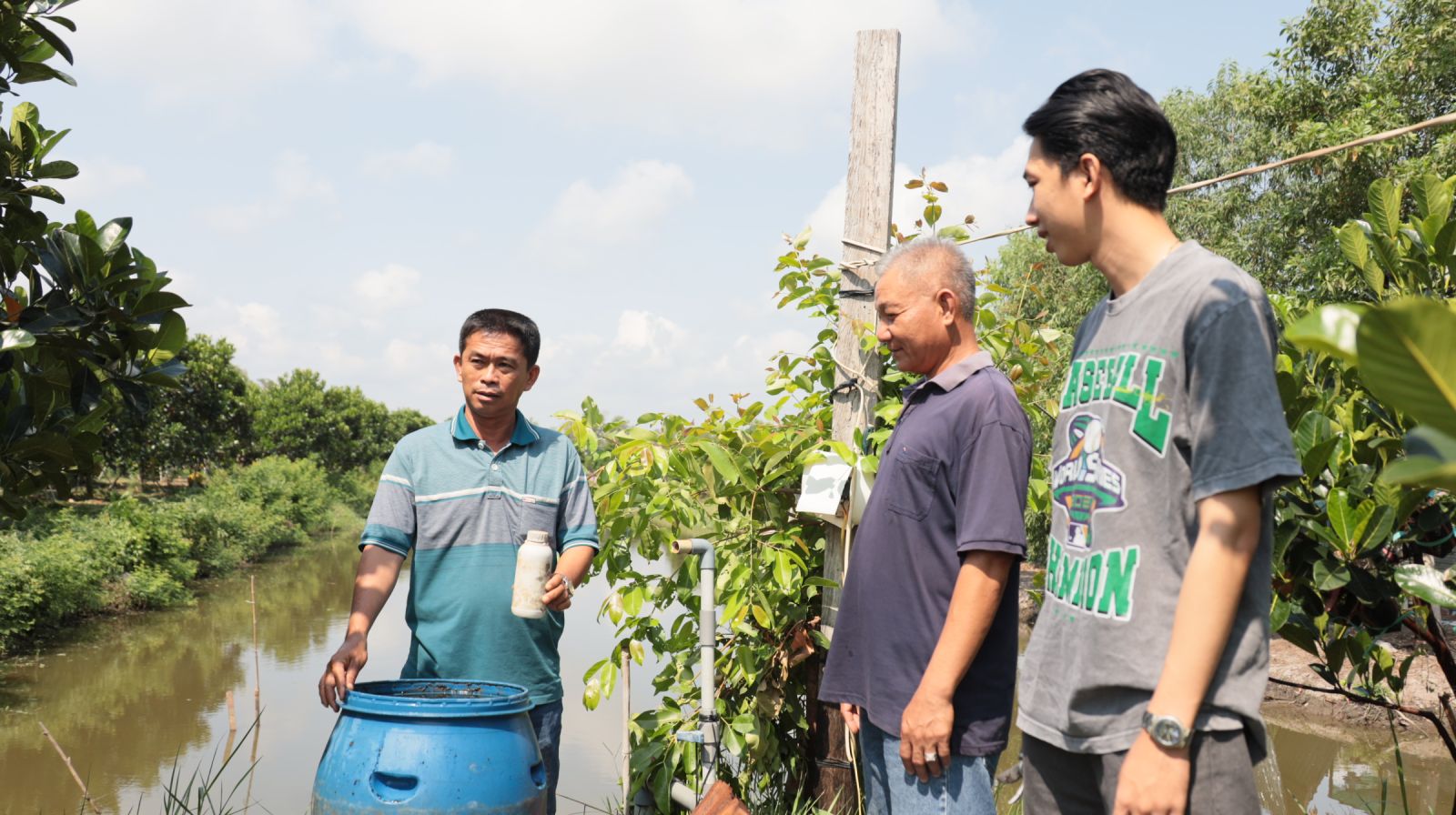
According to Mr. Duoc, when joining the cooperative, farmers will receive guidance on every step, from preparing before planting to providing certified seedlings of "superior quality," and fertilizers and pesticides at prices 15%-20% lower than the market price. During the cultivation process, the cooperative will also send people to provide step-by-step guidance, ensuring that the trees develop uniformly and stably until harvest, and the jackfruit will be purchased at market price.
The establishment of the cooperative by Mr. Ngo Van Duoc and other households specializing in growing red-fleshed, yellow-fibered jackfruit is a significant step forward in production linkages. It not only facilitates farmers in exchanging production experiences and stabilizing output but also aims to obtain planting area codes, serving the cooperative's export goals.
Minh Duong
Source: https://baotayninh.vn/trien-vong-mo-hinh-trong-mit-ruot-do-xo-vang-a187944.html
















































































Comment (0)