

Aspiration for peace
The works in the collection "Yellow Skin Songs" not only reflect the pain of the times, but also express a heartfelt yearning for peace, harmony, and healing the wounds left by war.
Through the language of music, Trịnh Công Sơn quietly entered into everyday moments, thereby evoking profound emotions and humanistic reflections. For him, war was not only a confrontation between two opposing sides but also a painful wound inflicted on the lives of individuals, especially unarmed civilians.
In the song "Mother of O Ly," Trinh Cong Son portrays the image of a mother from Central Vietnam with a simple yet haunting narrative voice:
Setting off one morning
Mother went to the backyard.
Ask if the pumpkin on the vine is still green.
This is a true story, about an elderly mother in Quang Tri in 1972 who walked 120km to Hue with only a pumpkin in her hand – her only remaining possession amidst the chaos of war. The short, few-word song is deeply moving. It reveals the extraordinary inner strength of these small people – women who bear the burden of both loss and the fragile hope of reunion.
Similarly, in the song "Mother's Folk Song," Trinh Cong Son allows the mother's lullaby to become the sorrowful echo of a generation living amidst bombs and bullets:
Mother sits rocking her child in a hammock, sadly enduring the passing years and wasting away.
The mother gazes at her homeland, hears her child's sorrow, and sheds tears of remorse.
Tears of remorse bring the child back to a life of eternal shame.
A river flows endlessly towards the sky, carrying the uncertain fate of humankind.
That lullaby wasn't just for one child; it was a lullaby for the entire nation during a time of division. In that lullaby, there were emotions, tears, and the pure and enduring love of a mother for her homeland.
It is this love, which permeates Trinh Cong Son's music, that has become the foundation for him to convey his message of peace. Peace, for him, does not begin with negotiations or slogans, but begins in the human heart – where there is still love, concern, and a pang of pain at the suffering of fellow human beings.
Joining hands in a big circle
And it was also from the aspiration for peace and reunification that Trinh Cong Son wrote the song "Joining Hands in a Great Circle." The song was created in 1968, when the country was still divided and the war showed no signs of ending.
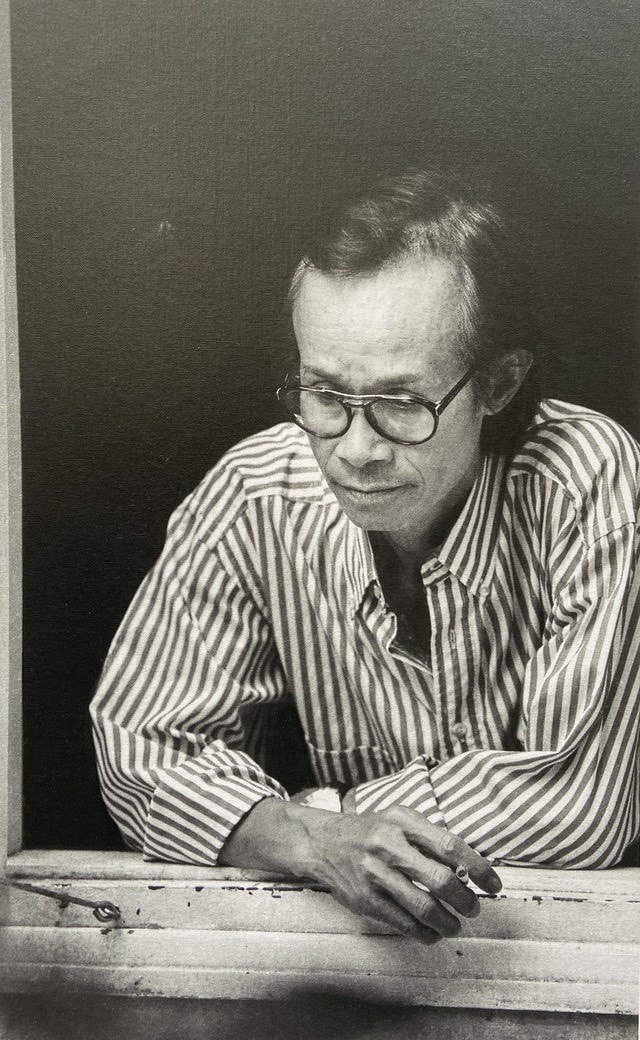
The song's melody is stirring, and the lyrics repeatedly use the verb "connect" as a plea. Trịnh Công Sơn wished not only to connect earth and sky, not only to connect North and South, but also to bring together people, hearts that seemed unable to beat in unison. For him, peace was a full embrace, a Vietnam united from South to North.
The mountains and forests stretch out their arms to connect with the distant sea.
We extend our arms wide to unite the land.
Each lyric carries a layer of meaning. Connecting the flag to the drop of blood. Connecting the city to the countryside. Connecting the living with the dead. It is a peace of compassion, of tolerance, of memory and future intertwined.
Peace is not just on paper or maps, but a peace that exists in every selfless act, every compassionate handshake, every tear shed in empathy between people of the same blood. It is a peace that begins with forgiveness and remembering each other as parts of a common home - the Fatherland.
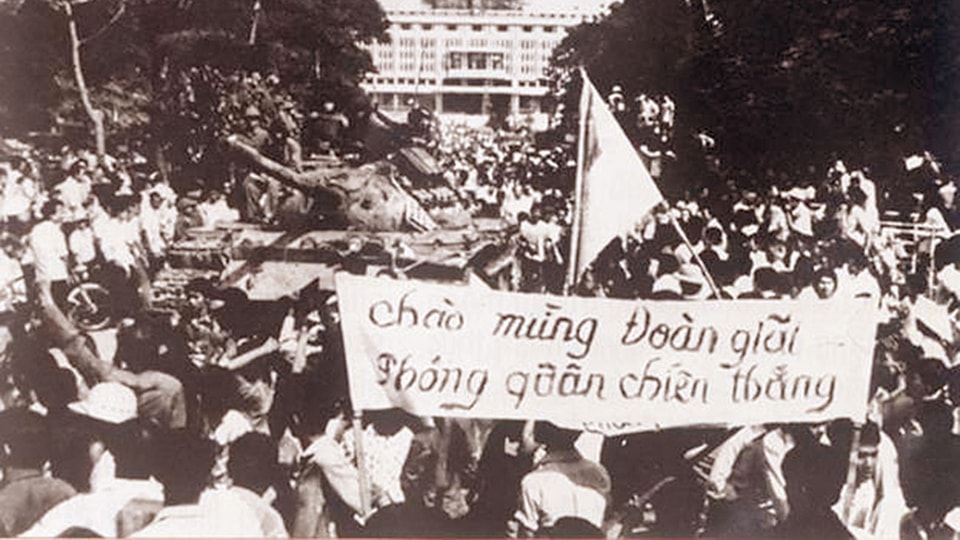
Trịnh Công Sơn's aspirations later became a reality. On the afternoon of April 30, 1975, the musician Trịnh Công Sơn was present at Saigon Radio Station and sang "Nối vòng tay lớn" (Joining Hands in a Great Circle). It wasn't just an ordinary performance, but a moment where art and history intersected. Amidst the overwhelming joy of millions, the song rose like a vow for the future: to move forward together, carrying no hatred, only hope.
After the complete reunification of the country, Trinh Cong Son's "Joining Hands in a Great Circle" quickly became a cultural symbol spreading throughout the nation. The song resonated in schoolyards, at art exchanges, and in community programs – like a catalyst that united people's hearts.
Even today, after so many changes, it remains relevant. Because peace is never a given. Peace is a journey to be preserved through wisdom, emotion, tolerance, and tireless effort.
Music cannot stop bombs from falling, but it can awaken people's conscience. And where there is compassion, there is still a chance for peace to flourish.
The legacy that Trịnh Công Sơn left behind is not just his timeless love songs. He was a musician of love, of pain, and of unfulfilled dreams. But above all, he was a musician of peace – a peace that begins in the heart, spreads through his melodies, and continues to be preserved by the outstretched arms that connect generations.
Source: https://baoquangnam.vn/trinh-cong-son-and-the-big-circle-3153758.html

![[Photo] General Secretary To Lam visits the exhibition space showcasing books, photo exhibitions, and achievements of digital transformation in journalism.](/_next/image?url=https%3A%2F%2Fvphoto.vietnam.vn%2Fthumb%2F1200x675%2Fvietnam%2Fresource%2FIMAGE%2F2025%2F12%2F19%2F1766110879215_1766110240024-jpg.webp&w=3840&q=75)
![[Photo] Enchanting ancient rose garden on the mountainside in Nghe An](/_next/image?url=https%3A%2F%2Fvphoto.vietnam.vn%2Fthumb%2F1200x675%2Fvietnam%2Fresource%2FIMAGE%2F2025%2F12%2F19%2F1766109900916_vuon-hong-chin-do-thu-hut-du-khach-toi-check-in-o-ha-noi-3-20162778-1671624890024-1671624890104198100259.jpeg&w=3840&q=75)




























































Comment (0)