

Collective economy (The cooperative economy) encompasses various forms of cooperative economic organizations, developing from basic to advanced levels, including: cooperative groups, cooperatives, cooperative unions, etc. Over the years, Quang Ninh province has consistently focused on and implemented numerous policies and mechanisms to develop the cooperative economy. The cooperative economy has gradually developed strongly and achieved many encouraging results, making a positive contribution to the implementation of national target programs on building new rural areas, sustainable poverty reduction, and socio-economic development in ethnic minority and mountainous regions.
To facilitate the development of the cooperative economy, in July 2023, the Provincial People's Council issued Resolution No. 155/NQ-HĐND on key solutions to support businesses, cooperatives, and business households in improving production and business efficiency and sustainable development. The province continues to accompany and provide maximum support to cooperatives to proactively adapt to the new situation, stabilize production and business activities, and enhance competitiveness. At the same time, priority is given to preferential credit sources to promptly meet the legitimate and reasonable borrowing needs of cooperatives; procedures are simplified, creating conditions to improve access to bank credit to unlock resources for cooperative development.
The province is increasing efforts to attract and encourage cooperatives and investment groups to develop linkages along the agricultural product value chain. Currently, the province has 40 linkage chains with 26 cooperatives participating. Many cooperatives have already partnered with businesses to market their products, such as: Binh Duong Agricultural Service Cooperative (Dong Trieu Town) partnering with OISY Co., Ltd. to invest in the production and sale of potatoes on a 40-hectare area; Hoa Phong High-Quality Service Cooperative (Dong Trieu Town) partnering with Mao Khe Coal Joint Stock Company to supply safe vegetables, rice, eggs, meat, and fish to the company's canteen; and Quang Ninh Agricultural and Pharmaceutical Cooperative Union (Ha Long City) partnering with Sachainchi Vietnam Joint Stock Company, Tan Cuong Hoang Binh Tea Company, and Bao Minh Confectionery Joint Stock Company to provide raw materials, processing, and cultivation and processing techniques for confectionery products.
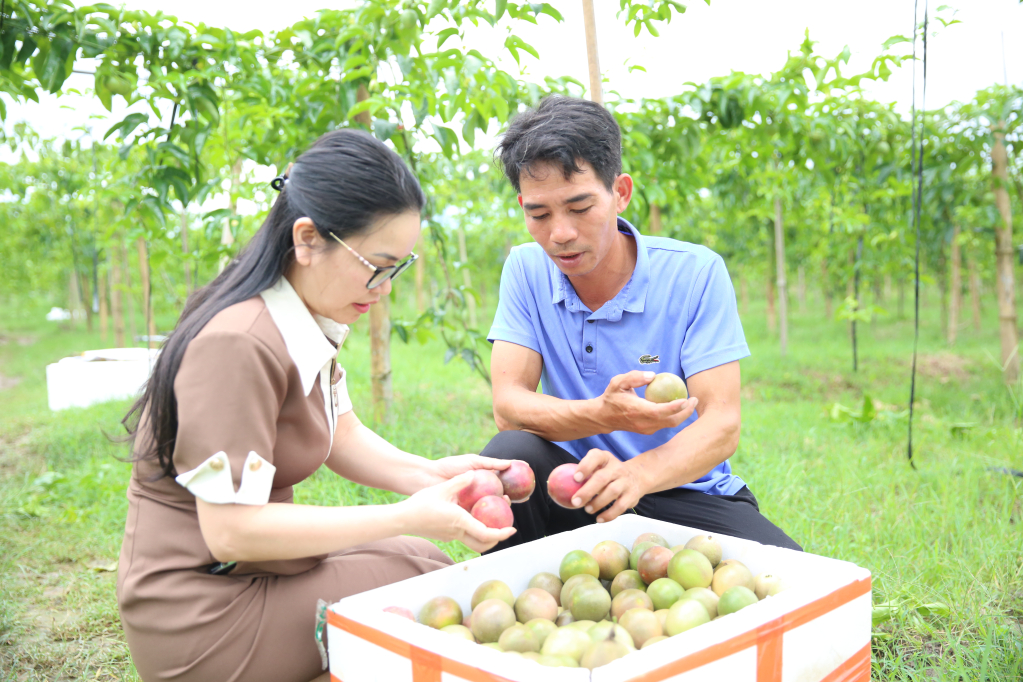
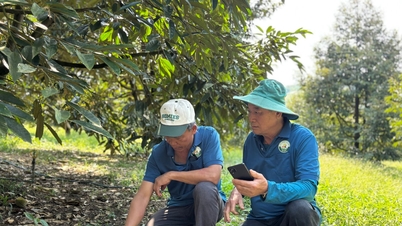
Mr. Dang Van Giang, Director of Truong Giang General Agricultural Cooperative, shared: "Previously, the cooperative mainly grew vegetables and short-term crops, but found the efficiency to be low. In November 2023, after research and with the support of Dam Ha district in terms of loans, training funds, seeds, fertilizers, and supplies, the cooperative switched to growing passion fruit on an area of over 3 hectares using organic farming methods. The process of selecting seeds, planting, caring for, harvesting, and preserving the passion fruit is coordinated by officials from Dam Ha commune in collaboration with the District Agricultural Technical Service Center and directly linked with the purchasing unit, Saigon - Gia Lai Joint Stock Company, to ensure product consumption. The passion fruit product has been tested and meets the standard of being free of 570 banned agricultural substances, initially ensuring the conditions for export. Developing the cooperative economy, creating linkages, and establishing a production chain has helped our cooperative in particular, and cooperatives in the province in general, to create a new direction, expand opportunities for development and product consumption."
With the province's focus on developing the cooperative economy through support in land policies, infrastructure, science and technology, capital, trade promotion, human resource training, and strengthening value chain linkages, the number of cooperatives and cooperative groups in the province has grown significantly and achieved many positive results in production and business activities, creating effective value chain linkages. To date, the province has developed 821 cooperatives and 3 cooperative unions operating in various fields, attracting 44,377 members. The average revenue and profit of cooperatives in the agriculture, forestry, and fisheries sectors is 850 million VND/year, with an average profit of approximately 150 million VND/year. The province has 215 cooperative groups, 2 agricultural and general cooperative unions, and 230 farms. The average revenue of each cooperative group is 850 million VND/year, and the average profit per member is 150 million VND/year.
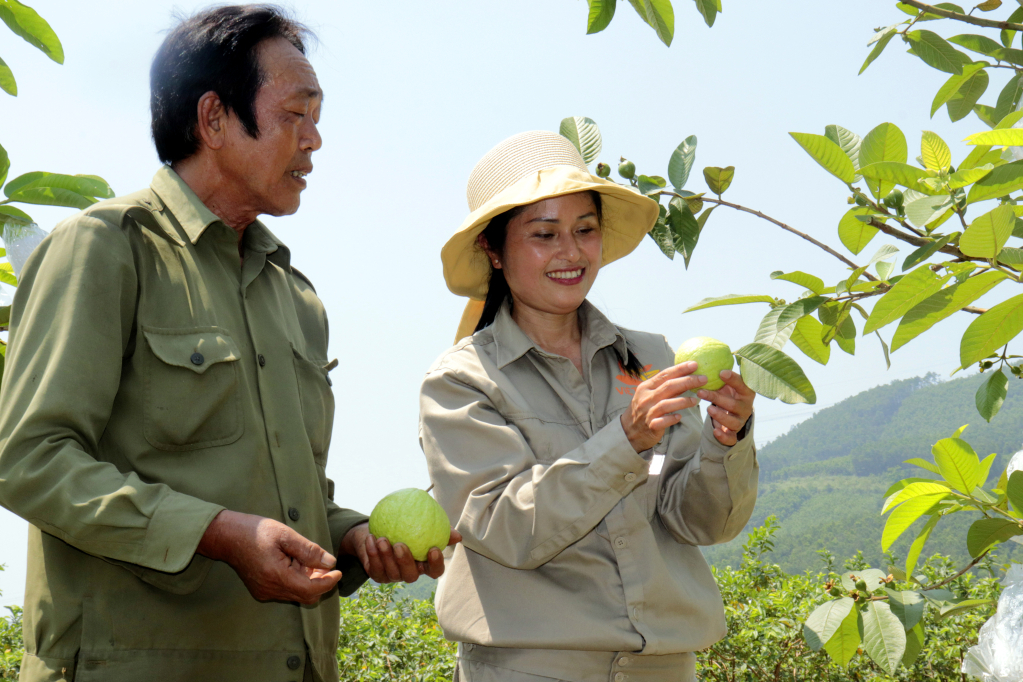
The formation of supply chains has helped cooperatives operate more efficiently, increase sustainability, and develop favorably. However, to further enhance the effectiveness and diversification of these supply chains, stronger mechanisms and policies are needed for this sector. Currently, the development of cooperative linkages still faces difficulties that need to be addressed, such as: the supply chains within cooperatives remain fragmented and loosely structured based on a "buy and sell" model; the awareness of people and businesses about the cooperative economy is still low; many cooperatives are small in scale; and the human resources for development and management within cooperatives do not yet meet development requirements.
To further promote and enhance the role of the cooperative economy in overall development, the province continues to disseminate information and raise awareness among officials, citizens, and businesses about the importance of the cooperative economy. Departments, agencies, and local governments will strengthen efforts to gather and exchange information, gradually resolving difficulties and creating favorable conditions for the legitimate needs of cooperative organizations; promote the replication of advanced models and best practices, especially with effective cooperatives and cooperative groups linked to sustainable value chains; strengthen cooperation, linkages, and joint ventures in production along the value chain of key products and OCOP products based on the application of science and technology in production; and select models in various fields to participate in the digital transformation process to develop into exemplary and effective cooperative and cooperative group models.
Source
![[Photo] The courage of new recruits of Brigade 144 on the training ground.](https://vphoto.vietnam.vn/thumb/1200x675/vietnam/resource/IMAGE/2026/05/27/1779881651341_anh-man-hinh-2026-05-27-luc-18-32-52.png)



![[Photo] The heat at the fireworks display site on the opening night of the Da Nang International Fireworks Festival 2026](https://vphoto.vietnam.vn/thumb/1200x675/vietnam/resource/IMAGE/2026/05/27/1779889741485_ndo_br_z7872039145157-fecaba5112f39e8352544099d7ef4738-5140-jpg.webp)


























































![[Photo] The courage of new recruits of Brigade 144 on the training ground.](https://vphoto.vietnam.vn/thumb/402x226/vietnam/resource/IMAGE/2026/05/27/1779881651341_anh-man-hinh-2026-05-27-luc-18-32-52.png)



























Comment (0)