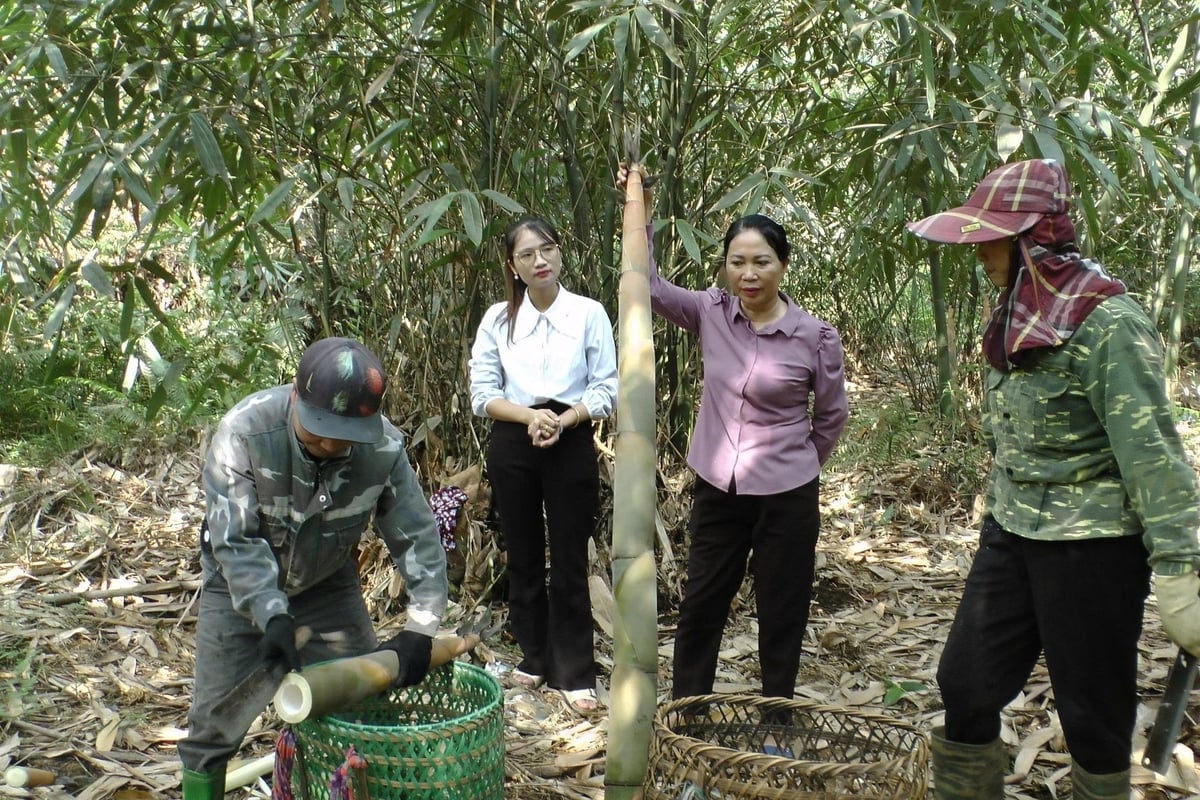
The Bat Do bamboo hills generate hundreds of millions of dong in income annually for the people in the highlands. Photo: Thanh Tien.
Bat Do bamboo replaces less efficient forestry trees.
The current Quy Mong commune in Lao Cai province was formed after the merger of three communes: Y Can, Quy Mong, and Kien Thanh, formerly part of Tran Yen district, Yen Bai province. This area is home to a large population of ethnic minorities such as the Dao, Tay, and Mong. The lives of the people are primarily based on agriculture and forestry. More than ten years ago, the poverty rate was around 20%, transportation infrastructure was underdeveloped, the area under low-value crops like cinnamon was limited, and people lacked access to information on farming techniques and markets.
In recent years, the restructuring of crop patterns has yielded positive results, especially the cultivation of Bat Do bamboo. Besides its high economic value, access to technical information, markets, and proper cultivation training has helped people improve productivity, reduce risks, and increase income, thereby rapidly reducing the poverty rate.
Mr. Le Van Trieu, residing in Tan Viet village, Quy Mong commune, used to cultivate Bodhi trees on 0.5 hectares of hillside land, but the results were poor. Thanks to guidance from agricultural extension officers through training courses and direct discussions, Mr. Trieu decided to switch to cultivating Bat Do bamboo.
To date, his family's bamboo garden, with its 120 bamboo plants, has entered its sixth year. On average, they harvest over 8 tons of bamboo shoots annually. With a stable selling price of 5,000 - 5,500 VND/kg, the bamboo garden generates revenue of over 40 million VND. Mr. Trieu plans that after harvesting over 1.5 hectares of cinnamon trees next year, he will replace them with Bat Do bamboo to ensure a stable annual income.
A major advantage of Bat Do bamboo is its simple cultivation technique. Mr. Trieu's family uses well-rotted manure to fertilize the bamboo hill before the rainy season. This method not only helps the plants grow well but also protects the soil, retains moisture, and prevents soil degradation and compaction.
“Unlike the Bodhi tree, which was frequently attacked by leaf-eating insects, the Bat Do bamboo is virtually free from pests and diseases. Its dense canopy naturally suppresses weeds, completely eliminating the cost and negative impact of chemical pesticides. The bamboo has a strong, fibrous root system that effectively retains soil and water,” Mr. Trieu explained.
Similar to Mr. Trieu's family, Mrs. Ha Thi Toan's family in Luong An village, Hung Khanh commune, previously cultivated corn and mulberry trees in an area near the stream. However, frequent flooding and pest infestations prevented silkworm farming from achieving the expected economic results. Thanks to technical information about Bat Do bamboo, the bamboo shoot market, and cultivation techniques disseminated through the commune's information channels, Mrs. Toan decided to convert 2 hectares of land to Bat Do bamboo.
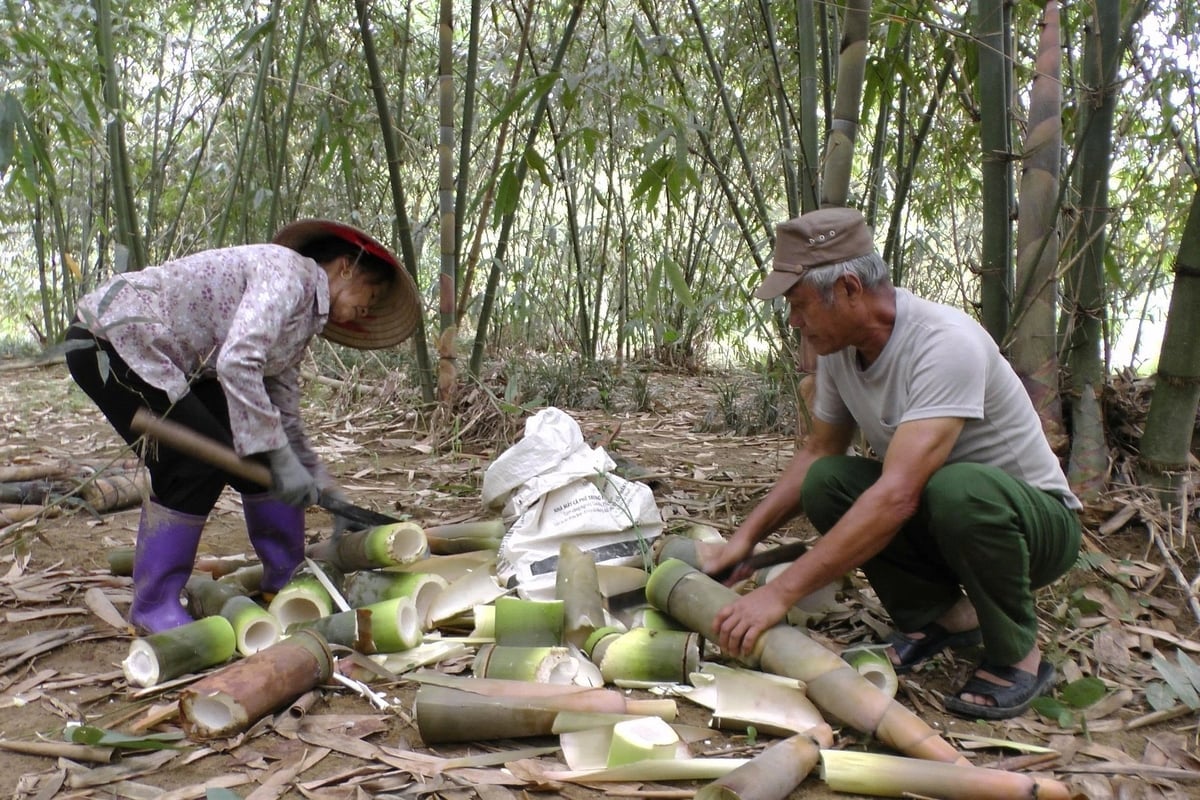
Mrs. Toán and her husband are busy harvesting bamboo shoots. Photo: Thanh Tiến.
Ms. Toán said that plowing and tilling the land to grow short-term crops is very hard work. Growing Bat Do bamboo only requires a one-time investment but yields harvests for many years, and the care required is much less strenuous. Currently, she earns about 150 million VND per year, which is much more stable than before. She shared: "If we didn't have timely information, know how to care for the bamboo, and understand the market demand, we wouldn't have dared to invest in Bat Do bamboo."
Continue to encourage the expansion of areas for growing multi-benefit crops.
According to Mr. Tran Van Tam, Vice Chairman of the People's Committee of Hung Khanh commune, the total area of bamboo in the commune is now nearly 2,000 hectares. Bat Do bamboo has been identified as the main crop in the local economic development program because it has proven to be superior, replacing low-value crops such as bodhi, acacia, and cassava... on hilly and riverside land. Households that fully participated in training sessions and information exchange groups have quickly increased their income, and many households have escaped poverty thanks to applying the right cultivation techniques and choosing the right time to harvest based on market information.
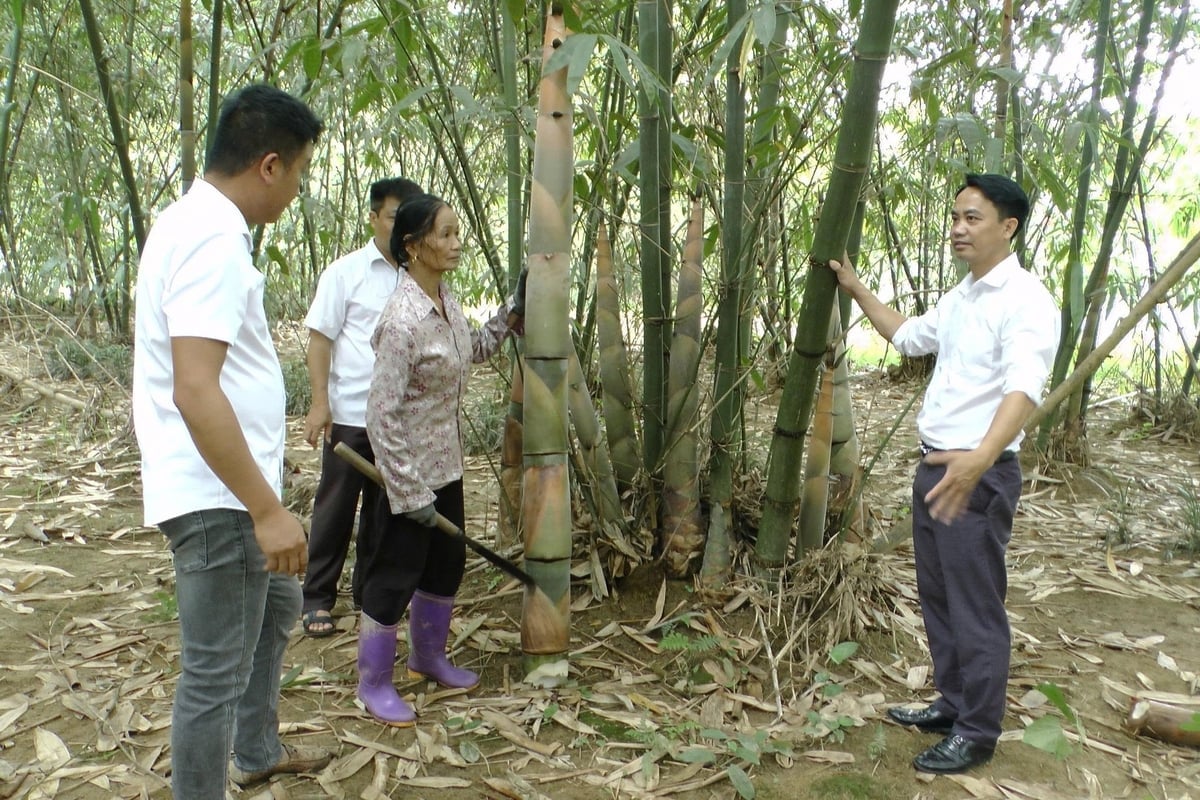
Hung Khanh commune currently has nearly 2,000 hectares of Bat Do bamboo. Photo: Thanh Tien.
The Bat Do bamboo not only brings economic benefits but also protects the environment and prevents soil erosion. More importantly, access to technical information and markets has helped people confidently invest, proactively cultivate, and sustainably expand the planted area.
The Bat Do bamboo not only brings economic benefits but also protects the environment and prevents soil erosion. More importantly, access to technical information and markets has helped people confidently invest, proactively cultivate, and sustainably expand the planted area. Lao Cai province currently has over 6,000 hectares of Bat Do bamboo, and people are continuing to apply knowledge from various information channels to improve productivity, increase income, and gradually escape poverty sustainably.
In the former Yen Bai province, now Lao Cai province, the Bat Do bamboo is considered a model for cultivation on sloping land because this type of bamboo is suitable for the farming skills of ethnic minorities in the highlands, yielding outstanding economic efficiency, with an average income of 70-100 million VND/ha/year. With intensive cultivation, the income can exceed 100 million VND/ha.
After more than two decades of taking root, the Bat Do bamboo has proven its key role in the economic development of the hilly and forested areas. Local authorities and people are continuing their efforts to expand the planted area. At the same time, they are actively applying science and technology to intensive cultivation processes to improve the yield and quality of commercial bamboo shoots.
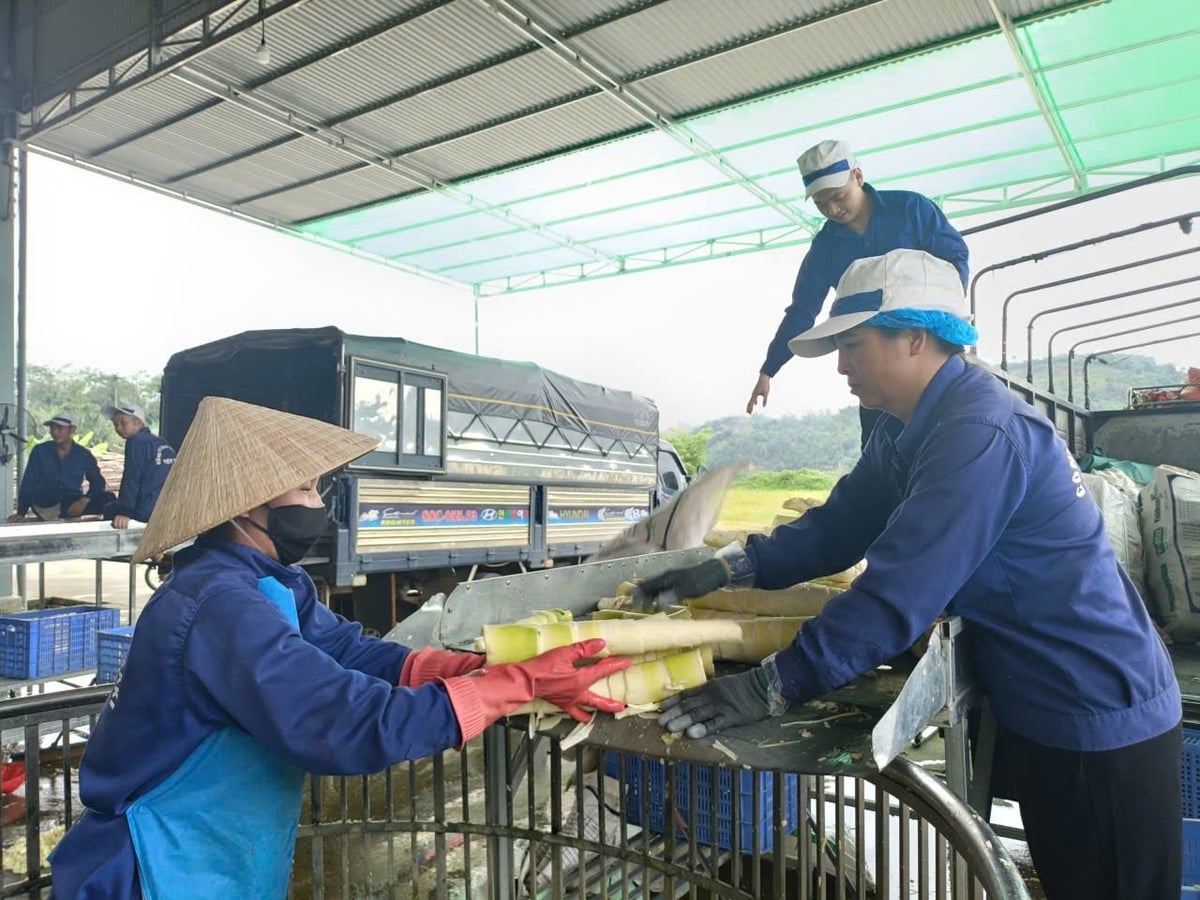
Businesses involved in purchasing, processing, and exporting bamboo shoots are bustling with activity during the bamboo shoot season. Photo: Thanh Tien.
Each year, the bamboo shoot harvest typically begins coinciding with the rainy season, lasting from early July to mid-October. The production of commercial bamboo shoots has continuously increased over the years. Thanks to close cooperation with businesses and purchasing units, the output remains stable with prices ranging from 5,000 to 5,500 VND/kg, ensuring a steady income for growers.
The bamboo shoot harvest for 2025 is now in its final stages, with the province's total bamboo shoot production estimated at over 40,000 tons. It can be affirmed that the Bat Do bamboo has contributed to transforming the lives of people in the highlands, its economic value proven over the past decades.
Source: https://nongnghiepmoitruong.vn/trong-tre-bat-do-phu-xanh-dat-rung-giam-ngheo-ben-vung-d773563.html



![[Photo] General Secretary and President To Lam presides over a meeting on preparations for the review of one year of operation of the three-tiered government system.](https://vphoto.vietnam.vn/thumb/1200x675/vietnam/resource/IMAGE/2026/06/02/1780391821195_a1-bnd-4595-9717-jpg.webp)








![Transforming from Resolution 57: [Part 2] Businesses Lead the Way](https://vphoto.vietnam.vn/thumb/402x226/vietnam/resource/IMAGE/2026/06/02/1780399668663_5332-dsc09931-2-235637_295-235639.jpeg)




![The Essence of Viet Bac Villages: [Part 3] The Precious Fragrance of Nghinh Tuong](https://vphoto.vietnam.vn/thumb/402x226/vietnam/resource/IMAGE/2026/05/29/1780020600366_5237-tinh-tuy-ban-lang-viet-bac-bai-3-chuyen-o-nghinh-tuong-050626_700.jpeg)
![The Quintessence of Northern Vietnam's Villages: [Part 2] The Famous Cassava Noodles of Kunming](https://vphoto.vietnam.vn/thumb/402x226/vietnam/resource/IMAGE/2026/05/28/1779937455892_3929-3144-mien-dong-15-nongnghiep-023138.jpeg)
![The Essence of the Village: [Part 1] Wine on the mountain, tea in the clouds - Bang Phuc](https://vphoto.vietnam.vn/thumb/402x226/vietnam/resource/IMAGE/2026/05/27/1779841729178_3821-1jpg-nongnghiep-103814.jpeg)




















































Comment (0)