

Parental monitoring at Kindergarten No. 14 (Tan Binh District, Ho Chi Minh City) revealed that all food items purchased by the school were 3-4 times more expensive than supermarket prices.
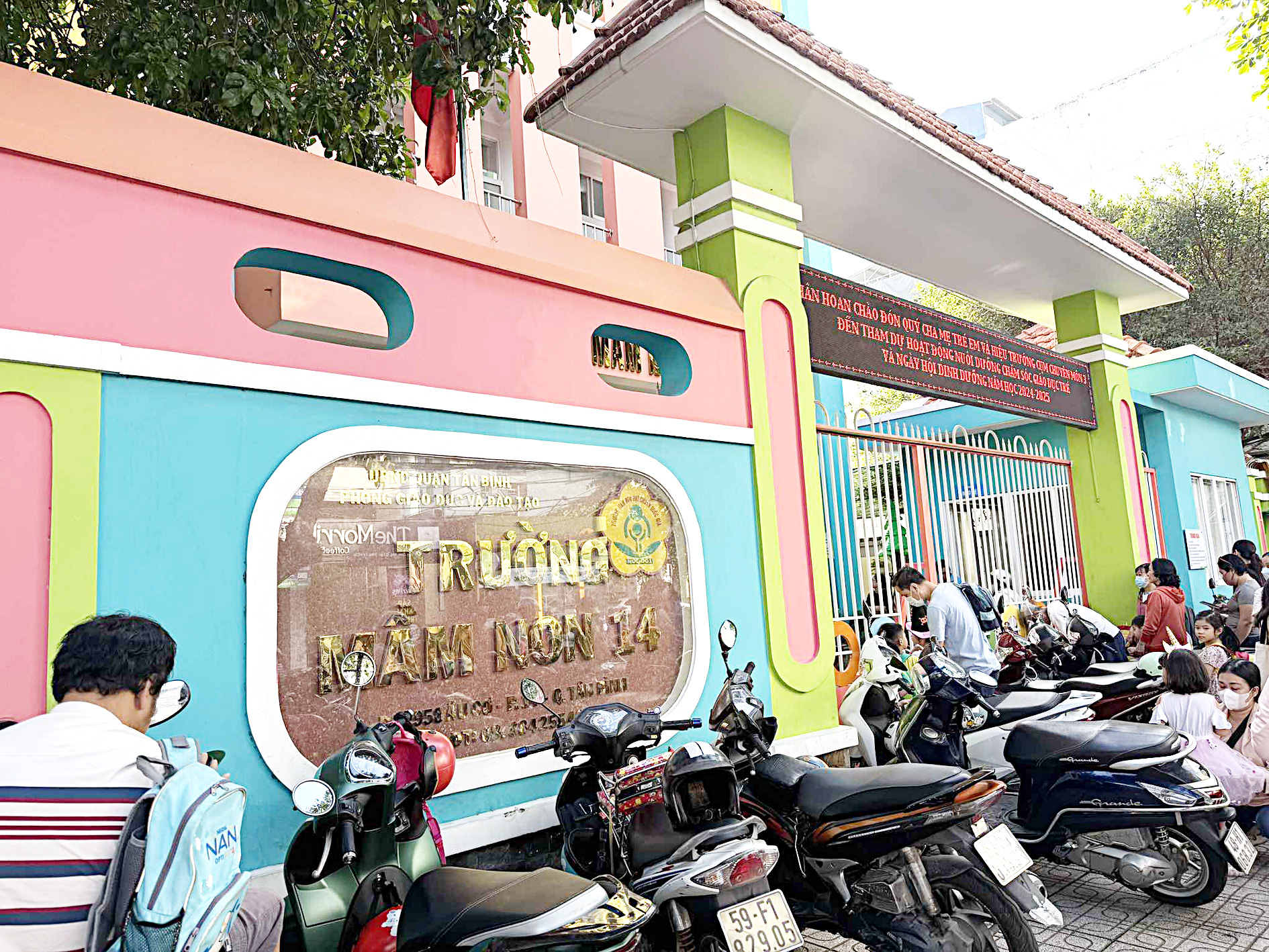
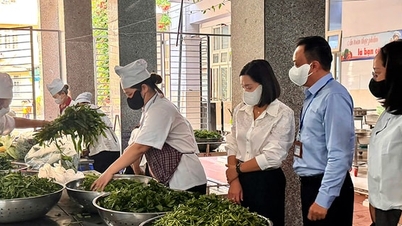
Kindergarten No. 14 (Tan Binh District, Ho Chi Minh City) - Photo: MINH GIANG
On October 24th, Kindergarten No. 14 in Tan Binh District had 358 students eating lunch and afternoon snacks. The food inventory for that day's lunch and afternoon snacks shows that the school used a total of 27 different spices, vegetables, and food items.
It's noteworthy that the school uses a lot of salt and sugar.
The price is 3-4 times higher.
According to the shopping receipt dated October 24th, the school purchased 8kg of red snapper, 9kg of pork loin, and 1.5kg of beef. For the afternoon snack, the school served eel porridge to the students, but only purchased 2.5kg of eel.
Notably, the food purchased by the school is significantly more expensive than what supermarkets sell. Parents comparing the school's purchase price with the retail price at Co.opmart supermarket found that the school's purchase price is many times higher (see table).
Not only processed foods, but even dried, packaged foods that companies buy and resell, such as sugar, salt, cooking oil, and vegetables, are priced much higher than in supermarkets.
Speaking with us, Ms. Huynh Thi Phuong Thao, principal of Kindergarten No. 14, said that the school's food is currently supplied by two companies: Tri Duc Clean Food Co., Ltd., which provides ingredients for breakfast, and Phu Hung Vegetable and Food Co., Ltd., which provides ingredients for lunch.
Regarding the reasons for choosing these two companies, the school's administration stated that at the beginning of the school year, many companies approached them offering food supplies. However, after a meeting, the school found that these two companies were legally compliant and offered the most reasonable prices, so they decided to choose them.
Explaining the high food prices, Ms. Thao said that the school also recognizes the high cost, but there are many legal and personnel regulations that make it very difficult for the school to do otherwise.
According to Ms. Thao, food suppliers must be part of a chain of companies that guarantee food safety. The school also previously inquired with a supermarket that was on this list, but they did not issue tax invoices, did not sign contracts, and payment was made on the day of purchase.
"Food from the market is cheap, but the school can't afford to buy it due to food safety and origin concerns. The school also doesn't have enough staff to handle this."
The school accepts purchases from these companies because of their legal guarantee of food safety, and the fresh, pre-processed food allows kitchen staff to prepare meals for students in a timely manner. Fish are filleted and priced based on weight after the bones are removed.
"Furthermore, these companies sign contracts and allow payment after several months of product use, rather than immediate payment," Ms. Thao added.
Too much sugar
On October 24th, the school's kitchen used 8kg of white granulated sugar, 1kg of iodized salt, 3 liters of fish sauce, 2 liters of fish oil, 1.5 liters of vegetable oil, and 28kg of rice. The school used 2kg of powdered milk for lunch and 7kg of powdered milk for breakfast.
So, the total weight of powdered milk the school gave the students to drink was 9kg, and the amount of sugar and salt the students consumed that day was also 9kg, not including 3 liters of fish sauce. Thus, the amount of salt and sugar the students consumed daily was more than the amount of milk!
It is noteworthy that the amount of sugar and salt that Kindergarten No. 14 provides to its students daily is much higher than the guidelines set by the Ministry of Education and Training and the Ho Chi Minh City Department of Education and Training. In 2022, the Ministry of Education and Training approved guidelines for organizing school meals. The Ho Chi Minh City Department of Education and Training then implemented these guidelines for schools.
Guidelines stipulate that menus should limit the use of sugar and salt. Sugar intake should not exceed 15g/student/day, and salt intake should not exceed 3g/day for children under 5 years old.
With the amount of sugar, salt, and fish sauce used in the school's food preparation, on average, most students (excluding 11 malnourished students and children who eat little and receive milk at lunchtime) consume 19.6g of milk per day while eating up to 22.3g of sugar, 2.8g of salt, and 8.6ml of fish sauce daily.
According to the school's shopping receipts for the five days of October 21, 22, 23, 24, and 28, only on October 21 did the school use 5kg of sugar; the amounts of sugar, salt, fish sauce, and cooking oil remained the same on the other days.
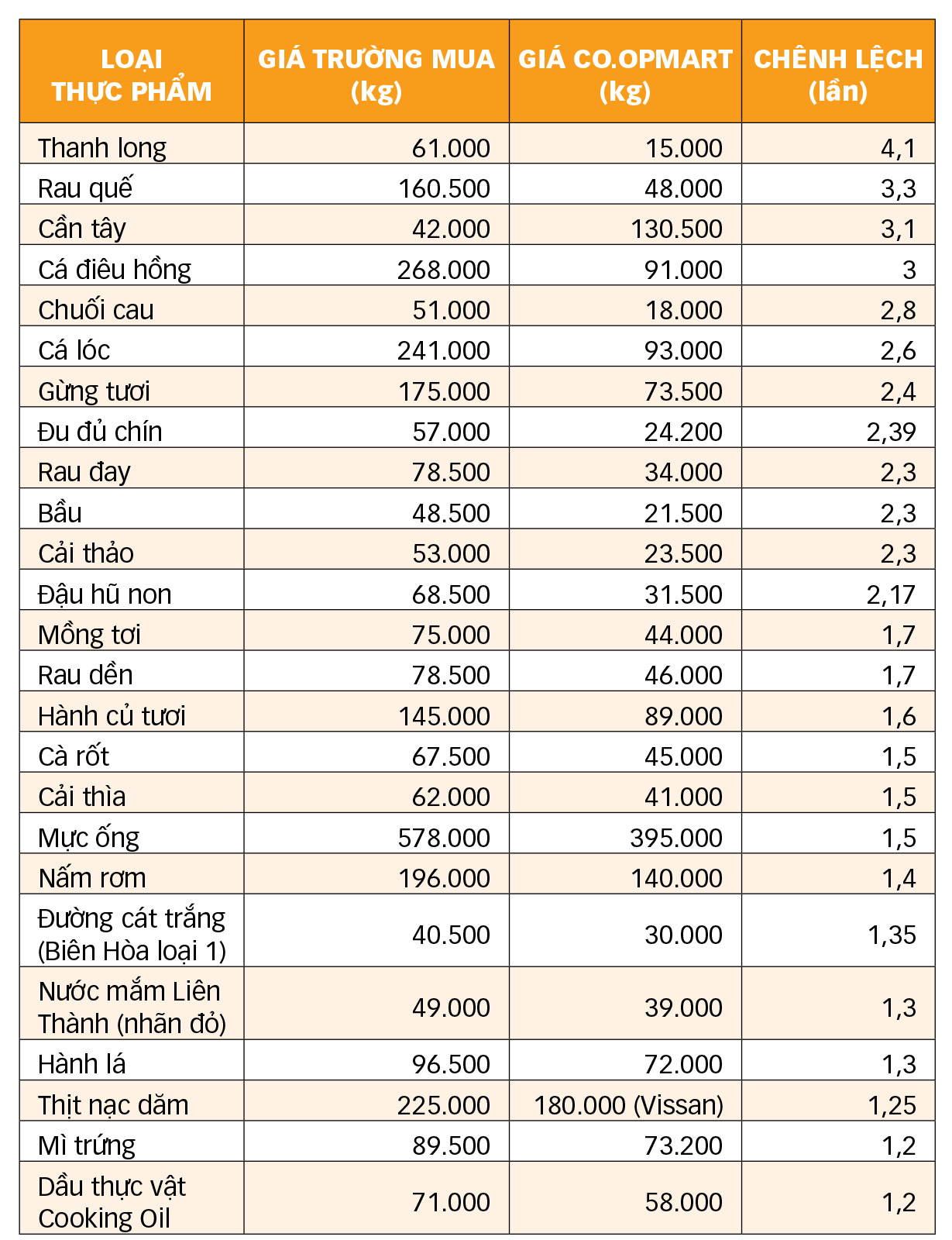
Compare the prices of food purchased by the school from market receipts on October 21, 22, 23, 24, and 28 with the prices at Co.opmart supermarket.
The dangers of eating too much sugar and salt.
Dr. Lam Vinh Nien, head of the Department of Nutrition and Dietetics at the University Medical Center of Ho Chi Minh City, generally stated that if children are developing and consume too much sugar and salt in a day, it will negatively affect their health.
This expert points out: "If children consume a lot of sugar, which creates a feeling of fullness, they tend to eat less healthy foods such as fruits, vegetables, and whole grains... because they are always in a state of satiety. Not to mention that eating too much sugar causes tooth decay, obesity, heart disease, and diabetes."
Consuming too much salt increases the risk of high blood pressure and creates a habit of eating salty foods that can cause health problems for organs like the kidneys, due to increased activity in regulating the body's salt intake. It's especially important to note that for children under 2 years old, their diet should not include added sugar.
The supermarket provides food delivery to the school.
On October 28th, in an interview with Tuoi Tre newspaper, a media representative of the Ho Chi Minh City Commercial Cooperative Union ( Saigon Co.op ) stated that Saigon Co.op currently supplies food to schools in Ho Chi Minh City.
"There are two types of food supply. If it's processed food, usually only large supermarkets provide it. This is because large supermarkets have the scale, manpower, and also strategically plan their locations for convenient access to schools."
For example, Co.opmart Cong Quynh (District 1); Co.opmart Huynh Tan Phat (District 7), Co.opXtra Linh Trung, Co.opXtra Pham Van Dong (Thu Duc City)... Schools located near large supermarkets will have meals delivered. This type of service accounts for 20-30%.
"As for pre-prepared food and dried goods, we supply them to schools with on-site kitchens. These are wholesale customers that Co.opmart sells to in large quantities," this person informed.
Source: https://tuoitre.vn/truong-mua-thuc-pham-voi-gia-tren-troi-20241030224215725.htm


















![[Video] Sunset at Lap An Lagoon – Where the sun sets over the fishing nets](https://vphoto.vietnam.vn/thumb/340x192/vietnam/resource/IMAGE/2026/05/31/1780192137701_beach-landscape-sea-water-nature-grass-745871-pxhere-com.jpeg)









![[Image] A brilliant symphony and explosive power in the skies of Da Nang.](https://vphoto.vietnam.vn/thumb/1200x675/vietnam/resource/IMAGE/2026/05/31/1780196945787_anh-man-hinh-2026-05-31-luc-10-08-51.png)























































Comment (0)