


Vietnam is increasingly integrating deeply into global value chains and production chains.
1. From receiving to contributing: A proactive stance and international responsibility.
A recurring theme throughout the article is the establishment of a new position for Vietnam in international integration. From a position of lagging behind, learning from and absorbing experience, Vietnam is gradually rising to assert its role as a proactive and responsible partner, ready to participate in shaping the international order and rules of the game, especially in emerging fields.
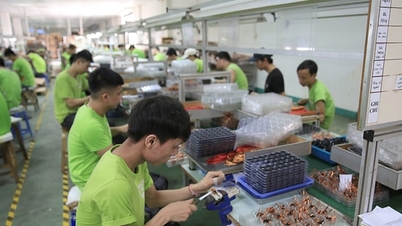
This is a natural development, based on the achievements of integration over the past 40 years, and is also an inevitable requirement as Vietnam increasingly integrates deeply into global value chains and production chains, and participates in many important international economic and political institutions.
2. Affirming the decisive role of internal strength in integration.
A key theoretical point in the article is the relationship between internal and external forces. The General Secretary emphasized that internal forces play a decisive role, while external forces have a supplementary role. This accurately reflects the reality of national development and demonstrates independent, self-reliant, and self-strengthening thinking in a world rapidly shifting towards a multipolar, multi-centered system, fraught with risks and conflicts of interest.
This idea also serves as a guiding principle in policy planning: integration must be closely linked to the restructuring of the economy , innovation of the growth model, development of science and technology, improvement of institutional capacity, and the quality of human resources. Without strengthening domestic capabilities, integration can lead to dependence and vulnerability to external shocks.
3. Integration is no longer the sole responsibility of the Party and the State.
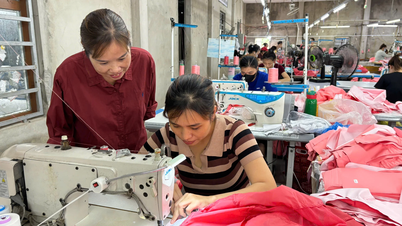
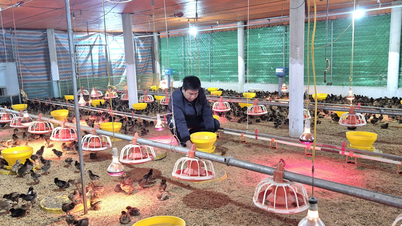
A notable shift in thinking expressed in the article is the view that international integration is not solely the responsibility of the Party and the State, but a cause for the entire population and the entire political system. The people and businesses are identified as the central and key players in the integration process. This is a development consistent with modern integration practices, in which the private sector, social organizations, and local communities play an increasingly important role.
The shift from a mindset focused on "Party and State integration" to one focused on "integration of the entire society" also contributes to building a socialized foundation for integration, thereby enhancing the effectiveness of policy implementation and the adaptability of the entire system.
4. Integration goes hand in hand with protecting national interests.
The General Secretary also emphasized that international integration does not mean compromise or abandonment of principles, but rather a process of both cooperation and struggle. This reflects a balanced approach between expanding cooperation with partners while maintaining independence, sovereignty, and ensuring national interests, based on respect for international law.
In a volatile world, the mindset of "cooperation to struggle and struggle to cooperate" is a practical tool that helps Vietnam maintain stability and development while preserving its unique position and identity.
5. Linking integration, institutional reform, and innovation.
A strategically valuable point in the article is the connection between international integration and domestic reform policies, especially the three major resolutions: Resolution 18 (on streamlining the administrative apparatus), Resolution 57 (on science, technology, innovation, and digital transformation), and Resolution 59 (on international integration). This trio demonstrates the integration of foreign policy and domestic reform, and the integration of institutional development with the development of national competitiveness.
Only by linking integration with institutional reform and scientific and technological development can Vietnam truly integrate, seize opportunities, and mitigate risks.
6. Human development – a sustainable foundation for integration
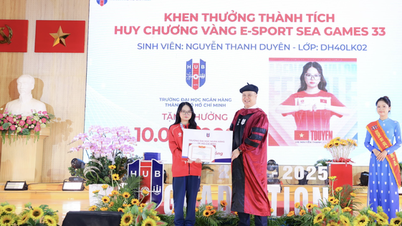
The article pays particular attention to human development and education. The General Secretary mentions the strategy of building a "rising generation" – young citizens with global capabilities, capable of standing shoulder-to-shoulder with their international peers by 2045. This is a profound approach, showing that integration is not just a matter of markets or technology, but first and foremost a story of intellect, culture, and human qualities.
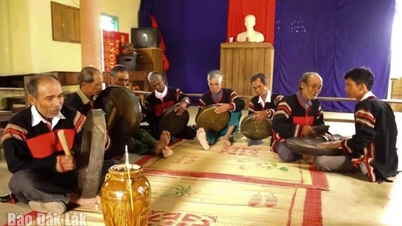
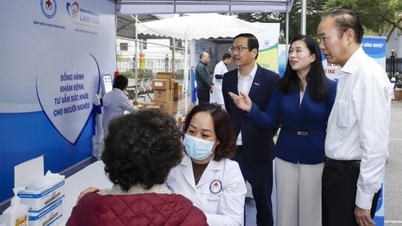
The development orientation towards cultural industries, standardized education and training, specialized healthcare, sustainable tourism, etc., also reflects a comprehensive integration perspective, not limited to economics or politics and security.
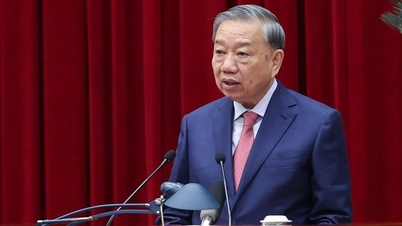
General Secretary To Lam's article sets out a theoretical and practical framework for the country's new integration phase. Integration is not just a foreign policy, but a highly integrated development method in which human resources, institutions, science and technology, and culture play a central role.
The directions outlined in this article need to be institutionalized into specific strategies, implemented synchronously from the central to local levels, from government agencies to businesses and the people. More importantly, this is the time we need to build a new capacity for integration: the capacity for thinking, the capacity for action, and the capacity for adaptation – so that the country can not only "keep pace" but also contribute to "setting the pace" in the flow of global integration.
Dr. Nguyen Si Dung
Source: https://baochinhphu.vn/tu-bai-viet-cua-tong-bi-thu-to-lam-nghi-ve-tu-duy-hoi-nhap-trong-ky-nguyen-moi-1022504110854009.htm


















































Comment (0)