

On the morning of December 17th, at the Party Central Headquarters, the Central Steering Committee on Institutional and Legal Improvement (the Steering Committee) held its second meeting to discuss: the draft report on the implementation results of Resolution No. 66-NQ/TW of the Politburo in 2025 and the direction and tasks for 2026; the draft work program for 2026 of the Steering Committee; the project "Improving the structure of the Vietnamese legal system to meet the requirements of national development in the new era"; the project on legislative orientation for the 16th National Assembly term; the report on the results of handling and resolving difficulties, obstacles, and "bottlenecks" caused by legal regulations; the report on major policies to mobilize and unlock financial resources for economic development; the report on mechanisms and policies for the development of small and medium-sized enterprises; and the report on some major orientations for improving legislation in the field of combating corruption, waste, and negative phenomena. Report on improving the legal framework for implementing decentralization, delegation of power, and delineation of authority.
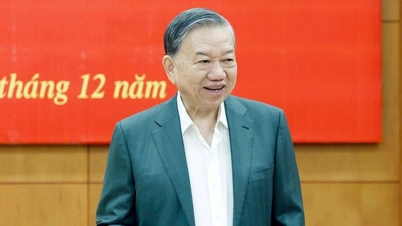
General Secretary To Lam , Head of the Central Steering Committee on Institutional and Legal Improvement, chaired the meeting.
Attending the meeting were members of the Politburo: Prime Minister Pham Minh Chinh, Deputy Head of the Steering Committee; National Assembly Chairman Tran Thanh Man , Deputy Head of the Steering Committee; other members of the Politburo, members of the Secretariat, members of the Central Committee of the Party, leaders of the Government, the National Assembly, the Fatherland Front, members of the Steering Committee and representatives of the leadership of a number of ministries, departments and central agencies.
Focus on removing bottlenecks as quickly as possible.
After hearing the reports and discussions, concluding the session, General Secretary To Lam acknowledged and highly appreciated the insightful, substantive, and comprehensive opinions expressed; and commended the meticulous and thorough preparation of the Standing Committee and relevant agencies.
Regarding the group of issues related to evaluating the work in 2025 and the tasks for 2026 (including 3 contents: Report on the results of implementing Resolution 66-NQ/TW in 2025, directions and tasks for 2026; Report on the results of addressing difficulties, obstacles, and bottlenecks in legal regulations; and the 2026 work program of the Steering Committee), the General Secretary requested the Party Committee of the National Assembly, the Party Committee of the Government, and the Party Committees of ministries, departments, and agencies at the central and local levels to continue to thoroughly understand and fully implement the goals, requirements, and tasks set out in the Resolution, emphasizing that "what has been done well must be done even better."
In addition to regular scheduled tasks, focus should be placed on three key areas: immediately reviewing and institutionalizing the major viewpoints and policies outlined in the documents of the 14th National Congress; urgently completing the laws and regulatory resolutions recently passed by the 10th session of the 15th National Assembly, ensuring timely issuance of guiding documents and necessary conditions for implementation; and focusing on quickly resolving legal bottlenecks, difficulties, and obstacles to prevent them from hindering development.
The Standing Office of the Steering Committee will incorporate the feedback from the delegates attending the meeting to finalize and officially sign the Report and Work Program for 2026 of the Steering Committee. During the implementation process, the Steering Committee will direct and supplement any newly arising tasks in accordance with practical requirements.
The Steering Committee generally agrees with the objectives, guiding principles, requirements, orientations, legislative tasks, and principles for determining the order of priority for implementation proposed in the draft Plan on Legislative Orientations for the 16th National Assembly term.
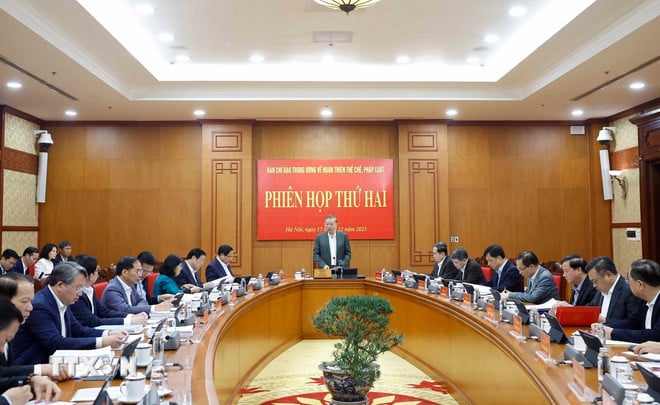
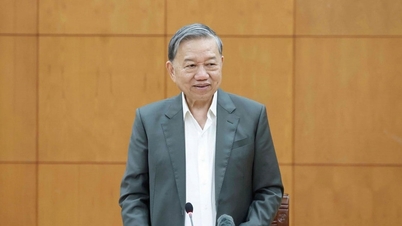
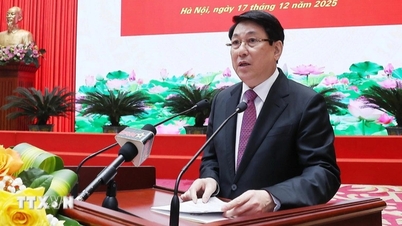
General Secretary To Lam speaks at the second session of the Central Steering Committee on perfecting institutions and laws. (Photo: Thong Nhat/VNA)
The General Secretary pointed out that the National Assembly Party Committee should incorporate the opinions of the Steering Committee members to finalize the draft plan, submit it to the Politburo for consideration and approval; and continue to thoroughly review it to ensure the full institutionalization of the Party's viewpoints, policies, and guidelines related to the construction and improvement of the legal system as stated in the Party's 14th National Congress documents, and to ensure consistency with the "Plan to improve the structure of the Vietnamese legal system to meet the requirements of national development in the new era."
The General Secretary noted that the Politburo had recently agreed on the principle of reporting to the Central Committee on the implementation of two major review projects during the 14th National Congress term (Review of 100 years of the Party's leadership of the Vietnamese revolution; Review of some theoretical and practical issues over 40 years of implementing the 1991 Platform for building the country during the transitional period to socialism); and requested the National Assembly Party Committee to study and add the task of reviewing the implementation of the 2013 Constitution to propose related issues, in line with the Party's major reviews.
Regarding the project "Improving the structure of Vietnam's legal system to meet the requirements of national development in the new era," the General Secretary emphasized that, concerning the two points of disagreement, the Steering Committee basically agreed with the proposal of the drafting agency. Accordingly, it is necessary to reduce the number of forms of legal normative documents according to the principle that each agency only issues one type of legal normative document, contributing to building a streamlined, transparent, and easily accessible legal system.
The consolidation of legal documents needs significant reform, aiming to establish them as the official basis for citing and applying laws. The consolidated document should be adopted and promulgated simultaneously with the amended or supplemented legal document. This will facilitate the application of laws by citizens, businesses, and public officials, contributing to the implementation of the principle of "placing citizens and businesses at the center of policy design."
Creating the most favorable legal framework to promote national development.
Regarding the report on major policies aimed at mobilizing and unlocking financial resources for economic development, General Secretary To Lam requested that the Party Committee of the Government direct the Party Committee of the Ministry of Finance and relevant agencies to focus on effectively implementing the identified directions for mobilizing and unlocking financial resources.
In particular, priority should be given to maintaining macroeconomic stability and controlling inflation as prerequisites for maximizing the mobilization of domestic and foreign resources; strengthening close coordination between fiscal and monetary policies; developing a synchronized government bond market, capital market, and money market; thoroughly removing institutional bottlenecks; substantially reducing administrative procedures and business conditions; reducing legal compliance costs; and creating a transparent and favorable investment and business environment for all economic sectors in accordance with the Politburo's guidelines and directions. Furthermore, attention should be paid to identifying models and mechanisms for the effective management and use of state capital in enterprises and promptly implementing specific mechanisms and policies regarding international financial centers, free trade zones, and crypto assets.
The Central Policy and Strategy Committee is studying the contents of the report from the Party Committee of the Ministry of Finance to supplement and refine the draft Resolution of the Central Committee on strategic solutions to promote double-digit economic growth associated with establishing a new growth model, and will submit it to the Central Committee Conference on schedule.
Regarding the orientation of mechanisms and policies for the development of small and medium-sized enterprises (SMEs) in the coming period, the General Secretary requested that the Party Committee of the Ministry of Finance urgently lead and direct the review and proposal of improvements to the institutional and legal framework in this field, ensuring that policies supporting the development of SMEs are substantive and effective, linked to improving the investment and business environment, and closely adhering to the spirit of the Politburo's directives in Resolution No. 66-NQ/TW and Resolution No. 68-NQ/TW.
Review and propose comprehensive amendments to the Law on Supporting Small and Medium-Sized Enterprises in 2026 to ensure the full institutionalization of the Politburo's guidelines and directions on supporting SMEs. This will focus on addressing bottlenecks in access to credit, reforming policies supporting training, consulting, and legal services; policies supporting science and technology, innovation; green transformation, and sustainable business practices. Doing this well will also significantly contribute to creating jobs and livelihoods for a large workforce, supporting social security, and strengthening the confidence of working people and SME owners in the overarching policies of the Party and State in the new development phase.
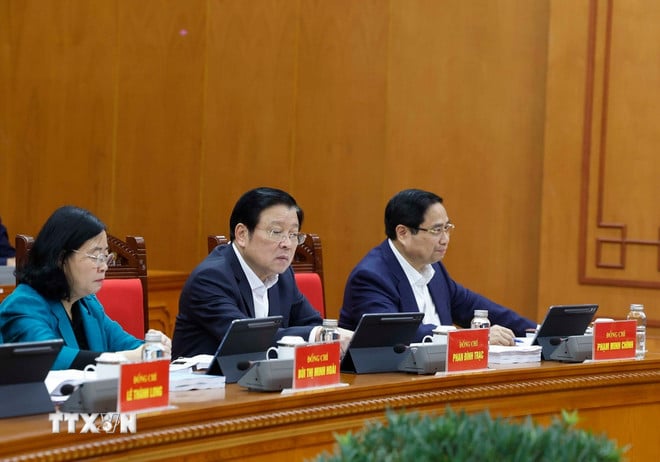
Delegates attending the second session of the Central Steering Committee on improving institutions and laws. (Photo: Thong Nhat/VNA)
Regarding some major directions for improving legislation in the field of preventing and combating corruption, waste, and negative phenomena, the General Secretary requested the Party Committee of the Government, the Party Committee of the Supreme People's Court, the Party Committee of the Supreme People's Procuracy, and relevant agencies to base their leadership and guidance on the content of the report to fully institutionalize the Party's viewpoints and policies into legal regulations in the field of preventing and combating corruption, waste, and negative phenomena.
The Central Internal Affairs Commission is studying the report's content to supplement and refine the summary of 20 years of implementing Central Resolution 3, 10th Congress, on strengthening the fight against corruption, waste, and negative phenomena; and to develop a new resolution to be submitted to the Central Committee for approval.
Regarding the report on perfecting the legal framework for implementing decentralization, delegation of power, and delineation of authority, General Secretary To Lam pointed out that the Party Committee of the Government continues to lead and direct the prompt resolution of proposals and recommendations from localities, including: reviewing and considering the issuance of guiding and explanatory documents for 355 tasks that localities have reported needing the issuance of legal documents or guiding documents; researching and proposing to competent authorities the issuance or amendment of contents related to 10 tasks requiring adjustment of authority between the central and local levels or between different levels of local government; continuing to closely monitor the implementation of decentralization, delegation of power, and delineation of authority in localities, promptly guiding and resolving difficulties and obstacles, ensuring implementation in accordance with the spirit of "localities decide, localities do, localities take responsibility."
2026 marks the first year of implementing the Resolution of the 14th National Congress of the Party – a year that lays the foundation for the implementation of tasks in the following years. The workload is immense, and the work of perfecting institutions and laws plays a crucial role. The Steering Committee requests that its members maximize their intellect and dedication, closely adhere to the development requirements of reality, and decisively lead and direct central and local ministries, departments, and agencies to successfully complete the assigned tasks, thereby creating the most favorable legal framework to promote national development according to the goals set forth in the documents of the 14th National Congress of the Party.
(VNA/Vietnam+)
Source: https://www.vietnamplus.vn/tong-bi-thu-tao-hanh-lang-phap-ly-thuan-loi-nhat-de-thuc-day-phat-trien-dat-nuoc-post1083571.vnp
![[Photo] Prime Minister Pham Minh Chinh receives the Governor of Tochigi Province (Japan)](/_next/image?url=https%3A%2F%2Fvphoto.vietnam.vn%2Fthumb%2F1200x675%2Fvietnam%2Fresource%2FIMAGE%2F2025%2F12%2F16%2F1765892133176_dsc-8082-6425-jpg.webp&w=3840&q=75)
![[Image] Leaked images ahead of the 2025 Community Action Awards gala.](/_next/image?url=https%3A%2F%2Fvphoto.vietnam.vn%2Fthumb%2F1200x675%2Fvietnam%2Fresource%2FIMAGE%2F2025%2F12%2F16%2F1765882828720_ndo_br_thiet-ke-chua-co-ten-45-png.webp&w=3840&q=75)
![[Photo] Prime Minister Pham Minh Chinh receives Lao Minister of Education and Sports Thongsalith Mangnormek](/_next/image?url=https%3A%2F%2Fvphoto.vietnam.vn%2Fthumb%2F1200x675%2Fvietnam%2Fresource%2FIMAGE%2F2025%2F12%2F16%2F1765876834721_dsc-7519-jpg.webp&w=3840&q=75)
![[Live] 2025 Community Action Awards Gala](/_next/image?url=https%3A%2F%2Fvphoto.vietnam.vn%2Fthumb%2F1200x675%2Fvietnam%2Fresource%2FIMAGE%2F2025%2F12%2F16%2F1765899631650_ndo_tr_z7334013144784-9f9fe10a6d63584c85aff40f2957c250-jpg.webp&w=3840&q=75)







































































Comment (0)