

When "winning without hesitation" becomes the national development mindset.
The history of our nation has seen decisions that transcend the boundaries of a single battle, becoming strategic lessons for generations to come. The decision to shift the strategy from "quick attack, quick victory" to "steady attack, steady advance" in the Dien Bien Phu Campaign is one such example.
The Nhan Dan newspaper, in its article commemorating the 35th anniversary of the historic Dien Bien Phu victory, published in the Sunday edition of Nhan Dan (May 1989) and recorded by writer Huu Mai, stated that to ensure the highest principle of "fighting to win," General Vo Nguyen Giap decided to change the strategy from "attack quickly, win quickly" to "attack surely, advance surely"; this was considered the most difficult decision in his military career. The decision was very clear: Postpone the offensive, withdraw the troops to their assembly points, move the artillery out, and restart political and logistical work according to the new strategy.
The People's Army Newspaper, in its article "The Dien Bien Phu Victory and the Humanistic Qualities of a General," published on May 6, 2016, also analyzed that this decision was based on closely monitoring battlefield developments, scientifically assessing the reality, and deeply imbued with the "fight to win" ideology that President Ho Chi Minh, the Politburo, and the Central Military Commission entrusted to the General before going to the front.
On the surface, the strategy of "fighting cautiously and advancing steadily" might be misinterpreted as slowing down. However, in reality, it represents a shift from a quick-win mindset to a sustainable-win mindset, from prioritizing momentum to prioritizing practical capabilities; from expecting opportunities to seizing them.
Speaking with a reporter from the Industry and Trade Newspaper, Lieutenant General, Professor, and Doctor Nguyen Dinh Chien - Director of the Institute of National Defense Strategy - stated that the core difference between "quick attack, quick victory" and "steady attack, steady advance" lies not in speed, but in the standards of strategic decision-making.
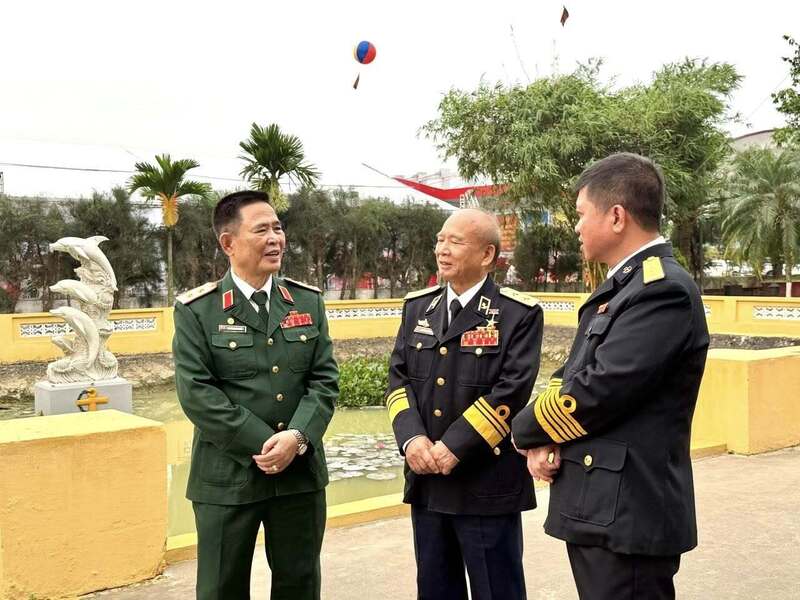
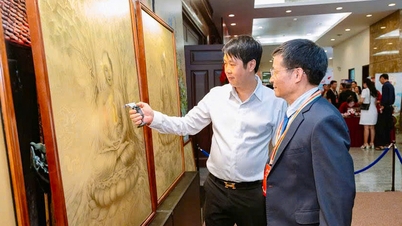
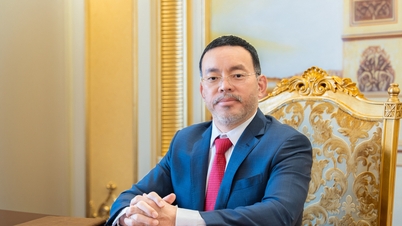
Lieutenant General, Professor, Doctor Nguyen Dinh Chien (far left) with leaders of the Navy. Photo: Provided by the interviewee.
According to him, "swift attack, swift victory" relies primarily on speed, surprise, and offensive momentum, while "steady attack, steady advance" prioritizes certain victory above all else. "This is not about being slow or hesitant, but about a more proactive approach: proactively preparing the battle formation, proactively controlling risks, proactively wearing down the enemy step by step, and proactively turning time into strength," emphasized Lieutenant General, Professor, and Doctor Nguyen Dinh Chien.
It is noteworthy that, after more than 70 years, that lesson remains relevant in the context of the country's current development. The Vietnamese economy is facing a critical juncture, with immense growth pressure, opportunities for supply chain shifts, a surge in new technologies, and increasingly fierce strategic competition among major powers.
The allure of today's "rapid growth" bears many similarities to the "quick win" mentality in warfare. High growth figures, a vibrant asset market, expanding credit, a surge in foreign capital, or technology investment frenzies easily create the impression that the economy is accelerating rapidly. But world economic history has shown that speed without a solid foundation can quickly turn into accumulating risk.
Lieutenant General, Professor, and Doctor Nguyen Dinh Chien analyzed that in war, launching a swift attack before conditions are right can lead to heavy losses in forces and disrupt the strategic situation. In economics, rapid growth can also lead to bad debts, asset bubbles, scattered investments, inflation, environmental pollution, dependence on foreign capital, and macroeconomic imbalances.
"The most striking similarity is that both are prone to making the mistake of confusing enthusiasm with capability. The desire for growth is necessary, but it cannot replace labor productivity, science and technology, sound institutions, strong businesses, and high-quality human resources," emphasized the former Director of the Institute for National Defence Strategy.
In fact, Vietnam's current development mindset is clearly showing a shift towards "moving fast but steadily." The 10-year socio-economic development strategy from 2021-2030 identifies the requirement for rapid and sustainable development, based primarily on science and technology, innovation, and digital transformation; considering these as decisive factors to improve the productivity, quality, efficiency, and competitiveness of the economy.
This spirit is further clearly demonstrated in Resolution 01/NQ-CP of 2026, where the Government sets a target of striving for GDP growth of 10% or more, while simultaneously closely linking it to macroeconomic stability, inflation control, ensuring major balances, self-reliance, self-sufficiency, and sustainable growth.
In other words, Vietnam is not choosing between "growth" and "sustainability," but is seeking to make these two goals mutually dependent.
The economic performance in the first quarter of 2026 partly reflects that spirit. GDP increased by 7.83%; the average CPI increased by 3.51%; exports and imports, realized FDI, and budget revenue all increased. These figures not only reflect efforts to boost growth but also demonstrate the need to maintain macroeconomic balance in a volatile global environment.
"Steady progress" means going further.
For many years, the phrase "independent and self-reliant economy" was sometimes misinterpreted as meaning closed off or less integrated. But in the context of today's globalization, that concept is being understood in a much more modern way.
Lieutenant General, Professor, and Doctor Nguyen Dinh Chien believes that development based on internal strength does not mean self-isolation, but rather knowing how to transform external forces into internal strength, and not allowing external forces to make one dependent.
The Lieutenant General reiterated the lesson from Dien Bien Phu: International aid is very important, but ultimate victory still comes from the inherent strength of the nation, from campaign logistics, artillery hauling routes, civilian laborers on the front lines, the courage of the soldiers, and the art of battlefield organization. External forces are only effective when there is sufficient internal organizational capacity and strategic initiative.
Similarly, in today's economy, foreign investment only truly has strategic significance if it helps upgrade domestic industries, transfer technology, train human resources, and connect Vietnamese businesses to higher-value chains.
In the article "Some Theoretical and Practical Issues in Building an Independent, Self-Reliant, and Actively Integrating into the International Community in Vietnam," published on June 8, 2025, the Communist Magazine, when discussing an independent and self-reliant economy in the context of international integration, highlighted several noteworthy points: the economy must ensure macroeconomic stability and major balances; have foundational economic sectors, foundational industries, and supporting industries; minimize dependence on foreign countries for technology, resources, and markets; be resilient to external shocks; and at the same time, actively and proactively integrate into the international community.
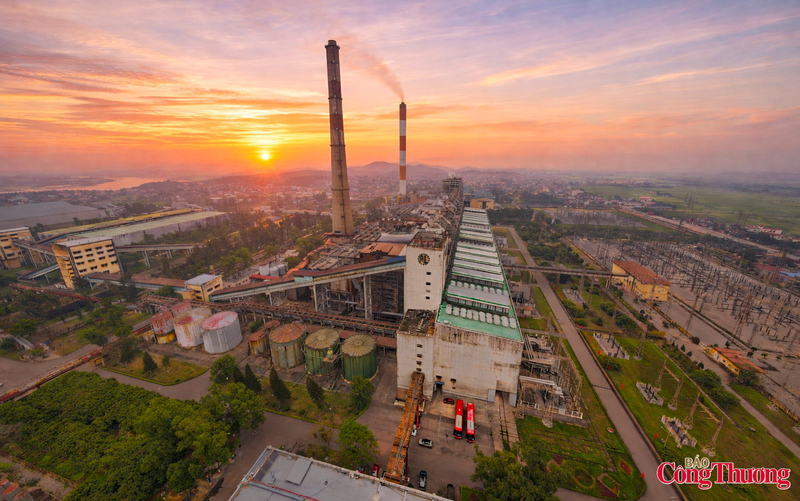
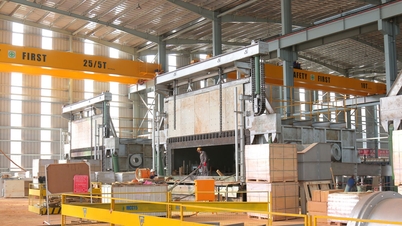
Industrial zones and factories are gradually transforming their technology towards modernity, environmental friendliness, and sustainable development. (Photo: Pha Lai Thermal Power Plant. Photo: Nam Nguyen)
That is the modern understanding of internal strength: not about closing off, but about having the capacity to choose, adapt, and protect national interests. Therefore, "fighting cautiously and advancing steadily" in economics is not a defensive mindset, but an offensive mindset with a solid foundation.
Lieutenant General Nguyen Dinh Chien argued that if "steady progress" is understood as perfectionism, waiting for all conditions to be met before acting, then opportunities will certainly be missed. But the true essence of "steady progress" is controlled acceleration. "Fast in action but solid in foundation; paving the way for innovation but without compromising data security, cybersecurity, financial security, and national interests," he said.
In reality, many countries that experienced rapid growth subsequently fell into prolonged crises due to weak foundations: real estate bubbles, dependence on foreign capital, lack of core technologies, premature population aging, or increasing social inequality.
Currently, a series of policies are focusing on "laying the foundation" for long-term growth. Resolution 68-NQ/TW sets a target of having approximately 2 million businesses by 2030, with the private sector contributing 55-58% of GDP and forming a team of businesses capable of participating in global value chains. The core of the resolution is not just increasing the number of businesses, but comprehensive institutional reform, building a development-oriented state, and creating an environment for private businesses to become the driving force of the economy.
That is also the core spirit of the "play it safe" mindset: To progress far, one must have a solid foundation and sufficient strength. According to Lieutenant General Nguyen Dinh Chien, Vietnam, in order to achieve both high growth and sustainable development, needs to simultaneously implement many strategic solutions. First and foremost, maintaining macroeconomic stability is crucial as maintaining a strategic position. A high-growth economy with high inflation, rising bad debts, and a distorted asset market can hardly be considered sustainable development.
Next, there needs to be a strong shift towards productivity-based growth instead of cheap capital, cheap labor, and resource exploitation. To achieve this, science and technology, innovation, data, modern governance, and the quality of human resources must become the central driving forces.
The Lieutenant General also particularly emphasized the role of institutional reform. “In the Dien Bien Phu Campaign, to get artillery into the battlefield, you had to open a path. In the economy, to get resources into production and technology into businesses, you have to open the path through institutions,” he said.
Furthermore, Vietnam needs to develop foundational industries, supporting industries, strategic infrastructure, build national risk management capacity, and place people at the center of its development model.
Because a rapidly growing economy that increases inequality, pollutes the environment, degrades the quality of life, or leaves workers behind cannot be considered sustainable development.
Looking back at the Dien Bien Phu victory, we can see that taking a step back was the key to achieving greater long-term success. The same applies to the country's development today. In a volatile world, Vietnam cannot do without the aspiration for high growth, but it certainly cannot sacrifice its long-term future for short-term achievements. " To go fast and far, we must first build a solid foundation ," Lieutenant General Nguyen Dinh Chien concluded.
Source: https://congthuong.vn/tu-danh-chac-tien-chac-den-tu-duy-phat-trien-ben-vung-455525.html















































































Comment (0)