

Gradually perfecting the "rules of the game" for the carbon market.
For many years, the carbon market in Vietnam was primarily viewed as a tool linked to emission reduction and green transition goals. However, the legal framework for the carbon market is now relatively complete, built on three pillars: the Party's guidelines, the Government 's directives, and specialized legal regulations. This is considered the foundation for ensuring consistency from policy direction to implementation.

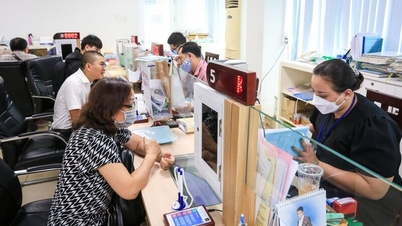
Decree No. 29/2026/ND-CP dated January 19, 2026, is considered an important step in perfecting the legal infrastructure for the carbon market. (Illustrative image)
A significant milestone is Decision No. 232/QD-TTg dated January 24, 2025, of the Prime Minister approving the Project on establishing and developing a carbon market in Vietnam. This document clearly defines the objectives, market structure, and the roles of relevant agencies in the implementation process.
At the legal level, the Environmental Protection Law for the first time established a carbon market as an economic tool in environmental management. Accordingly, the Ministry of Finance was assigned to lead the development of the domestic carbon market, while the Ministry of Agriculture and Environment was responsible for its operation.
Based on this, documents have been issued to gradually establish mechanisms for measuring, reporting, and assessing emissions, as well as managing transactions and emission quotas for greenhouse gases. Notably, Decree No. 29/2026/ND-CP dated January 19, 2026, on the carbon exchange is considered a significant step in perfecting the legal infrastructure for the carbon market. The Decree, comprising 6 chapters and 35 articles, provides detailed regulations on registration, code issuance, custody, trading, transfer of ownership, and payment of greenhouse gas emission quotas and carbon credits on the domestic exchange.
According to regulations, all emission quotas and carbon credits intended for trading must be centrally registered on the National Registration System before being deposited and traded. The Ministry of Agriculture and Environment is responsible for assigning domestic codes to each credit and quota to ensure consistency, transparency, and avoid data duplication.
The decree also stipulates the principle of complete separation between carbon trading and regular securities trading. Participants are only allowed to use a separate trading account for emission quotas and carbon credits; and must ensure they have sufficient funds when placing buy orders and sufficient credits when placing sell orders.
During the pilot phase, which runs until the end of 2028, the platform operators will not charge service fees to encourage businesses to participate in the market. From 2029 onwards, a fee collection mechanism will be applied according to regulations.
Connecting the domestic market with international mechanisms.
While Decree 29 laid the foundation for the operation of the domestic carbon market, Decree No. 112/2026/ND-CP on the international exchange of greenhouse gas emission reduction results and carbon credits is seen as a stepping stone for Vietnam to participate more deeply in the global carbon market.
This decree, effective from May 19, 2026, is based on the domestication of Article 6 of the Paris Agreement on climate change – a mechanism that allows countries to exchange emission reduction results with each other.
According to Dr. Nguyen Phuong Nam, an international assessment expert for the UNFCCC on climate change, the carbon market in Vietnam currently has two parallel components: a mandatory market managed by the State and a voluntary market operating according to international standards.
In this context, a voluntary market had already formed before a complete legal framework was enacted. However, the lack of a clear regulatory mechanism posed numerous risks related to data transparency, international recognition, and the potential for double counting of emission reduction results.
One of the core points of Decree 112 is the requirement that all international transactions must be conducted through the national registration system. This mechanism helps control the transfer of credits and ensures that emissions sold abroad are not subsequently counted towards the national emissions reduction record.
The decree also clearly stipulates the percentage of credits that can be transferred internationally. For projects on the priority list, the maximum transfer rate can be up to 90%; while for other sectors, only a maximum of 50% is allowed. The remainder must be retained to serve the goal of reducing domestic emissions.
The concept of "correspondent adjustment" was also introduced for the first time as an important technical tool to ensure transparency in emissions inventory. Correspondent-adjusted credits are generally valued higher in the international market due to their greater reliability.
From a business perspective, the decree opens up opportunities to participate in the global carbon market through projects in reforestation, renewable energy, biomaterials, or low-emission agriculture. However, to generate tradable credits, projects must undergo a lengthy measurement, assessment, and verification process lasting 1.5 to 2 years.
Accelerating preparations for the official commissioning phase.
Alongside the completion of the trading mechanism, on May 21, 2026, the Government issued Decree No. 180/2026/ND-CP regulating carbon sequestration and storage services of forests. According to the new regulations, from July 1, 2026, the buying and selling of emission reduction results and forest carbon credits must be conducted through contracts or exchanges, and must be confirmed by the Ministry of Agriculture and Environment before transfer.
The decree clearly establishes ownership rights for forest carbon credits. For privately owned planted forests, the forest owner has the right to own carbon credits generated from the project. For forests owned by the entire population, the Ministry of Agriculture and Environment or the provincial People's Committee acts as the representative owner, depending on the project's management level.
According to the current roadmap, the domestic carbon market will begin pilot operation in 2026, while continuing to refine its mechanisms and technical infrastructure. After 2029, the market is expected to officially operate and gradually expand the scope of participating entities.
In the initial phase, approximately 110 businesses in major emission-generating sectors such as thermal power, cement, and steel will participate in the emission quota trading system. This is considered a key group that needs to develop strategies to adapt to the carbon pricing mechanism as soon as possible.
According to experts, the nature of a carbon market is to allow the buying and selling of emission rights and the resulting emission reductions to achieve greenhouse gas reduction targets at the optimal cost. This mechanism is considered more effective than simply applying administrative measures.
In the context of increasing emission requirements in many countries, especially carbon border adjustment mechanisms, the early establishment and operation of a domestic carbon market will not only help businesses proactively adapt but also create a foundation for enhancing competitiveness in the global supply chain.
Currently, around 140 countries have committed to achieving net-zero emissions, while many major markets are beginning to implement mandatory ESG disclosure regulations and emission reductions across their supply chains.
Source: https://congthuong.vn/hoan-thien-hanh-lang-phap-ly-tang-toc-van-hanh-thi-truong-carbon-458098.html
![[Image] Hanoi's urban life under the challenge of a "scorching hot" environment](https://vphoto.vietnam.vn/thumb/1200x675/vietnam/resource/IMAGE/2026/05/25/1779706979265_nang-nong-t5-2026-minh-duy-7-4636-jpg.webp)




![[Image] Close-up view of the interchange connecting the two expressways and Long Thanh Airport.](https://vphoto.vietnam.vn/thumb/1200x675/vietnam/resource/IMAGE/2026/05/25/1779703378210_ndo_br_z7863716673926-224453a31600126cce10622af6290afd-4549-jpg.webp)




























































































Comment (0)