

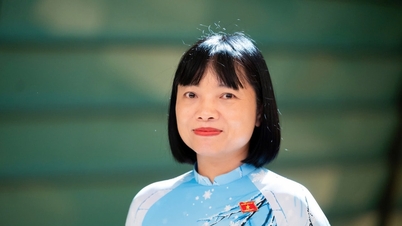
This is the assessment of Associate Professor Bui Hoai Son, a full-time member of the National Assembly's Committee on Culture and Society , when speaking with a reporter from Dan Tri newspaper about the 80th anniversary of the first General Election (January 6, 1946).
Sacred landmark
What was the significance of the first General Election Day, sir?
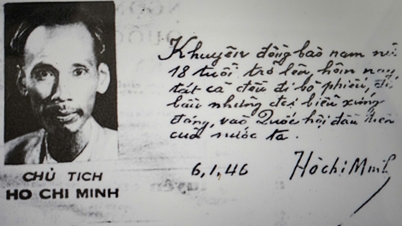
Eighty years ago, January 6, 1946, went down in national history as a sacred milestone, when for the first time in history, Vietnamese people from all parts of the country were able to directly cast their votes to elect representatives to the National Assembly , representing their will and aspirations.
From that ballot, the Vietnamese National Assembly was born, not only as the highest organ of state power, but also as a symbol of democracy, social trust, and a new political and cultural landscape.
Looking back over the past 80 years, we increasingly understand that when the people are truly the masters of power, and when the National Assembly is truly the embodiment of national wisdom and responsibility, then the country has a solid foundation for sustainable, humane, and enduring development.
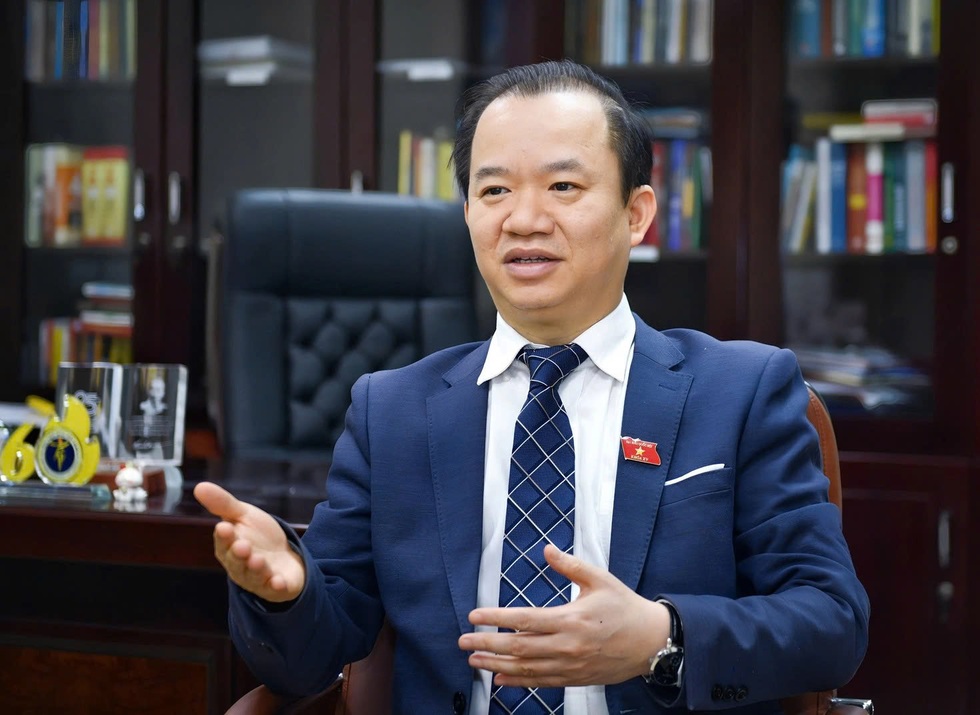
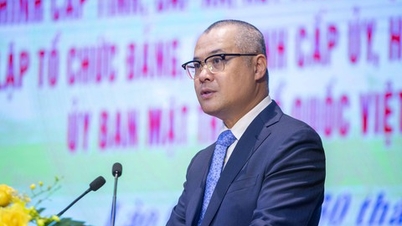
Associate Professor Bui Hoai Son, full-time member of the National Assembly's Committee on Culture and Society (Photo: Contributor).
Eighty years is a long enough time to calmly and profoundly assess the historical and contemporary significance of the first General Election.
This was not only the opening day of the Vietnamese National Assembly, but also the starting point of a modern political culture, a culture that respects the people, upholds the rule of law, and considers power as a mandate from the people, not a privilege of any individual or organization.
Holding a general election in the context of a newly independent country facing countless difficulties demonstrated a fundamental choice: the new Vietnamese state must be built on a foundation of democracy, on the people's trust, and for the people.
The 1946 ballot opened up a new political space, where the people were not merely subjects of governance, but became active participants in shaping state power.
From a cultural and political perspective, this represents a fundamental shift from a power model based on command and privilege to one based on law, accountability, and transparency. It is from this foundation that parliamentary culture and the culture of the rule of law have gradually formed and perfected, becoming important pillars of our country's political life.
As a member of Parliament, how do you see your responsibilities and role, both individually and for members of Parliament in general?
Throughout its 80-year journey, the Vietnamese National Assembly has accompanied the nation through major turning points: the resistance war, national reunification, reform, and deep integration into the international community. Each historical period bears the indelible mark of the National Assembly – a National Assembly of the people, representing the people and accountable to the people.
While in the early years of nation-building, the National Assembly played a role in legitimizing and protecting the revolutionary government, today, the National Assembly is the center of institutional reform, the place where the most important national issues are discussed, considered, and decided.
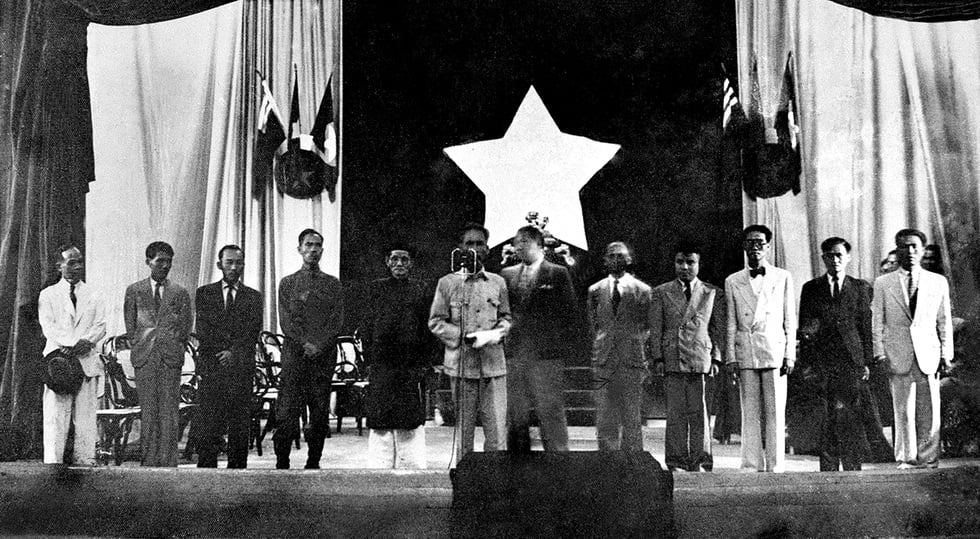
On March 2, 1946, the First National Assembly held its first session, electing the United Resistance Government with President Ho Chi Minh as its chairman. At this meeting, President Ho Chi Minh took the oath of office before the National Assembly (Photo: VNA).
As a member of Parliament, I have always deeply felt that behind every vote, every decision, every law lies the trust and expectations of millions of voters across the country. That trust is both an honor and a great responsibility.
That responsibility demands that each member of the National Assembly constantly cultivate political acumen, public service ethics, professional competence, and a spirit of service to the people.
Every statement made in parliament, every interaction with constituents, every on-site inspection trip is not only a duty, but also an opportunity for us to listen, understand, share, and create policy solutions based on the legitimate needs and interests of the people.
The National Assembly plays a particularly important role in the new era.
As Vietnam enters a new era, what is the importance and significance of the National Assembly, sir?
- In the new era, as Vietnam strives to become a developed, high-income country, alongside the requirement for rapid and sustainable economic development, cultural development, human resource development, perfecting the rule of law, and promoting socialist democracy are indispensable pillars.
The National Assembly, with its legislative, supervisory, and decision-making roles on important national issues, holds a particularly crucial position in shaping that future.
Each law enacted is not merely a dry legal document, but also an expression of society's vision, philosophy, and values. Laws both regulate behavior and reflect what we value, encourage, and protect in community life.
Therefore, I have always maintained that the National Assembly is not only an institution of power, but also a cultural entity.
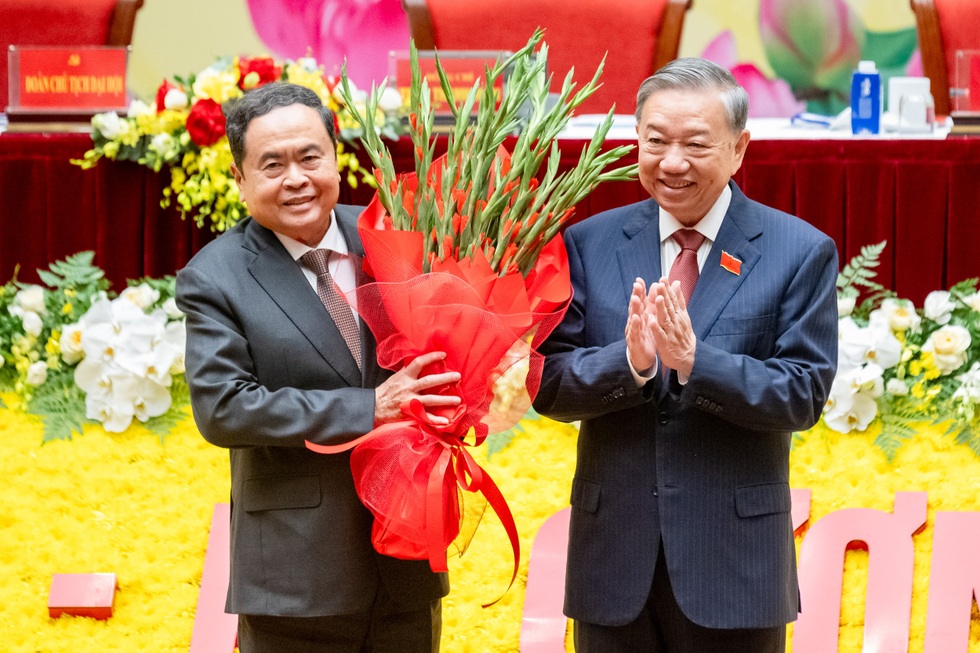
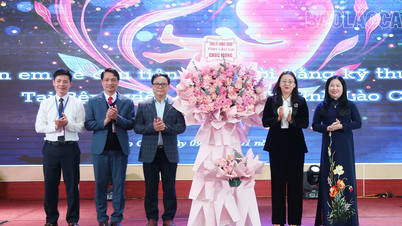
General Secretary To Lam presents flowers to congratulate the Secretary of the National Assembly Party Committee and Chairman of the National Assembly Tran Thanh Man at the First National Assembly Party Congress, term 2025-2030 (Photo: Pham Thang).
Legislative, supervisory, and decision-making activities of the National Assembly, if imbued with a spirit of humanism, responsibility, and respect for the people, will contribute to nurturing a culture of the rule of law, strengthening social trust, and building a healthy and sustainable development environment.
Parliamentary culture is not only reflected in the way discussions, debates, and voting take place in the assembly hall, but also in an attitude of openness, transparency, and listening to the opinions of experts, scientists, artists, businesspeople, workers, farmers, youth, the elderly, and the vulnerable.
These diverse voices are the lifeblood of democracy, the material upon which the National Assembly formulates policies that are relevant to and for the benefit of society.
Continue to innovate vigorously to meet new development requirements.
According to him, what reforms does the National Assembly need?
- A modern parliamentary culture demands the capacity for dialogue, evidence-based debate, respect for differing viewpoints, and a focus on social consensus based on the common interests of the nation. This is not only a skill requirement, but also a cultural and political one.
Members of the National Assembly not only represent the will of the voters, but also bear the responsibility of reconciling different interests in society, protecting national interests, and wholeheartedly serving the Fatherland and the people.
Therefore, improving the quality of delegates, enhancing professionalism in parliamentary activities, promoting the role of specialized committees, and expanding social and scientific consultations are necessary conditions for the National Assembly to continue its strong reforms and meet new development requirements.

Secretary of the National Assembly Party Committee and Chairman of the National Assembly Tran Thanh Man delivered a speech at the First National Assembly Party Congress, term 2025-2030 (Photo: Pham Thang).
In the context of digital transformation, deep international integration, artificial intelligence, green economy, circular economy, climate change, non-traditional security, etc., entirely new challenges arise for national governance, making it even more crucial for the National Assembly to "take a step ahead" in identifying issues and improving institutions.
As an elected official, I understand that any policy, if delayed or poorly prepared, will directly affect the lives of millions of people and the long-term development of the country.
Therefore, in addition to ensuring the constitutionality, legality, and feasibility of laws, the National Assembly must pay more attention to assessing the cultural, social, environmental, and human impacts, so that all decisions are geared towards the highest goal of bringing a prosperous, happy, safe, and humane life to the people.
In the field of culture and human resources – an area in which I have had the opportunity to be involved for a long time – the role of the National Assembly is even more evident. Culture is not only the spiritual foundation of society, but also an endogenous resource that determines a nation's soft power.
Laws on culture, arts, creativity, education, science and technology, copyright, cultural industries, etc., if developed in a comprehensive, modern, and appropriate manner, will create tremendous momentum to awaken creative aspirations, unleash the potential of the Vietnamese people, contribute to economic growth, cultural diplomacy, and promote the image of the country to the world.
Conversely, if we consider culture merely a supporting field, lacking priority in terms of institutions, resources, human resources, and financial mechanisms, we will miss out on one of the strategic drivers of sustainable development.
I believe that in this journey, Congress can and should play a pioneering role.
Pioneering in awareness – viewing investment in culture as an investment in the future. Pioneering in institutionalization – creating a favorable legal framework for healthy, creative, and integrated cultural development. And pioneering in oversight – ensuring that all policies and guidelines on culture are implemented effectively, transparently, and in line with their objectives. This is not only a legal responsibility, but also a cultural mission of elected bodies.
The National Assembly maintains close ties with and listens to the people.
Eighty years after the first General Election, what are your thoughts on this special occasion?
- On the occasion of the 80th anniversary of the first General Election, we not only pay tribute to the previous generations who sacrificed and contributed to laying the foundation for a new democracy, but we must also remind ourselves of our responsibility to preserve, promote, and deepen those values.
The National Assembly is only truly strong when it is closely connected with the people, when it listens to the people, and when it dares to voice the people's opinions at the highest forum of the State. And the people are only truly masters when their votes are respected, when their voices are truthfully reflected, and when their legitimate rights and interests are protected by a fair, transparent, and humane legal system.
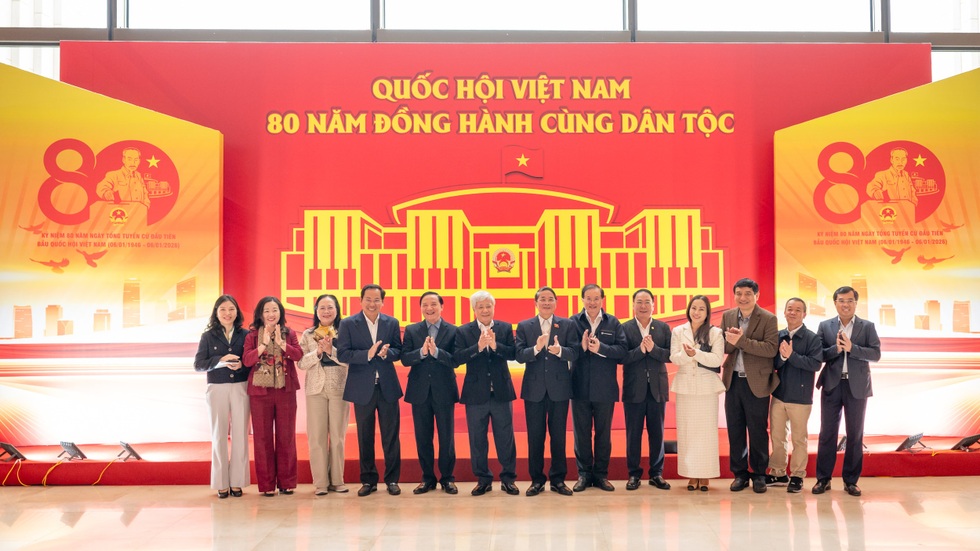
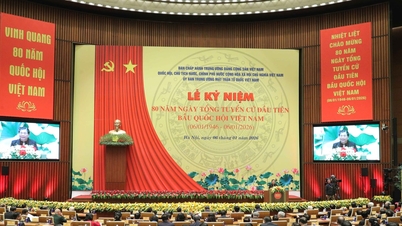
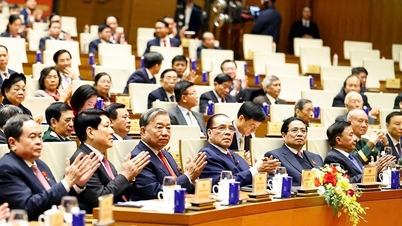
Permanent Vice Chairman of the National Assembly Do Van Chien and delegates at the rehearsal for the ceremony commemorating the 80th anniversary of the first general election to elect the Vietnamese National Assembly (Photo: Pham Thang).
From the first ballot in 1946 to the present day, we have come a long way, full of sacrifices and challenges, but also incredibly proud. The road ahead still holds much work to be done, many challenges to overcome, and many decisions that must be carefully and scientifically considered.
I believe that with the political and cultural foundation forged over eight decades, with a united, intelligent, responsible, and people-oriented National Assembly, and with increasingly strengthened social trust, we will continue to successfully build a socialist rule of law state of the people, by the people, and for the people – a modern, humane state that upholds the supremacy of law and places people at the center of all development.
On the occasion of the 80th anniversary of the National Assembly elections, we once again affirm the immutable value: power must belong to the people and serve the people.
When these values are upheld and disseminated, the National Assembly is not only the highest institution of state power, but also a source of morality, culture, and national trust. And that is the foundation for Vietnam to confidently step into the future – a future of sustainable development, prosperity, and happiness.
Thank you, sir!
Source: https://dantri.com.vn/thoi-su/tu-la-phieu-dau-tien-den-niem-tin-quoc-gia-20260104142853661.htm
















































Comment (0)