 |
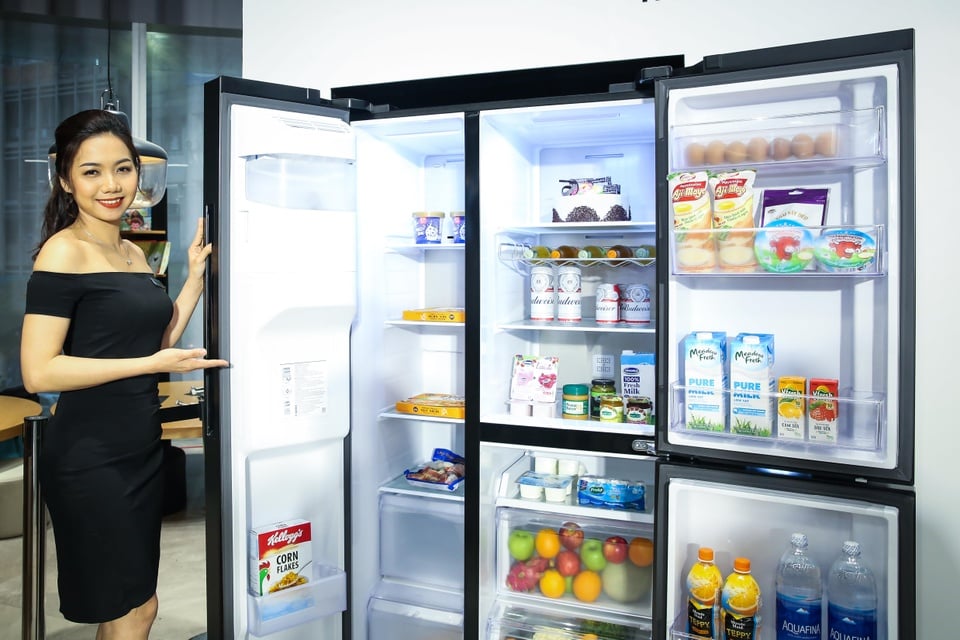
A refrigerator door left ajar is a reason why the appliance consumes more electricity. Photo: Lieu Lam . |
To save time shopping, Dinh Viet ( Hanoi ) often buys enough food for several days and stores it in the refrigerator. Once, due to overloading the refrigerator, some food containers were placed too close to the edge of the compartment, preventing the door from closing completely, without him realizing it.
"I thought I had closed the refrigerator door as usual. However, the next day when I took out food to cook, I discovered that the refrigerator door had been left ajar," Viet recounted.
Upon discovering the refrigerator door was slightly ajar, this young man simply closed it and continued using it as normal, believing the incident only affected food preservation. However, at the end of the month, his electricity bill reached millions of dong, surprising him. At this point, Dinh Viet began to suspect that the refrigerator door not being properly closed might be the reason for the unusually high electricity consumption.
Even a small gap can cause a refrigerator to consume more electricity.
Refrigerators operate by maintaining a low internal temperature to preserve food. Under normal conditions, once the set temperature is reached, the appliance will automatically reduce its power or temporarily stop cooling to save energy.
However, if the refrigerator door is not closed tightly, the cold air inside will continuously escape, while warm air from the environment will enter. This causes the temperature inside the refrigerator to rise and forces the cooling system to work again to compensate for the lost cold air.
The longer the refrigerator door remains open, the harder the appliance has to work to maintain the required temperature. Instead of operating in a normal cycle, the compressor may have to run continuously for extended periods, thereby increasing energy consumption.
 |
Leaving the refrigerator door open forces the compressor to work harder to maintain the desired temperature. Photo: Lieu Lam . |
Furthermore, moisture from the outside can condense on the cooling coils, reducing cooling efficiency. This, in turn, forces the refrigerator to work harder to maintain its food preservation capabilities.
This situation is often more noticeable on hot days, when the temperature difference between the inside and outside of the refrigerator is greater. Besides increasing electricity bills, continuous operation for extended periods can also affect the lifespan of the cooling components inside the appliance.
Reasons why the refrigerator door doesn't close properly.



In Dinh Viet's case, the problem stemmed from overloading the refrigerator with food. When containers, bags of food, or bottles are placed too close to the edge of the compartment, the refrigerator door may not close completely or may slightly spring back open after being closed.
This is also one of the most common reasons why refrigerator doors leak. Additionally, many people have a habit of closing the door and leaving without checking for a tight seal. Even a small gap is enough to cause continuous cold air loss for hours.
However, a refrigerator door not closing properly isn't always due to usage habits. After years of operation, some parts of the appliance may degrade and affect the door's ability to close tightly.
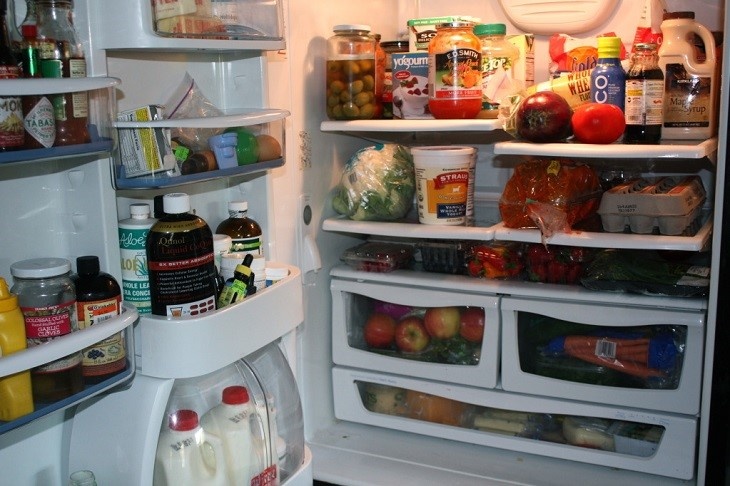 |
Overcrowding the refrigerator with food can prevent the door from closing properly. (Image: Dien May Xanh ) |
Of these, the rubber door seal is the most common problem. Over time, the seal can harden, accumulate dirt, or lose its elasticity, causing the cabinet door to no longer fit tightly against the cabinet body as it did initially.
Additionally, door hinges can sag after prolonged use, especially when users frequently place large water bottles or heavy objects on the door. When the door no longer fits perfectly with the cabinet frame, small gaps will appear, reducing cooling efficiency.
Additionally, the installation location is also a factor to consider. If the refrigerator is placed on an uneven surface or tilted forward, the door may not close completely after the user releases it.
Notably, not all cases of a refrigerator door being left ajar are easily detected with the naked eye. Many people only realize the problem when food spoils faster than usual or their electricity bill increases unusually.
How to prevent refrigerator doors from leaving a gap.
To minimize cold air loss and avoid increased energy consumption, users should start with simple habits during use.
First, avoid overcrowding the refrigerator with food. Containers, bags, and bottles should be neatly arranged, avoiding placing them too close to the edges of the shelves to prevent obstructing the door from closing. Regularly clean out the refrigerator and remove expired food to allow for proper air circulation.
After each use, users should observe or manually check to ensure the cabinet door is completely closed. This is a simple step, but it can help prevent the door from being left ajar for hours without being detected.
In addition, rubber gaskets need to be cleaned regularly to remove dirt and grease that accumulates on the surface. If the gasket is found to be hardened, cracked, or has lost its elasticity, users should replace it to ensure the cabinet door seals properly.
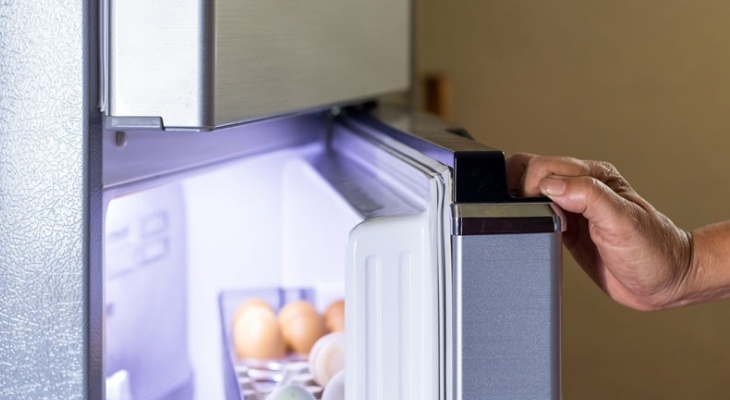 |
Regular cleaning of the rubber seal helps the refrigerator door close more tightly. Photo: Dien May Xanh . You may also like  Experience the World Cup to the fullest with the "beast" 8000mAh battery of the realme 16T 5G at TGDĐ.VTV.vn: As the demand for watching football anytime, anywhere explodes, realme 16T 5G at TGDĐ: 300,000 VND discount, free 5G SIM with 300GB/month data, trade-in old phones with a 3 million VND subsidy, 0% interest installment payments.  French expert offers advice to help Vietnamese technology avoid the "protectionism trap".Experts believe Vietnam needs to be wary of the "technology protectionism trap"—a situation where large investments are made to develop products that only serve the domestic market but lack the competitiveness to compete internationally.  VinFast Evo Lite: The 'combo' of advantages that makes swappable batteries attractive to urban residents.Compact, requiring no driver's license, with convenient battery swapping and economical operating costs, the VinFast Evo Lite is becoming the preferred mode of transportation for urban users. |
For refrigerators that have been in use for many years, checking the hinges and the balance of the appliance is also essential. If the door shows signs of sagging or the refrigerator is placed on an uneven floor, users should adjust it promptly to avoid affecting cooling efficiency.
With just a few minor changes in usage and maintenance, users can reduce the risk of cold air loss, preserve food more effectively, and limit unnecessary electricity costs.
Source: https://znews.vn/tu-lanh-ngon-dien-vi-thoi-quen-it-ai-de-y-post1661862.html


![[Photo] Prime Minister Le Minh Hung presides over the thematic session on promoting science and technology development and innovation.](https://vphoto.vietnam.vn/thumb/1200x675/vietnam/resource/IMAGE/2026/06/23/1782207872934_ndo_br_dsc-1724-jpg.webp)