|
The deck of the US aircraft carrier USS Abraham Lincoln. Photo: Reuters . |
Two US carrier strike groups, the USS Abraham Lincoln and the USS George HW Bush, remain operational in the Arabian Sea, an area adjacent to Iranian territorial waters. President Trump affirmed that US naval forces will continue to maintain a presence there even after the Strait of Hormuz has been reopened to international navigation.
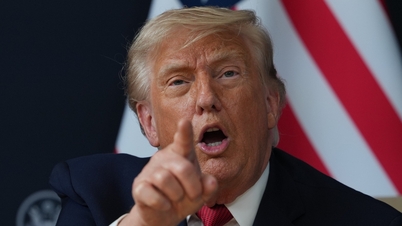
"All warships remain in place, ready to reimpose a lockdown if necessary, although at this point that scenario seems unlikely," Trump wrote on the social media platform Truth Social on June 23.
Also in a statement on June 23, the US Central Command (CENTCOM) said that the two carrier strike groups continue to conduct missions in the Middle East, as the US military maintains a state of combat readiness and closely monitors the situation in the region.
On the same day, CENTCOM also released new images showing the aircraft carrier USS George HW Bush operating in the Arabian Sea.
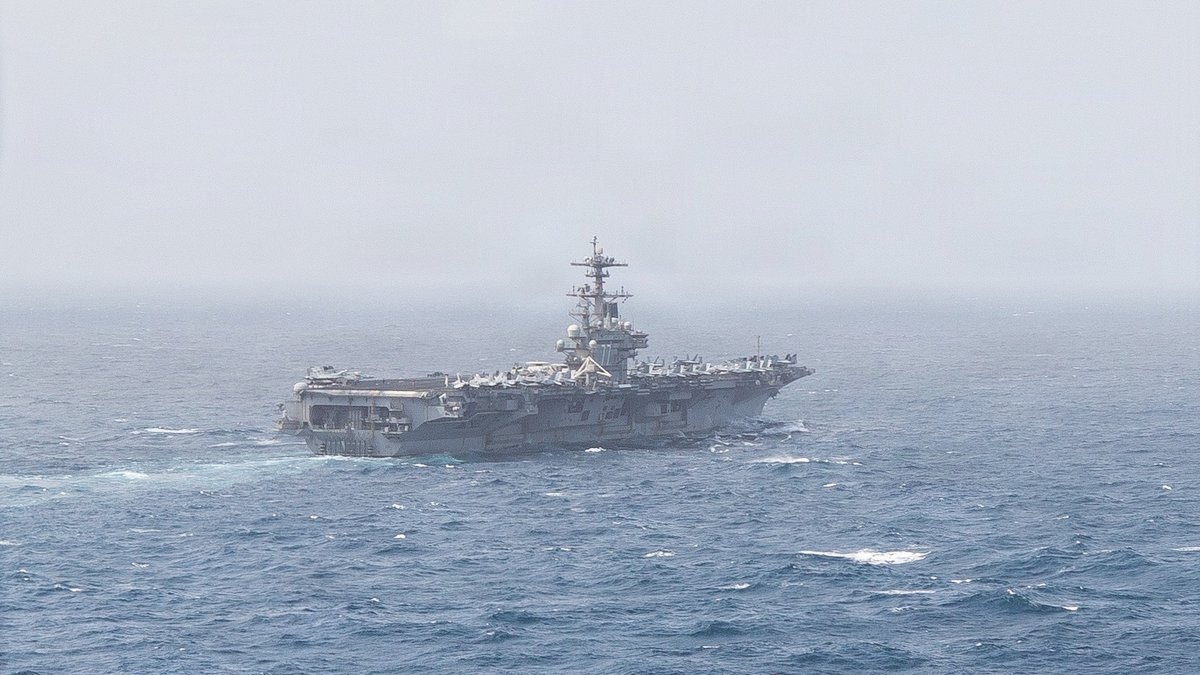 |
Images of the aircraft carrier USS George HW Bush in the Arabian Sea were released by CENTCOM on social media on June 23. Photo: X/CENTCOM. |



Earlier, President Trump announced that the Strait of Hormuz would remain open and affirmed that the US would not deploy any military blockade operations in this strategic waterway.
However, the American leader emphasized that the warships would remain in their current positions to ensure a rapid response should the situation change.
These statements indicate that Washington still wants to maintain military leverage over Tehran throughout the negotiations, even though US officials have repeatedly expressed optimism about the prospects of reaching a comprehensive agreement.
"The current plan is to maintain the status quo of forces throughout the 60 days of negotiations," a senior U.S. official said on June 15. "We hope to be able to reduce the military presence in the future, but that time has not yet come."
According to Fox News , the US administration has not yet provided a specific roadmap for reducing troops in the Middle East. Washington officials said any decision to adjust troop numbers will depend on the progress of negotiations with Iran.
"It is expected that reducing the military presence will only be considered after the parties reach a final agreement," the official added.
This means the Pentagon will continue to maintain approximately 50,000 troops in the Middle East – one of the largest U.S. military deployments in the region in over 20 years.



Source: https://znews.vn/my-duy-tri-tau-san-bay-gan-iran-post1662595.html


![[Photo] Prime Minister Le Minh Hung presides over the thematic session on promoting science and technology development and innovation.](https://vphoto.vietnam.vn/thumb/1200x675/vietnam/resource/IMAGE/2026/06/23/1782207872934_ndo_br_dsc-1724-jpg.webp)
![[Image] Paris's oldest bridge goes viral after transforming into a giant cave.](https://vphoto.vietnam.vn/thumb/1200x675/vietnam/resource/IMAGE/2026/06/24/1782283441197_ndo_br_dsc05314-jpg.webp)