

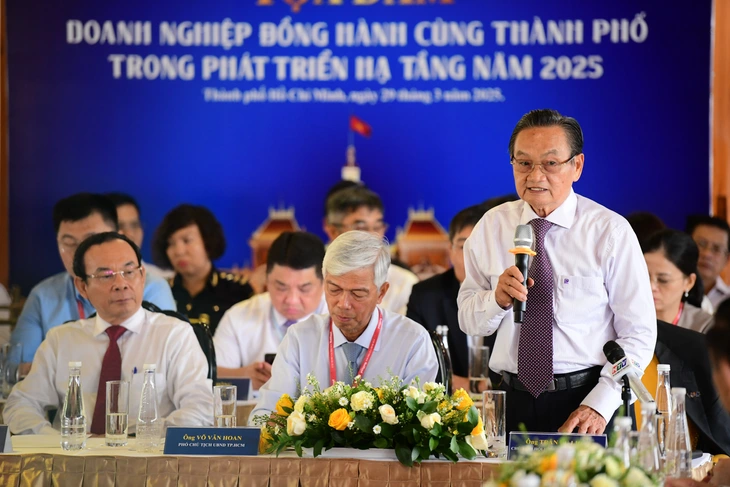
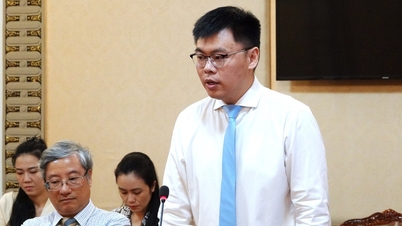
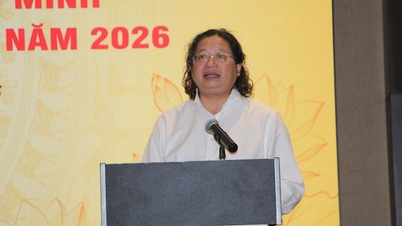
Dr. Tran Du Lich - National Monetary Policy Advisory Council - made the recommendation at the seminar on March 29th.
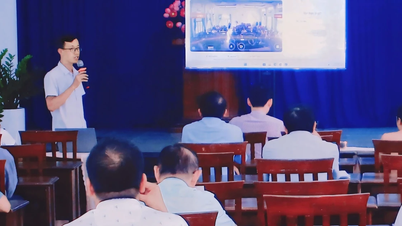
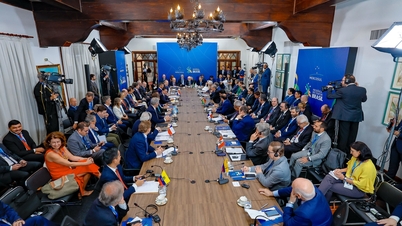
On the morning of March 29th, at the seminar "Businesses Partnering with the City in Infrastructure Development in 2025" organized by the Ho Chi Minh City People's Committee, Dr. Tran Du Lich - National Monetary Policy Advisory Council - raised issues for businesses and the city regarding the private investment model.
Mr. Lich argued that in Ho Chi Minh City, there was a period when every 1 dong of state investment attracted 12 dong of private investment, with state investment being just 1 unit of capital, and the role of businesses was very significant.
Mr. Lich posed two questions for businesses: How can they contribute to the development of economic and digital infrastructure? And are all the regulations and laws on PPPs (Planning Law, Investment Law, Law on Public-Private Partnership Investment) attractive enough for businesses to invest? What issues need to be resolved to allow the private sector to participate more deeply and strongly in economic and social infrastructure investments?
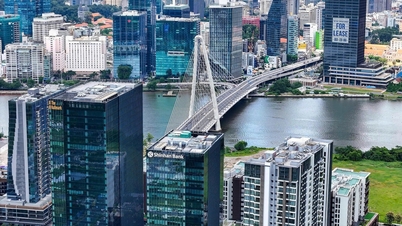
On the occasion of the groundbreaking ceremony for the pedestrian bridge across the Saigon River, connecting Bach Dang Wharf (District 1) with the Thu Thiem urban area (Thu Duc City) with a total investment of nearly 1,000 billion VND, Mr. Lich raised a new issue.
"I want to discuss this in detail because the law currently lacks a model for private investment, state ownership, and public use. I propose a legal framework that cannot be included in the general law on PPP investment."
"In order to attract enormous resources from private investment, it is necessary to adjust investment according to the model of private investment, state ownership, and public use. This has been quite common in other countries," Mr. Lich said.
To achieve this, Mr. Lich said that two main sets of policies are needed: tax support for businesses and moral support.
According to Mr. Lich, all investment capital for construction projects should be deducted before tax, as other countries have done.
"For example, with a tax rate of 15-20%, a state-funded project worth 1,000 billion VND would only require the state to contribute 200 billion VND, while private enterprises contribute 800 billion VND. If such collaboration is achieved, many projects will be completed without the state having to spend 1,000 billion VND."
"And in terms of spirit, the project is named after the company so that they feel honored and that they have contributed to society," Mr. Lich analyzed.
Overall, from 2026 onwards, Ho Chi Minh City will be like a massive construction site, with too much room for private investment, so Mr. Lich noted:
"Regarding the proposal to implement Resolution 188 of the National Assembly on urban railways, how can Vietnamese businesses participate in the development of these railways at each operational stage, in order to form a future railway industry? What policies are needed to make this possible? Businesses can conduct research."
Construction begins on a 1 trillion VND pedestrian bridge across the Saigon River, connecting Bach Dang Wharf and Thu Thiem - Video: CHAU TUAN
Ho Chi Minh City: will select 50 of the most outstanding businesses over the past 50 years to honor.
At the seminar, Mr. Vo Van Hoan, Vice Chairman of the Ho Chi Minh City People's Committee, said that the city would consider the proposal to adjust the private investment model. Mr. Hoan added that the city will soon select 50 of the most outstanding businesses over the past 50 years to honor them for their companionship with Ho Chi Minh City on the occasion of the 50th anniversary of the Liberation of the South and National Reunification (April 30, 1975 - April 30, 2025).
Source: https://tuoitre.vn/tu-su-kien-khoi-cong-cau-1-000-ti-dong-kien-nghi-moi-ve-dau-tu-tu-nhan-2025032915551524.htm


![[Photo] Prime Minister Pham Minh Chinh presides over a meeting on private sector economic development.](/_next/image?url=https%3A%2F%2Fvphoto.vietnam.vn%2Fthumb%2F1200x675%2Fvietnam%2Fresource%2FIMAGE%2F2025%2F12%2F20%2F1766237501876_thiet-ke-chua-co-ten-40-png.webp&w=3840&q=75)



























































Comment (0)