

Born and raised during a time when the country had just emerged from war, I witnessed the difficulties of the centrally planned economy and deeply understood the hardships faced by those working in the private sector. My mother is the most intimate and clearest example of this.
Her husband passed away early, and to support her children's education, she toiled tirelessly selling various goods, sometimes even accepting the stigma of being a "black market trader." She wasn't wealthy or "super-profitable," sometimes only earning a few kilograms of rice. Even those kilograms of rice had to be obtained by arduously navigating checkpoints and crossing rivers and streams during the flood season, risking her life, before finally reaching home.
During the period of economic opening, my mother was one of the first people in the locality to establish a private enterprise, trading in construction materials. The company experienced periods of prosperity and decline, then operated intermittently, and eventually had to close down; the main reasons being difficulties in licensing, administrative procedures, unclear legal regulations in the field, disputes due to overlapping compensation claims, and lawsuits… My mother passed away during the Covid-19 pandemic, while some of the complaints she filed were still in the process of being resolved.
Reading Resolution 68, which outlines the reasons for the hardships faced by the private sector, I was moved to see the image of my mother and many other entrepreneurs I know. It states that “the mindset and understanding of the position and role of the private sector in the economy are still incomplete and have not kept pace with development requirements; the institutional and legal frameworks are still problematic and inadequate; leadership and guidance have not received sufficient attention; property rights and the right to freedom of business are not fully guaranteed. The private sector still faces many difficulties and obstacles in accessing resources, especially capital, technology, land, natural resources, and high-quality human resources. Some preferential policies and support measures are not truly effective and are difficult to access; business costs remain high.”
But from now on, those obstacles are gone, as Resolution 68 affirms the Party's guiding viewpoint: "The private sector is the most important driving force of the national economy, a pioneering force promoting growth"; "thoroughly eliminate preconceived notions, thoughts, concepts, and attitudes about the Vietnamese private sector; (...) respect businesses and entrepreneurs, identifying entrepreneurs as soldiers on the economic front; ensure full property rights, freedom of business, equal competition, and freedom to conduct business in sectors not prohibited by law; (...) protect the legitimate rights and interests of businesses and entrepreneurs; ensure equal competition in the private sector."
The aforementioned directives are not merely a "liberation," but truly a "revolution" in changing perceptions to suit the times and social realities. Resolution 68 brings great joy to businesspeople and the people, instilling confidence in a bright future for an independent, self-reliant, self-sufficient, and prosperous Vietnamese economy. And I believe that even my beloved mother, in the afterlife, is smiling with peace of mind.
Source: https://baophapluat.vn/tuong-lai-ruc-ro-tu-nghi-quyet-68-nqtw-post547485.html

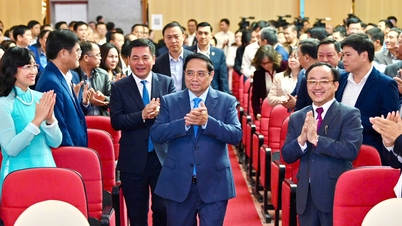
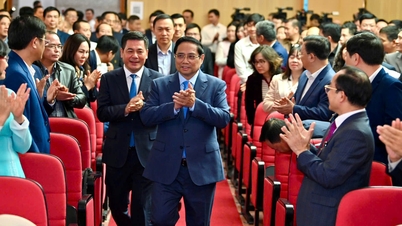
![[Photo] Prime Minister Pham Minh Chinh attends the Conference on the Implementation of Tasks for 2026 of the Industry and Trade Sector](/_next/image?url=https%3A%2F%2Fvphoto.vietnam.vn%2Fthumb%2F1200x675%2Fvietnam%2Fresource%2FIMAGE%2F2025%2F12%2F19%2F1766159500458_ndo_br_shared31-jpg.webp&w=3840&q=75)




















































Comment (0)