

On the morning of April 20th, in Ho Chi Minh City, the Ministry of Education and Training (MOET) held a national university admissions conference for 2026, announcing several notable new points in this year's admissions process and summarizing the previous year's admissions season.
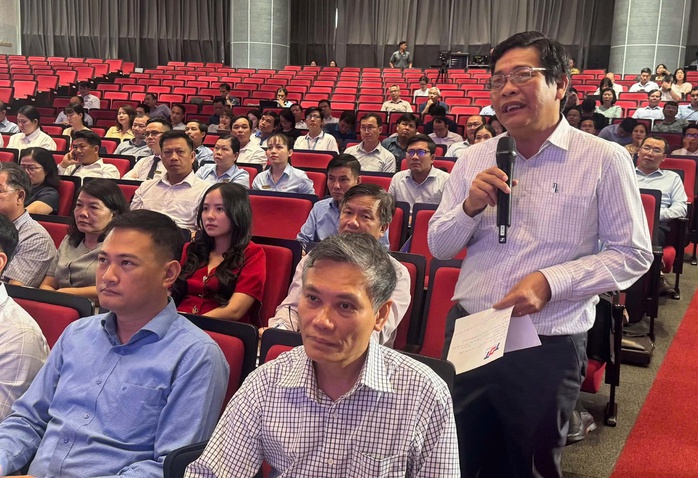
Representatives from educational institutions at the 2026 university admissions conference.
According to Professor Nguyen Tien Thao, Director of the Higher Education Department, a significant change in university admissions in 2026 is the expansion of the fields to which the minimum quality assurance threshold will be applied. In addition to teacher training and health-related fields, this year the field of law has also been officially added to this list.
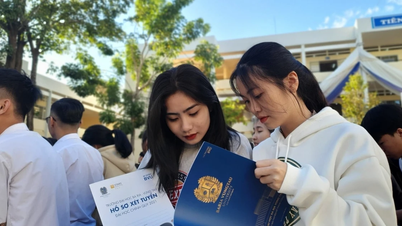
Notably, regulations for admission based on academic transcripts continue to be tightened. Candidates wishing to apply through this method must achieve a minimum of 15 points in the high school graduation exam for three subjects in the transcript-based admission combination, or for mathematics, literature, and a third subject. This regulation aims to ensure a consistent quality of input and limit disparities between different admission methods.
One topic that received much discussion at the conference was the adjustment of the foreign language priority points.
Accordingly, the bonus points were reduced from 3 points to a maximum of 1.5 points. Many delegates argued that this significant change could cause confusion among students regarding their academic direction.
Professor Nguyen Vu Quoc Huy, Rector of Hue University of Medicine and Pharmacy, suggested the need to develop a stable long-term enrollment strategy. He argued that constantly adjusting policies year after year makes it difficult for society, especially students, to plan their studies in advance.
According to him, regulations need a clear roadmap over 3-5 years to ensure predictability and psychological stability.
Regarding information on the 2025 university entrance exam, a representative from the Department of Higher Education stated that 76% of training institutions achieved an enrollment rate of over 80%, an increase compared to 2023 (63%) and 2024 (71.38%).
Looking at the subject groups, out of 24 training groups, 12 groups account for nearly 90% of the enrolled students compared to the target, while the remaining 12 groups account for only about 10%, with a scale of less than 10,000 students.
Notably, the teacher training sector recorded an enrollment rate of over 90%, with both the number of applicants and successful candidates increasing significantly at many schools thanks to the impact of new policies under the Law on Teachers. Similarly, strategic technology and STEM fields continued to attract applicants in both quantity and quality.
However, the admissions process still has some limitations. These stem from the candidates themselves, such as providing incorrect information, failing to carefully review or complete the process, or registering after the deadline. In addition, some training institutions have not updated their data fully, submitted reports untimely, or even participated in the admissions system, or have made errors during the process.
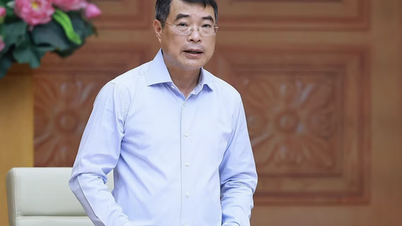
Concluding the conference, Professor Le Quan, Deputy Minister of Education and Training, acknowledged that student admissions is always a sensitive area, affecting many stakeholders. Therefore, policies need to be thoroughly researched before being issued.
The Ministry of Education and Training will consider feedback from training institutions and experts, and will also develop a stable admissions regulation until 2030, moving towards increasing autonomy for universities.
Strengthening training in strategic fields
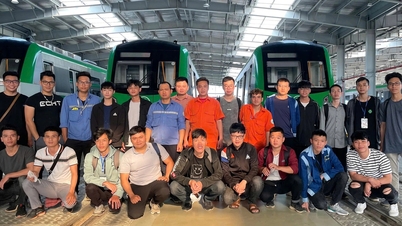
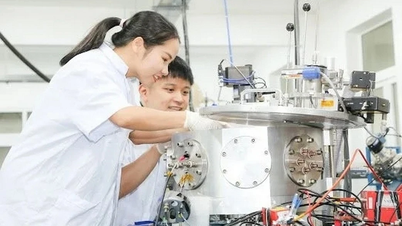
In the 2026 university entrance examination period, the Ministry of Education and Training plans to implement talent training programs in key areas such as semiconductors, nuclear energy, and railways. Simultaneously, numerous scholarships will be offered for engineering and master's programs in STEM (science, technology, engineering, and mathematics) fields to develop high-quality human resources to serve the national strategy.
Source: https://nld.com.vn/tuyen-sinh-dh-2026-nhieu-thay-doi-quan-important-196260420130143789.htm


![[Image] Hanoi's urban life under the challenge of a "scorching hot" environment](https://vphoto.vietnam.vn/thumb/1200x675/vietnam/resource/IMAGE/2026/05/25/1779706979265_nang-nong-t5-2026-minh-duy-7-4636-jpg.webp)

![[Image] Close-up view of the interchange connecting the two expressways and Long Thanh Airport.](https://vphoto.vietnam.vn/thumb/1200x675/vietnam/resource/IMAGE/2026/05/25/1779703378210_ndo_br_z7863716673926-224453a31600126cce10622af6290afd-4549-jpg.webp)


















































































Comment (0)