

Can AI applications replace human presenters?
Typically, creating a complete television program takes a considerable amount of time and effort for a news organization, especially given the increasingly rapid competition for information from other platforms. Recognizing this limitation, many television news organizations have recently adopted technology and AI in their production processes.
Many television stations around the world have launched AI-powered presenters (MCs). Since 2022, major television stations in the US, India, South Korea, and Japan have developed AI MCs for their television programs. Viewers can watch AI MCs present news broadcasts.
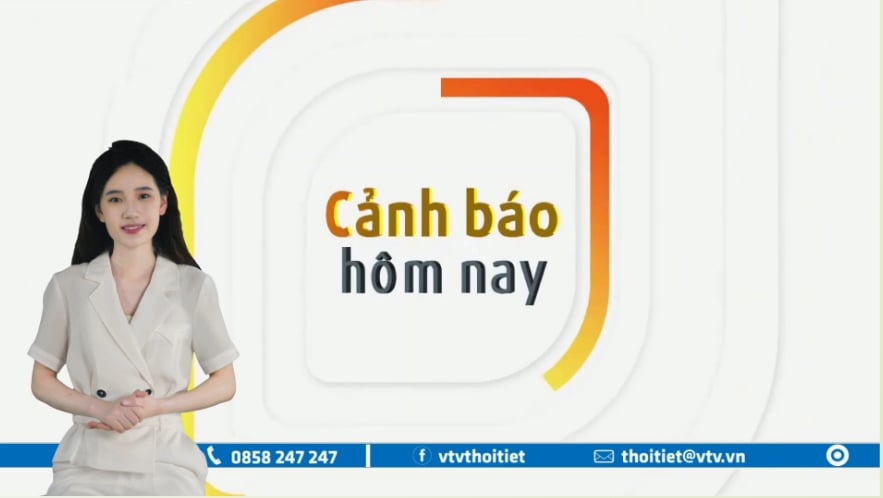
At Vietnam Television (VTV), based on data from a real editor, an AI editor was created to simulate intonation, voice, expressions, and facial movements. (Photo: VTV)
Domestically, news agencies are now applying technology to convert video and audio recordings into text, and to transcribe online meeting content into text. In particular, they are creating virtual presenters who can accurately read news bulletins and host programs in multiple languages. Without stumbling or spelling errors, these presenters are used in emergency situations and when news needs to be updated continuously and there are no live presenters or broadcasters available.
According to editor and MC Truong Viet Phong of Vietnam National Assembly Television, the application of artificial intelligence (AI) to create virtual models, broadcasters, or presenters is a popular trend, helping to create products and services that previously required significant time and expense to produce. There have been programs hosted by virtual MCs at various domestic and international media outlets that have generated significant buzz, delivering effective communication and attracting widespread attention.
Mr. Nguyen Truong Giang, Director of the Television Technology Center of Vietnam Television, shared that AI is currently widely applied in television. AI helps support television content production by creating television clips from text descriptions. In particular, AI has the ability to create weather presenters.
Mr. Nguyen Truong Giang added that currently at Vietnam Television, AI is being applied very usefully in automatic video transcription, actively supporting the work of reporters, saving time in post-production, and meeting the demand for quick updates on news articles. In addition, AI also automates data extraction, automatically creates subtitles for videos according to timecode, summarizes video content, and extracts prominent keywords from videos.
Vietnam Television (VTV) has used AI to create a virtual presenter. Based on data from a real news anchor, they built an AI presenter that mimics the intonation, voice, expressions, and facial movements (avatar or virtual person). When the virtual presenter is given a news segment, it creates a video with the image of reading the news just like a real news anchor.
"It can be said that the application of AI in television is feasible and also an inevitable trend. Media organizations can apply AI in all stages, from content ideation to program production techniques, to improve content quality, speed, accuracy, etc. in program production," Mr. Nguyen Truong Giang shared.
Leverage strengths and minimize weaknesses.
The undeniable advantages of a virtual presenter include the ability to work continuously without rest, low costs, improved work efficiency, and reduced television program production costs.
However, many people worry that using virtual presenters with automated voices will diminish the appeal and attractiveness of television programs. Viewers will feel bored when they no longer see the genuine expressions of people in response to news, issues of public interest, or shocking content.
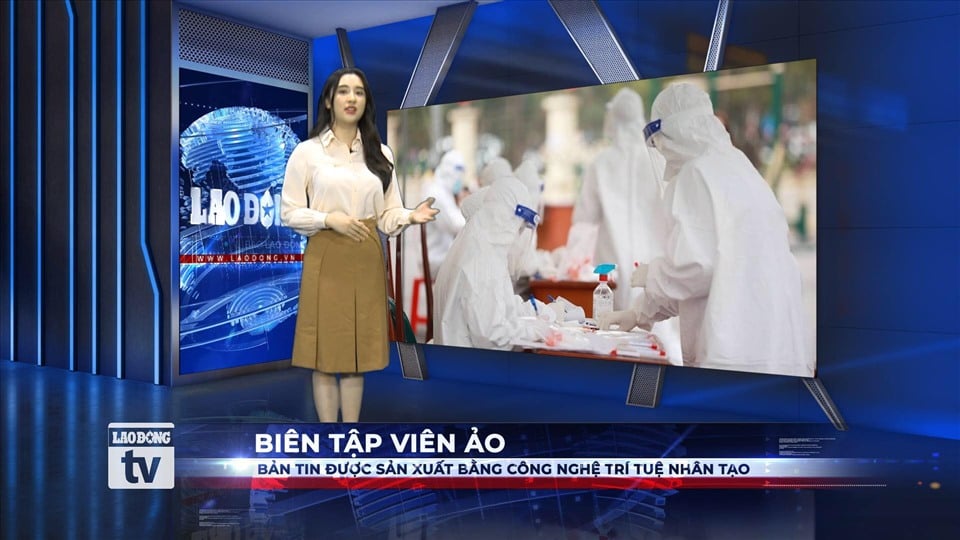
A virtual editor created by artificial intelligence technology at Lao Dong newspaper. Photo: LDO
Journalist Ngo Tran Thinh, Head of Digital Content Department, News Center, Ho Chi Minh City Television (HTV), shared: "At HTV, we use AI to create presenters, but only for illustrative purposes. When a reporter appears on screen covering a particular issue or event, the presenter still goes out to work. To obtain complete and accurate information and images, the presenter must go to the location themselves. Therefore, although the station currently uses AI quite a lot in many areas, the presenters and editors at the station still work and dedicate themselves wholeheartedly."
Some TV programs use AI as presenters, but they all display a label on the screen indicating that the virtual presenter is reading, making it easy for viewers to distinguish. However, through testing, we found that the virtual presenter did not create interest or enjoyment for the audience. The station's television news reports still prioritize live presenters, even those on location, to obtain the highest quality and most authentic visual information.
Sharing his views on this issue, journalist Le Quoc Minh, Member of the Central Committee of the Communist Party of Vietnam, Editor-in-Chief of Nhan Dan Newspaper, Deputy Head of the Central Propaganda Department, and President of the Vietnam Journalists Association, stated: In some developed countries, AI-generated presenters are capable of acting, answering questions, and displaying facial expressions, emotions, and hand and foot movements like real people. A real presenter would interact directly with the virtual MC.
For domestic news organizations, which are often at a more rudimentary stage, we use AI to read dialogue and subtitles based on pre-prepared news content. This method is easy to use and quite common.
Regarding whether virtual presenters can replace real presenters, journalist Le Quoc Minh assessed: Real presenters, with their attractive appearance, professional expertise, and expressive and emotional demeanor, still attract more viewers. We believe that being a presenter is a creative and improvisational job, something that virtual presenters cannot replace in the near future.
"Editors shouldn't be preoccupied with whether they'll lose their jobs as presenters to AI; instead, they need to understand it, know its advantages and disadvantages, and think about how to utilize AI. They need to know what technology is good at and in what situations they can leverage it. All of this is to ensure their work is as effective as possible in the production process," journalist Le Quoc Minh emphasized.
Source: https://www.congluan.vn/ung-dung-ai-thay-the-nguoi-dan-chuong-trinh-dang-mung-hay-dang-lo-post310794.html

![[Photo] Prime Minister Pham Minh Chinh presides over a meeting on private sector economic development.](/_next/image?url=https%3A%2F%2Fvphoto.vietnam.vn%2Fthumb%2F1200x675%2Fvietnam%2Fresource%2FIMAGE%2F2025%2F12%2F20%2F1766237501876_thiet-ke-chua-co-ten-40-png.webp&w=3840&q=75)


![[Photo] Prime Minister Pham Minh Chinh presides over the conference announcing the establishment of the International Finance Centre in Vietnam.](/_next/image?url=https%3A%2F%2Fvphoto.vietnam.vn%2Fthumb%2F1200x675%2Fvietnam%2Fresource%2FIMAGE%2F2025%2F12%2F21%2F1766309817714_ndo_br_dsc-3400-jpg.webp&w=3840&q=75)







































































Comment (0)