

Many topics surrounding the application of artificial intelligence (AI) to music creation were discussed at the national scientific conference "Applications of Artificial Intelligence in Contemporary Music Composition," held at Van Hien University in Ho Chi Minh City on the afternoon of June 21st.
Adaptation and AI are becoming increasingly prevalent.
The national scientific conference "Application of Artificial Intelligence in Contemporary Music Composition" is an event organized by Van Hien University in collaboration with the Southern Region of the Vietnam Musicians Association and sponsored by Nguoi Lao Dong Newspaper. The conference aims to create a forum for experts, musicians, music lecturers, students, and others to share and learn more about the application of AI in contemporary music composition.
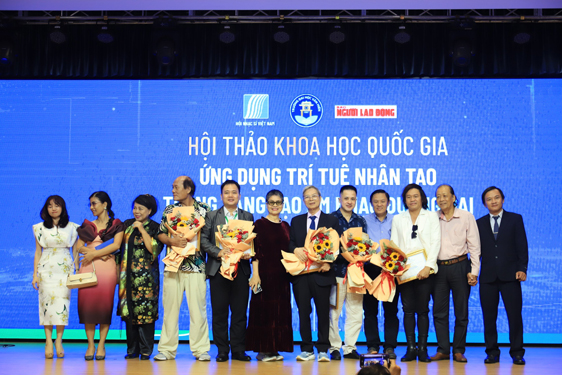
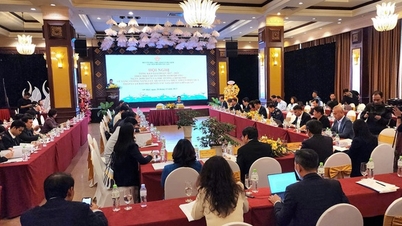
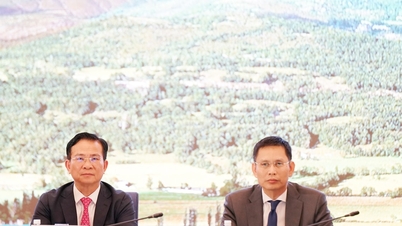
Speakers and delegates pose for a commemorative photo at the conference. (Photo provided by Van Hien University)
Mr. Nguyen Do Tung, Executive Director of Van Hien University, said: "This workshop aims to exchange ideas and propose solutions and development directions between AI and music; discuss important topics such as the potential and limitations of AI in music creation, how AI creates music trends, the future of music and AI...".
Speakers at the conference all agreed that AI is an inevitable trend of the times, developing increasingly in multiple fields, not just music. Therefore, the use and adaptation of AI in creative work by musicians will become increasingly common.
"Training musicians to use AI as a tool alongside human intelligence and emotions for creating music will help them become smarter, more efficient, and more prolific in their musical endeavors," commented Associate Professor Dr. Truong Ngoc Thang from Van Lang University.
Meanwhile, Master of Music Nong Xuan Hieu - Faculty of Arts, Van Hien University - stated: "Currently, AI can compose complete musical pieces with minimal human intervention. AI can automatically create music, create virtual instruments, analyze music, and assist in mixing and mastering. Not only limited to production, AI also participates in live performances, interacts with audiences, and collects and analyzes audience feedback from various online platforms and media channels."
According to experts, the future of AI in music is very bright. AI not only helps improve production efficiency but also opens up new creative avenues for musicians. AI tools will continue to develop, becoming smarter and easier to use, enabling everyone, even those with little musical knowledge, to compose and produce high-quality music.
AI is just an assistant.
Meritorious Artist Tran Vuong Thach - Vice President of the Vietnam Musicians Association in charge of the Southern region - raised many issues regarding creativity and copyright when musicians use AI tools to create works. Are works created by humans using AI the creation of humans or of machines? Therefore, does the copyright of the work belong to the human or to the AI?
This is a topic widely discussed by copyright centers and international copyright organizations from Europe, America, and other countries. If a work created by humans using AI is successful and generates revenue, will royalties be paid to the musician or the AI? Many speakers argued that AI should be viewed as an assistant or a supporting tool in the creative process because AI still has limitations and challenges, especially with Vietnamese folk music.
"AI has only just begun to accumulate a vast repertoire of European and American music. The genres of Vietnamese folk music, folk songs, or music with folk influences from specific regions are still limited. With continuous upgrades, AI will certainly be a valuable tool to support musicians and music enthusiasts in creating folk music in the future," said Colonel and musician Nguyen Mai Kien, Head of the Training Department at the Military University of Culture and Arts.
Dr. Nguyen Bach Mai from Nguyen Tat Thanh University observed: "AI still has limitations in terms of emotions, mainly relying on patterns and algorithms to create music, therefore it often lacks authenticity and subtlety, and cannot be compared to the emotions from real-life human experiences."
Regarding copyright issues, Colonel and musician Nguyen Mai Kien said that when using the Suno software, Suno stated that if users did not purchase a license, they were only allowed to share songs created using the AI, not to commercialize them. Conversely, if users purchased a monthly license, they would be allowed to use the created songs for commercial purposes, earning money from YouTube or other online platforms.
"Currently, copyright laws have not kept pace with the development of AI. Organizations and lawmakers need to quickly introduce new regulations to ensure the rights of artists and music producers, while promoting creativity and the development of AI in this field," proposed Master of Music Nong Xuan Hieu.
Source: https://nld.com.vn/ung-dung-ai-trong-am-nhac-tac-quyen-cua-ai-196240621205446004.htm







































































Comment (0)