

People who are frequently exposed to sunlight, especially intense sunlight, may develop malignant tumors on their skin if they get sunburned.
Skin cancer is a condition where skin cells grow out of control. Dr. Ngo Truong Son (Deputy Head of the Oncology Department, Tam Anh General Hospital, Hanoi ) said there are two main types of skin cancer: non-melanoma and melanoma.
Non-melanoma skin cancer: This type of cancer most commonly occurs on parts of the body that are exposed to prolonged, repeated sun exposure, such as the ears, face, neck, and arms. Non-melanoma skin cancers include squamous cell carcinoma (a type of cancer that affects the cells on the outermost layer of the epidermis) and basal cell carcinoma (a type of cancer that starts in the basal cells of the skin).
Malignant melanoma: This is a type of skin cancer that begins in melanocytes. Of all skin cancers, melanoma causes the most deaths because it tends to spread to other parts of the body, including vital organs. Several studies indicate that the risk of malignant melanoma correlates with genetic and individual characteristics and exposure to ultraviolet radiation.
In addition, there are other less common types of skin cancer such as: melanoma (formed by the excessive growth of melanocytes); cutaneous lymphoma (formed when white blood cells in the skin grow abnormally)...
According to the World Health Organization (WHO), there are 132,000 cases of malignant melanoma and 2-3 million cases of non-malignant melanoma skin cancer each year. As ozone levels are depleted, the atmosphere loses its filtering and protective functions, and ultraviolet radiation from the sun reaches the Earth's surface in increasing amounts. Researchers estimate that a 10% decrease in ozone levels will lead to approximately 300,000 additional cases of non-melanoma skin cancer and 4,500 additional cases of melanoma skin cancer.
Risk factors
Dr. Truong Son further shared that the main cause of skin cancer is radiation from ultraviolet rays from sunlight. Having many atypical moles is the biggest risk factor for malignant melanoma in people with fair skin. Malignant melanoma is more common in people with pale complexions, blue eyes, and red or blonde hair. People with a history of sunburn; exposure to coal and arsenic compounds also increase their risk of this type of cancer.
People who work at high altitudes and outdoors have a higher risk of skin cancer because ultraviolet (UV) rays are stronger with increasing altitude (because the atmosphere is thinner at higher altitudes and cannot filter UV rays as effectively). The strongest sunlight is near the equator, so the closer people live to the equator, the higher their risk of skin cancer.
Other risk factors include repeated exposure to X-rays; scarring from disease and burns; immunosuppression, such as in people who have undergone organ transplantation; age; a history of skin cancer; and certain rare genetic diseases.
Token
Skin cancer most commonly appears on the face, neck, arms, legs, ears, and hands—areas that are frequently exposed to sunlight. However, it can also appear in other areas.
Skin cancer often has no symptoms in its early stages. Symptoms of skin cancer may include: new lesions on the skin or changes in size, shape, or color. These changes can vary so much that there is no way to describe what skin cancer looks like. Some people may experience itching or pain; sores that don't heal but bleed or scab over; a shiny red or skin-colored bump appearing on the skin; a rough, red, or scaly spot that may be felt on the skin; lumps with raised edges and a central crust or bleeding; wart-like nodules; scar-like streaks with no clear border...
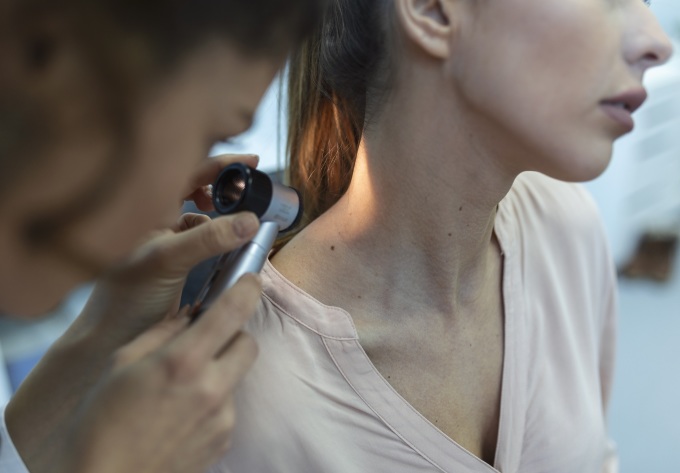
A skin examination can help identify signs of skin cancer. Photo: Freepik
According to Doctor Truong Son, skin cancer symptoms can vary depending on the type of skin cancer and its location on the skin. Therefore, if any new spots or changes appear on the skin and persist for two weeks or more, patients should seek medical attention for proper diagnosis and treatment.
Treatment and prevention
To diagnose skin cancer, the most common methods involve a general physical examination and taking a personal and family medical history. Afterward, the doctor may assess the lesions using dermoscopy, biopsy, and histopathology. Treatments for skin cancer may include surgery, chemotherapy, radiation therapy, photodynamic therapy, biological therapy, and immunotherapy.

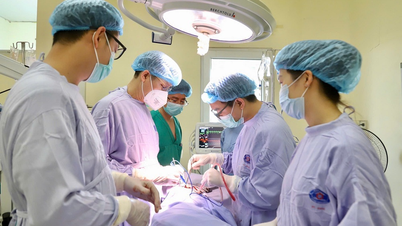
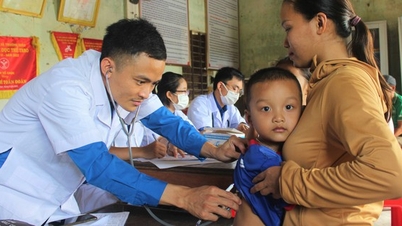
Doctor Ngo Truong Son examines a patient at Tam Anh General Hospital in Hanoi. Photo: Linh Dang.
Dr. Truong Son recommends that, to reduce the risk of skin cancer, the best way is to avoid frequent exposure of the skin to sunlight and other sources of UV radiation, such as limiting sunbathing; limiting going outside during times of high UV radiation (between 10 am and 2 pm). Everyone should use sunscreen with an SPF of 30 or higher for the whole body; apply it at least 10 minutes before going outside and reapply every 30 minutes if outdoors. Wear sun-protective clothing (specifically designed to block UV rays), wear a wide-brimmed hat; wear light-colored clothing instead of dark-colored clothing when going out in the sun because black absorbs more ultraviolet rays.
You can wear sunglasses, preferably those that block 100% of ultraviolet rays, when going out in the sun. Proactively get regular health checkups at least once a year, and twice a year for those with risk factors. Note that if unusual skin conditions persist for two weeks, moles grow larger, or are surrounded by blood vessels, patients should seek immediate medical attention for timely diagnosis and treatment.
Nguyen Phuong
Source link




































































































Comment (0)