Therefore, in the spiritual and cultural life of our ancestors, there was always a strong belief in folk beliefs. This was expressed through the establishment of temples, shrines, and pagodas for worship, to entrust their faith, and over time, these places have marked and affirmed the history of our country's sovereignty in the early days when our ancestors opened up the southern lands.
From shrines dating back to the pioneering era...
Around the end of the 17th century, the Thoi Binh area saw the arrival of some Kinh people from outside the region, who refused to submit to the tyrannical landlords of the feudal regime, along with those exiled by the Nguyen lords. By the end of the 19th and beginning of the 20th centuries, some Chinese and Khmer people joined forces with the Kinh to reclaim land, build villages, and establish settlements, forming Thoi Binh village, which consisted of four hamlets: Kien An, Cuu An, Tan Thoi, and Tan Binh. During the French colonial period, these four hamlets were merged into Thoi Binh hamlet, which is present-day Thoi Binh.
In the early days of land reclamation and settlement, Thoi Binh village was a place of dense forests and treacherous waters teeming with wild animals. Our ancestors faced countless dangers. Due to their reverence for nature, and especially their folk beliefs in worshipping multiple deities for protection and guidance, they built small shrines for symbolic and symbolic worship, such as shrines for the earth god, water god, human god, or animals considered sacred, like Ông Ba Mươi (the Tiger God)... Consequently, the Thoi Binh area today has many shrines dating back to ancient times, such as the Ba Chua Xu shrine in Nguyen Hue hamlet, Tan Bang commune; the Ba Chua Xu shrine in Cay Kho hamlet, Ho Thi Ky commune; and the Thien Hau shrine of the Chinese community in Thoi Binh town... Ba Chua Xu is a concrete manifestation of the long-standing Vietnamese belief in worshipping the Mother Goddess. As the embodiment of the Mother Goddess, representing the local people's desire for protection and security, many shrines dedicated to her have been erected by the people at the village entrances and river junctions in Thoi Binh district.
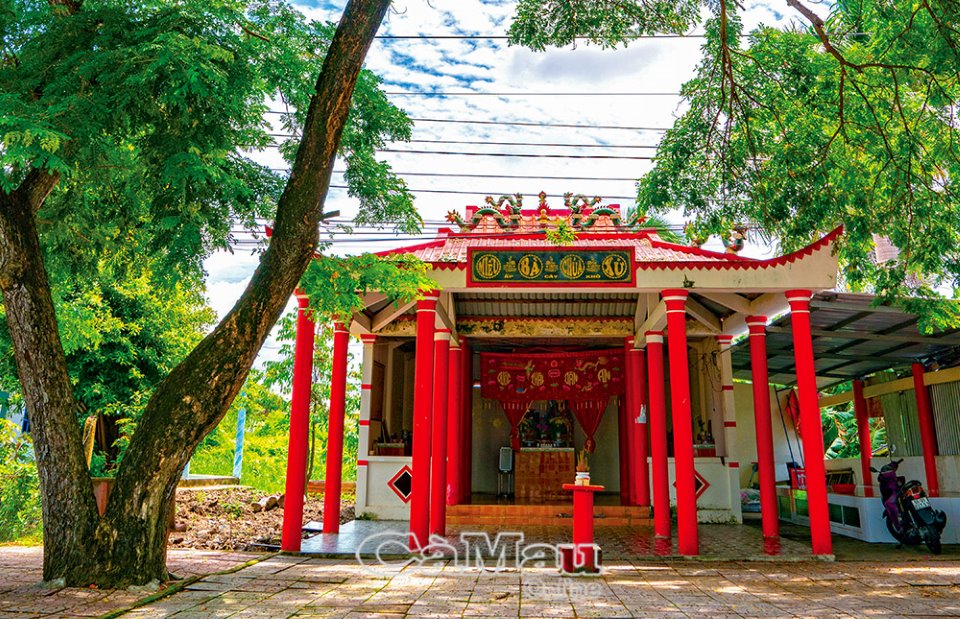
The area of Thoi Binh today has many ancient temples, such as the Ba Chua Xu Temple in Cay Kho hamlet, Ho Thi Ky commune.
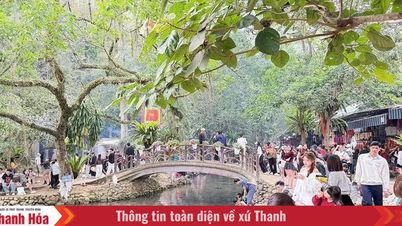
...Visiting temples and pagodas, which are historical relics.
In keeping with the Vietnamese tradition of always remembering and showing gratitude to the pioneers who settled the land, gathered people to establish villages and hamlets, and expanded this region, as well as the later generations who cultivated the land and built welfare facilities to help people reclaim and cultivate fields; the generations of migrants to Thoi Binh village have all shown their gratitude to these ancestors... Therefore, there are many communal houses here dedicated to the tutelary deity of the village, who oversees the affairs of the villages and also serves as a meeting place for the villagers to discuss matters.

During the Nguyen Dynasty, the communal houses in Thoi Binh village all had royal decrees bestowing titles upon their tutelary deities, as most of them had rendered meritorious service to the country. For example, the Thoi Binh communal house was granted a royal decree by Emperor Tu Duc on November 29th, 1851 (the year of Tan Hoi); on November 29th, 1852 (the year of Nham Ty), Emperor Tu Duc granted royal decrees to the Tan Bang and Tan My communal houses (Tan Loc)... These communal houses, during the years of resistance against foreign invaders, became centers of revolutionary activity and are now recognized as historical and cultural relics.
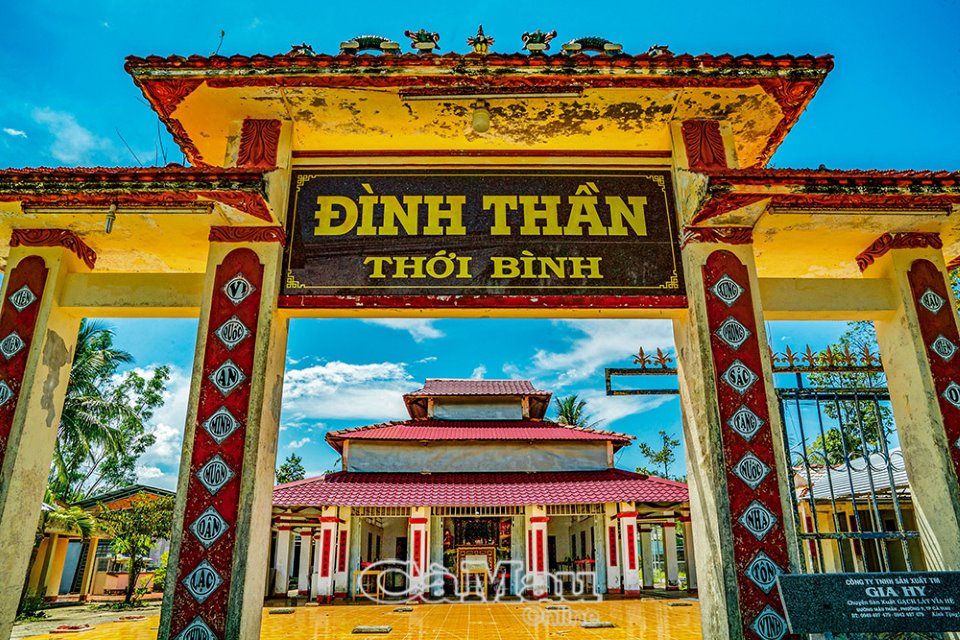
The Thoi Binh communal house was built in 1846-1847 and was granted the title of deity by Emperor Tu Duc on November 29th, 1851 (the year of Tan Hoi).
In particular, the Hung Kings worship tradition demonstrates the strength of national unity. More than 160 years ago, in Thoi Binh village, there was the "King's Shrine" (now the Hung Kings Temple, located along National Highway 63, in Giao Khau hamlet, Tan Phu commune, recognized as a provincial-level historical and cultural relic in 2011). Initially, the Hung Kings Temple was built simply with wood and leaves. After many renovations and restorations, the temple complex has now been invested in and built in a grand style so that the people of Thoi Binh and future generations of Ca Mau can remember their national origins.
Along with shrines and communal houses established during the early days of village and hamlet founding, pagodas served as centers for the activities and dissemination of Buddhism, as well as places for monks and nuns to practice and preach Buddhist doctrines. In Thoi Binh district, pagodas also sheltered revolutionary cadres, a prime example being the Cao Dan Pagoda in Tan Loc commune, a National Historical and Cultural Monument. Built in 1922, Cao Dan Pagoda was a secret base of the revolution during the two resistance wars against France and the United States. Many Buddhists and monks participated in the resistance here, most notably the late Venerable Huu Nhem (former abbot of the pagoda), a staunch revolutionary fighter who served as Vice Chairman of the National Liberation Front of the Southwestern Region.

The Rach Giong Pagoda (Duong Dao hamlet, Ho Thi Ky commune), a provincial-level historical site, was built in 1788, making it 235 years old and one of the earliest pagodas built in the Thoi Binh area. Throughout its formation and development, the pagoda fulfilled its religious duties while also serving as a revolutionary base, a strong rear support, and a place for disseminating the Party's policies and guidelines to ethnic minorities and Buddhist followers. It also served as a cultural exchange center for ethnic groups from the early days of clearing the wasteland to build villages and hamlets.

Rach Giong Pagoda (Duong Dao hamlet, Ho Thi Ky commune) was built in 1788, making it 235 years old and the earliest pagoda built in the Thoi Binh area. The pagoda was recently restored and recognized as a Provincial Historical Monument in 2022.

Temples, pagodas, and shrines are important cultural, spiritual, and religious symbols in the lives of the people of Thoi Binh for generations, closely associated with the process of nation-building and national defense, and the history of revolutionary and resistance periods of the people of Thoi Binh in particular and Ca Mau in general. Therefore, preserving the values of folk religious culture is also about inheriting and promoting the flow of national culture.
Huynh Lam
Source link