

From the process of understanding "globalization" and "international integration"...
Before the 9th Party Congress in 2001, the Party's documents only mentioned "internationalization," not "globalization." From the 9th Party Congress, Vietnam began to mention "economic globalization." At that time, the Political Report of the 9th Party Congress stated: "Economic globalization is an objective trend, attracting more and more countries to participate; this trend is being dominated by some developed countries and transnational capitalist economic groups, containing many contradictions, having both positive and negative aspects, having both cooperation and struggle" (1) . Through the 9th and 10th Party Congresses, Vietnam emphasized " economic globalization." At the 11th Party Congress (2011), Vietnam shifted from the understanding of "economic globalization" to the understanding of "globalization." The Political Report of the 11th Party Congress stated: “Globalization and the scientific and technological revolution are developing strongly, promoting the formation of an information society and a knowledge economy” (2) . The 12th Party Congress (2016) continued to affirm: “Globalization, international integration, the scientific and technological revolution, and the knowledge economy continue to be promoted” (3) . The Political Report of the 13th Party Congress (2021) emphasized: “Globalization and international integration continue to progress but are facing the rise of nationalism...” (4) .
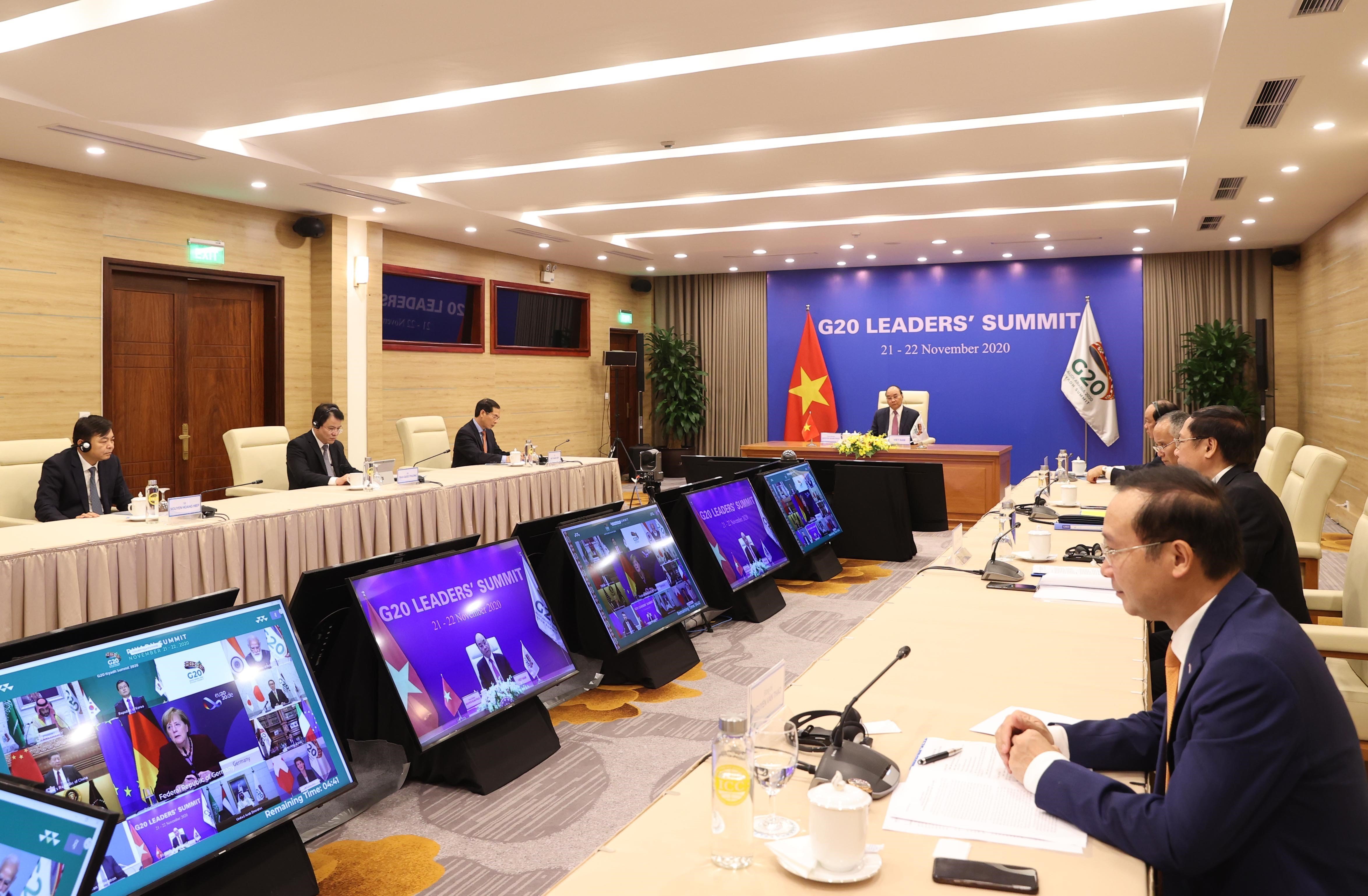
Member of the Politburo and Prime Minister Nguyen Xuan Phuc attended the second discussion session of the G20 Summit on the theme: “Building a Sustainable, Inclusive and Resilient Future” in an online format, on November 22, 2020 (Photo: VNA).
Along with the awareness of globalization, Vietnam has gradually carried out international integration. The 9th Party Congress set forth the policy: “ Actively integrate into the international and regional economy in the spirit of maximizing domestic resources, improving the effectiveness of international cooperation, ensuring independence, self-reliance and socialist orientation, protecting national interests, national security, preserving national cultural identity, and protecting the environment” (5) . The 10th Party Congress (2006) took another step in the awareness and action of international integration; it set forth the policy: “Actively and proactively integrate into the international economy, while expanding international cooperation in other fields. Vietnam is a friend and reliable partner of countries in the international community, actively participating in the process of international and regional cooperation” (6) . At the 11th Party Congress, Vietnam emphasized international integration: “Consistently implement the independent, self-reliant, peaceful, cooperative and development foreign policy; multilateralize and diversify relations, actively and proactively integrate into the international community; be a friend, a reliable partner and a responsible member in the international community; for the national interest, for a prosperous and strong socialist Vietnam” (7) .
The Platform for building the country during the transition period to socialism (supplemented and developed in 2011) has identified 8 basic directions of the Vietnamese revolution, of which the fifth direction is: “Implementing an independent, self-reliant, peaceful, friendly, cooperative and developmental foreign policy; actively and proactively integrating into the international community” (8) . The Platform sets out the requirement: “Consistently implement an independent, self-reliant, peaceful, cooperative and developmental foreign policy ; multilateralize and diversify relations, actively and proactively integrate into the international community; enhance the country's position; for the national and ethnic interests, for a strong and prosperous socialist Vietnam; be a friend, a reliable partner and a responsible member in the international community, contributing to the cause of peace, national independence, democracy and social progress in the world” (9) . On April 10, 2013, the Politburo (11th term) issued Resolution No. 22-NQ/TW “On international integration” . One of the general tasks set forth by the 12th Party Congress is: “Implementing an independent, self-reliant, multilateral, diversified foreign policy, actively and proactively integrating into the international community; maintaining a peaceful and stable environment, creating favorable conditions for the cause of building and protecting the Fatherland; enhancing Vietnam's position and prestige in the region and the world” (10) . The 12th Congress set forth the policy: “Improving the effectiveness of international economic integration, fully implementing international commitments, building and implementing a strategy to participate in free trade areas with important economic and trade partners, signing and effectively implementing new generation free trade agreements in a comprehensive plan with a reasonable roadmap, in line with the interests of the country… Promoting international integration in the fields of culture, society, science and technology, education and training and other fields” (11) . The Party's XIII Congress Political Report outlines major orientations covering important development issues of the country in the next 10 years, including "continuing to implement the independent, self-reliant, multilateral, diversified foreign policy, actively and comprehensively integrating into the international community effectively; firmly protecting the Fatherland, maintaining a peaceful and stable environment, and continuously improving Vietnam's international position and prestige. Multilateralizing and diversifying international economic relations, avoiding dependence on one market or one partner. Enhancing the resilience of the economy against negative impacts from external fluctuations; proactively improving the defense system to protect the domestic economy, businesses, and markets in accordance with international commitments. Implementing many forms of international economic integration with flexible roadmaps, suitable to the conditions and goals of the country in each stage" (12) .
Thus, from the Ninth Party Congress to the present, the Party's views on "globalization" and "international integration" have become increasingly comprehensive and play an extremely important role in formulating the guidelines, policies, and strategies for national development. The understanding of "internationalization" has evolved into the understanding of "economic globalization" and then to the understanding of "globalization." Based on the practical experience of "globalization," the Party and State have put forward the policy of "actively integrating into the international and regional economy," "actively and proactively integrating into the international economy while expanding international cooperation in other fields," and today, the policy of "actively and proactively integrating into the international economy," "improving the effectiveness of international economic integration," and "promoting international integration in the fields of culture, society, science and technology, education and training, and other fields."
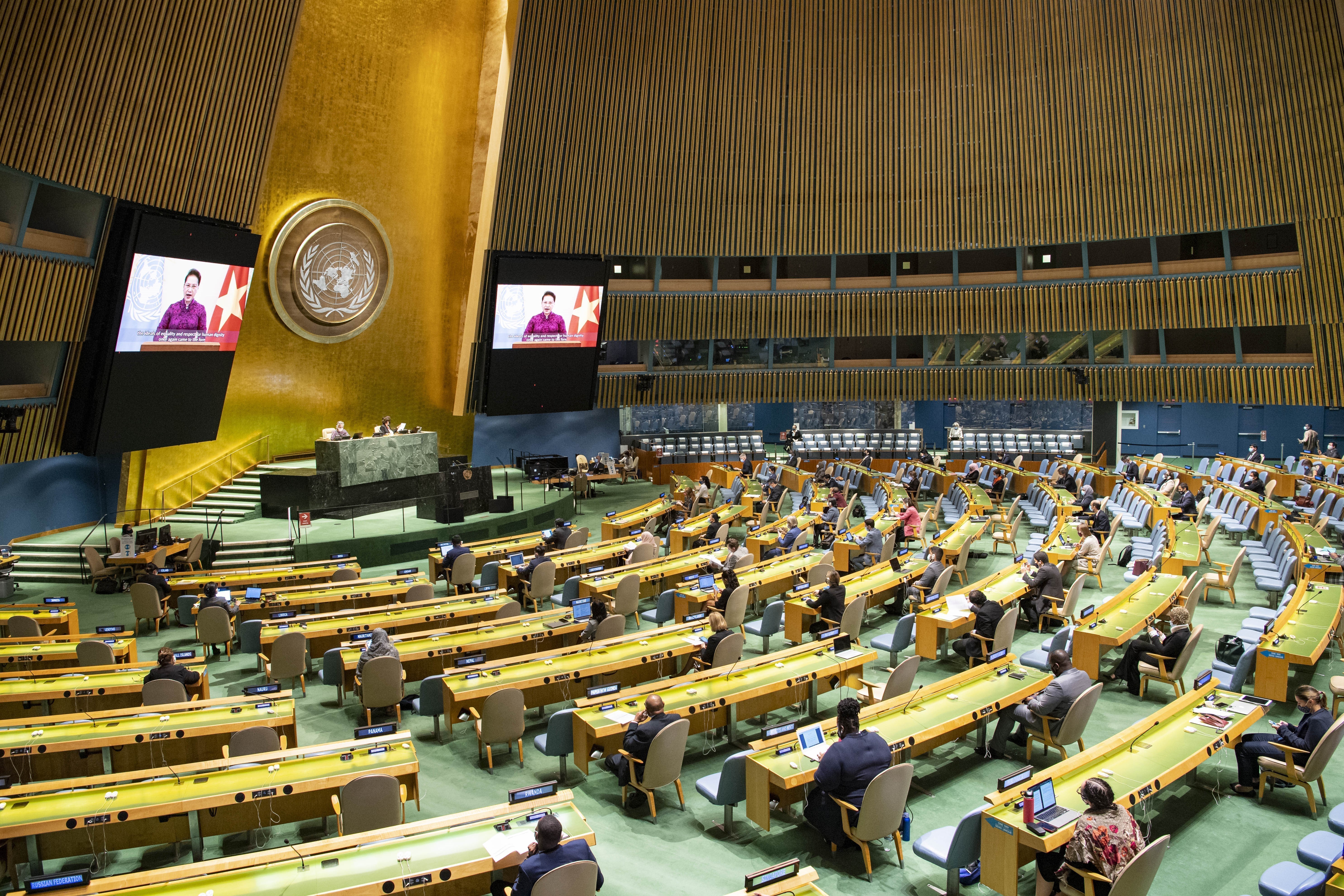
Politburo member and National Assembly Chairwoman Nguyen Thi Kim Ngan sent a message to the high-level meeting commemorating the 25th anniversary of the Fourth World Conference on Women with the theme: “Promoting gender equality and empowering all women and girls” (within the framework of the High-Level Week of the 75th Session of the United Nations General Assembly), January 10, 2020. Photo: VNA
…to the new context of "globalization" today.
In recent years, both in Vietnam and around the world, there have been opinions suggesting that "globalization" is stagnating; some even mention "deglobalization." This viewpoint emphasizes the increasing trend of protectionism in many countries, the US-China trade war and trade disputes between major global economic centers, and the US's threat and actual withdrawal from several international institutions. Therefore, the question now is whether globalization is stagnating? Answering this question is one of the fundamental bases for the 13th National Congress of the Communist Party of Vietnam to formulate the country's development path for the coming years.
Essentially, "globalization" is the process of forming the "global," distinct from the "regional" (relating only to specific geo-economic and political regions of the world), the "bloc" (relating only to groups of forces in the world), and the "nation-state" (relating only to individual countries). Modern human society, with its global economy, global politics, and human civilization, demonstrates that globalization has progressed significantly and profoundly; simultaneously, it affirms that "globalization" is truly an objective and irreversible trend. It is clear that, despite numerous limitations, shortcomings, and flaws in all three major systems mentioned above, the inherent need for development within human society is the root cause determining the trend of globalization. It is noteworthy that the process of globalization does not unfold linearly, but rather involves leaps and bounds, linked to revolutions in the forces of human social production. It can be asserted that, in the coming period, with the explosion of the Fourth Industrial Revolution (Industry 4.0), there will inevitably be new leaps and bounds in the process of globalization; globalization will not slow down at all.
The increase in protectionist activities in recent years does not mean the fragmentation of the world market into separate national markets or blocs, nor does it disrupt transnational investment flows or eliminate global problems arising from the development of the world economy. Solving these problems requires increased cooperation and joint efforts from the international community. Rather, protectionism only creates new tariff and non-tariff "obstacles" to the circulation of goods, services, and investment, obstacles that have always existed in the process of globalization. World trade and investment statistics clearly show that, despite the increase in protectionist activities in recent years, world trade and international investment continue to grow.
The formation of the "global" in the process of globalization has led to the emergence of global institutions, such as the United Nations and its affiliated organizations, the World Trade Organization (WTO), the World Bank (WB), and the International Monetary Fund (IMF). These institutions are not static; their operating mechanisms must constantly be reformed and updated to suit each stage of the "global" development. This adaptation ensures the vitality and enhances the effectiveness of international institutions, and does not, and certainly cannot, hinder the process of globalization. The new development of globalization, linked to the explosion of the Fourth Industrial Revolution, inevitably leads to innovations, reforms, and restructuring of existing global institutions and may give rise to new global governance institutions.
The requirements for Vietnam's current process of international integration.
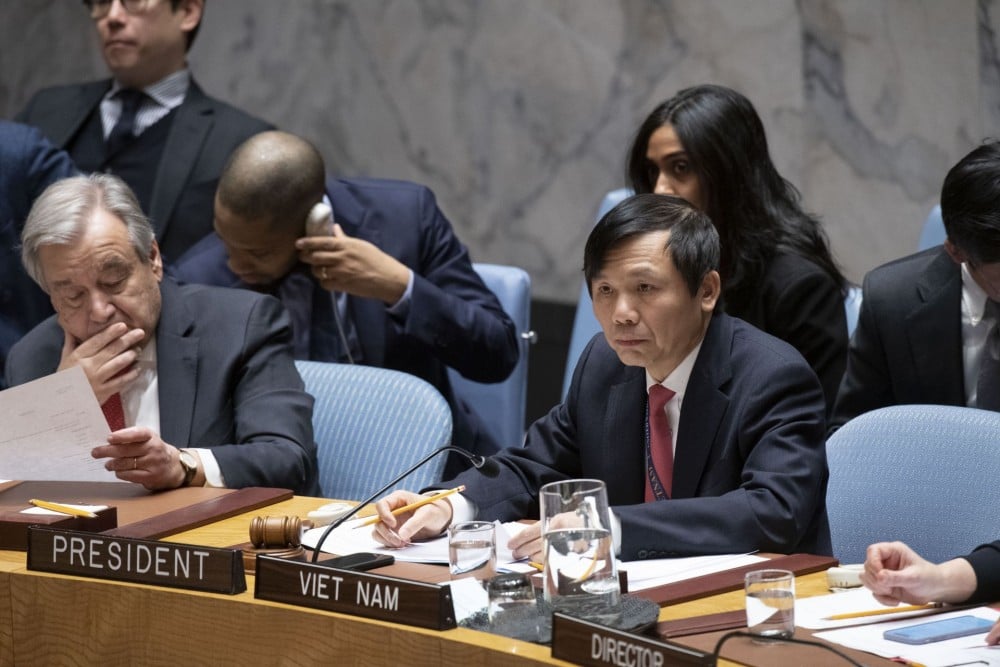
Ambassador Dang Dinh Quy, Head of the Permanent Mission of Vietnam to the United Nations, chaired the discussion session on cooperation between the United Nations and ASEAN in maintaining international peace and security, January 2020. Source: UN
The process of a country's international integration can be understood as its participation in the global system and its becoming a constituent part of the global whole, primarily as a constituent part of the "world economy," "world politics," and "human civilization." This participation is through interactive activities (cooperation, competition, and conflict...) with various constituent parts of the "system," including joining or withdrawing from different "subsystems" within the system. All these activities are purposeful, aiming to: 1- Develop the nation; 2- Affirm national identity; 3- Gain a worthy position for the nation within the system; 4- Participate in perfecting and developing the system...
It is necessary to discard the simplistic but quite common thinking in Vietnam today that "international integration" is a highly developed form of "international cooperation." The problem is that "international cooperation" and "international integration" belong to different conceptual classes. International cooperation is only one of many methods of interaction between countries; besides international cooperation, there is also competition, struggle, alliances, partnerships, confrontation, war, etc. The fundamental point is that, unlike the concept of "international integration," the concept of "international cooperation" does not refer to the formation of a global system.
To assess the state of a country's international integration, the scope, level of participation, and position of that country in various aspects of international life and in global systems should be used as criteria.
In terms of "broad-narrow" integration, there are three levels: Firstly, narrow integration, when a nation integrates only in a few areas of international community life; secondly, relatively broad integration, when a nation integrates in most areas of international community life; and thirdly, broad integration, when a nation integrates in all areas of international community life.
Regarding the "shallow-deep" aspect , there are also three levels of integration: Firstly , shallow integration, when the integrating nation has almost no position or role in the international community; secondly , relatively deep integration, when the integrating nation has a certain position or role in the international community; and thirdly , deep integration, when the integrating nation has a significant position or role in the international community. In the language of systems theory, deep integration is when the integrating nation, as a constituent part of the system, has a significant influence on the formation and development of the system's "emergent" nature; while shallow integration is when the integrating nation has almost no influence on the formation and development of the system's "emergent" nature.
With the above approach, it can be seen that, after two decades of proactive and positive international integration from the 9th Party Congress to the present, Vietnam has gradually participated in all areas of international political and social life; becoming a responsible member with a certain position, role, and influence in the international community, both economically, politically, and culturally and socially... This means that Vietnam is actively integrating into the global whole. Therefore, to develop the country in the new context of "globalization" and the new stage of "international integration," attention should be paid to the following major issues:
Firstly , a correct understanding of "globalization" and "international integration" is essential as a basis for formulating national development policies and strategies, combining national strength with the strength of the times. In particular, it is necessary to clearly recognize the new developments in globalization in the coming years with the explosion of the Fourth Industrial Revolution; from there, strategizing and planning should be undertaken in the process of proactive and positive international integration.
Secondly , Vietnam currently participates in various aspects of international political and social life, meaning it has broadly integrated into the global whole, but only to a relatively deep level, with a certain position and role in some fields. Vietnam's proactive and positive process of international integration has made it a constituent part of the global whole. Going forward, it is necessary to identify the pursuit of an increasingly significant position and role in the world economy, world politics, and human civilization as the main content of Vietnam's proactive and positive international integration process.
Economically , Vietnam needs to strive to secure a place in global production and supply chains; prioritizing the rapid development of digital economy sectors and Industry 4.0. Opportunities are opening up for Vietnam in the post-COVID-19 era, and these should not be missed. To achieve this, priority should be given to developing Vietnam's connections with the world, both "hard" and "soft" connections.
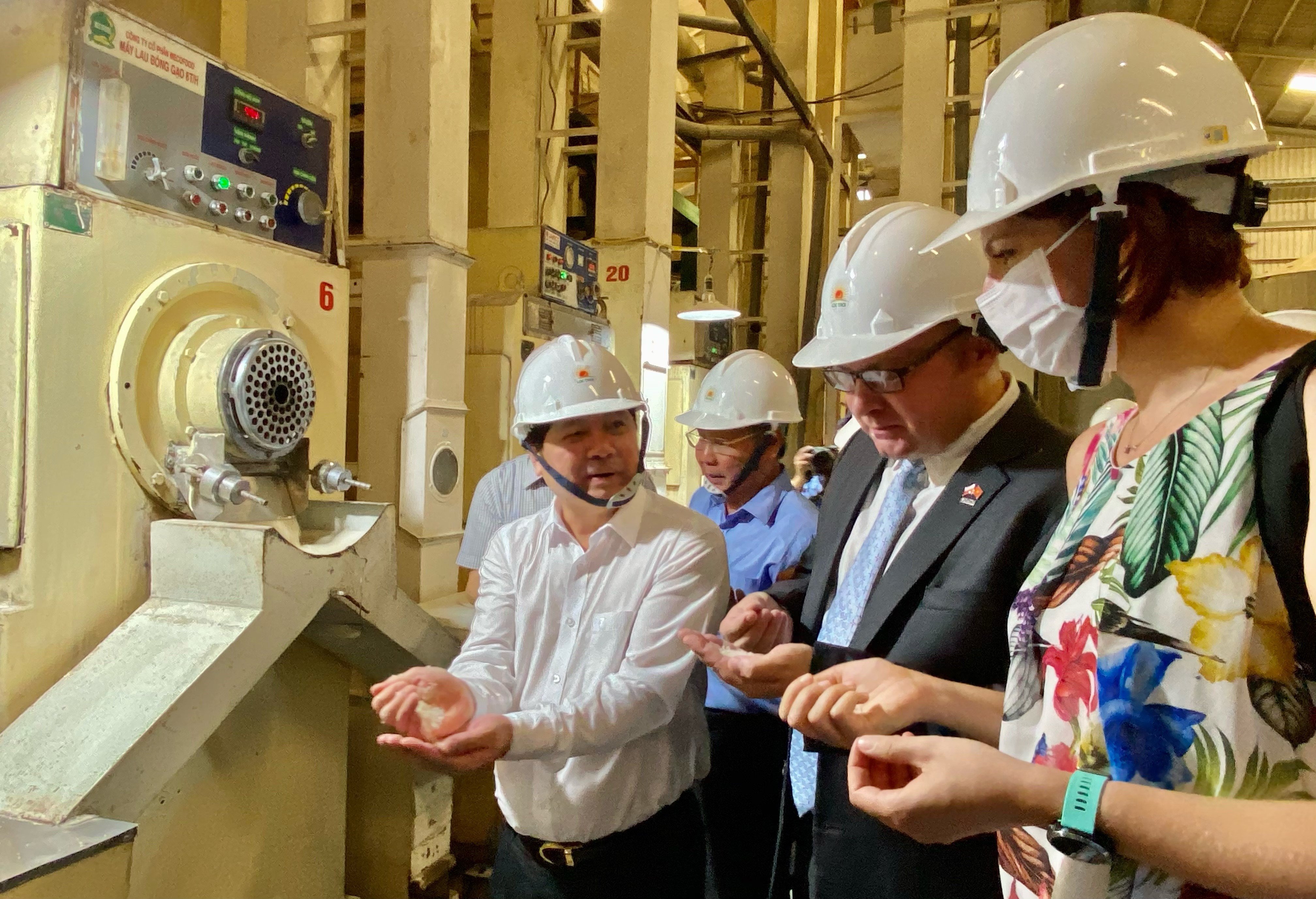
An Giang province held a ceremony to announce the export of a shipment of fragrant rice from Loc Troi Group to Europe under the EVFTA free trade agreement on September 22, 2020. (In the photo: The Deputy Minister of Agriculture and Rural Development and delegates visit the products at the Loc Troi rice production factory.) - Photo: VNA
Politically , Vietnam will continue to enhance its position in relations with major powers, especially the permanent members of the United Nations Security Council and ASEAN. It will proactively participate in addressing international and regional issues, demonstrating its role as "a friend, a reliable partner, and a responsible member of the international community, contributing to the cause of peace, national independence, democracy, and social progress in the world."
In terms of socio-cultural aspects , it is necessary to promote Vietnamese history, culture, and language to the world; preserve and promote the value of natural heritage, geoparks, ecological parks, and world cultural heritage, both tangible and intangible; affirm the good social values and traditions of Vietnam, and Vietnamese identity; actively participate in creating cultural, artistic, and scientific products with international influence; participate in addressing humanitarian issues on the international stage; participate in combating uncivilized and anti-cultural phenomena and activities that are against humanity... Special attention should be paid to multiplying and developing the country's "soft power," and competing in terms of "soft power" on the international stage. In the context of the Fourth Industrial Revolution, social media plays an increasingly significant role in promoting culture and also in cultural "invasion," spreading social values and eroding them, leveraging and limiting the "soft power" of nations, contributing to social stability and causing social instability. Social media has become a cultural phenomenon, an information channel, and a governance tool. Besides strengthening state management of social media, some countries are proactively utilizing and promoting its role as an information channel and governance tool. Vietnam needs a new approach to social media, moving beyond simply treating it as an object of regulation.
Thirdly , when implementing international integration activities, issues always arise that need to be addressed regarding the relationship between independence, self-reliance, and proactive international integration. For example, in the process of international integration, it is necessary to constantly adjust and amend the domestic legal system; however, this must be done with a careful roadmap and steps to both consolidate independence and self-reliance while successfully integrating into the international community. Or there are issues of dealing with the risk of dependence on external markets, economic dependence leading to political dependence...; or the need to cope with cultural invasion, handle the phenomenon of cultural exchange in international integration, and the contradictions in building the Vietnamese people under the influence of the global citizen movement and the infiltration of social values incompatible with our country...
Fourth , Vietnam needs to proactively and actively participate in the innovation, reform, and establishment of global and regional institutions; contributing more to building the "rules of the game," considering this a crucial national interest.
Fifth , in the process of international integration, an increasing number of disputes are constantly arising. Besides common international mechanisms, the world also has specialized, regional mechanisms for resolving international disputes in which we lack experience. Therefore, an urgent issue in the integration process is to enhance the capacity to prevent, combat, handle, and resolve international disputes, coupled with the training and development of personnel specializing in these fields.
------------------------
(1), (5) Party Congress Documents during the Renovation Period (Congress VI, VII, VIII, IX), National Political Publishing House, Hanoi, 2005, pp. 617, 664
(2) Documents of the 11th National Congress of Delegates , National Political Publishing House, Hanoi, 2011, p.28
(3), (10), (11) Documents of the 12th National Congress of the Communist Party of Vietnam, Central Party Office, Hanoi, 2016, pp. 18, 79, 155-156
(6) Documents of the 10th National Congress of Delegates , National Political Publishing House, Hanoi, 2006, p. 112
(7), (8), (9) Documents of the 11th National Congress of Delegates , op. cit ., pp. 235-236, 72, 83-84
(4), (12) Nguyen Phu Trong: “Report of the Central Executive Committee of the 12th Party Congress on the documents submitted to the 13th Party Congress” , https://www.tapchicongsan.org.vn/web/guest/media-story/-/asset_publisher/V8hhp4dK31Gf/content/bao-cao-cua-ban-chap-hanh-trung-uong-dang-khoa-xii-ve-cac-van-kien-trinh-dai-hoi-xiii-cua-dang)
Source: https://tapchicongsan.org.vn/web/guest/quoc-phong-an-ninh-oi-ngoai1/-/2018/821539/ve-hoi-nhap-quoc-te-va-tham-gia-tien-trinh-toan-cau-hoa-cua-viet-nam.aspx

![[Photo] Prime Minister Pham Minh Chinh presides over the conference announcing the establishment of the International Finance Centre in Vietnam.](/_next/image?url=https%3A%2F%2Fvphoto.vietnam.vn%2Fthumb%2F1200x675%2Fvietnam%2Fresource%2FIMAGE%2F2025%2F12%2F21%2F1766309817714_ndo_br_dsc-3400-jpg.webp&w=3840&q=75)


![[Photo] Prime Minister Pham Minh Chinh presides over a meeting on private sector economic development.](/_next/image?url=https%3A%2F%2Fvphoto.vietnam.vn%2Fthumb%2F1200x675%2Fvietnam%2Fresource%2FIMAGE%2F2025%2F12%2F20%2F1766237501876_thiet-ke-chua-co-ten-40-png.webp&w=3840&q=75)
















































Comment (0)