

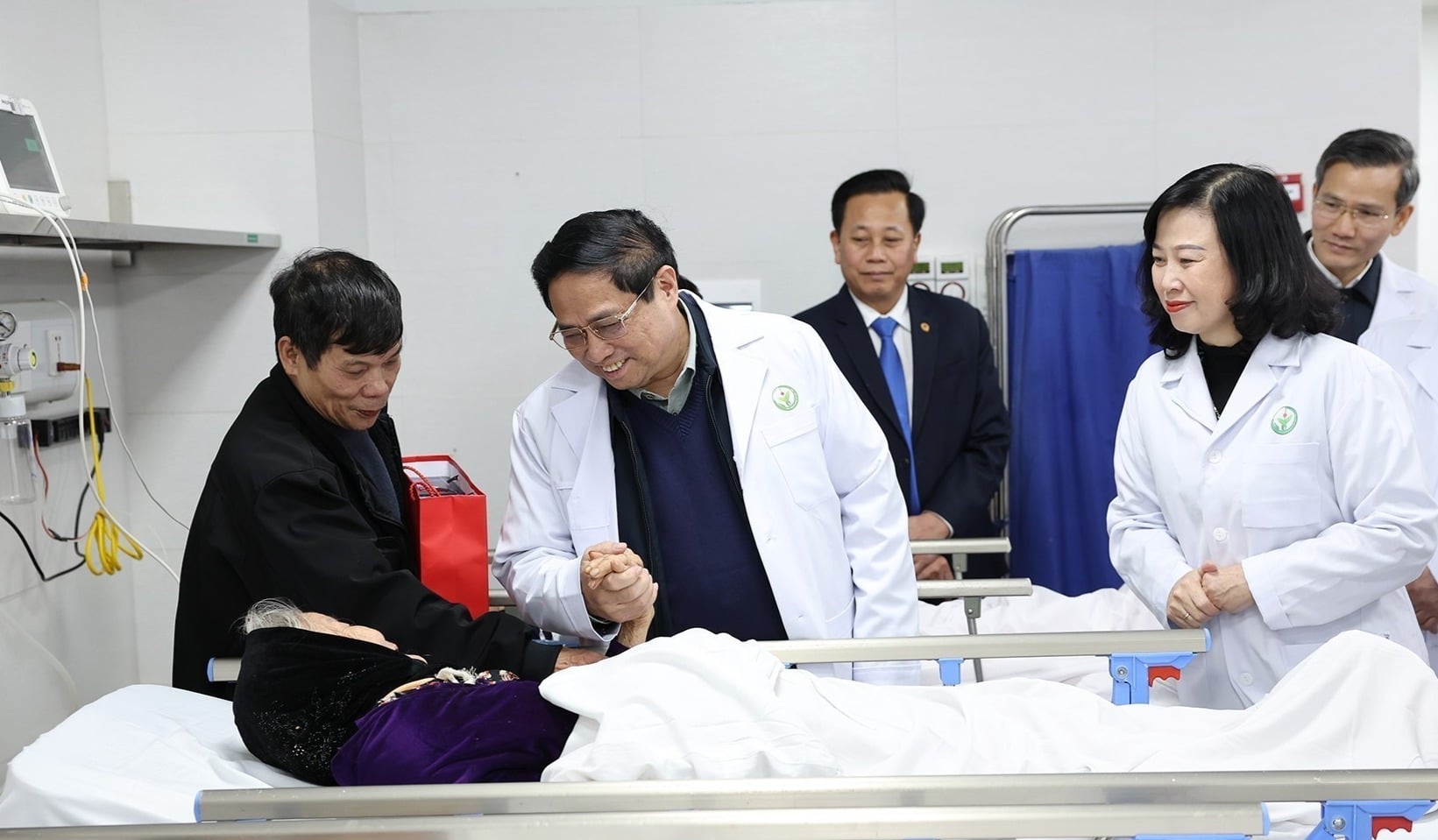
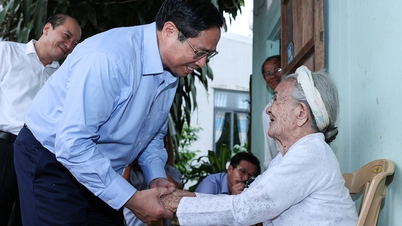
Politburo member and Prime Minister Pham Minh Chinh presents gifts and encourages patients being treated at Viet Duc Friendship Hospital_Photo: VNA
The 21st century is witnessing a profound demographic change in human history - the phenomenon of population aging. This is no longer a phenomenon unique to developed countries, but has become a global trend, universal and irreversible, with a profound impact on the economic and social structure of every country.
For Vietnam, our Party and State have always been consistent in their viewpoints, considering the elderly as a precious asset of the nation, an important resource in the cause of building and defending the Fatherland. The work of caring for, supporting and promoting the role of the elderly is not only a social responsibility and a social security policy, but also the inheritance and promotion of the traditional morality of "When drinking water, remember its source", the spirit of respecting the elderly and valuing longevity of the Vietnamese people. The viewpoints, policies and guidelines for the elderly at the same time clearly demonstrate the humane nature and superiority of the socialist regime that we are building.
In the general context, proactively adapting and turning the challenge of population aging into development opportunities is an urgent requirement. Instead of viewing population aging as a burden on the social security and health systems, the world is shifting to a more positive approach - developing a silver economy. This is considered a new development model, an important component of the national economy, aiming to exploit the enormous economic and social potential of the elderly population, thereby creating momentum for growth and social progress.
In the multi-layered ecosystem of the silver economy, the health sector has the mission to meet the increasingly diverse and specialized needs of this population group, while proactively innovating its operating model, applying science and technology, and developing appropriate types of care services. This is not only a solution to improve the quality of life of the elderly, but also contributes significantly to human resource development, promoting growth in the silver economy - a new pillar of sustainable development of the country.
Silver economic development in the medical field
The silver economy has been studied, analyzed, and approached from various perspectives by numerous international organizations, but they all agree on one common point: emphasizing the economic opportunities arising from the aging population. The European Commission's 2015 report approaches the silver economy from the perspective of "economic opportunities arising from public and consumer spending related to population aging and the specific needs of the population over 50 years old." This approach focuses on the role of older people as consumers, opening up a vast market for new products and services that meet their needs.
The Organization for Economic Cooperation and Development (OECD) takes a more open approach to the issue, emphasizing the two-way role of older people in the economy. Accordingly, the silver economy includes not only economic activities to meet the needs of older people, but also their own economic, intellectual and social contributions. Older people are not only consumers, but also experienced workers, mentors, volunteers, and caregivers, continuing to create value for the community. This approach emphasizes the exploitation of the “silver dividend” - the valuable resource of older people - as a driving force for development.
The essence of silver economy is not to form an independent economic sector, but a comprehensive, interdisciplinary approach, aiming to integrate aging factors into all areas of development. In which, the elderly are not only beneficiaries of welfare, but also active subjects of the development process. Today, the elderly have better health, longer life expectancy, higher education and financial accumulation, becoming a dynamic consumer group and a potential labor force of society. Globally, the size of the silver economic market is estimated to reach trillions of USD and is continuing to grow rapidly.
This approach requires innovation in policy-making thinking, especially in the health sector. Instead of focusing solely on controlling the rising health care costs for the elderly, it is necessary to shift to a “value creation” mindset. The question is not only “How to pay for elderly care?”, but more importantly “How to build a sustainable health product and service ecosystem that both improves the quality of life for the elderly and promotes economic growth?”. This requires the health sector to play a central role in coordinating with ministries, branches, localities and the private sector to form and develop a new growth sector - the silver economy in health, contributing to promoting sustainable development of the country.
Healthcare and health-related health care are the core components, accounting for the largest proportion and playing a central driving role in the silver economic ecosystem. This ecosystem includes a large, multi-layered value chain, which can be divided into the following main groups: i- Preventive medicine and health promotion: A pioneering field, including screening services, early disease screening, specialized nutrition counseling, vaccination, physical and mental training programs, proactive health management, aiming at the goal of "healthy aging"; ii- Medical examination and treatment: Focusing on developing specialized geriatrics, effective non-communicable disease management models, and rehabilitation after stroke, surgery or chronic diseases; iii- Long-term care: A large potential market, but still in its infancy in Vietnam, including flexible models, such as home care services, day care centers, professional nursing homes and housing models integrating care services; iv- Pharmaceuticals and medical nutrition: Associated with the market of drugs, functional foods, vitamins and medical nutrition products researched and developed specifically for the elderly; v- Medical equipment and support technology: An area of intersection between medicine and high technology, including personal health monitoring devices, safe smart home systems, support robots and remote medical platforms, helping to conveniently connect patients and doctors.
Developing silver economy in the medical field is an objective requirement, stemming from urgent practical demands:
First, thoroughly grasp and implement the Party's resolution on adapting to population aging and taking care of people's health.
Developing a silver economy in healthcare is a specific solution to implement the Party's major policy, which is reflected throughout the resolutions. Resolution No. 21-NQ/TW, dated October 25, 2017, of the 6th Central Conference, Session XII, clearly defines the orientation of "adapting to population aging". Resolution No. 72-NQ/TW, dated September 9, 2025, of the Politburo "On a number of breakthrough solutions to strengthen the protection, care and improvement of people's health" continues to emphasize the requirement of "strengthening the protection, care and improvement of people's health" (1) , focusing on policies for the elderly. The resolution sets a target that by 2045, the average life expectancy will reach over 80 years old, the number of healthy years will increase to over 71 years; At the same time, key solutions are proposed, such as encouraging investment in the form of public-private partnerships to develop medical facilities, especially elderly care centers; strengthening the financial system and health insurance towards universal coverage by 2030; expanding payments for disease prevention and early diagnosis; developing high-quality human resources; strongly applying science and technology; promoting self-sufficiency in the production of pharmaceuticals and medical equipment and enhancing international cooperation.
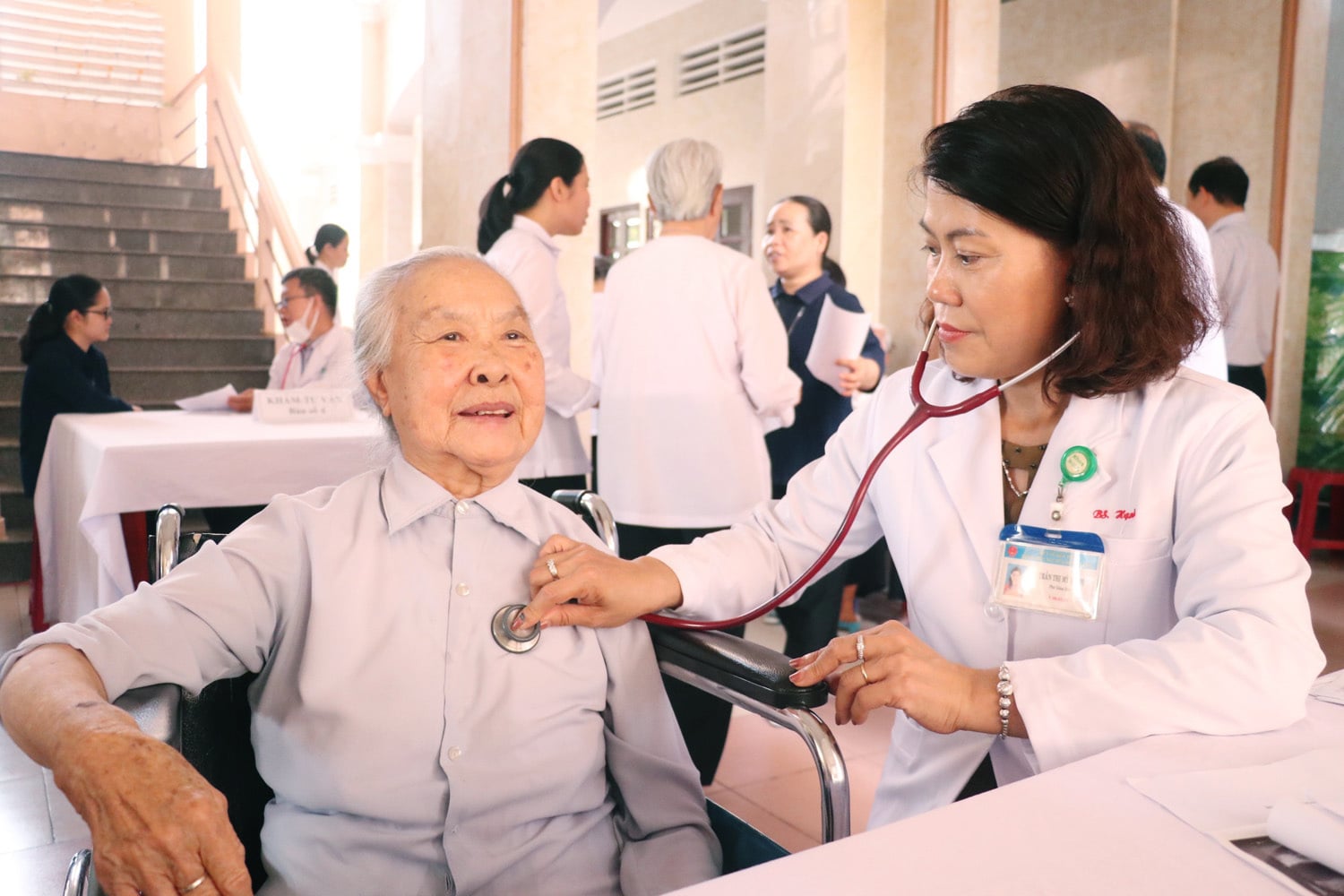
Healthcare for the elderly in Vinh Long province_Photo: VNA
Second, solve social security problems in a sustainable way.
Developing a silver economy in healthcare is the way to improve the quality of life of the elderly, realizing the goal of “healthy, active aging” initiated by the World Health Organization (WHO). A professional, synchronous care service system will help reduce the burden on families and society, especially on women - the group that is taking on the majority of caregiving roles in households.
Third, create new economic growth momentum.
The silver economy in healthcare opens up a potential market for products and services, attracts private investment, promotes innovation and high-tech application. More importantly, this sector will create more new jobs, contribute to the shift in labor structure, expand the service economy and enhance the sustainability of national growth.
Thus, developing a silver economy in the health sector is not only a requirement of the reality of population aging, but also a strategic solution to concretize the Party and State's guidelines and policies, contributing to improving the quality of the population, developing Vietnamese people and promoting sustainable growth of the country.
Population aging and challenges for Vietnam's healthcare sector
Vietnam is entering a period of pivotal demographic transition, with two prominent features: rapid aging and profound changes in the size and structure of the elderly population.
First, the population aging rate is rapid.
According to the United Nations Population Fund (UNFPA) and the World Bank (WB), Vietnam is among the countries with the fastest population aging rate in the world (2) . While it took France 115 years and Sweden 85 years to increase the proportion of people aged 65 and over from 7% to 14%, it took Vietnam only about 25 years to complete this process - equivalent to the speed of Japan and Thailand. The rapid aging rate does not give our country much time to prepare policies, social security systems and essential support services for the elderly.
Second, the size and structure of the elderly population are changing rapidly.
According to 2024 data, the whole country has about 14.2 million people aged 60 and over, accounting for 14% of the total population. In the period 2009 - 2019, the total population increased by an average of 1.14%/year, while the elderly population increased by 4.35%/year (3) . Notably, the group of people aged 80 and over increased rapidly and had a much higher proportion of women than men, leading to more specific and complex health care needs. A worrying fact is that the average life expectancy of Vietnamese people in 2024 reached 74.7 years, but the number of healthy years lived was only about 65.4 years (4) .
The rapid population aging process is posing many challenges to Vietnam's health sector.
One is the increased burden of dual disease.
Elderly Vietnamese people may face infectious and non-communicable diseases at the same time, including “multi-morbidity” - a person suffering from many chronic diseases at the same time, such as cardiovascular disease, high blood pressure, diabetes, cancer, chronic obstructive pulmonary disease, dementia, etc., making diagnosis and treatment complicated and costly.
Second, the health service delivery system has not yet adapted.
The current healthcare model still focuses on hospital-based treatment, while the network of preventive medicine, primary health care and rehabilitation has not received adequate investment. This leads to overload at upper-level hospitals. A professional long-term care system has barely formed; the burden of caring for the elderly still falls mainly on the family.
Third, financial pressure on health care is growing.
The average medical expenses for the elderly are about 5 times higher than for other population groups. The rapid increase of this population group is putting great pressure on the state budget and threatening the sustainability of the Health Insurance Fund.
Fourth, there is a serious shortage of human resources and specialized facilities in geriatrics.
Currently, the country has very few doctors, nurses and medical staff who are properly trained in geriatrics. The system of hospitals, geriatric departments and specialized medical examination and treatment facilities for the elderly is not yet complete, leading to limitations in the capacity to provide high-quality medical services to this population group.
The above challenges show that, without a synchronous, comprehensive and timely solution, the rapid population aging process will become a great pressure on the health sector and the entire social security system of Vietnam in the coming decades.

Passing on cultural values to future generations_Source: baoquangninh.vn
Some key solutions need to be implemented in the coming time
Firstly, perfecting institutions, policies, and laws, creating a synchronous legal corridor for developing silver economy in the health sector. Studying and amending the Law on the Elderly and related legal documents to perfect the legal framework for developing silver economy in sync with regulations on health care and protection in the health sector. The focus is on adding specific regulations on long-term care services; public-private partnership mechanisms in the nursing sector; licensing, inspection, and quality management standards for new types of care services, ensuring compliance with trends and practical needs.
Second, develop a health service delivery system in an integrated, continuous, people-centered manner. Consider primary health care as the foundation of the elderly health care system. Deploy an integrated primary health care model for the elderly at 100% of commune and ward health stations, in which primary health care is responsible for screening, establishing health management records, managing non-communicable diseases, rehabilitation and coordinating care services in the community. Develop a diverse and synchronous long-term care network; Effectively implement the goals in the Elderly Health Care Program until 2030 according to Decision No. 1579/QD-TTg, dated October 13, 2020, of the Prime Minister: Approving the Elderly Health Care Program until 2030. Have breakthrough mechanisms and policies to encourage the private sector and social organizations to participate in investing in this field through incentives on land, tax, and credit. Develop models of day care centers, professional home care services, international-standard nursing homes, and friendly and safe housing for the elderly.
Third, innovate the health financing mechanism for the elderly, ensuring sustainability and fairness. First of all, research and develop long-term care insurance - a strategic and long-term solution. This model can be piloted in some localities with conditions, with a clear financial mechanism on contribution sources (state budget, employees, employers), beneficiaries, scope of benefits and appropriate payment methods, referring to international experience. In addition, it is necessary to expand the scope of payment of the Health Insurance Fund for long-term care services at home, rehabilitation and palliative care in the community. Create a favorable legal corridor for the development of commercial insurance for lifelong health care, encourage public-private partnership in investment, construction and operation of geriatric health infrastructure and modern nursing homes.
Fourth, develop a network of medical examination and treatment facilities and human resources specializing in geriatrics. Focus resources on consolidating and developing a synchronous and effective geriatric examination and treatment system at both the central and local levels. Promote training and have appropriate policies to attract and reward medical staff working in the field of geriatrics. Issue regulations allowing the opening of formal training codes for geriatricians, geriatric nursing bachelors, and long-term care managers; develop a set of national professional competency standards for elderly care workers as a basis for training and granting practice certificates. Have preferential training policies and special allowances to encourage medical staff to stick with this profession.
Fifth, develop the pharmaceutical industry, medical nutrition, medical equipment and assistive technology to serve the elderly. Encourage domestic enterprises to invest in research and production of drugs, functional foods, and medical nutrition products specifically for the elderly through preferential policies on tax, credit, and land. Learn from international experience in developing the medical nutrition market and easily absorbed food products, contributing to the goal of national pharmaceutical self-sufficiency. Develop a strategy for developing the domestic medical equipment and assistive technology industry; encourage cooperation between enterprises, institutes, and schools to produce equipment such as hearing aids, smart wheelchairs, multi-function walking sticks, smart home systems, and care robots. Promote public-private partnerships to include these products in the health insurance payment list or care service packages, making them easily accessible to people.
Sixth, promote research, application of science and technology and digital transformation in elderly health care. Prioritize resources for digital transformation in the health sector, focus on developing a remote medical platform, nationwide electronic health records, and apply artificial intelligence (AI) in screening and early diagnosis of common diseases in the elderly, such as dementia, Parkinson's, cardiovascular disease, etc. Strengthen cooperation between research institutes, higher education institutions and enterprises in research, production and application of smart medical equipment and supporting technology suitable to the conditions and affordability of Vietnamese people.
The synchronous and effective implementation of the above solutions will contribute to the formation and development of a silver economy in the healthcare sector - a new pillar of sustainable development, meeting the requirements of caring for, protecting and promoting the role of the elderly in the current period of rapid population aging./.
----------------
(1) See: Resolution No. 72-NQ/TW, dated September 9, 2025, of the Politburo, “On a number of breakthrough solutions to strengthen the protection, care and improvement of people's health”, https://xaydungchinhsach.chinhphu.vn/nghi-quyet-72-nq-tw-cua-bo-chinh-tri-ve-mot-so-giai-phap-dot-pha-tang-cuong-bao-ve-cham-soc-va-nang-cao-suc-khoe-nhan-dan-119250912060746502.htm
(2) See: United Nations Population Fund in Vietnam: “Population aging”, https://vietnam.unfpa.org/vi/topics/gi%C3%A0-h%C3%B3a-d%C3%A2n-s%E1%BB%91
(3), (4) See: Statistics Department, Ministry of Finance: “The trend of rapid population aging in Vietnam, current situation and solutions”, https://www.nso.gov.vn/du-lieu-va-so-lieu-thong-ke/2025/01/xu-huong-gia-hoa-dan-so-nhanh-o-viet-nam-thuc-trang-va-giai-phap/
Source: https://tapchicongsan.org.vn/web/guest/chinh-tri-xay-dung-dang/-/2018/1184303/nganh-y-te-voi-cong-tac-cham-soc%2C-bao-ve-va-phat-huy-vai-tro-nguoi-cao-tuoi-trong-giai-doan-hien-nay.aspx
![[Photo] The captivating scenery of the fragrant maple forest in Quang Tri](/_next/image?url=https%3A%2F%2Fvphoto.vietnam.vn%2Fthumb%2F1200x675%2Fvietnam%2Fresource%2FIMAGE%2F2025%2F12%2F10%2F1765353233198_lan09046-jpg.webp&w=3840&q=75)


![[Photo] Explore the US Navy's USS Robert Smalls warship](/_next/image?url=https%3A%2F%2Fvphoto.vietnam.vn%2Fthumb%2F1200x675%2Fvietnam%2Fresource%2FIMAGE%2F2025%2F12%2F10%2F1765341533272_11212121-8303-jpg.webp&w=3840&q=75)






























![[Video] The craft of making Dong Ho folk paintings has been inscribed by UNESCO on the List of Crafts in Need of Urgent Safeguarding.](https://vphoto.vietnam.vn/thumb/402x226/vietnam/resource/IMAGE/2025/12/10/1765350246533_tranh-dong-ho-734-jpg.webp)
































































Comment (0)