

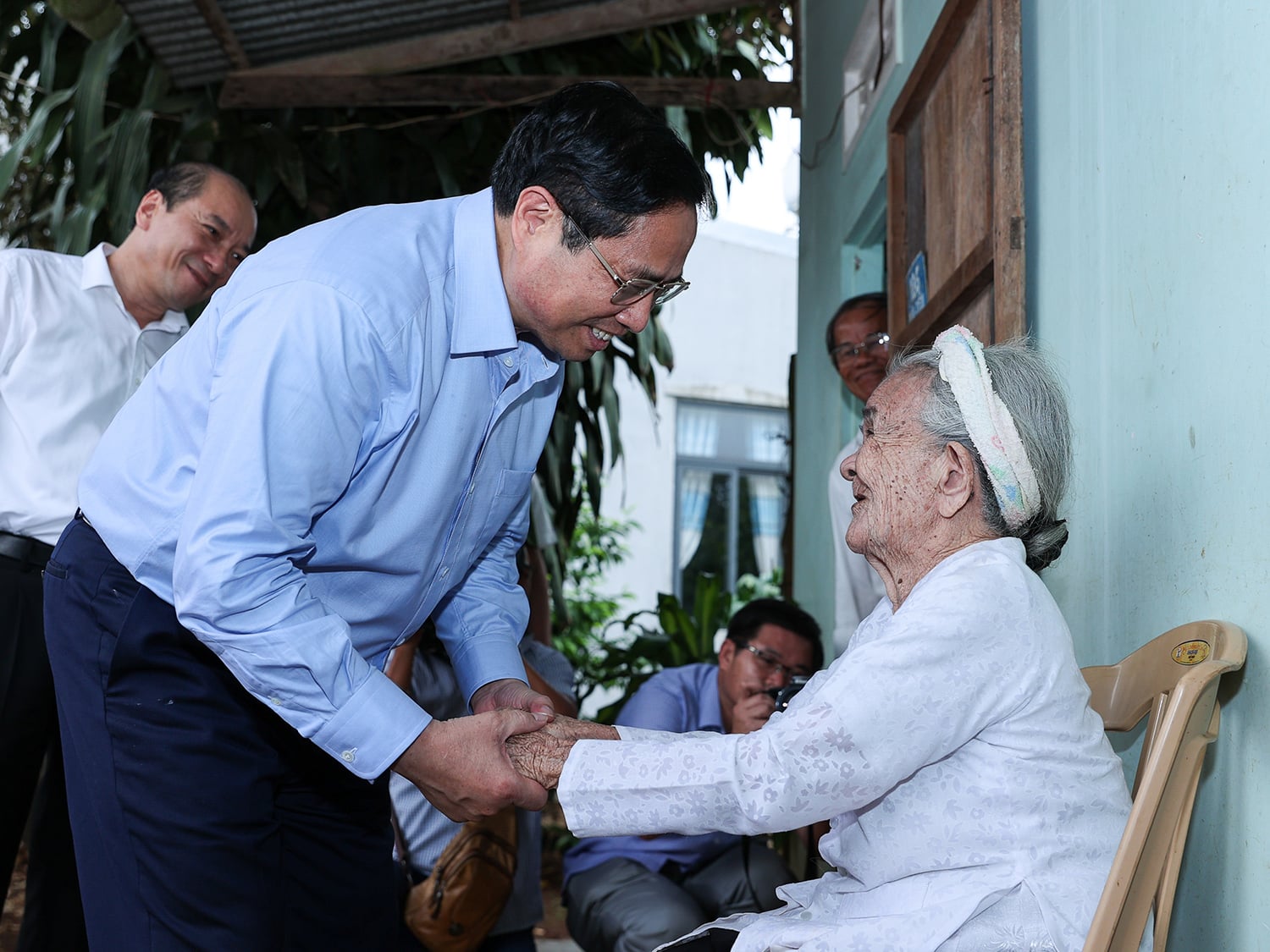
President Ho Chi Minh 's viewpoints and instructions on propaganda and mass mobilization work
Propaganda is associated with the process of transmitting and disseminating information, viewpoints, ideas, and political stances in a systematic way, pointing out the correctness of viewpoints, ideas, and political stances to orient public opinion, educate , persuade recipients, believe, and act according to the set goals and plans, ensuring the successful implementation of the government's guidelines and policies. During his lifetime, VI Lenin once emphasized: "The first task of any political party with responsibility for the future is to convince the majority of the people to see the correctness of its platform and strategies" (1) .
President Ho Chi Minh always effectively communicated Marxism-Leninism and revolutionary guidelines in simple, familiar, easy-to-understand and easy-to-remember language, thereby building trust and strength for the great national unity bloc, paving the way for the victory of the Vietnamese revolution. His viewpoints and instructions on propaganda and mass mobilization work are expressed in a number of core contents:
Firstly, propaganda is the bridge between the Party, the government and the people, between policies and action plans to implementation and execution. President Ho Chi Minh emphasized: "We must closely connect with the people. We must not be far from the people. Far from the people is loneliness. Loneliness is certain to fail" (2) . The Party plays an important role in the revolutionary cause, directly organizing, leading, and proposing policies and strategies. The masses are the implementing subjects, deciding the success or failure of all guidelines and policies; therefore, propaganda work has the mission of explaining, conveying and transforming Ideology and theory become people's awareness, belief and action. He pointed out, "Propaganda is to tell people something so that they understand, remember, follow and do. If that goal is not achieved, propaganda has failed" (3) . Thanks to propaganda, people clearly understand the goals and benefits of policies, support and voluntarily implement them; officials understand people's thoughts and feedback to adjust policies to reality, creating social consensus. When people receive complete, clear and reasonable information, their belief in the Party's leadership is strengthened, false and distorted information is prevented and eliminated, and the great national unity bloc is strengthened.
Second, propaganda must take the people's interests as the highest goal, closely linked to the people's legitimate needs and daily concerns. President Ho Chi Minh always attached importance to the central role of the people in the revolutionary cause and the process of implementing the Party's policies and guidelines; therefore, propaganda work must originate from the people's legitimate needs, interests and aspirations. Propaganda work must aim to solve problems effectively, improve people's lives; practically, and address concerns such as employment, income, actual health situation, education, environment, etc. He believed that “it is not enough to just use newspapers, books, rallies, slogans, leaflets, and directives. First of all, we must find every way to explain clearly to each citizen: That work is beneficial to them and their duty, they must enthusiastically do it” (4) . Reality clearly proves that if we do not put the needs of the people first Propaganda is just a formal slogan, lacking persuasiveness; therefore, it is necessary to focus on direct contact, listening, surveying groups and classes of people, organizing dialogues, and collecting feedback. Propaganda needs to be closely linked to reality and people's lives, concretizing policies and guidelines with examples, models, real data..., avoiding abstract and unrealistic theories. Propaganda content accurately reflects what is happening in society, especially issues of people's livelihood, social security, economic development, culture, education..., focusing on things that people care about and want to be resolved.
Third, propaganda must unify theory and practice - a mandatory requirement to avoid dogmatism and rigidity, becoming a driving force for revolutionary action, contributing to bringing the Party's policies and guidelines into life. President Ho Chi Minh affirmed: "Learning to do. Theory goes hand in hand with practice" (5) and harshly criticized the situation of "talking about high-level theories, but not close to life". Only when theory is vividly and closely concretized can it penetrate deeply into people's awareness and feelings, creating voluntary action; at the same time, helping the Party adjust policies in accordance with people's aspirations, eliminating content that is far from reality. Effective propaganda will build trust, so that people are willing to contribute human and material resources to build the country.
Fourth, the way of propaganda must be diverse and flexible, the content of propaganda must be concise, easy to understand, and appropriate to the intellectual level of the people. President Ho Chi Minh repeatedly criticized the habit of writing long and empty words, requiring writing and speaking briefly, but with content because the ultimate goal of propaganda is to transform awareness into action. The language of propaganda must be honest, avoiding dogma and slogans and "when talking about something, say it very simply, quickly, and firmly like 2 times 2 is 4, without any embellishment" (6) . Propaganda must be close to the culture and language of the people, so propaganda cadres must learn to speak simply, easily, and appropriate to the level of the listener, "so that people can understand, understand to do. Therefore, propaganda must be practical. Not propaganda for the sake of propaganda" (7) . President Ho Chi Minh reminded propagandists to always ask themselves: “Who are you writing for? Who are you telling? If not, it is like deliberately not wanting people to listen, not wanting people to see” (8) . Another point worth noting is that it is necessary to pay attention to the way of presenting the problem, it must be “simple, clear, practical... Do not talk off topic, do not repeat yourself. Do not talk for more than an hour, because if you talk too long, people will get bored” (9) .
Fifth, focus on promoting the exemplary role of cadres and party members to enhance the effectiveness of propaganda and mass mobilization tasks. President Ho Chi Minh believed that “Eastern peoples are all rich in emotions, and for them a living example is worth more than a hundred propaganda speeches” (10) , so “setting an example” must be considered one of the most important, prestigious, effective and practical tasks in propaganda, persuasion and creating trust among the people. Setting an example must be demonstrated in the spirit of “worrying before the world, being happy after the world”, being exemplary in seriously implementing the Party and State’s guidelines and policies, proactively contributing to the common cause for the people to follow. Saying is doing, having revolutionary ethics, keeping credibility in performing public duties, avoiding formalism, empty talk, and shouting empty slogans, because propaganda "must be done with words, depending on the circumstances, organizing to truly help the people, not just mobilizing the people through speeches" (11) . He also emphasized that propaganda cadres must be dedicated to their work, "If you only tell people to work hard, but you yourself eat lunch and sleep late; tell people to save, but you yourself are extravagant and careless, then a hundred years of propaganda will be useless" (12) .
Some results achieved in recent times
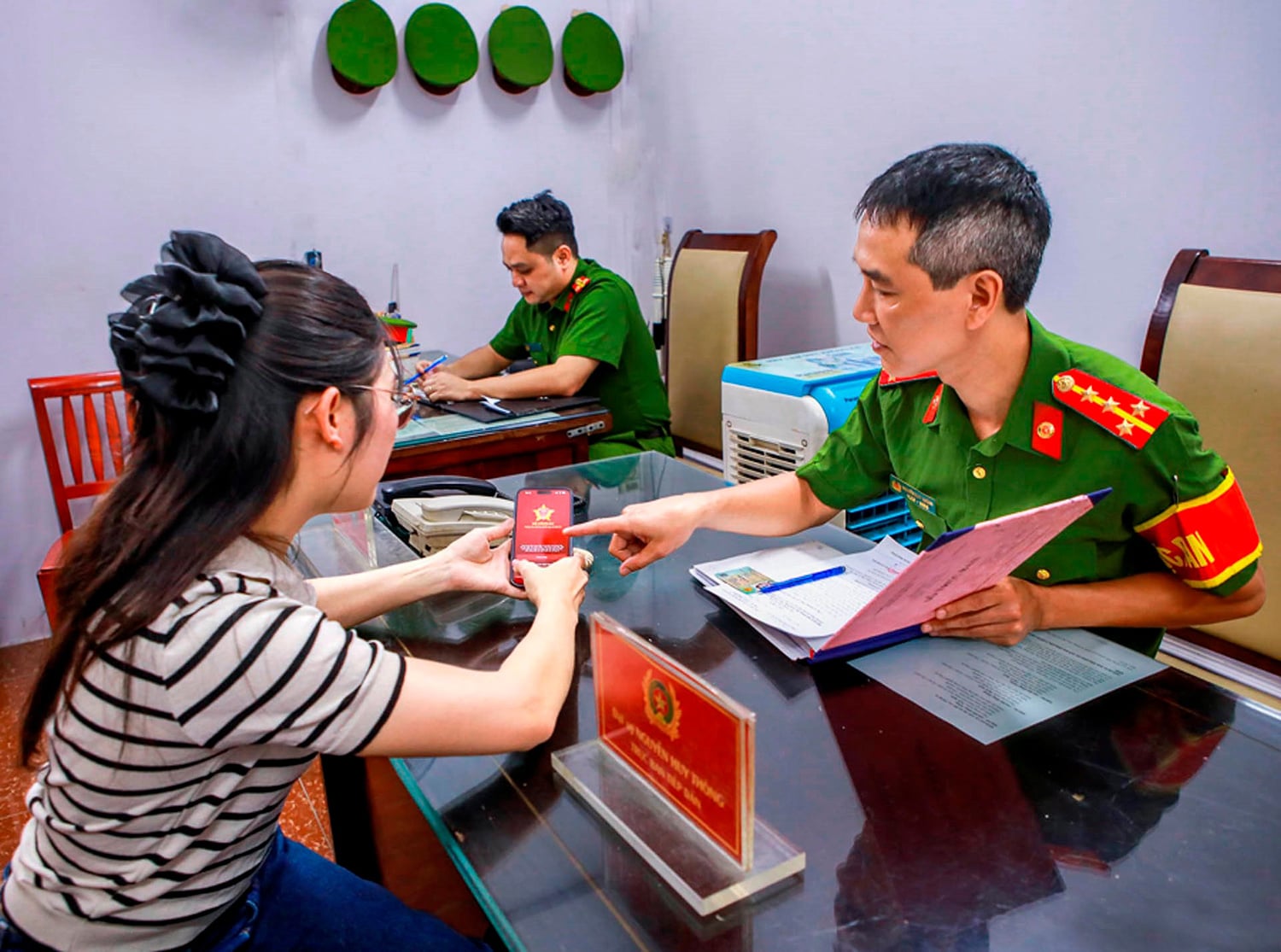
Firstly, propaganda work has conveyed the contents of policies and guidelines in a clear, concise, and easy-to-understand manner for each target audience, pointing out the correctness of the Party's guidelines and guidelines, the State's policies and laws, contributing to orienting public opinion, educating and persuading recipients to believe and act according to the set goals and plans, ensuring the successful implementation of the Party's and State's guidelines and policies; fighting against the wrong views of hostile forces. The propaganda team uses familiar and simple language, limiting difficult-to-understand, dry, abstract, and academic technical terms; propaganda content focuses on many core issues, not spreading out, being long-winded and boring; effectively using images and real-life examples so that people can easily relate to life. More importantly, choosing the appropriate way of expression for each target audience, such as farmers, workers, students, ethnic minorities, etc. has helped information to be received effectively. For example, when propagating about digital transformation and the Fourth Industrial Revolution, the propaganda team explains specifically and in detail, directly integrating it into people's livelihood issues, such as how to make online citizen identification cards, cashless payments, use public administration applications, etc. so that people can clearly see the benefits and correctness of the Party's guidelines and policies, the State's policies and laws, and proactively participate.
Second, the policy content is informed by specific examples, close to people's lives, not just talking about theory, reading the original policy text. The use of images and language close to work and daily concerns has helped people understand, relate and increase their trust in the policy. Focus on explaining the meaning and importance of the policy, the reasons for promulgation as well as the role of the policy for each target group and the whole society, from which people clearly understand what problem the policy solves, who benefits, so they proactively and voluntarily implement it, creating unity in perception and action. Thereby, creating trust, promoting social consensus, contributing to the effective and sustainable implementation of the Party and State's policies and guidelines. For example, during the COVID-19 pandemic prevention and control period, slogans such as "staying at home is protecting the community" and "wearing a mask for loved ones" were supported by people, who actively implemented the "5K" message and complied with social distancing.
Third, propaganda work has been innovated, applying information technology and social networks to spread quickly, combining oral propaganda, mass media (newspapers, radio, internet) and visual forms (posters, propaganda paintings), specifically: 1- Oral propaganda by cadres and reporters directly conveyed at conferences, residential groups, classes, meetings with people, etc., creating an atmosphere of closeness, easy interaction, and timely feedback (suitable for the elderly, rural areas, remote areas, etc.); 2- Mass communication through television, radio, newspapers, social networking platforms (Facebook, Zalo, Youtube, Tiktok, etc.) with the advantage of spreading quickly, wide range, suitable for young people, workers, urban residents, etc.; 3- Visual propaganda, such as billboards, posters, propaganda posters, bulletin boards... is a direct, easy-to-remember, and easy-to-access form in public places, such as schools, markets, and medical stations. Most propaganda officers effectively use platforms and applications, such as websites, emails, presentations, livestreams, propaganda software, chatbots, phone applications, etc. to ensure wide accessibility, especially effective in emergency situations or when issuing new policies. For example, during the COVID-19 pandemic, the Ministry of Health and relevant agencies effectively promoted 5K clips on Tiktok, epidemic announcements via Zalo, loudspeakers, propaganda posters...
Fourth, the role of grassroots cadres, reporters, and propagandists - those who are close to the people - is maximized to ensure is the bridge between the Party, the government and the people. This is the team that plays a key role in conveying the Party and State's policies to the people. effective, practical and convincing (13) . In particular, grassroots cadres have outstanding advantages, such as "being close to the people, speaking the voice of the people", communicating in an easy-to-understand, easy-to-remember way, promptly orienting public opinion, refuting false information; promoting the role of the Party's "ears, eyes, mouth" at the grassroots level, contributing to creating social consensus and spreading policies widely among the people.
Fifth, the propaganda method is carried out scientifically, methodically, not hastily but persistently, suitable for each time and object; information is conveyed regularly, gently, but continuously, creating a "gradual permeation" into people's awareness and actions. Propaganda is associated with specific instructions on what the propagandist "must do" and "how to do it", each specific step regarding procedures, time, location, and contact person, thereby helping people not fall into a state of confusion, increasing the effectiveness of policy implementation. When preventing and fighting the COVID-19 epidemic, propaganda officers do not not only say "must wear a mask", but also explain the effectiveness of wearing a mask in disease prevention and control, Distribute free masks and instruct people on how to wear masks properly. Along with that, The method of setting examples of good people and good deeds to spread the spirit of implementing policies and guidelines is also emphasized and inspired in propaganda work.
Some shortcomings and limitations
Although there have been many innovations with remarkable results, propaganda work still has some limitations. Propaganda content is sometimes dry, unattractive and not close to people's lives; communication methods are heavy on theory, lack innovation, and are not linked to the psychology and needs of each target group, leading to low efficiency. The handling of false and distorted information on cyberspace is not good; the application of technology is not professional. A number of officials doing propaganda work lack modern communication skills, especially digital skills; they have not kept up with young people and specific public groups; the work of grasping public opinion before events and unexpected situations to quickly adjust and respond to information is not timely (14) . Resources for communication are still lacking, lacking synchronization between levels and sectors, some localities and units have not paid due attention, leading to propaganda work lacking depth and spreading power.
In the context of the Fourth Industrial Revolution with the explosion of science and technology, it is creating profound changes in economic and social life. The remarkable development of the internet, artificial intelligence (AI), and social networks has gradually reduced the influence of traditional media. This poses new and increasingly high requirements for propaganda work. Propaganda work in the past relied mainly on print newspapers, radio, and television, so information control was strictly ensured, but now, the rapid spread of information on social networking platforms poses an increasing challenge in ensuring effective propaganda in the new context.
In general, the new situation poses major problems for propaganda work: 1- The speed and rapid spread of information. False information can spread in cyberspace much faster than the ability of authorities to respond, requiring a proactive, flexible propaganda team to promptly and accurately handle arising problems; 2- Personalization and fragmentation in information reception. Modern public accesses information according to preferences and algorithms. To be effective, propaganda needs to "speak the right language", choose the right channel and form appropriate to each target group. Relying only on language, regulations in documents or dry statements will reduce public appeal.
Some issues raised in the application and development in the current revolutionary stage
Firstly, seriously grasp and effectively implement the Party and State's policies and guidelines on propaganda work in general and policy communication in particular (15) . Firmly adhere to the principle of flexibly innovating propaganda content and methods for each context, issue, and specific target audience in the spirit of "we cannot follow the old path. We must dare to think big, act big, carry out major reforms with the highest political determination and the most persistent efforts" (16) . Propaganda content must be consistent with reality, close to the needs and aspirations of the people; focus on issues of deep concern to each target group, each locality, region, area, etc. It is necessary to quickly and promptly update new policies and guidelines to convey clearly, accurately, without deviation, helping people understand correctly and fully to implement; closely combine theoretical knowledge with specific examples, easy-to-understand and easy-to-apply real-life situations to increase persuasiveness and spreading power. Focus on disseminating cultural and ethical values, organizing emulation movements, setting examples of good people and good deeds... to create a comprehensive picture of the country's construction and development. Increase interaction, listen to feedback from the people, research, create channels for people to ask questions, exchange and give opinions through dialogues, online forums or directly to clarify problems, improve propaganda effectiveness. Propaganda is diversified by group, it is necessary to classify content and approach suitable for each target (elderly, youth, ethnic minorities, workers...) to ensure information is received effectively. Increase propaganda of experiences and practices through combination with practical activities, such as training, competitions, festivals, creating opportunities for people to directly experience, absorb and implement policies.
Second, improve the quality of the propaganda staff. The propaganda staff is the bridge between the Party and the people, playing a key role in bringing the Party's guidelines and policies into social life, so it is necessary to constantly improve political capacity, capacity, skills and ethics. Proactively develop reasonable plans, avoid the mentality and habit of acting arbitrarily, doing things perfunctorily, not thoroughly, must "carefully consider the situation and arrange the work properly. Main and urgent tasks should be done first. Do not be sloppy, have no plan... so that every task is main, messy, and disorganized" (17) . Regularly organize training courses on propaganda skills, update new knowledge, skills in using information technology and social networks; select cadres with capacity, qualities and deep understanding of the locality, close to the people. Strengthen inspection, evaluation, timely encouragement and reward of excellent propaganda officers to encourage the spirit of working in a more professional and effective direction, meeting job requirements well. Propaganda officers are not only "readers", but also need to have communication skills, debate, presentation, news writing, making short clips, handling information crises, refuting false information; be close to the people, have political courage and always be aware that if they lack the ability to investigate, analyze, research, understand the masses and only say whatever comes to mind, write whatever comes to mind, they will definitely fail (18) .
Each propaganda officer must have "revolutionary enthusiasm and sincere love" (19) , grasp the Party's guidelines and policies, deeply understand resolutions and documents to convey them correctly, sufficiently, and easily; closely connect with the grassroots to understand the culture, language, and customs of each locality, grasp the thoughts and aspirations of the people. In the context of digital transformation, the motto "short, concise, easy to understand, practical" in propaganda according to Ho Chi Minh's thought needs to be ensured, while at the same time, it is necessary to increase investment in modern media products (infographics, short videos, social media posts, etc.). Overcome the situation of propaganda officers using academic, abstract, administrative, and dogmatic language; encourage officers to be creative in conveying content while implementing policies well.
Third, combine propaganda work with setting examples and practical actions. President Ho Chi Minh emphasized: "If people are skillful in mobilizing the masses, everything will be successful" (20) ; therefore, propaganda must be combined with concretization by actions suitable to local and grassroots realities. To improve the effectiveness of propaganda, it is necessary to synchronize from content, method to organization and implementation. Propaganda must be accompanied by specific instructions: "what to say and how to do", provide full information on procedures, locations, supporters, and use a variety of forms (text, video, leaflets, direct support). Combine propaganda with mobilization and exemplary actions, spreading from typical examples, first of all, the team of cadres, party members, leaders, and cadres with higher positions must be exemplary so that setting an example truly becomes an important content in propaganda activities, affirming the pioneering role, creating a spreading force, promoting the emulation movement to build the country.
Fourth, strengthen inspection and serious supervision of propaganda work. It is necessary to develop a methodical, specific, scientific and appropriate plan and mechanism for each level and field, clearly defining the content, time, and responsible unit. Combine many forms of inspection, such as attending meetings, conducting field surveys, collecting feedback from people through survey forms, dialogues, and monitoring activities on digital platforms. Research and develop a set of criteria to evaluate propaganda effectiveness, such as the number of people reached, the level of understanding, the rate of action after propaganda, positive or negative feedback from the community; promote the application of technology in monitoring, such as quick reporting software, online surveys, Q&A chatbots; monitor interactions via social networks, and analyze digital data. Promote the supervisory role of Party committees, the Vietnam Fatherland Front, and mass organizations, especially at the grassroots level; Conduct periodic reviews and summaries, publicize results, reward good performing units, and strictly handle places that are perfunctory or perfunctory.
Fifth, focus on applying science and technology and diversifying information channels. Practice shows that, to fully promote the effectiveness of propaganda, it is necessary to synchronously and creatively combine many propaganda methods, suitable for each locality and each population group; maintain the guiding role in the digital space, considering it a key task of propaganda work in the new era. Currently, user behavior analysis tools allow for the construction of effective content, targeting the right audience and accurately measuring communication impact. This is a factor that needs to be exploited and promoted. At the same time, it is necessary to prepare carefully to anticipate and adapt to new media trends. To do so, it is necessary to build a modern, courageous, flexible, creative and technology-savvy media team, using social networks proactively and in the right direction; continue to develop technology with VR (virtual reality), AR (augmented reality) or metaverse (virtual universe) to avoid falling behind./.
---------------
(1) VI Lenin: Complete Works , National Political Publishing House Truth, Hanoi, 2006, vol. 36, p. 208
(2) Ho Chi Minh: Complete Works , National Political Publishing House Truth, Hanoi, 2011, vol. 5, p. 278
(3) Ho Chi Minh: Complete Works, op. cit ., vol. 5, p. 191
(4) Ho Chi Minh: Complete Works, op. cit., vol. 6, pp. 232 - 233
(5) Ho Chi Minh: Complete Works , op. cit. , vol. 11, p. 611
(6) Ho Chi Minh: Complete Works, op. cit., vol. 2, p. 283
(7) Ho Chi Minh: Complete Works, op. cit., vol. 14, p. 159
(8), (9) Ho Chi Minh: Complete Works, op. cit., vol. 5, pp. 340, 191
(10) Ho Chi Minh: Complete Works, op. cit., vol. 1, p. 284
(11) Ho Chi Minh: Complete Works, op. cit., vol. 7, p. 219
(12) Ho Chi Minh: Complete Works, op. cit., vol. 5, p. 126
(13) Specifically: Grassroots cadres (party cell secretaries, village chiefs, neighborhood group leaders, etc.) are people who are close to the people, understand the people, grasp the local characteristics, thoughts and aspirations of the people; reporters are people assigned to propagate systematically and methodically, helping to disseminate policies accurately and with basis; people's propagandists are exemplary individuals with prestige in the community, such as village elders, the elderly, veterans, women's union members, etc. are all mobilized and their roles are promoted.
(14) See: Documents of the 13th National Congress of Delegates , National Political Publishing House Truth, Hanoi, 2021, vol. I, p. 91
(15) Như Chỉ thị số 28-CT/TW, ngày 16-9-2013, của Ban Bí thư khóa XI, “Về tăng cường công tác bảo đảm an toàn thông tin mạng”; Quyết định số 874/QĐ-BTTTT, ngày 17-6-2021, của Bộ Thông tin và Truyền thông, “Về việc ban hành Bộ quy tắc ứng xử trên mạng xã hội”; Chỉ thị số 12/CT-TTg, ngày 12-5-2021, của Thủ tướng Chính phủ, “Về tăng cường công tác tuyên truyền, định hướng hoạt động truyền thông, báo chí phục vụ nhiệm vụ bảo vệ Tổ quốc; kịp thời chấn chỉnh và xử lý các vi phạm trong hoạt động báo chí, truyền thông”; Chỉ thị số 7/CT-TTg, ngày 21-3-2023, của Thủ tướng Chính phủ, “Về việc tăng cường công tác truyền thông chính sách”; Quyết định số 407/QĐ-TTg, ngày 30-3-2022, của Thủ tướng Chính phủ, “Về phê duyệt Đề án “Tổ chức truyền thông chính sách có tác động lớn đến xã hội trong quá trình xây dựng văn bản quy phạm pháp luật giai đoạn 2022 - 2027””; Chỉ thị số 30-CT/TW, ngày 5-2-2024, của Ban Bí thư, “Về công tác tuyên truyền miệng trong tình hình mới”,...
(16) Xem: GS. TS. Tô Lâm: “Toàn Đảng, toàn dân, toàn quân chủ động, sáng tạo, đoàn kết thi đua yêu nước, quyết tâm triển khai thực hiện thắng lợi các Nghị quyết quan trọng của Bộ Chính trị, tạo động lực mạnh mẽ đưa đất nước ta tiến lên trong kỷ nguyên mới”, Tạp chí Cộng sản , số 1063, tháng 6-2025, tr. 4
(17) Hồ Chí Minh: Toàn tập, Sđd , t. 5, tr. 332
(18) Xem: Hồ Chí Minh: Toàn tập, Sđd, t. 5, tr. 340
(19) Hồ Chí Minh: Toàn tập, Sđd, t. 14, tr. 159
(20) Hồ Chí Minh: Toàn tập, Sđd, t. 6, tr. 234
Nguồn: https://tapchicongsan.org.vn/web/guest/chinh-tri-xay-dung-dang/-/2018/1177502/quan-diem%2C-chi-dan-cua-chu-tich-ho-chi-minh-ve-cong-tac-tuyen-truyen%2C-van-dong-quan-chung-nhan-dan---mot-so-van-de-dat-ra-doi-voi-viec-van-dung%2C-phat-trien-trong-ky-nguyen-moi-cua-dat-nuoc.aspx


![[Photo] Cat Ba - Green island paradise](/_next/image?url=https%3A%2F%2Fvphoto.vietnam.vn%2Fthumb%2F1200x675%2Fvietnam%2Fresource%2FIMAGE%2F2025%2F12%2F04%2F1764821844074_ndo_br_1-dcbthienduongxanh638-jpg.webp&w=3840&q=75)



























![[VIMC 40 days of lightning speed] Da Nang Port: Unity - Lightning speed - Breakthrough to the finish line](https://vphoto.vietnam.vn/thumb/402x226/vietnam/resource/IMAGE/2025/12/04/1764833540882_cdn_4-12-25.jpeg)



































Comment (0)