

The “one shoulder” model in China
The model of “the Party cell secretary is also the village, hamlet, or residential group chief” (abbreviated as “one shoulder”, the Party cell secretary is also the village chief) has a history of development of more than three decades, from a small-scale initiative in a locality to a comprehensive national strategy in China. Accordingly, the model originated in Lengji Town, Gucheng County, Hubei Province in 1988, after the 1987 Village Committee Organization Law (Experimental) was promulgated. This law allowed people to directly elect the village committee, leading to decentralization and power conflicts between the Party cell ( political organization) and the village committee (self-governing administrative organization). In Xiaoliu Village, the Party cell secretary wanted to use the budget to build schools to improve education, while the village chief prioritized road construction to improve traffic, leading to a deadlock that lasted for many months. To solve this problem, Lengji Town experimented with the "one-shoulder" model in 13 small villages (population under 1,000 people). As a result, administrative costs were reduced by 20%, management efficiency increased, and especially people's satisfaction with the Party and government improved. After five years of implementation, all 29 villages in the town had adopted the model. At the same time, Shandong Province also began piloting the model in Qingdao and Yantai counties. As a result, by 1990, the rate of Party cell secretaries who were also village heads had reached 40%. In 1990, the Central Committee of China issued the “Notice on Village Organization Construction”, which, although not mandatory, encouraged the practice of Party cell secretaries who were also village heads, paving the way for the model to spread more widely.
Since the late 1990s, the “one shoulder” model has been replicated in many provinces such as Shandong, Guangdong, Hainan, and Zhejiang, on a larger scale and with support from local governments. In Weihai City (Shandong), the pilot implementation was carried out in three villages with different levels of economic development: Nanshan (poor), Donghai (average), and Xilu (well-off). The results showed that the implementation of the model of the Party cell secretary concurrently being the village chief helped speed up the bridge construction progress from 1 year to 6 months; at the same time, it reduced internal disputes over budget allocation. In 1999, Shandong Province issued an official document encouraging secretaries to participate in village committee elections, resulting in a concurrent holding rate of 53%. In Guangdong, in the 1998-1999 elections, 53% of Party cell secretaries became village chiefs; Party members account for 77% of village committee members. In Qionghai City (Hainan), the voter participation rate is over 95% and the concurrent holding rate is up to 98.5% thanks to a strong propaganda campaign. In 2001, Zhejiang Province developed the model through the “Opinions on Election of Party Cells and Village Committees”, which emphasized cross-appointment between Party Cells and Village Committees to increase the role of Party members in grassroots governance. This period marked the transition from grassroots initiatives to official central attention.
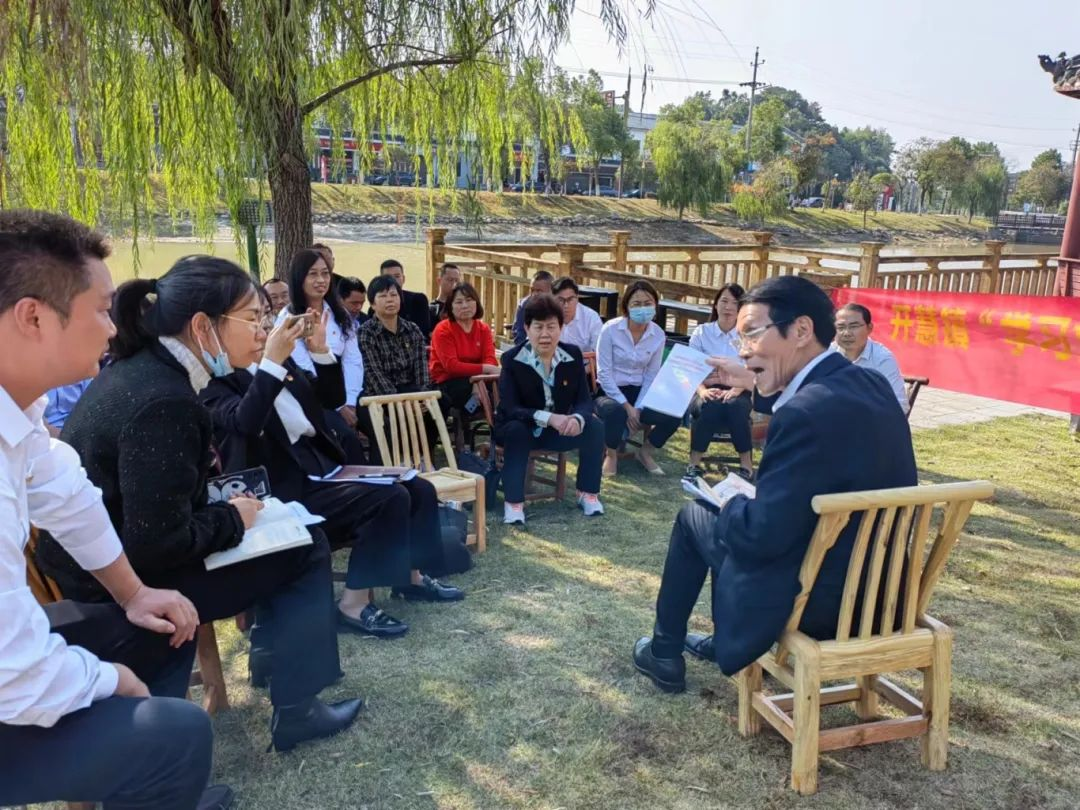
2002 marked a turning point when the Central Committee of China recognized the model through the “Notice on Improving Village Committee Elections” of the General Office of the Communist Party of China and the State Council. This document required Party cell secretaries to run for village chiefs, encouraged Party members to participate in village committees, and set the condition that secretaries must be elected by the people before taking on Party duties and roles, ensuring democracy and legitimizing power. In 2002, 18 provinces held elections with 380 million voters participating, resulting in a 2.7% reduction in the number of village committees and 222,000 cadres compared to before. In Dali village ( Henan province), the number of cadres was reduced from 7 to 4 after applying the model, helping to save a significant amount of budget and increase the efficiency of implementing inter-village road construction projects (completed in 4 months instead of 8 months as before). From 2002 to 2017, the practice of concurrent employment was widely encouraged but not mandatory, laying the foundation for the next phase.
Since 2018, the “one-shoulder” model has become a national strategy with the “Rural Recovery Plan 2018 - 2022”. The plan sets a target of increasing the proportion of concurrent positions from 30% (in 2016) to 50% (in 2022). Next, the “Regulations on Rural Grassroots Organizations” (in 2019) require that the secretary “should” be the village head according to legal procedures, promoting cross-appointment between the Party cell and the village committee. Other documents issued in 2019 and 2021 continue to emphasize increasing the proportion of Party members in the village committee. For example, in Anhui province, by 2021, 65% of villages had adopted the model, which has helped to quickly implement projects such as: installing rooftop solar power systems (nearly 500 households benefited in 6 months), and renovating irrigation systems (increasing rice productivity by 15% in 300 hectares of rice fields). In Yunnan province, the concurrent model has helped to implement a resettlement program for nearly 1,000 households in landslide areas in 2019-2021.
It can be seen that combining two leadership roles into one person not only helps resolve internal conflicts but also ensures the Party's centralized leadership, in line with the principle of democratic centralism in the socialist political system. Up to now, the "one-shoulder" model is not only an administrative solution, but also a strategic political tool to modernize rural China, associated with major strategies such as: "Rural Revitalization", "Building a New Socialist Rural Area" and realizing the goal of building a "well-off society in all respects" of the Communist Party of China.
Three obvious effects of the “one-shoulder” model in China can be summarized as follows: (1) Strengthening the Party’s leadership : The model ensures that the Party cell closely leads the village committee, helping the Central Government’s policies to be implemented quickly and effectively. In Shandong province, thanks to the unity in leadership, the poverty reduction program achieved 90% of the 2020 targets; 80% of the villages carrying out concurrent tasks completed the targets 6 months early. In Jiangsu province, new rural construction projects (such as renovating canals, building schools, etc.) in 70% of the villages carrying out concurrent tasks were completed 3 to 6 months ahead of schedule. (2) Reducing internal conflicts : In Hubei province, after more than 30 years of applying the model, conflicts between the Party cell and the village committee have decreased by 80%, creating stability in grassroots management. In Dashi Village (Lijiang Town, Yunnan Province), the budget dispute between the Party cell secretary and the village head lasted from 2013 to 2015, but after implementing the dual-duty policy in 2015, the issue was resolved in 3 months. In Guangdong Province, conflicts over land management have decreased by 60% in villages that implemented the dual-duty policy in the period of 2018 to 2022. (3) Increased administrative efficiency : Streamlining the apparatus helps save resources, especially in poor rural areas. By 2022, about 60-70% of villages in China have adopted this model, reducing administrative costs by an average of 15%. In Guizhou Province, village operating costs have decreased from 300,000 yuan to 250,000 yuan per year after implementing the dual-duty policy. In Zhejiang province, villages that take on dual responsibilities have reduced project approval times from two months to three weeks by eliminating overlapping procedures.
To effectively implement this model, China focuses on 6 steps: (1) Selecting talented people; (2) Training cadres; (3) Flexibly applying the model locally; (4) Close supervision; (5) Resource support; (6) Effective propaganda.
Selecting talented people : Zhejiang Province prioritizes the selection of part-time secretaries from retired soldiers, local professionals or businessmen returning to their hometowns, ensuring standards of capacity and prestige. Accordingly, in Nghiem Dien village (Wenzhou city, Zhejiang province), the secretary and village chief, a former military officer, guided people to build an eco-tourism area, increasing the average income from 5,000 to 8,000 yuan/year in the years 2018 - 2022. In Shandong province, many part-time secretaries are university students returning to their hometowns, bringing the knowledge they learned to manage the village, helping to improve governance capacity at the grassroots level.
Cadre training : Skills and professional training courses are held in ethnic minority areas of China. In 2022, 200 part-time cadres in Tibet were trained in project management and community communication, which increased policy implementation efficiency by 25%. In Gansu province, a three-month course on planning methods helped 100 cadres overcome limitations and complete 80% of inter-village road projects in 2023.
Flexibly apply the model at the local level : In developed areas such as Jiangsu province, the Party cell secretary and village chief are often separated to meet management needs, with only 30% of villages holding concurrent positions. On the contrary, in poor areas such as Guizhou province, the proportion of cadres holding concurrent positions is up to 85%, in order to save resources. Meanwhile, in Hainan province, the government flexibly allows concurrent positions on small islands (population under 500 people), but in large towns such as Qionghai, the Party cell secretary and village chief are separated.
Strict supervision : Shandong province has implemented an online monitoring system and publicized the budget on a digital platform, which has reduced the number of abuses of power by 30% since 2020. In some localities, village supervision committees have been empowered, such as in Anhui province, where they can request village heads to publicly explain every quarter. In Guangdong province, since 2022, Huazhou County has set up a hotline for people to report abuses of power, resulting in 15 violations being handled in 2022 and 2023.
Resource support : The central government transfers financial and human resources to support the grassroots. For example, in Henan Province, since 2019, each village that has a part-time job has received an additional 50,000 yuan per year to support infrastructure projects. In Yunnan Province, the provincial government has assigned 20 more technical support staff to 50 villages with part-time staff in landslide areas in 2020 and 2021.
Effective communication : Anhui Province held regular meetings to explain the benefits of implementing concurrent employment, resulting in a consensus rate of 90% and resulting in 65% of villages implementing concurrent employment in 2021. In Zhejiang Province, the government used local television to promote the model, increasing public awareness from 60% (in 2018) to 85% (in 2022).
From China's experience to proposals for good implementation of the model in Vietnam
The implementation of the Party cell secretary concurrently being the village head in China has local flexibility, application of monitoring technology, and strong investment of resources to ensure long-term effectiveness. Besides the undeniable achievements of the model, there are still difficulties and challenges for local Party committees and authorities. First of all, it is the problem of power concentration. When power is concentrated in one person, it can easily lead to abuse of power if there is a lack of a strict monitoring mechanism. At the same time, the capacity of some concurrent cadres is still weak. In remote areas of Gansu province, many concurrent cadres lack management skills, leading to delays in implementing new rural construction projects. In Tibet, some cadres do not fully understand the central government's policies, causing difficulties in implementing the resettlement program. Meanwhile, potential conflicts are also an existing risk when implementing this concurrent model. Some scholars believe that the model of the Party cell secretary being the village chief only resolves personal conflicts, not completely resolving the organizational conflicts between the Party cell and the village committee. In Yunnan province, the underground fighting between interest groups in the village still occurs, although not as openly as before; specifically, in Xiaoping village ( Dianchi commune, Baoshan district) , powerful families in the village secretly put pressure on the secretary and village chief to prioritize land allocation, leading to inequality that lasted from 2018 to 2022.
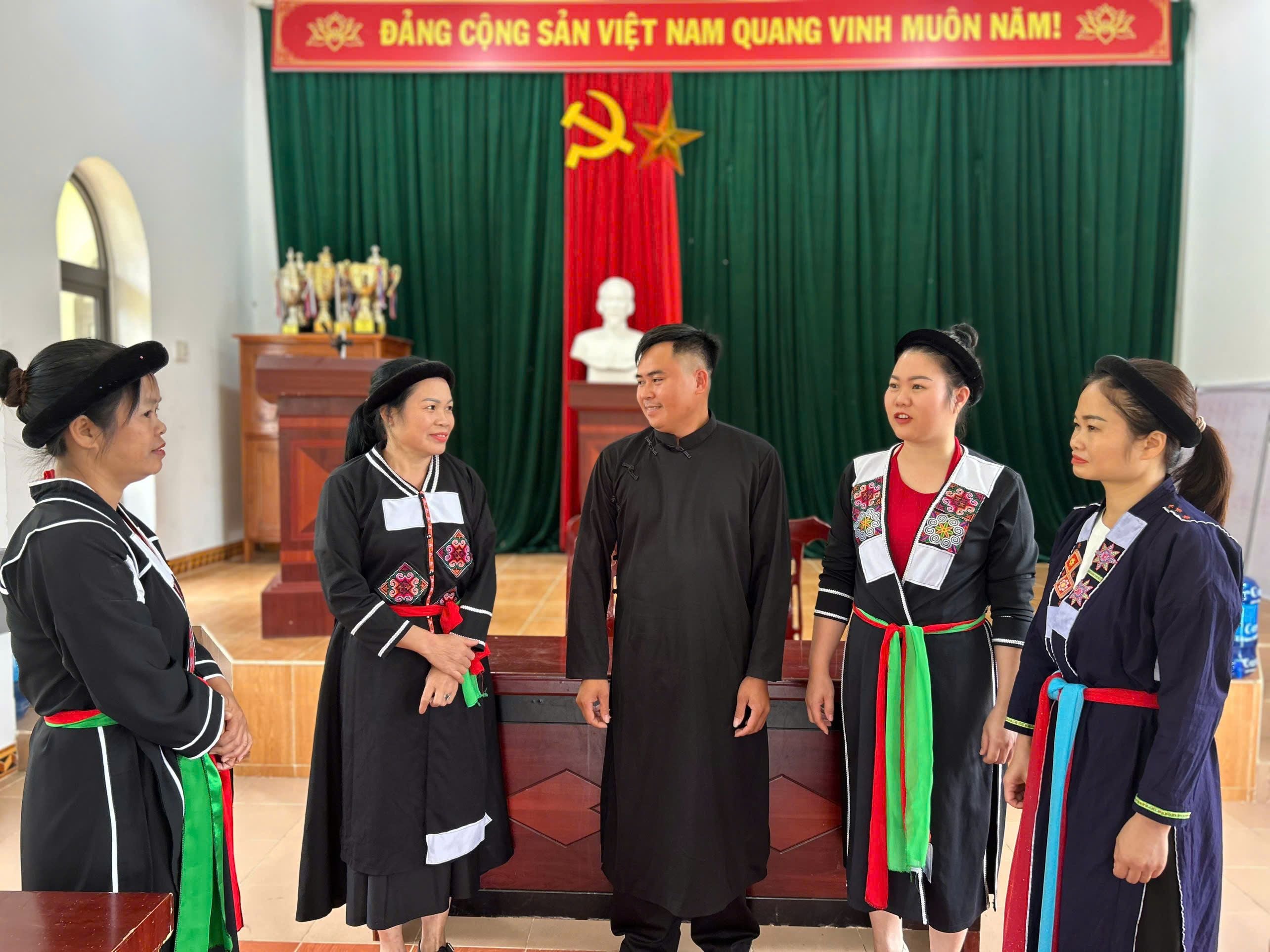
In Vietnam, implementing Resolution No. 18-NQ/TW, dated October 25, 2017, of the 6th Central Conference, Session XII, "Some issues on continuing to innovate and reorganize the apparatus of the political system to be streamlined, effective and efficient", in a number of new organizational models, the unification of titles has been piloted, including the model of Party cell secretaries who are also heads of villages, hamlets, and residential groups. Party committees and organizations at all levels have issued many documents to lead and direct the implementation of this concurrent model. As of September 30, 2020, the whole country has 26,649 Party cell secretaries who are also heads of villages, hamlets, and residential groups. By December 2020, 61/63 provincial and municipal party committees had implemented the model with the number of party cell secretaries also being village heads in 28,241/87,341 party cells (reaching 32.33%). The unification of the above two positions has contributed to streamlining the organizational apparatus, creating consensus and unity from the issuance of policies and resolutions to leadership, direction, and implementation to ensure direct and comprehensive implementation, reducing meeting time; strengthening the leadership role of party cells, promoting the responsibility of party members in performing political tasks in residential areas. On the other hand, the implementation of the above model has contributed to enhancing the role, responsibility and maximizing the capacity of the leader, clearly demonstrating the core role in leading and directing people to implement the Party's policies and guidelines, and the State's policies and laws.
However, the process of organizing and implementing the model of Party cell secretary concurrently being village chief in Vietnam today still has certain shortcomings and limitations, such as: Selecting personnel who meet the standards and conditions to undertake both tasks at the same time is facing many difficulties; policies and regimes have not created motivation for the team of Party cell secretaries who are also village chiefs to focus on their work; the workload and pressure of work is too great for one person to simultaneously hold two positions; potential risks when the roles of Party cell secretary and village chief are not clearly defined or the problem of authoritarianism, arbitrariness, and violation of the principle of democratic centralism of the head;...
In the current context, the entire political system is vigorously, drastically, comprehensively and synchronously carrying out the revolution of reorganizing and streamlining the apparatus from the central to the grassroots level, moving towards implementing the 2-level local government model. Accordingly, the position, role, tasks and powers of the grassroots government will be strengthened, which means that the scale, nature, activities, regimes and policies for non-professional activists in villages and residential groups will also change. From the experience of implementing the model of Party cell secretary who is also the village head in China, it is possible to propose a number of solutions to effectively implement the model of Party cell secretary who is also the village head in Vietnam as follows:
Firstly , raise awareness and responsibility of Party committees and organizations in the political system, cadres, Party members and people in implementing the model of Party cell secretary concurrently being village chief. Urgently build a legal framework, issue clear regulations on holding these two positions concurrently; define the responsibilities and powers of cadres holding these positions concurrently to avoid spontaneity and lack of synchronization and unity.
Second , do a good job of planning, training, fostering, arranging, and using cadres in accordance with the model of Party cell secretary who is also the village chief. Invest in training and financial policies from the Central Government to help cadres complete their tasks well. At the same time, flexibly apply in practice, and prioritize applying concurrent positions in difficult areas with low local budgets to save resources.
Third , promote the role of organizations in the grassroots political system and the people in implementing the model of Party cell secretary who is also the village chief. Promote grassroots democracy, mobilize community strength, and take advantage of people's contributions of labor and money instead of depending on the state budget.
Fourth , strengthen the leadership, direction, guidance, inspection and supervision of Party committees at all levels over the activities of Party cell secretaries who are also village chiefs. Strengthen the application of science and technology, digital transformation combined with traditional methods, using online monitoring in areas with conditions (towns, small cities); at the same time, maintain meetings with people so that cadres can be close to people in remote areas where there is no technological infrastructure.
Fifth , pay attention to improving policies and remuneration, ensuring facilities and reasonable conditions for Party cell secretaries who are also village chiefs.
The model of “Party cell secretary concurrently being the village, hamlet, or residential group head” in China has brought about positive results in grassroots governance. With a comprehensive strategy, clear legalization, application of modern technology, and strong investment in resources, the model has become an important tool in rural modernization in China. The experiences learned during the implementation process not only help China perfect the model, but also provide valuable lessons for other socialist countries, including Vietnam, especially in balancing the Party’s leadership and democratic management at the grassroots level, especially in an era that requires sustainable development and community cohesion./.
Source: https://tapchicongsan.org.vn/web/guest/the-gioi-van-de-su-kien/-/2018/1177602/kinh-nghiem-thuc-hien-mo-hinh-%E2%80%9Cbi-thu-chi-bo-dong-thoi-la-truong-thon%2C-ban%2C-to-dan-pho%E2%80%9D-o-trung-quoc---van-dung-cho-thuc-tien-viet-nam-trong-giai-doan-hien-nay.aspx

![[Photo] Cat Ba - Green island paradise](/_next/image?url=https%3A%2F%2Fvphoto.vietnam.vn%2Fthumb%2F1200x675%2Fvietnam%2Fresource%2FIMAGE%2F2025%2F12%2F04%2F1764821844074_ndo_br_1-dcbthienduongxanh638-jpg.webp&w=3840&q=75)







































![[VIMC 40 days of lightning speed] Da Nang Port: Unity - Lightning speed - Breakthrough to the finish line](https://vphoto.vietnam.vn/thumb/402x226/vietnam/resource/IMAGE/2025/12/04/1764833540882_cdn_4-12-25.jpeg)





































Comment (0)