

According to Nelson Tugume, CEO of Inspire Africa Group, which owns the African Coffee Park in Ntungamo district, western Uganda, China's application of a 0% tariff on all goods from less developed countries creates a much more favorable trade environment than markets that still maintain high tariffs on African agricultural products.
This policy will take effect from December 1, 2024, according to which China opens its doors to 100% duty-free products from least developed countries with diplomatic relations, including 33 African countries. Later, Beijing continued to expand, applying to all 53 African countries with diplomatic relations with China.
Mr. Tugume said that preferential tax policies, along with increasing demand for coffee consumption in China and instability in some traditional coffee-producing countries, have created a “golden time” for Ugandan farmers to access new, more stable markets.
“For any business that wants to grow, they will go where the environment is favorable,” he said as Uganda prepares to export a large batch of locally sourced and processed coffee to the Chinese market.
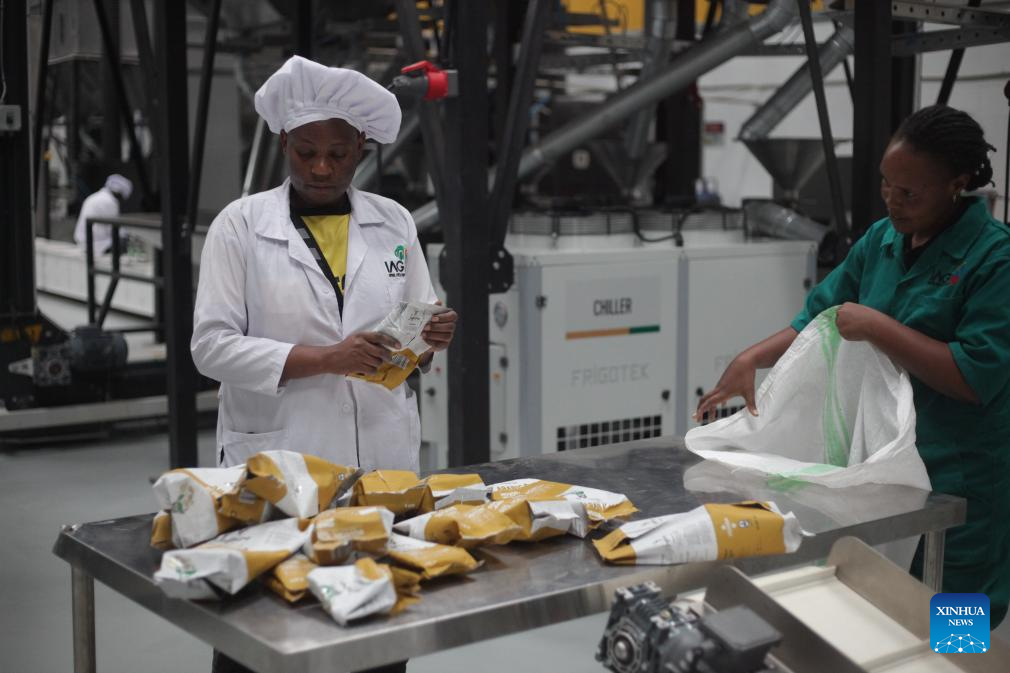
To meet China’s strict quality standards and ensure sustainable supply, Uganda is stepping up technology transfer, according to Xinhua. Mr. Tugume said more than 40 Inspire Africa employees have just returned from China after receiving technical training, and another 40 will continue to travel to the country to learn how to operate modern coffee processing equipment.
“Development is only sustainable when there is exchange and mutual learning. Chinese partners have created conditions for us to directly enter the factory and understand how the technology is applied.”
Uganda’s coffee exports to China increased by 190% in March 2025 alone, making China the second-largest market for Ugandan coffee in Asia, according to data from the Ugandan Ministry of Agriculture , Livestock and Fisheries. Ugandan businesses signed deals worth around $3 million during the China International Import Expo (CIIE) earlier this month.
At the event, Uganda also signed a memorandum of understanding with Cotti Coffee – a privately held Chinese coffee brand that currently has more than 7,500 stores in 28 countries – to bring Ugandan coffee directly to Chinese consumers through its large-scale retail network.
According to the country’s Ministry of Agriculture, coffee is now one of the strategic commodities for Uganda’s economic transformation, with about 1.8 million households dependent on this crop. In the context of China’s push to open up its trade policy with Africa, many experts say this is an opportunity for countries like Uganda to participate more deeply in the global value chain, instead of just exporting raw materials.
Source: https://baotintuc.vn/thi-truong-tien-te/chinh-sach-thue-0-cua-trung-quoc-tao-cu-hich-cho-ca-phe-uganda-20251203110518227.htm

![[Photo] Worshiping the Tuyet Son statue - a nearly 400-year-old treasure at Keo Pagoda](/_next/image?url=https%3A%2F%2Fvphoto.vietnam.vn%2Fthumb%2F1200x675%2Fvietnam%2Fresource%2FIMAGE%2F2025%2F12%2F02%2F1764679323086_ndo_br_tempimageomw0hi-4884-jpg.webp&w=3840&q=75)



![[Photo] Parade to celebrate the 50th anniversary of Laos' National Day](/_next/image?url=https%3A%2F%2Fvphoto.vietnam.vn%2Fthumb%2F1200x675%2Fvietnam%2Fresource%2FIMAGE%2F2025%2F12%2F02%2F1764691918289_ndo_br_0-jpg.webp&w=3840&q=75)






































































Comment (0)