

Tan sticky rice from Tu Le commune is among the best sticky rice varieties in the country. According to the elders here, no other place that grows this type of rice can produce rice as fragrant and sticky as the Tu Le valley.
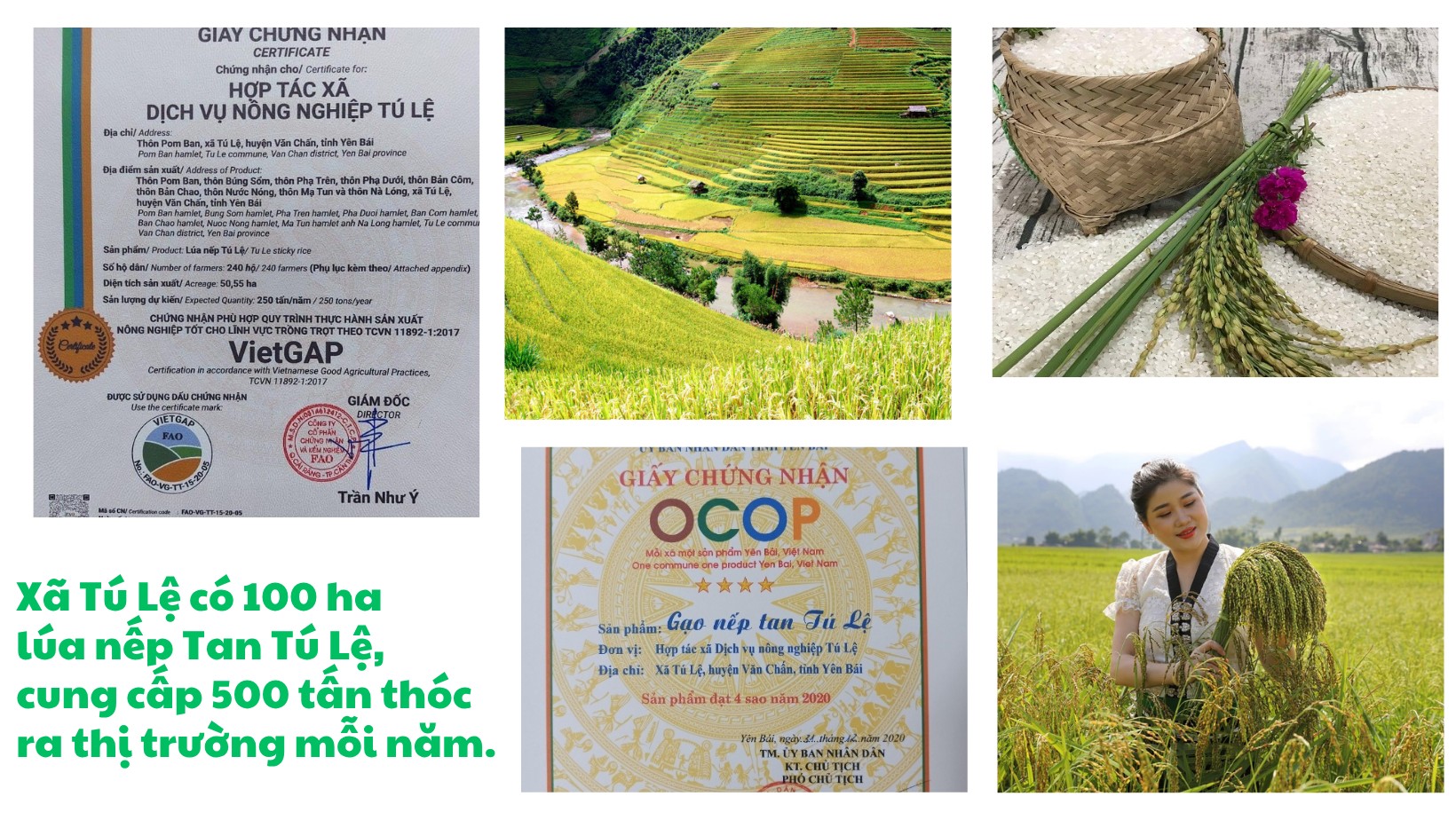
Tan sticky rice is delicious because it is grown in a geographical location nestled between three high mountains, resulting in large daily temperature fluctuations and longer nights; on rare soil with a thin weathered layer, high potassium concentration, and irrigated by spring water from Ngoi Hut and Nam Lung; the soil structure is loose, easily permeable to water, and the climate is clean, favorable for the natural growth of the rice plant. It is also due to the careful preservation of this precious rice variety and the meticulous care from planting to harvesting, following safe practices by the Thai people in this area.
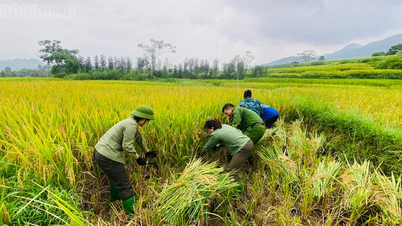
These days, from early morning, farmers in the Tú Lệ sticky rice growing region eagerly head to the fields. For about the last 5 years, the Tan sticky rice variety has been cultivated organically by the majority of the people, which is not only safe for the health of producers and consumers, but also brings significantly higher income.
Ms. Hoang Thi Lien from Na Long village shared: "Tu Le sticky rice doesn't have a high yield, only 40-42 quintals/hectare, but the selling price is quite high. Last season, my family earned over 18 million VND."
Reportedly, Ms. Lien's family owns 5 sao (approximately 0.5 hectares) of rice paddies, all planted with the local Tan sticky rice variety every season. Ms. Lien is also one of 200 households linked with the Tu Le Agricultural Service Cooperative to produce according to the cooperative's standards, and the cooperative guarantees the purchase of her product at a price of 20-25 thousand VND/kg, which is 2-7 thousand VND/kg higher than the average price of paddy rice.
"We were given hands-on training to implement safe production processes, from monitoring and record-keeping methods, production accounting, occupational safety guidance, and methods for managing the use of pesticides..." - Ms. Lien added.
With high-priced products and stable guaranteed sales, farmers in Tú Lệ have shifted towards commodity production, focusing on care and improving productivity by applying scientific and technological advancements.
The local government has also invested in infrastructure development, ensuring stable irrigation for the production area and preserving the quality of the local rice variety. They have also worked with the people to establish a concentrated production area for Tú Lệ sticky rice, currently covering over 100 hectares. 50% of this area is cultivated using a closed-loop process, from seed selection to production linkages, product procurement, processing, packaging, and sale to consumers.
Tan Tu Le glutinous rice products have been very well received by consumers. In the future, the commune will continue to encourage and guide people to expand the safe glutinous rice raw material area along the value chain, applying advanced technologies to ensure that the product reaches consumers with quality, cleanliness, and safety.
Not only the Tú Lệ sticky rice region, but all specialty rice-growing areas in Lào Cai province are currently receiving similar development attention, clearly demonstrating the involvement of businesses, the government, and farmers.
Accordingly, local authorities have focused on guiding and encouraging people to change their production habits towards a commodity-based approach, applying scientific and technological advancements to facilitate large-scale production linkages. Simultaneously, they have created conditions for the establishment of agricultural enterprises, cooperatives, and production groups, providing quick and convenient access to support resources to leverage land, finance, and scientific and technological potential for market development and effective participation in the process of building agricultural product brands.
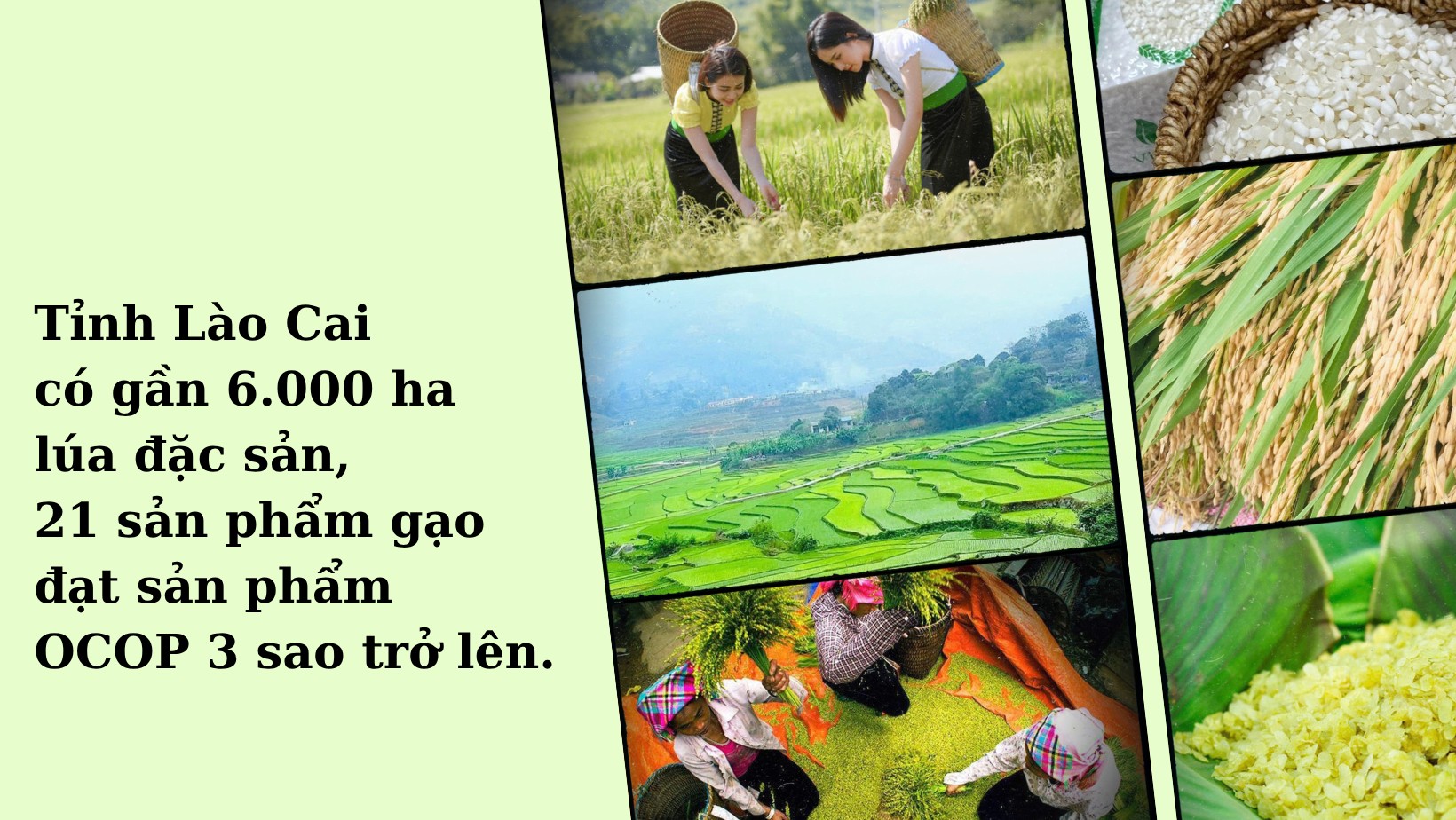
To date, Lao Cai province has nearly 6,000 hectares of specialty rice, notably including: the Séng cù rice growing area in the communes and wards of Bản Xèo, Nghĩa Lộ, Khao Mang, Mường Khương, Trịnh Tường… with an area of over 3,000 hectares; the Khẩu Tan Đón sticky rice growing area in Dương Quỳ commune with an area of 90 hectares; the Lào Mu sticky rice growing area in Lâm Thượng commune with an area of 60 hectares; the Chiêm Hương rice growing area in the Đại - Phú - An single-variety rice fields with an area of over 500 hectares; the Khẩu Mẹo and Khẩu Nậm Xít rice growing areas in Bắc Hà and Bản Liền communes with an area of 457 hectares…
Essentially, the province has focused on establishing intellectual property rights for specialty rice-growing areas, strengthening trade promotion and marketing activities, and bringing local rice products to larger markets. Businesses and cooperatives have also effectively participated in forming and maintaining value chain linkages, enhancing rice products in many aspects, including quality, appearance, design, and packaging.
Currently, the province has 21 rice products that have achieved OCOP 3-star or higher ratings, not including processed products made from specialty rice varieties such as sticky rice, banh chung (Vietnamese rice cake), banh giay (Vietnamese sticky rice cake), com (Vietnamese puffed rice), and rice wine. These products have all completed packaging, logos, labels, and traceability systems, and have been positively received by consumers nationwide.
Ms. Pham Thi Hao, Director of Hao Anh Agricultural Cooperative in Lao Cai Ward, shared: In 2022, the cooperative had two products that achieved OCOP 3-star status: Seng Cu rice and Seng Cu brown rice. Not stopping there, the cooperative continues to upgrade its products, organizing production in a closed chain from production to consumption and business; providing support in terms of seeds, fertilizers, technical procedures, and guaranteeing the purchase of Seng Cu paddy from farmers.
The cooperative has established a raw material area with over 60 households cultivating Séng cù rice according to VietGAP standards, creating products that are safe for consumers' health, contributing to increased income for local people, ensuring peace of mind in production, and preserving the local rice variety. The product has We supply to many supermarkets, retailers, and large distribution companies. In 2025, the cooperative's two products, Séng cù rice and Séng cù brown rice, were upgraded to OCOP 4-star.
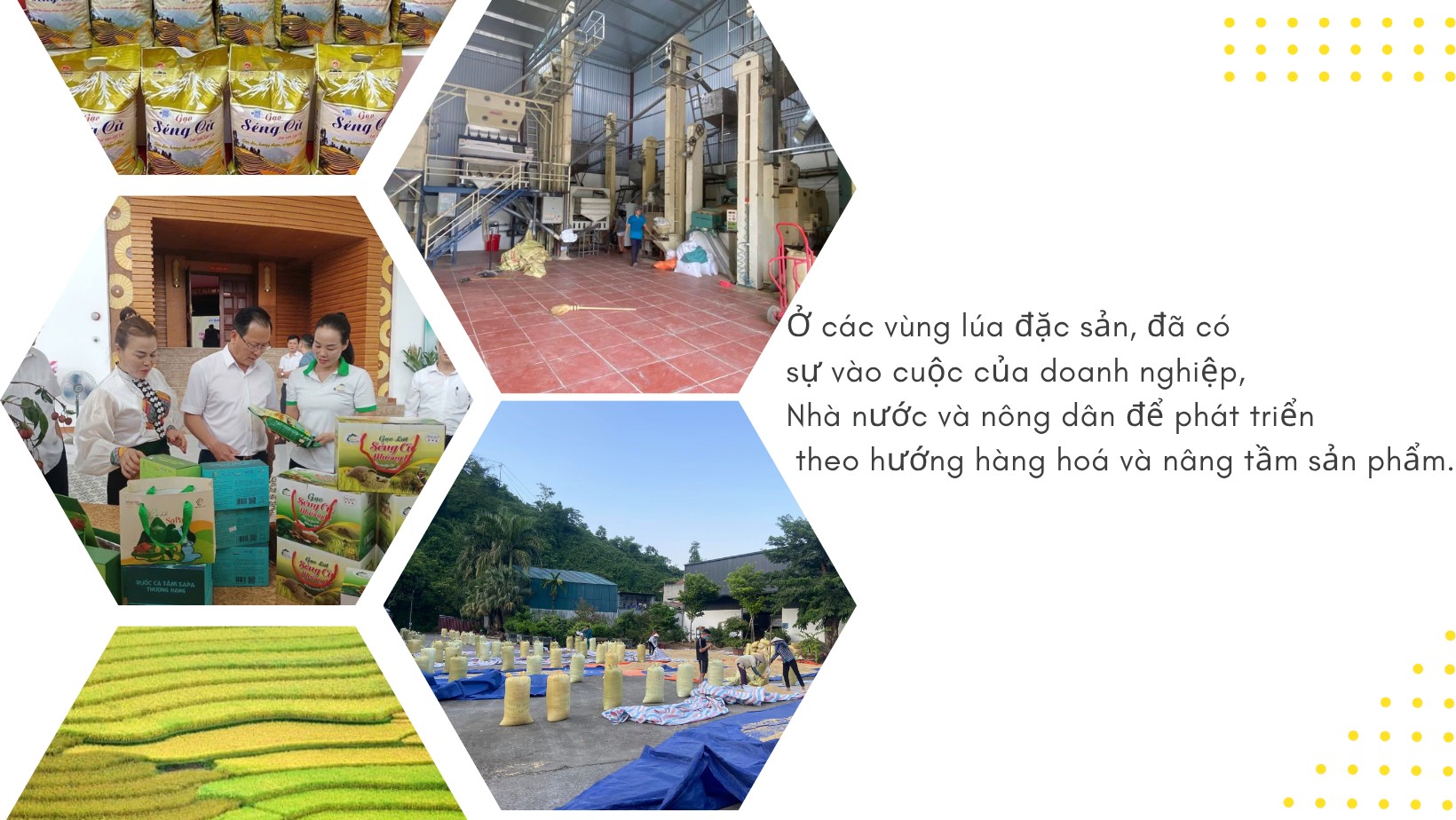
Some units have boldly invested in modern machinery for their production processes, such as milling machines, dryers, and color sorters. Mr. Cao Xuan Dien, Director of Tien Phong Cooperative in Ban Xeo commune, said: "The cooperative has invested over 1 billion VND in a modern rice milling line that can automatically remove defective and black-tipped grains; and sort grains using a light-based sorting machine to reduce breakage and ensure uniformity, preserving the nutrient-rich bran layer for packaging and supplying to the market with products that meet high standards of appearance and quality."
It can be affirmed that the merger of Lao Cai and Yen Bai provinces is equivalent to the merger of two renowned specialty rice granaries of the Northwest region, with diverse varieties and types, and bearing the unique cultural characteristics of each land and ethnic group.
This potential forms the basis for the province's strategic steps in the coming period, optimizing resources, combining the finest traditional values with science and technology, and planning larger, more synchronized specialized rice production areas to meet the needs of more market segments. From here, Lao Cai's specialty rice can confidently become a regional agricultural brand, proudly bringing the flavors of the Northwest region to all parts of the country.
Source: https://baolaocai.vn/ve-mien-gao-dac-san-post648885.html

![[Photo] General Secretary and President To Lam presides over a working session with the Central Policy and Strategy Committee on the development of the materials industry.](https://vphoto.vietnam.vn/thumb/1200x675/vietnam/resource/IMAGE/2026/05/21/1779359935432_a3-bnd-3129-1412-jpg.webp)


![[Photo] National Assembly Chairman Tran Thanh Man working with the Standing Committee of the Law and Justice Committee](https://vphoto.vietnam.vn/thumb/1200x675/vietnam/resource/IMAGE/2026/05/21/1779378929214_ndo_br_1-4610-jpg.webp)
































































Comment (0)