

 |
The trip helped us to better appreciate the vibrancy of a seaside tourist city.
Simple and elegant
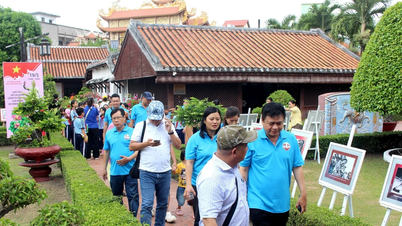
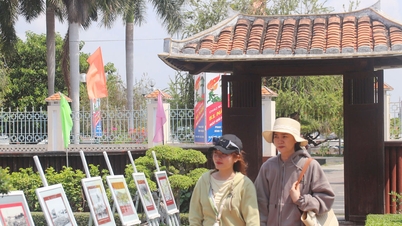
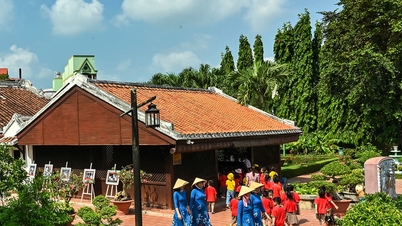
As planned, at exactly 2:30 PM, we revisited Duc Thanh School. After offering incense and paying our respects to the beloved leader of the Party and the people, we toured the school and strolled around Duc Thanh Bridge to take in the tranquil atmosphere of the seaside village along the Ca Ty River.
The Duc Thanh School was originally built in 1907 (the same year as the Dong Kinh Nghia Thuc School) on the land of the Nguyen family's ancestral temple in Thanh Duc village (No. 39, Trung Nhi Street, Duc Nghia Ward, former Phan Thiet City) and operated until 2012. The Duc Thanh School relic was reconstructed based on descriptions from former students of the school from the time when teacher Nguyen Tat Thanh (Ho Chi Minh) taught there. The main structure of the school consists of two large wooden buildings used as classrooms, a small two-story house (Ngoa Du Sao) where meetings were held, distinguished guests were received, and literary discussions took place, and the royal residence served as a shared living space for teachers and students who were away from home.
The school's operating funds came from two sources: the profits from 10 acres of prime farmland donated by Mr. Huynh Van Dau, a wealthy and patriotic local man, and sponsorship from Lien Thanh Trading Company. Thanks to this, students received free tuition, and teachers received only subsidies without salaries. The school had four classrooms, with a peak enrollment of around 100 students from Saigon, Da Nang , Hoi An, and many other places in the South Central and Southeast regions, many of whom were sent by relatives of prominent figures to board and study there.
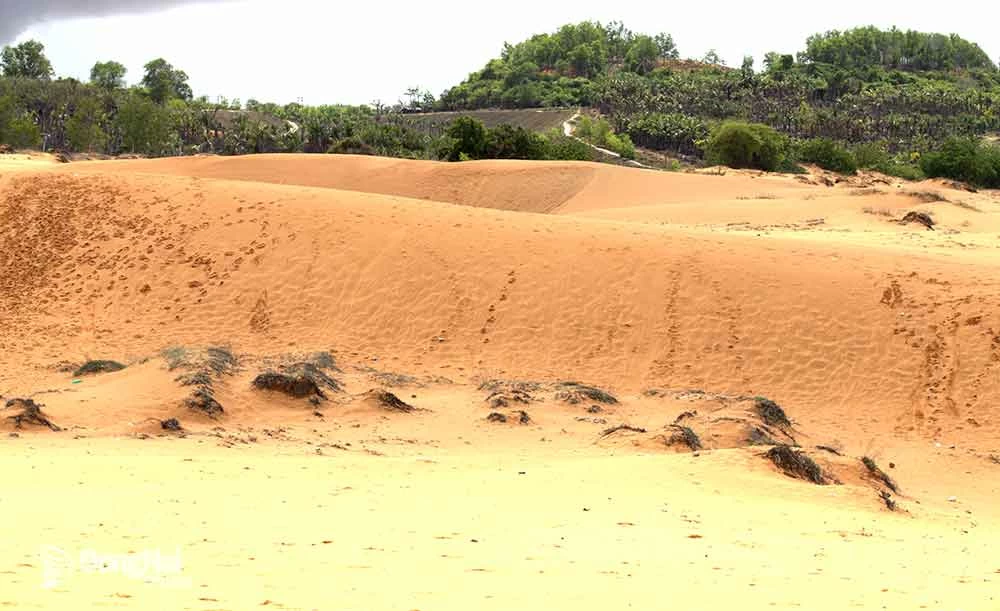
| One unpleasant image that lingered after my short trip back to Mui Ne was that of some locals setting up tents right on top of the sand dunes to solicit tourists to participate in sandboarding activities for money. This inadvertently destroyed the pristine beauty of the sand dunes, obstructed the view of tourists, and caused them to feel disturbed. We hope the local authorities will strengthen management to restore the natural beauty of the sand dunes. |
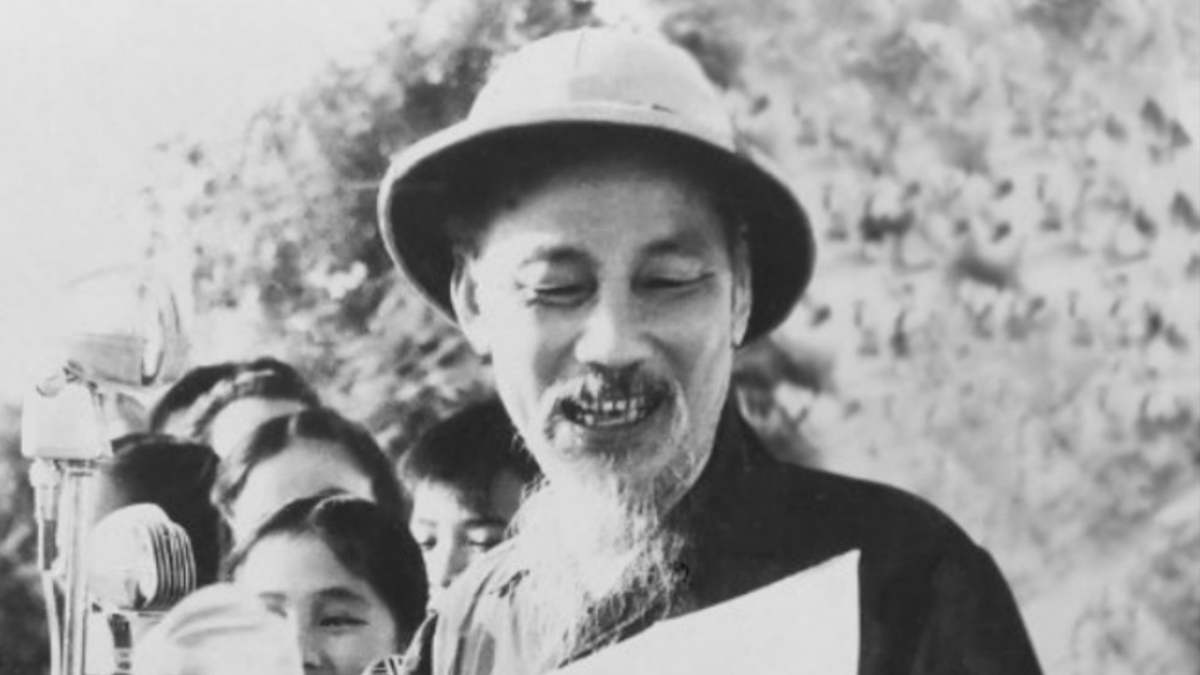
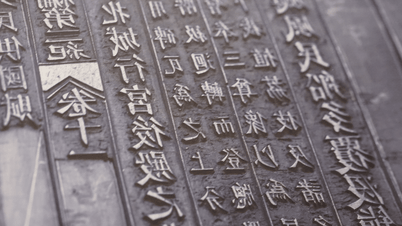
The familiar and intimate image of the school transported us back to the context of the country more than a century ago, when this small school, though modest, was filled with progressive ideas and served as a meeting place for patriots. The school was founded in 1907 by patriotic scholars in Phan Thiet, Binh Thuan, in response to the Duy Tan Movement initiated by Phan Chau Trinh, Tran Quy Cap, and Huynh Thuc Khang. The name Duc Thanh is an abbreviation of Duc Thanh School ( Education for Youth), with the intention of establishing a place to disseminate knowledge and instill patriotism and the Duy Tan ideology in the youth of that time. Therefore, the school's curriculum was compiled and annotated by the Dong Kinh Nghia Thuc in Hanoi and sent to Phan Thiet…
It was here, on his journey south to find a way to save the country, that the young Nguyen Tat Thanh stopped and worked as a teacher for a short time before boarding a French ocean liner to travel overseas for decades in search of a way to save the country and its people from the yoke of slavery. The simple, polished ebony benches and the small study were where this patriotic young teacher spent his time reading, contemplating national and world history; simultaneously imparting knowledge to his students and instilling in them a spirit of patriotism and love for their people.
In the backyard, the ancient starfruit tree, planted by the family of Mr. Nguyen Thong (a patriot), also holds cherished memories for the young teacher, who, outside of class hours, personally tended to it while reading. Duc Thanh School is not only a place that marks the footsteps of a brilliant leader, Ho Chi Minh, but also a symbol of the thirst for knowledge and the fierce patriotism of the Vietnamese people when the country was under French colonial rule.
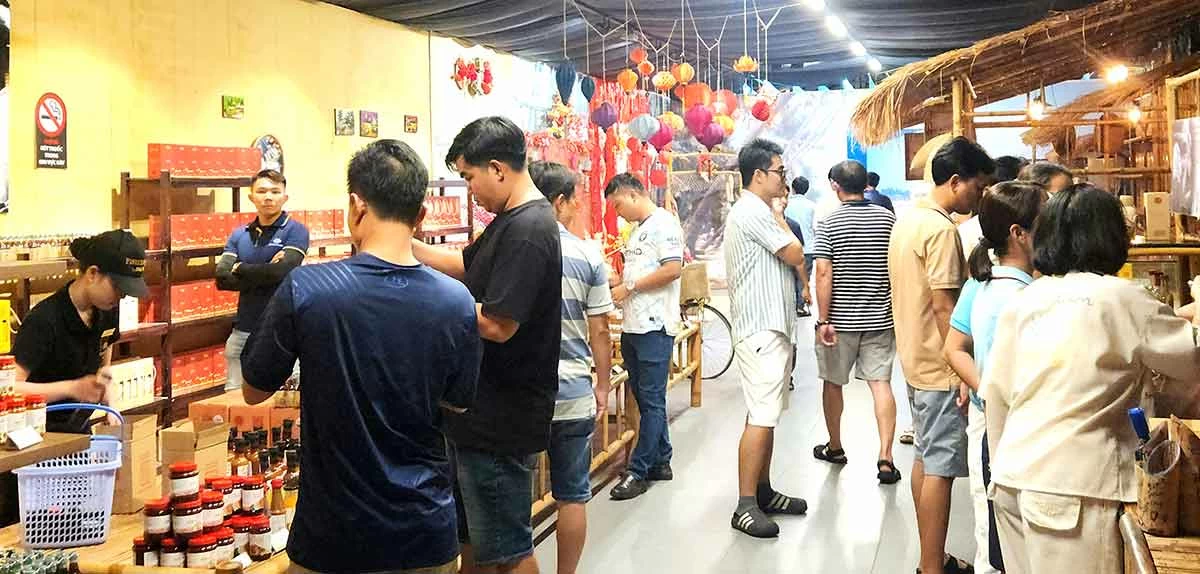 |
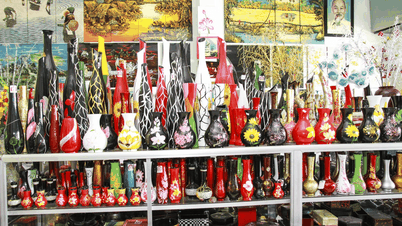
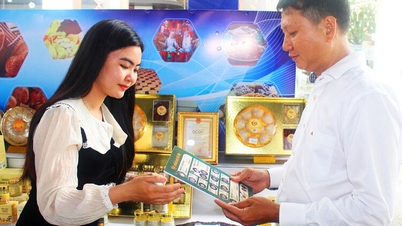
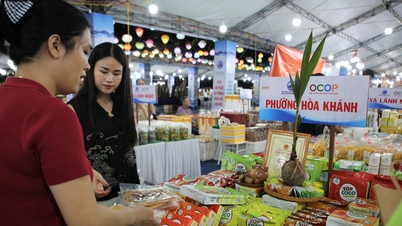
| Tourists learn about and buy local specialties in Phan Thiet. |
Across from the school, on the Ca Ty River, lies the fishing village, still familiar with the sights and sounds I first heard here more than 20 years ago. It was the time when boats returned from their fishing trips, so every 5-10 minutes a motorboat would speed back to the dock, laden with fish and shrimp – the bounty of the ocean that has sustained the fishermen of this fishing village for centuries. The only difference was that the boats were larger and more numerous, moored closely together at the dock, giving visitors a sense of warmth and abundance. From within the village, a traditional folk song rose, adding a touch of warmth to the familiar sounds of the fishing village. The atmosphere was truly intimate. As evening approached, the air became pleasant. On the Duc Thanh Bridge, the bustling flow of people and vehicles brought a vibrant energy to this seaside city.
Mui Ne's Salty Flavors
Following a local's suggestion, we chose a 4-star hotel on the outskirts of Phan Thiet as our accommodation. This was one of the first high-end resorts built in the "resort capital of Mui Ne" about 25 years ago. That evening, we went back to the outskirts of Mui Ne for dinner. Houses lined both sides of the road, mostly tourism businesses. We were introduced to a restaurant to enjoy seafood. It was worth it when the owner specially arranged a table for us right by the sea, allowing everyone to breathe fresh air and escape the crowds inside the restaurant. Besides local dishes like grilled sun-dried squid and sea cucumber, we also enjoyed lobster with its firm, sweet meat and the distinctive salty taste of the ocean.
The next morning, we took a taxi back to visit the Mui Ne sand dunes. According to the taxi driver, the locals call them red sand dunes because they are a darker yellow than the typical sandy yellow of beach sand. Although they no longer have the pristine, expansive beauty they had when I first visited, the smooth sand dunes, exposed to the sun, have naturally formed very charming shapes that allow visitors to feast their eyes and let their imaginations run wild.
Around noon, the group decided to visit a private museum about a traditional fishing village located on the outskirts of Phan Thiet. There were quite a lot of visitors. Many women were posing for photos right at the entrance. For an entrance fee of 100,000 VND, visitors are guided through the local Cham culture in Phan Thiet - Binh Thuan (formerly), introduced to ancient houses, village gates, and the daily life activities of the locals such as weaving nets, casting nets, pulling nets, making fish sauce, and making salt. Visitors can also experience raking salt in the salt fields and sample various types of traditional, high-protein fish sauce, commonly known as "nuoc mam nhi." Besides anchovy fish sauce, there is also shrimp fish sauce with a fragrant aroma and a rich, dark yellow color. Visiting the fishing village and tasting delicious, pure fish sauce helps visitors understand more about Phan Thiet's famous specialty, made from the salt of the sea, the sunshine and wind of the South Central region, and the diligent hands of the local people.
The establishment issued discount vouchers worth 30,000 VND to each visitor to purchase fish sauce as souvenirs. There were various sizes and types of fish sauce to choose from, but the common price ranged from around 100,000 VND per 250ml bottle. We chose the type with more fish and less salt, priced at 95,000 VND per bottle, to buy a pair for each of us as gifts.
What impressed us was that, despite its small space, the museum dedicated to traditional fishing villages has collected and preserved many valuable documents, such as two royal decrees from the Nguyen Dynasty (regarding the fishing villages of Binh Thuan province, from Emperors Dong Khanh and Khai Dinh) and many old photographs of Phan Thiet fishing villages, depicting street scenes and architectural structures from the early 20th century to the years 1945-1958, all in excellent black and white quality. Particularly noteworthy is the preservation and display of the precious wooden house of Ham Ho (a term often used to refer to wealthy fish sauce producers in the past), who owned at least five "ques" (each "que" being a house consisting of ten barrels with a capacity of approximately 5 tons of fish).
Van Phong
Source: https://baodongnai.com.vn/dong-nai-cuoi-tuan/202507/ve-phan-thiet-59c255a/
![[Photo] Capturing the moment the tide recedes at Yen Binh Son rapids - a million-year-old scenic spot in Quang Ngai.](https://vphoto.vietnam.vn/thumb/1200x675/vietnam/resource/IMAGE/2026/05/19/1779175463885_yen9-1199-jpg.webp)

![[Photo] National Assembly Chairman Tran Thanh Man attends the groundbreaking ceremony for the National Highway 1A spatial axis project.](https://vphoto.vietnam.vn/thumb/1200x675/vietnam/resource/IMAGE/2026/05/19/1779161360398_ndo_br_bnd-1412-jpg.webp)












































![[Photo] General Secretary and President To Lam receives Indian Defense Minister Rajnath Singh](https://vphoto.vietnam.vn/thumb/402x226/vietnam/resource/IMAGE/2026/05/19/1779184046302_anh-man-hinh-2026-05-19-luc-16-46-58.png)














Comment (0)