

 |
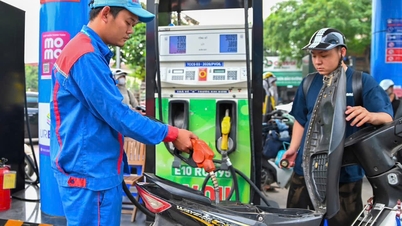
E10 gasoline, a mixture of 90% mineral gasoline and 10% bioethanol, has been officially sold nationwide since June 1st. Photo: Hoai Bao . |
Besides concerns about engine durability when using E10 gasoline, some consumers believe that using E10 gasoline may cause cars and motorcycles to have weaker engines, reduced acceleration, and higher fuel consumption. Therefore, consumers are worried about potential economic losses.
At the recent seminar "Is using E10 gasoline a cause for concern?" organized by the Government's Electronic Information Portal, experts provided explanations to address this concern.
The consumption is negligible.
According to Mr. Lo Hai Nam, Head of the Technical Committee of the Vietnam Motorcycle Manufacturers Association (VAMM), in terms of fuel properties, E10 gasoline has a lower calorific value than regular mineral gasoline. Therefore, to ensure engine power, fuel consumption when using E10 will increase compared to mineral gasoline.
VAMM representatives argue that this difference is very small, almost imperceptible. According to studies and practical assessments, the fuel consumption difference when using E10 gasoline compared to conventional gasoline is negligible.
From the perspective of an engine engineering expert, Associate Professor Pham Huu Tuyen, Director of the Center for Research on Power Sources and Autonomous Vehicles ( Hanoi University of Science and Technology), stated that in terms of energy density or calorific value, E10 gasoline is about 3-4% lower than conventional gasoline.
However, fuel consumption and engine performance depend not only on the calorific value of the fuel, but are also affected by many other factors during the combustion process.
According to Mr. Tuyen, the fact that E10 gasoline contains a small amount of oxygen helps the fuel burn more completely in the engine cylinder, thereby reducing the amount of harmful emissions such as HC and CO produced due to incomplete combustion. As a result, the thermal efficiency of the engine can be improved.
In addition, ethanol has a higher density than mineral gasoline, so 1 liter of E10 gasoline has a slightly greater mass. This is considered a factor that helps compensate for the decrease in the fuel's calorific value.
Mr. Tuyen analyzed that, given the advantages in the combustion process, the impact of E10 gasoline on fuel consumption cannot be evaluated solely based on its calorific value. Test results at the Center for Research on Power Sources and Autonomous Vehicles show that engine power and fuel consumption of vehicles using E10 gasoline are essentially equivalent to those using conventional gasoline.
Meanwhile, Mr. Bui Ngoc Bao, Chairman of the Vietnam Petroleum Association, said that although gasoline prices still operate according to market mechanisms, the excise tax on mineral gasoline is 10%, while on E10 bio-gasoline it is only 7%. In addition, the environmental protection tax applied to E10 gasoline has also been adjusted downwards compared to mineral gasoline.
State management agencies have made calculations to ensure that, in addition to environmental benefits, biofuels can also bring certain economic benefits to consumers during use.
Remember to choose the type of fuel that is recommended by the vehicle manufacturer.
At the seminar, representatives from the Vietnam Petroleum Association also stated that, in addition to guiding people on the use of E10 gasoline, an important issue that needs attention is the habit of using the correct type of fuel and performing regular vehicle maintenance.
According to Mr. Bao, before E10 gasoline was introduced, most consumers paid little attention to choosing the right fuel type in accordance with the manufacturer's recommendations.
"This is why many vehicles have fuel systems that accumulate deposits and deteriorate due to improper maintenance or the long-term use of unsuitable fuel," Mr. Bao explained.
He also pointed out that many people only care about the octane rating, such as RON 92 or RON 95. However, the actual fuel quality is reflected in the corresponding fuel quality standards, such as level 3, level 4, or level 5 (Euro 3, Euro 4, Euro 5). This is information that many car owners are unaware of.
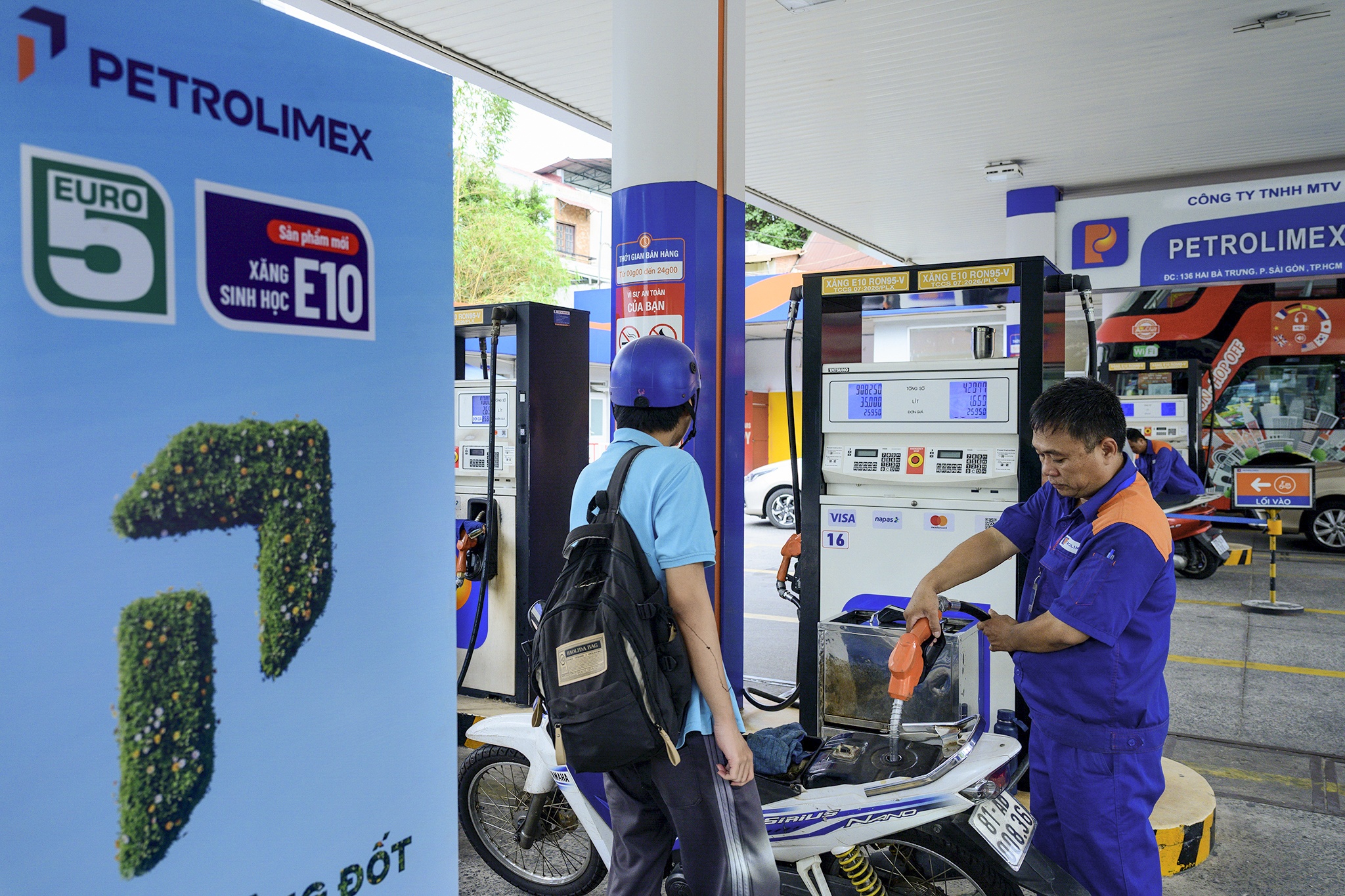 |
The price of E10 gasoline is determined by the base price of gasoline, ethanol, production costs, logistics, distribution, profit, and taxes. Photo: Hoai Bao . |
According to the Vietnam Petroleum Association, even though it's all RON 95 gasoline, it can be produced according to different quality standards. While most vehicles manufactured after 2017 are designed to use fuel meeting standards level 4 or 5, many people continue to use lower-standard fuel for extended periods.
"Using fuel that doesn't conform to the manufacturer's recommendations is the main cause of damage to internal engine components such as cylinders and pistons," Mr. Bao analyzed.
Representatives from the Vietnam Petroleum Association believe that when implementing E10 gasoline, regulatory agencies, petroleum businesses, and vehicle manufacturers need to strengthen consultation to help people better understand fuel quality standards, thereby choosing the right type of gasoline for their vehicles. E10 gasoline will also be clearly categorized into levels 3, 4, and 5 to allow customers to make informed choices.
Source: https://znews.vn/vi-sao-xe-dung-xang-e10-co-the-hao-xang-hon-post1656102.html


![[Photo] General Secretary and President To Lam presides over a meeting on preparations for the review of one year of operation of the three-tiered government system.](https://vphoto.vietnam.vn/thumb/1200x675/vietnam/resource/IMAGE/2026/06/02/1780391821195_a1-bnd-4595-9717-jpg.webp)












































































Comment (0)