


From the moment they are born, Muong children grow up in the arms of their grandmothers, mothers, and sisters, sheltered and comforted by simple, sweet lullabies. Muong lullabies (also known as "ru ún") not only have soothing melodies but also convey countless beautiful hopes and dreams of women for their children. In a gently rocking bamboo cradle, by the warm fire, or in the quiet midday heat of summer, the gentle lullaby lulls the child to sleep, nurturing their young souls to love and cherish their homeland.
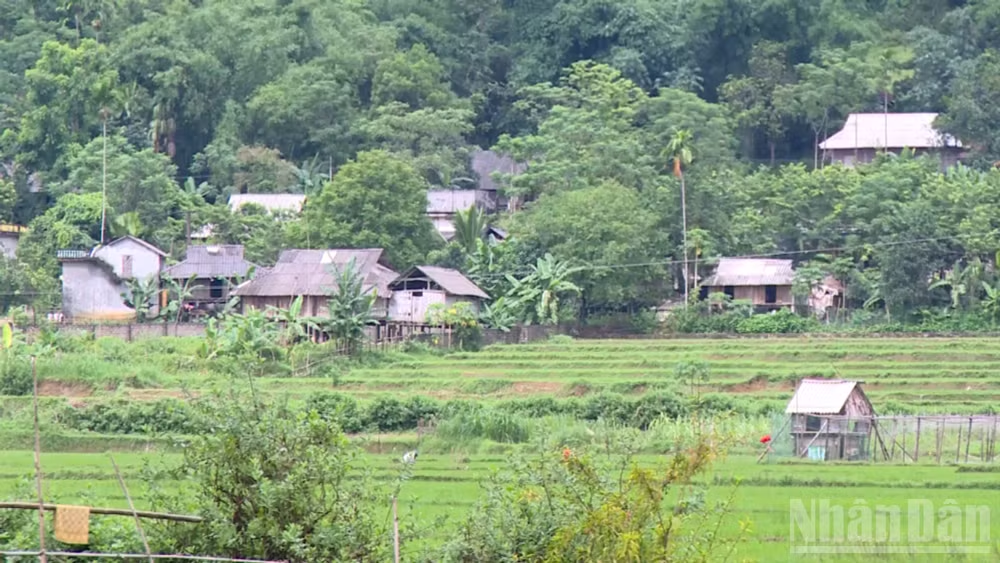
Lullaby, a rhythm connecting love
Ms. Bui Thi Don, from Toan Thang commune, Phu Tho province (formerly Gia Mo commune, Tan Lac district, Hoa Binh province), shared: “When I was little, I grew up listening to the lullabies of my grandmother and mother. Those lullabies were like a thread connecting me to my family and village. Now that I am a grandmother, I still sing lullabies to my grandchildren, hoping that the sound of lullabies will forever remain in my family's home.”
Most lullabies use the traditional six-eight verse form, with short, repetitive, easy-to-remember and easy-to-learn lines. The imagery in the lullabies is familiar to the mountains, forests, fields, streams, and hearths. In the lullabies, mothers impart teachings to their children, instilling filial piety towards their grandparents, love for their village, and preservation of the customs and traditions of their ancestors.
Unlike many other regions, Muong lullabies often borrow from folk songs, ancient tales, and epics like "The Creation of the Land and Water ," symbolizing the origins of the Muong people. Each melody is like a story told through music , nurturing pride in their roots and evoking love for their homeland in every child from infancy.
Ms. Bui Thi Mien, from Muong Bi commune, Phu Tho province (formerly Phong Phu commune, Tan Lac district, Hoa Binh province), shared: “In the past, whenever my mother had free time, she would carry me and sing lullabies. Nowadays, many young children rarely get to hear these old lullabies. I hope that the children will always preserve and remember them so that when they grow up, the Muong lullabies will still be heard in the village.”
Simple melodies, imbued with the spirit of the countryside.
The Muong lullaby repertoire boasts many familiar melodies such as: u hay, da oi da om, day lullaby, night lullaby. These melodies have a gentle, soothing rhythm, with few wide intervals, and are often sung by grandmothers and mothers during breaks from embroidery, spinning, beside the cradle, or in the fields. The lullaby's sound permeates and resonates through the mountains and forests, blending with the sound of streams and wind, nurturing the souls of children.
Muong children are likened to blank sheets of paper. Lullabies are the way mothers and grandmothers paint on them the colors of compassion, gratitude, and attachment to their village and homeland. Lullabies also serve as a bridge connecting the present generation with ancient values, fostering pride in their ethnic identity.
Ms. Dinh Thi Dua, from Muong Bi commune, Phu Tho province (formerly Phong Phu commune, Tan Lac district, Hoa Binh province), shared: “As a child, I slept soundly to my mother's lullabies. As a mother and older sister, I sing lullabies to my children and grandchildren. Lullabies are in my blood. I only hope my grandchildren will preserve them and not forget the lullabies of our homeland in the future . ”
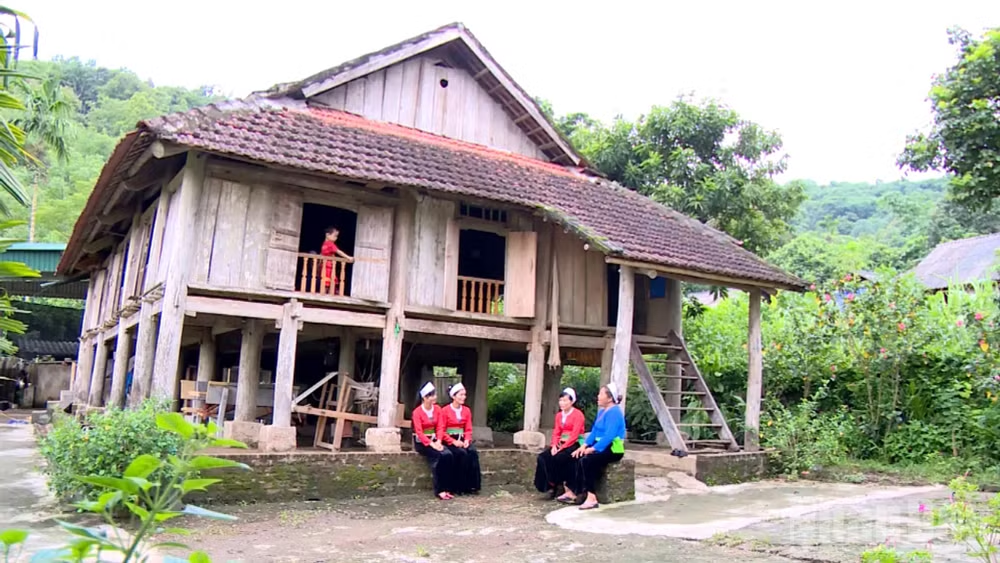
Life is changing rapidly these days, and many young families no longer maintain the tradition of singing lullabies to their children. Nevertheless, in many Muong villages, lullabies continue to gently spread like an enduring cultural stream. These songs not only lull children to sleep but also teach them good values, cultivate love, and nurture their roots.
The Muong lullaby is a simple yet warm melody, accompanying the growth of generations. Even when the children and grandchildren grow up, the lullaby will remain, reminding each Muong person of their roots, family bonds, and moral principles.
In the melodious lullaby, we encounter the image of children sleeping peacefully beside their mothers, and hear the gentle breath of the mountains and forests, the faint smoke rising from the stilt houses in the evening. The lullaby, simple yet profound, will spread like a refreshing stream, nourishing the souls of generations of Muong people today and in the future.
Runet singing is a distinctive cultural feature of the Muong people.
Source : https://nhandan.vn/video-hat-ru-net-dac-sac-van-hoa-cua-dong-bao-muong-post892397.html
![[Image] Hanoi's urban life under the challenge of a "scorching hot" environment](https://vphoto.vietnam.vn/thumb/1200x675/vietnam/resource/IMAGE/2026/05/25/1779706979265_nang-nong-t5-2026-minh-duy-7-4636-jpg.webp)

![[Image] Close-up view of the interchange connecting the two expressways and Long Thanh Airport.](https://vphoto.vietnam.vn/thumb/1200x675/vietnam/resource/IMAGE/2026/05/25/1779703378210_ndo_br_z7863716673926-224453a31600126cce10622af6290afd-4549-jpg.webp)








































































Comment (0)