

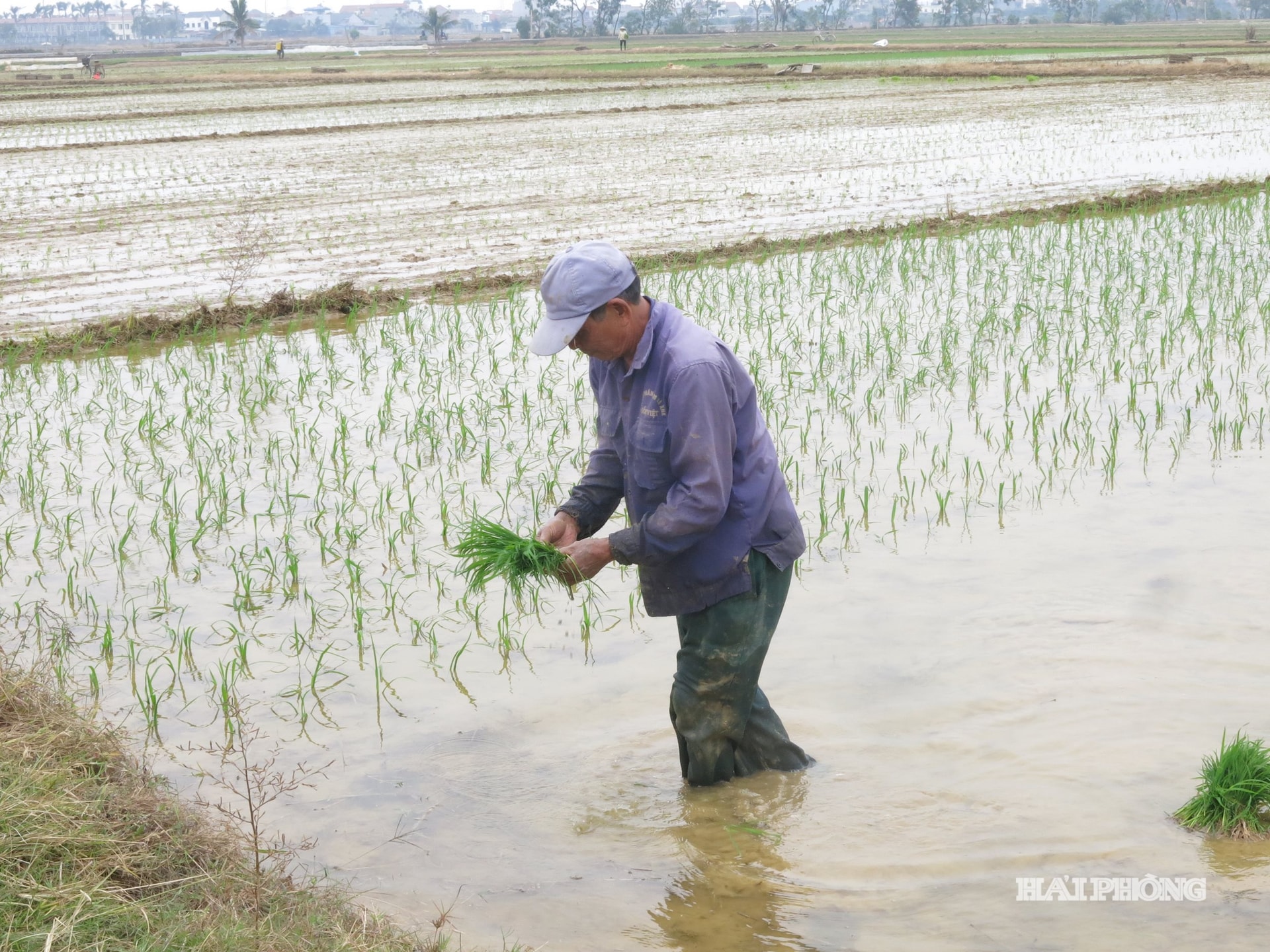
Farmers proactively manage their planting schedules.
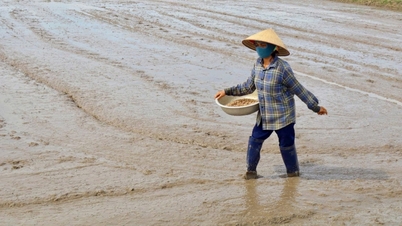
Taking advantage of favorable weather and warm, sunny days, farmers in the eastern and western communes of the city have finished planting their spring rice crop. Ms. Nguyen Thi Tam, from Luong Cau village, An Khanh commune, who has 6 sao (approximately 0.6 hectares) of rice fields planted with spring rice, said that this year, the weather is favorable, and the seedlings are growing and developing quickly, so she has uprooted all the seedlings to focus on planting the spring rice crop. Her family's land mainly consists of small, scattered plots, making machine planting inconvenient. Ms. Tam took advantage of the help of her children and grandchildren, who were on Tet holiday leave, to help plant the spring rice crop.
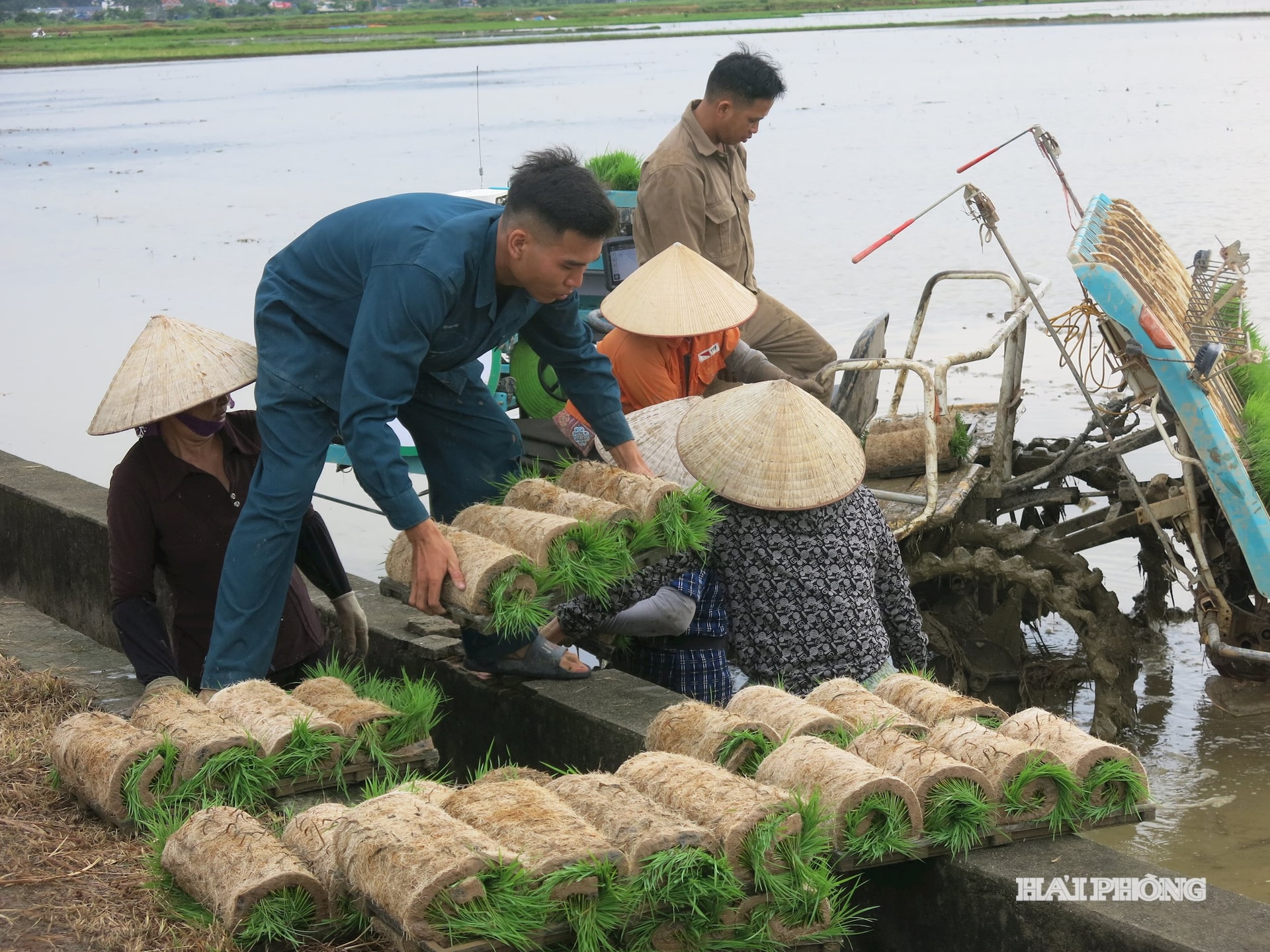
In some localities where farmers have small, scattered plots of land and it is inconvenient to use machinery for planting, they proactively utilize family labor, hire or borrow additional workers, or exchange labor with each other to ensure the planting is completed within the timeframe and before Tet (Lunar New Year), so they can enjoy the holiday without worry.
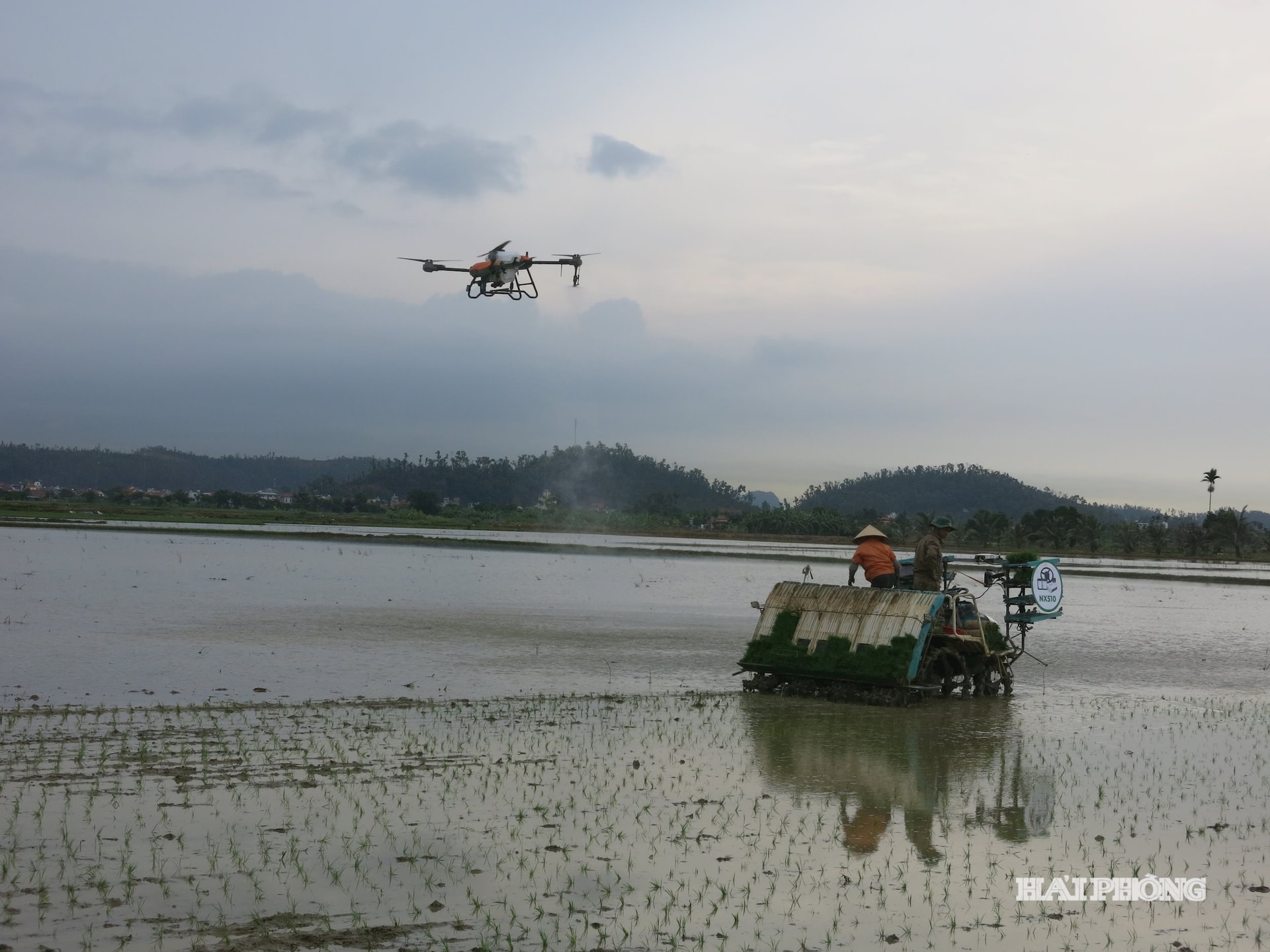
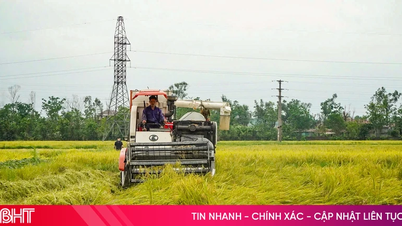
On large fields, mainly large-scale farms cultivating abandoned farmland, farmers proactively purchase or rent mechanized equipment from service teams to plant rice on the available land. Mr. Bui Nang Nhuan in Thanh Mien commune has accumulated 5 hectares for rice cultivation. This spring, his entire rice crop was planted before the Lunar New Year.
Mr. Nhuận said that after renting the land, he transformed it into large plots, making it convenient to introduce mechanization into production. Therefore, he mainly uses the direct seeding method for most of the area (over 3 hectares). The remaining 2 hectares are planted using a transplanting machine, so the planting process is quite fast, completed just a few days before Tet (Lunar New Year).
According to the Hai Phong Department of Crop Production and Plant Protection, the spring crop of 2026 will begin before the Lunar New Year, so farmers throughout the city started sowing and planting spring rice from February 1st. This year's spring rice planting schedule will last 20 days, ending at the end of February. Before the Lunar New Year, the city had sown over 55,000 hectares of spring rice, reaching over 70% of the total planted area.
In the days following the Lunar New Year, some communes and wards such as Nam An Phu, Bac An Phu, Kinh Mon, Hop Tien, Pham Su Manh, etc., that still have land for winter crops will sow rice after harvesting all the winter crops.
This year's spring rice planting schedule is within the appropriate timeframe and favorable weather conditions. For early spring rice, farmers planted from February 1st to 10th, mainly using pure rice varieties and glutinous rice DT22. Late spring rice was planted from February 10th to 20th, using short-day rice varieties with a growth period of 120-160 days, such as pure rice varieties: Q5, KD18, BT7, BT7KBL, TBR225, Dai Thom 8…; hybrid rice varieties: VT404, VT333, Thuy Huong 308, Thai Xuyen 111, Lai Thom 6.
Ensuring production conditions
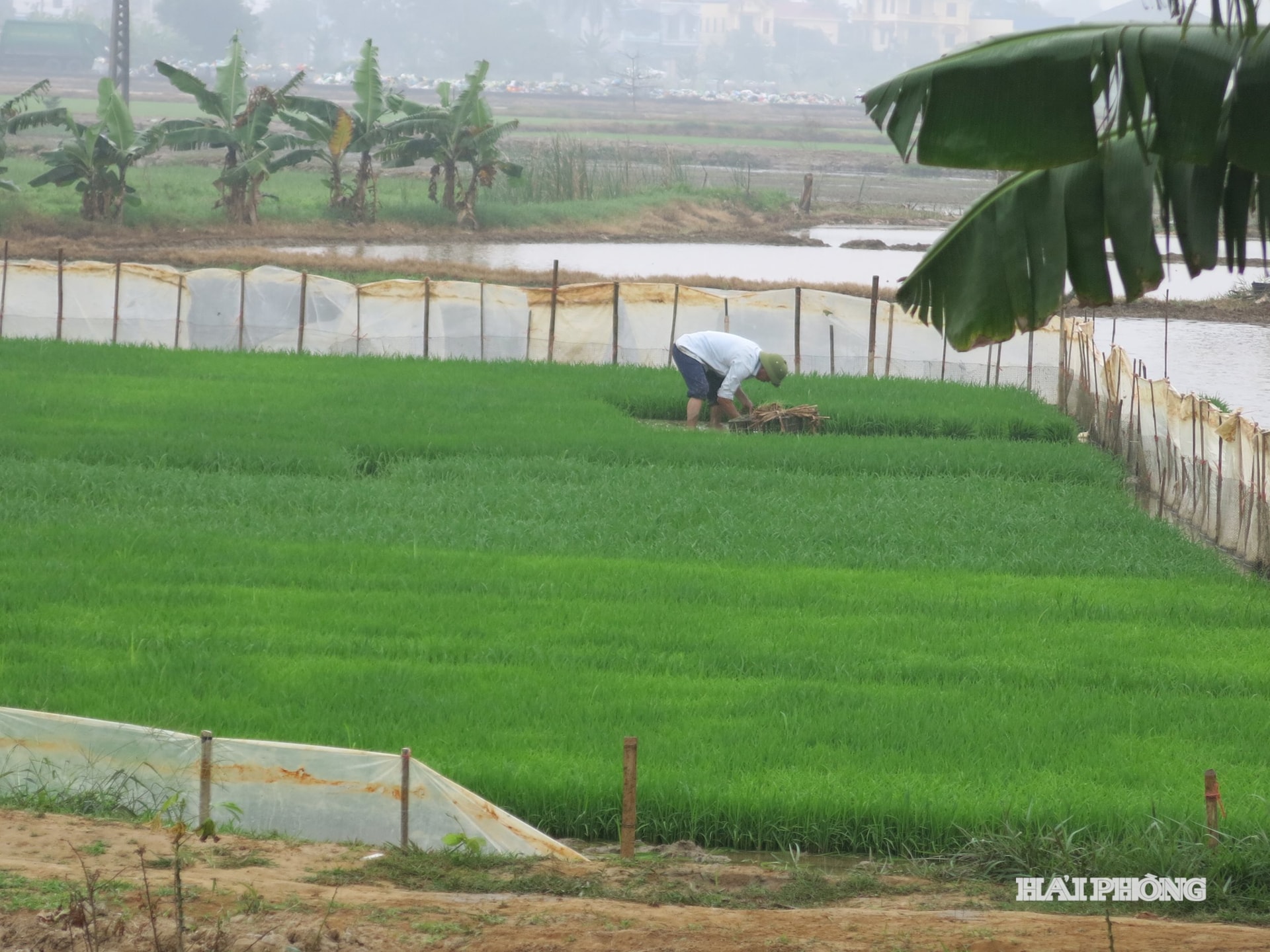
To ensure efficient spring rice production in 2025, the Department of Agriculture and Environment of the city proposes that localities and specialized agencies promote and encourage farmers to proactively prepare the land from the initial stages, ensure sufficient water resources for spring rice planting, and strictly adhere to the planting schedule, seed structure, and planting methods.
According to Deputy Director of the Department of Agriculture and Environment Luong Thi Kiem: This year, the weather is favorable, so farmers are taking advantage of it to sow and plant rice on the entire area. Local authorities are overcoming difficulties in mobilizing machinery for sowing and other conditions to sow spring rice within the correct timeframe…
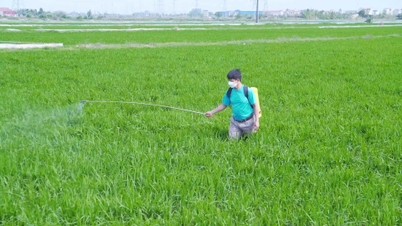
After sowing, farmers must regularly inspect the fields, maintain water levels to keep the rice warm, and apply fertilizer to help the rice recover quickly and grow well. In particular, farmers should pay attention to rice blast disease once the rice plants have rooted and turned green, so that timely and effective control measures can be taken.
.jpg)
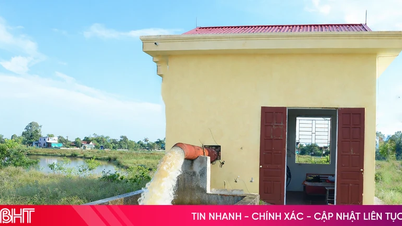
To support the spring rice planting season, irrigation companies are proactively supplying water to farmers. According to Do Van Trai, Chairman of Da Do Irrigation Works Exploitation Company Limited, the company has directed its stations and teams to operate irrigation works at full capacity to flush out acidity and salinity, clean the water source, and draw water into the system, ensuring the best possible water reserves and quality for domestic use and agricultural production.
In particular, during the spring of 2025, several high tides occurred on the main rivers, causing salinity levels to tend to increase. In response to this situation, the Irrigation Works Exploitation Stations and the two River Management Teams in Regions I and II increased the frequency of salinity measurements at sluice gates along the Van Uc and Lach Tray river dykes, closely monitoring the salinity-freshwater fluctuations. Irrigation officials were on duty 24/7 at the facilities, measuring salinity multiple times, taking advantage of periods of low salinity and brief "freshwater outlets" to safely draw water for the system, ensuring that farmers' production areas were not affected by salinity. Therefore, on New Year's Eve, after checking the water source to ensure quality, the Trung Trang Irrigation Works Exploitation Station implemented technical measures to welcome the first freshwater of the year into the system for production and daily life.
In agricultural cooperatives, cooperative officials actively promote and encourage farmers to produce according to the correct seasonal schedule; ensuring a good supply of seedlings for planting.
According to Nguyen Thi Ha, Director of Thuy Huong Agricultural Cooperative, the cooperative has invested in tray seedling production technology to supply its production area and all farmers in the city who need tray seedling cultivation and transplanting machines.
HO HUONGSource: https://baohaiphong.vn/vui-xuong-dong-gieo-cay-lua-xuan-536035.html
![[Photo] General Secretary and President To Lam receives Amazon's Senior Vice President David Zapolsky](https://vphoto.vietnam.vn/thumb/1200x675/vietnam/resource/IMAGE/2026/05/22/1779466547770_a1-bnd-3513-6601-jpg.webp)


































































Comment (0)