

Many potentials
According to statistics from the Department of Construction, the province currently has 6 port areas managed by the Nha Trang Maritime Port Authority and the Binh Thuan Maritime Port Authority, comprising 21 berths, including 42 piers (including dry docks) with a total length of over 8,700m. Mr. Chu Van An, Deputy Director of the Department of Construction, said that Khanh Hoa seaport is planned as a Class I seaport (national general port, regional hub) and is oriented to develop into a special seaport with a focus on the North Van Phong port area. According to the plan approved by the Ministry of Construction , by 2030, the North Van Phong port area will function to serve inter-regional socio-economic development, with the potential to develop into an international transshipment port, including container terminals, general cargo terminals, and international passenger terminals. At the same time, it will gradually develop international tourist passenger terminals and marinas to directly serve tourists in Van Phong Bay and the surrounding area according to demand.
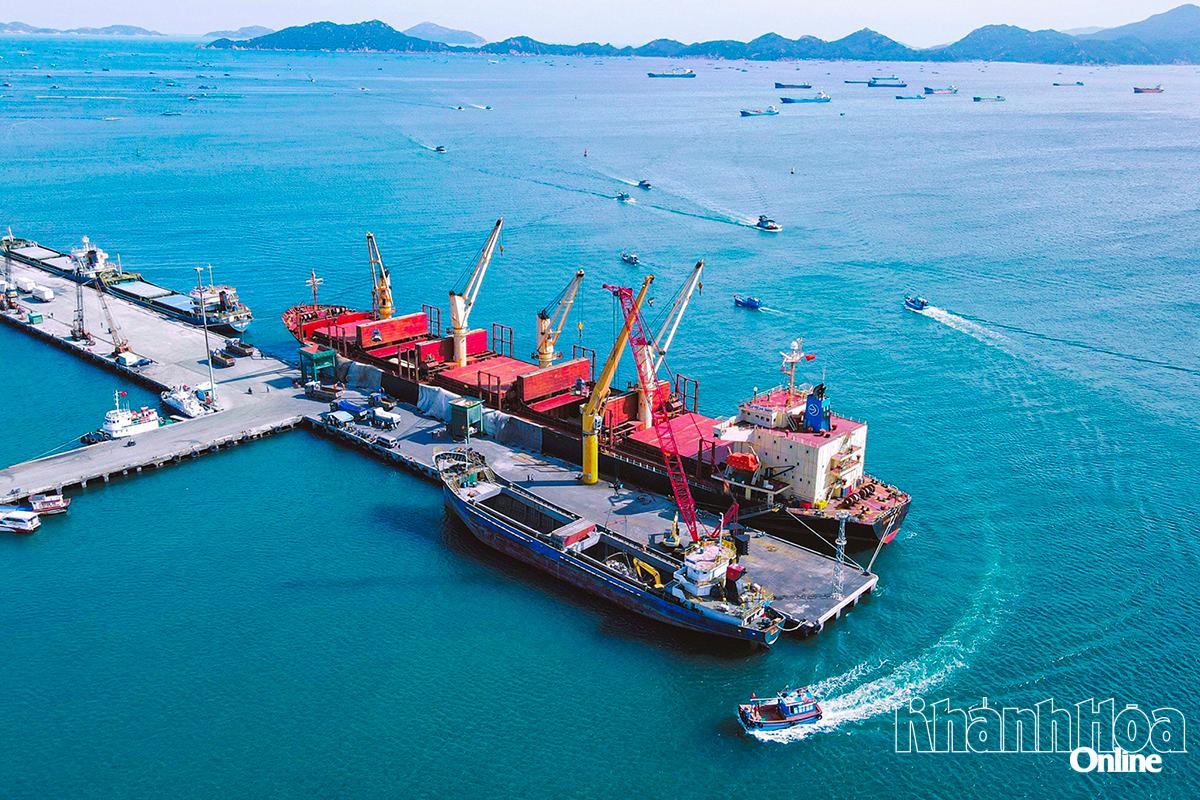 |
| Cam Ranh port regularly receives large cargo ships. |
The Nam Van Phong port area directly serves the Van Phong Economic Zone and handles the transshipment of liquid, gas, and bulk cargo, with general cargo, bulk, liquid, and gas berths. The Nha Trang port area will be an international passenger port and yacht marina, an international maritime tourism hub, capable of receiving passenger ships up to 225,000 GT and cruise ships and yachts. The Cam Ranh port area will serve the socio-economic development of the province and the Central Highlands region, with general cargo, container, bulk, liquid, and gas berths, passenger berths, and berths serving national defense and security. The Ca Na and Ninh Chu port areas are planned to serve the needs of import and export of goods, the development of local industries, especially receiving large-capacity general cargo, container, and liquid cargo vessels.
The seaports have a maximum vessel capacity of 400,000 tons at the South Van Phong port area and a minimum of 2,000 tons at the Ninh Chu port area. Specifically, the North Van Phong port area includes 2 berths with 3 piers totaling 545m in length; the maximum vessel capacity is 70,000 tons. The South Van Phong port area includes 8 berths with 16 piers (including dry docks) totaling 3,291m in length; the maximum vessel capacity is 400,000 tons. The Nha Trang port area includes 4 berths with 6 piers totaling 966.5m in length; the maximum vessel capacity is 40,000 tons. The Cam Ranh port area includes 5 berths with 15 piers totaling 3,419m in length; the maximum vessel capacity is 110,000 tons. The Ninh Chử port area comprises one port with one pier, 210m long; capable of receiving vessels up to 2,000 tons, primarily serving fishing vessels combined with cargo ships carrying salt and construction materials. The Cà Ná port area comprises one port with one pier, 353m long; capable of receiving vessels up to 100,000 tons.
Develop a comprehensive connectivity infrastructure.
Mr. Chu Van An stated that the Department of Construction will advise the Provincial People's Committee on several groups of solutions for developing seaports, such as: creating cargo hubs and attracting cargo sources; applying specific policies and mechanisms and digital transformation in state management... At the same time, it will develop a phased investment roadmap in two key stages, focusing on completing the legal framework and building breakthrough maritime infrastructure; and propose a plan for investment promotion and attraction, along with projected funding sources.
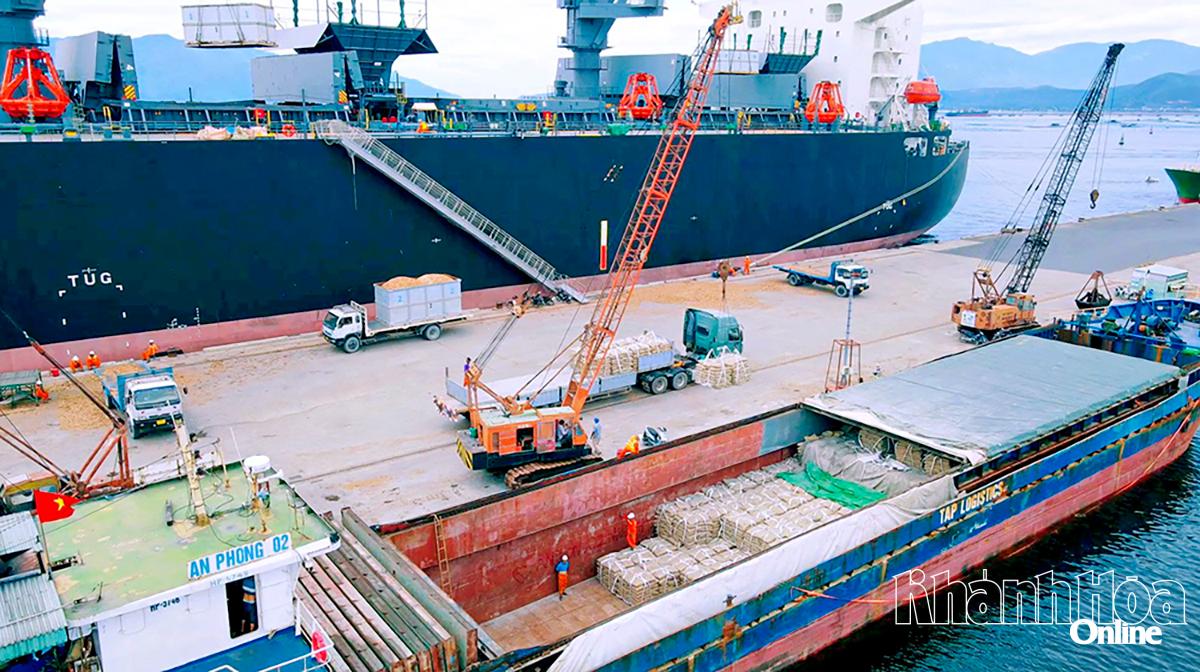 |
| Loading and unloading goods at Cam Ranh Port. |
Furthermore, to optimize the operation of the six main port areas, the infrastructure and transportation connections need to be invested in and developed synchronously. Specifically, along the North-South road backbone, in addition to the currently operating National Highway 1, the North-South expressway has officially opened its entire length within the province, contributing to improved goods flow from seaports to northern and southern provinces. During the 2026-2030 period, the province will continue to invest in upgrading connecting roads from the expressway and national highways to the ports to ensure smooth traffic flow.
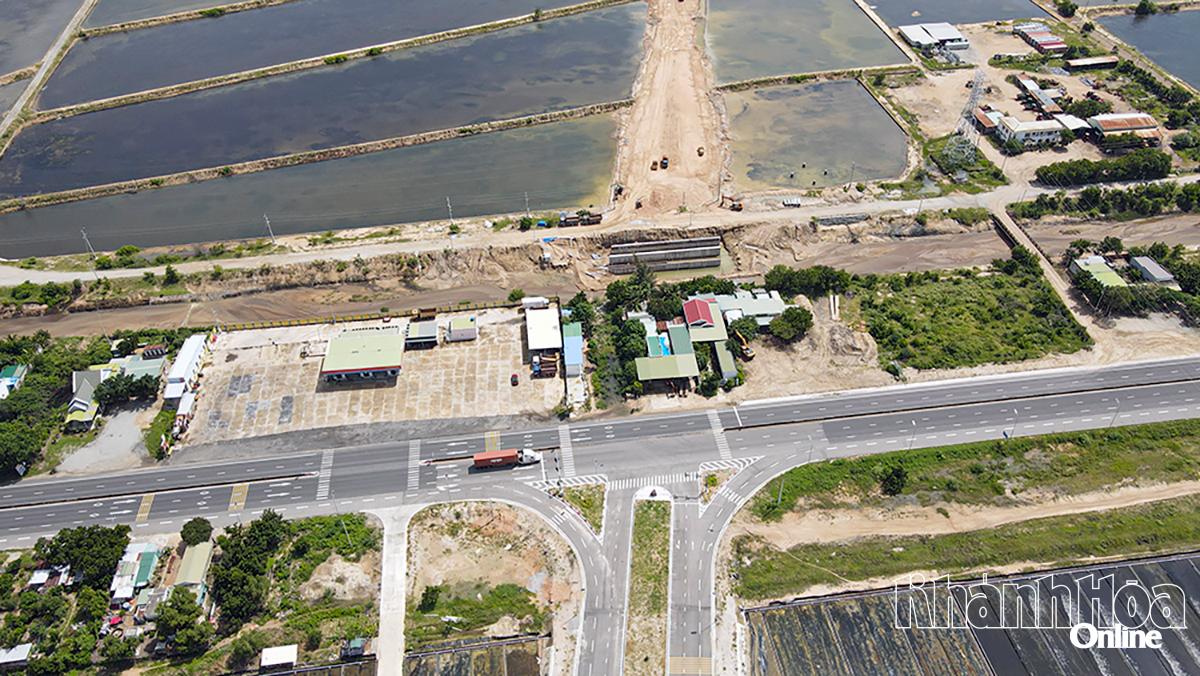 |
| The road connecting the North-South Expressway via National Highway 1 to the Ca Na General Seaport is being constructed urgently. |
Regarding horizontal connectivity, the Khanh Hoa - Buon Ma Thuot expressway is currently under construction and is expected to be fully operational by early 2027. The expansion project of National Highway 26B is being implemented by the Provincial Project Management Board for Agricultural and Transportation Construction Projects to ensure seamless connection between the Khanh Hoa - Buon Ma Thuot expressway and the Nam Van Phong port area. The Nha Trang - Da Lat expressway is being studied by the Provincial People's Committee, and a report will be submitted to the competent authorities for approval of investment preparation procedures in 2026, with investment and construction expected to be completed between 2027 and 2030. The expansion project of Provincial Road 1A is also underway to ensure seamless connectivity and meet the transportation needs of industrial zones under investment within the Van Phong Economic Zone and the Nam Van Phong port area. In addition, the inter-regional transport infrastructure project connecting the Ca Na General Seaport to the provinces in the southern Central Highlands is expected to be invested in during the period 2026 - 2030, aiming to form a sea-forest economic corridor, promote logistics and socio-economic development of the region.
LITERARY CHANNEL
Source: https://baokhanhhoa.vn/kinh-te/202605/phat-huy-tiem-nang-he-thong-cang-bien-88c35ad/


![[Image] Close-up view of the interchange connecting the two expressways and Long Thanh Airport.](https://vphoto.vietnam.vn/thumb/1200x675/vietnam/resource/IMAGE/2026/05/25/1779703378210_ndo_br_z7863716673926-224453a31600126cce10622af6290afd-4549-jpg.webp)


![[Image] Hanoi's urban life under the challenge of a "scorching hot" environment](https://vphoto.vietnam.vn/thumb/1200x675/vietnam/resource/IMAGE/2026/05/25/1779706979265_nang-nong-t5-2026-minh-duy-7-4636-jpg.webp)















































































Comment (0)